Introduction
Vietnam stands as one of Southeast Asia's fastest-growing economies, with the Asian Development Bank projecting 6.7% GDP growth for 2025. Yet as competition intensifies across sectors, broad market strategies increasingly fail to cut through the noise. Many brands entering Vietnam default to mass positioning, only to watch their messaging disappear into an oversaturated marketplace.
Niche branding offers a more direct path. By building a focused identity for a well-defined audience segment, brands can establish loyalty and differentiation faster than competitors chasing everyone.
Vietnam's young, digital-first population creates ideal conditions for this approach: 46% of consumers now prioritize environmental credentials, and 54% of Gen Z prefer brands enabling individual expression.
What follows is a practical guide to identifying viable niches, applying branding strategies suited to Vietnam's cultural context, and building the kind of trust that turns a defined audience into loyal advocates.
TLDR
- Vietnam's middle class is projected to double from 13% to 26% by 2026, creating space for niche brands serving sophisticated urban consumers
- Success depends on cultural intelligence, audience research via platforms like Zalo and TikTok, and community-first marketing
- Micro-influencer partnerships and platform-specific content work best when anchored in Vietnamese values like community and trust
- Consistency and genuine knowledge of your target segment's habits are what convert awareness into lasting brand loyalty
Why Vietnam Is a Prime Market for Niche Brands
Economic growth creates consumer spending power
Vietnam's economy is accelerating. The World Bank forecast 6.1% growth for 2024 and 6.5% for 2025-2026, up from 5% in 2023. By Q1 2026, Vietnam reported 7.83% GDP growth, leading Southeast Asia.
This growth translates to purchasing power. Vietnam's middle class will jump from 13% of the population in 2023 to 26% by 2026, with an additional 36 million people joining the consuming class by 2030.
A young, urbanizing population drives lifestyle brands
With a median age of 33.4 years and roughly 50% of the working population aged 20-39, Vietnam offers a massive base of digitally connected young adults. Urbanization stands at 38% and grows at approximately 2.5% annually, concentrating purchasing power in cities like Ho Chi Minh City, Hanoi, and Da Nang.
Consumers shift from price to values alignment
Vietnamese consumers remain value-conscious, but priorities are shifting toward "best value" and ethical alignment:
- 80% report willingness to pay more for sustainable products
- 74% prefer brands that demonstrate social responsibility
The shift is most pronounced in urban centres, where consumers increasingly seek brands that reflect identity and lifestyle aspirations rather than cheaper commodity alternatives.
Government support for brand building
Vietnam's National Brand Programme helps businesses transition from contract manufacturing (OEM) to own-brand manufacturing (OBM). The programme aims to "build and promote the image of Vietnam as a nation with high-quality goods and services," according to Vietrade. Vietnam's national brand value reached approximately $520 billion in 2025, ranking 32nd among 193 economies.
What Is a Niche Market? Examples From Vietnam
A niche market is a focused subset of a larger market defined by shared characteristics, needs, preferences, or identities. Examples include specialty coffee drinkers prioritising single-origin Vietnamese beans, or urban professionals seeking organic skincare made from local ingredients.
Fast-growing niche categories in Vietnam
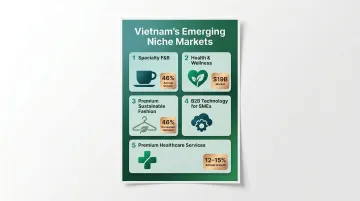
Several segments are pulling ahead as consumer preferences grow more specific:
- Specialty F&B: Vietnam exported 1.78 million tons of coffee valued at $4.06 billion in 2022, yet brands like Trung Nguyen Legend compete on cultural storytelling rather than commodity pricing. Urban consumers are shifting from mass robusta toward artisanal offerings.
- Health & Wellness: The market reached $19 billion in 2024, with mental health services alone valued at $2.3 billion in 2025 (2.6% CAGR through 2034), driven by post-pandemic health awareness.
- Premium Sustainable Fashion: 46% of consumers now select products based on environmental credentials, giving sustainable fashion brands a receptive audience among urban millennials and Gen Z.
- B2B Technology for SMEs: Digital transformation across Vietnam's small and medium enterprises is creating demand for specialised software, cloud infrastructure, and automation tools.
- Premium Healthcare Services: Aging demographics and rising incomes are driving demand for eldercare facilities, specialised medical services, and wellness tourism — a segment growing at 12–15% annually.
Vietnamese brands that built dominance through niche positioning
Vinamilk demonstrates category focus. Brand Finance recognised it as Vietnam's most valuable dairy brand with an AAA+ rating and brand value of $3 billion. The company launched 125 products in 2024 alone, maintaining dominance through continuous innovation within a focused dairy identity.
PNJ (Phu Nhuan Jewelry) commands over 55% market share in Vietnam's jewelry segment. Digital transformation increased system capacity by 500% during peak seasons and boosted sales productivity by 200%. The result: an omnichannel retail operation that scales reliably around high-demand periods like Lunar New Year and wedding season.
Biti's Hunter repositioned from legacy footwear manufacturer to streetwear-lifestyle brand targeting young Vietnamese. Its 2024 "Buoc Toi" campaign drove 30% sales uplift within two weeks by leaning into national pride and self-discovery themes.
How to Identify and Validate Your Niche in Vietnam
Understand regional and generational differences
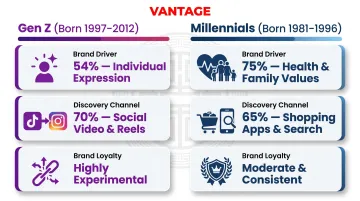
Ho Chi Minh City and Hanoi are Vietnam's primary consumption centers, but consumer behavior differs between them. Most urban shoppers move fluidly between online and offline — researching on TikTok, then buying in-store, or discovering a brand on Zalo and converting via an app. Generational divides shape this behavior significantly:
| Dimension | Gen Z (Born 1997-2012) | Millennials (Born 1981-1996) |
|---|---|---|
| Brand Driver | Individual expression (54% prefer identity-aligned brands) | Health and family safety (75% prioritize) |
| Discovery Channel | Social media first (70% research on TikTok/Instagram) | Apps and convenience (65% use shopping apps weekly) |
| Loyalty | Very low; highly experimental | Moderate; value consistency |
Use digital signals to validate demand
Zalo reaches 85% of Vietnamese users with approximately 78 million regular users, surpassing all global messaging apps. By end of 2024, Zalo hosted over 13 million monthly users across 3,465 active Mini Apps.
TikTok reaches 55.6% of all Vietnamese adults aged 18+, with users spending over 41 hours per month on the platform. Hashtag trends and search volumes provide valuable demand signals.
Practical research methods:
- Social listening on Zalo and TikTok for emerging conversations
- Google Trends Vietnam for keyword search patterns
- Facebook group engagement analysis
- Consumer interviews in target demographics
- Competitor mapping and positioning analysis
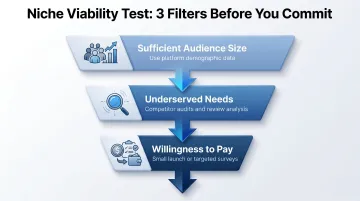
Evaluate niche viability with three criteria
Before committing to a positioning direction, test against three filters:
- Sufficient audience size — Use platform data to estimate segment scale. TikTok's demographic filters, for instance, can confirm whether "urban Vietnamese women aged 25–35 seeking mental wellness products" is a viable niche or too narrow.
- Underserved needs — Run competitor brand audits and customer review analysis to surface gaps no one is addressing yet.
- Willingness to pay — Run a small product or service launch, or use targeted surveys, to gauge price sensitivity before locking in your brand positioning.
Validate cultural fit
What works in Singapore or Thailand rarely translates directly to Vietnam — cultural values here shape how niches are defined from the ground up. Two dynamics matter most:
- Collectivism: Family ties and community belonging drive purchase decisions. 67% of consumers discover products through online communities, and 58% trust friend recommendations over advertising — making community-led brand strategies far more effective than broadcast campaigns.
- Face (mặt mũi): Vietnamese consumers gravitate toward brands that signal social standing and group belonging. Community-building and peer validation consistently outperform one-way advertising.
Niche Market Branding Strategies That Work in Vietnam
Build brand narratives rooted in specificity
Niche brands compete on depth, not breadth. Craft a precise story: who it's for, what problem it solves, why it matters.
PNJ illustrates this well. Holding over 55% market share, the jewelry brand invested in cloud infrastructure enabling 500% capacity scaling during peak seasons — critical for God of Fortune Day, when most Vietnamese visit jewelry stores to buy gold.
The result: a brand narrative that married heritage craftsmanship with modern convenience, serving customers without friction at peak demand.
Leverage micro-influencers within niche communities
In Vietnam's social commerce ecosystem, celebrity endorsements rank last at just 22% for product discovery. Community cultivation outperforms influencer spending.
Identify the right micro-influencers using:
- Engagement rate (aim for 3-6% minimum)
- Content alignment with brand values
- Audience demographic data matching your niche
- Authenticity and genuine community connection
Use community-building as a primary channel
Online communities are the top discovery channel at 67%, surpassing casual social media browsing. Trust builds through shop reviews (68%), friend/family experience (58%), and direct chat with sellers (50%).
Tactical approaches:
- Create Facebook Groups for brand enthusiasts
- Launch Zalo Official Accounts for direct communication
- Run branded challenges encouraging user-generated content
- Feature customer spotlights regularly
- Build exclusive member programmes with early access
Develop platform-specific content strategies
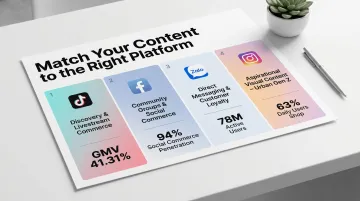
Each platform serves a distinct purpose in Vietnam. Match your content format to where your audience is — and why they're there.
| Platform | Primary Use | Key Stat |
|---|---|---|
| TikTok | Short-form educational content; Gen Z awareness | Shop GMV share rose from 29% (2024) to 41.31% (2025) |
| Community groups; social commerce for older millennials | Dominates at 94% of social commerce activity | |
| Zalo | Direct communication; loyalty programmes; personalised offers | Vietnam-native app with deep daily usage |
| Aspirational visual storytelling for fashion, cosmetics, lifestyle | Strongest with urban Gen Z audiences |
Adopt focused distribution aligned with the niche
Resist being everywhere. Select channels your target audience uses:
- Specialty retail stores for premium positioning
- Direct-to-consumer e-commerce for convenience
- Specific marketplace segments on Shopee/Lazada
- Livestream commerce on TikTok Shop
Spreading too thin signals a brand that hasn't decided what it stands for — the opposite of niche.
Continuously measure, adapt, and localise
Vietnam's digital landscape shifts faster than most markets — platform GMV shares, discovery behaviours, and community norms can all change within a single year. Track engagement metrics, sentiment, and conversion data on a rolling basis. Be willing to refine messaging, creative assets, or even your niche definition as real audience data comes in.
Building Cultural Resonance Into Your Niche Brand Identity
Connect emotionally, not just functionally
Vietnamese consumers respond to brands reflecting shared values: family and community, personal ambition, cultural pride, and authenticity. Embed these emotional triggers into brand identity from the start.
Apply visual and verbal cultural codes
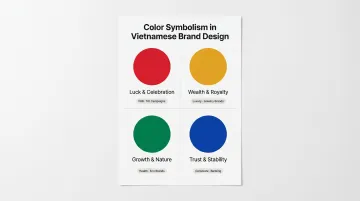
Color symbolism carries strategic weight:
| Color | Cultural Meaning | Branding Application |
|---|---|---|
| Red | Luck, happiness, celebration, national pride | Sales promotions, F&B, Tet campaigns |
| Yellow/Gold | Wealth, royalty, prosperity | Luxury, jewelry, finance |
| Green | Growth, hope, nature, freshness | Health foods, eco-brands, organic products |
| Blue | Trust, peace, stability | Corporate, banking, technology |
Language register matters: Choose between formal (for B2B or luxury) versus conversational tone (for Gen Z lifestyle brands). Be aware of northern versus southern dialect differences.
Use authentic storytelling rooted in Vietnamese heritage
Secoin, a Vietnamese handmade cement tile manufacturer, exemplifies cultural identity translating to international brand equity. Continuously recognized as a Vietnam National Brand since 2016, Secoin operates 3 showrooms and 9 factories, exporting to 60 countries across 6 continents.
Secoin positions each tile as cultural art, blending artisanal Vietnamese heritage with Japanese operational standards. Rather than competing on price against industrial manufacturers, Secoin commands premium pricing because the brand story itself is the product.
Getting this kind of cultural positioning right requires more than translation — it requires genuine market fluency. Agencies like Vantage Branding work with brands entering Southeast Asian markets to develop identities that feel locally grounded without losing strategic clarity.
Digital Channels for Niche Market Targeting in Vietnam
Map platforms to marketing objectives
| Platform | Users in Vietnam | Primary Use Case |
|---|---|---|
| Zalo | ~78M regular users (85% penetration) | Messaging, brand communication, loyalty |
| 72.7M (75.2% penetration) | Community groups, social commerce | |
| TikTok | 76.1M total (40.9M adults 18+) | Discovery, livestream shopping |
| YouTube | 62.3M | Long-form content, music |
| 10.6M | Fashion, cosmetics (Gen Z urban) |
Vietnam's internet penetration stands at 78.8%, with 127 million mobile connections. Users spend roughly 6 hours and 20 minutes online daily. For niche brands, that screen time represents a concentrated opportunity — provided you show up on the right platforms with the right format.
Leverage e-commerce platforms strategically
Vietnam's total e-commerce market reached $32 billion in 2024, growing 27% year-over-year. The market is consolidating: the number of active storefronts dropped 7.43% as professional sellers with strong brand presentation dominate.
Shopee, Lazada, and TikTok Shop offer niche-specific storefronts and search targeting. Livestream shopping became the dominant content format in 2022 and has held that position since, with 38% of consumers spending up to three hours weekly watching livestreams.
Prioritize organic community-building before paid advertising
Niche brands with limited budgets should prioritize:
- Organic community cultivation on Facebook Groups and Zalo — build trust with your audience before spending on reach
- Influencer co-creation and user-generated content — niche communities respond to peer voices over polished ads
- Livestream commerce on TikTok Shop — test product-market fit and brand messaging in real time
When scaling to paid campaigns, use hyper-targeted segmentation by interest, behavior, and location (for example, targeting specialty coffee enthusiasts in Ho Chi Minh City) — narrower audiences convert at significantly higher rates than broad demographic buys.
Frequently Asked Questions
What is an example of a niche market?
A niche market is a focused subset of consumers sharing specific characteristics or needs. In Vietnam, examples include specialty coffee drinkers seeking single-origin Vietnamese beans, or urban professionals aged 25-35 purchasing organic skincare made from local ingredients.
What major brands are made in Vietnam?
Vinamilk (dairy, $3 billion brand value), Trung Nguyen (specialty coffee), PNJ (jewelry with 55% market share), and VinFast (automotive) have built strong identities through niche positioning. Category-focused positioning drove local market leadership and international growth for each.
How do you find your niche market in Vietnam?
Start with digital audience research — Google Trends Vietnam, Zalo and TikTok social listening, and Facebook group analysis. Then validate demand through competitor analysis and customer interviews before committing to a full brand positioning.
How important is cultural localization for niche branding in Vietnam?
Cultural localization is essential. Niche brands that align messaging, visuals, and language with Vietnamese values — collectivism, family, community belonging — build deeper emotional connections and trust than generic international approaches.
How can a foreign brand successfully enter a niche market in Vietnam?
Partner with local experts who understand regional nuances, and adapt your brand narrative to Vietnamese cultural values rather than direct-translating from other markets. Start with a narrowly defined segment, then scale once that community is established.