Introduction: Branding Case Studies in Vietnam
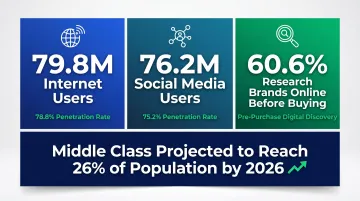
Vietnam has emerged as one of Southeast Asia's most dynamic brand-building environments. With 79.8 million internet users representing 78.8% penetration as of January 2025, the country's digitally connected population creates unique opportunities—and demands—for brands. This isn't just a market of young consumers (median age 32.4 years); it's a market where cultural identity matters deeply, where consumers actively scrutinise authenticity, and where brands must earn trust rather than simply broadcast messages.
This article examines real branding and rebranding case studies from Vietnam, drawing out strategic lessons for domestic and international brands alike. The cases covered include:
- Banking: SABECO, MB Bank, MSB
- Consumer goods: Biti's Hunter
- Food delivery: Baemin
- Global localisation: Oreo in Vietnam
Each case offers insights that range from celebrated successes to instructive cautionary tales.
TLDR:
- Vietnam's 76.2 million social media users (75.2% penetration) make digital channels the primary brand-building arena
- Successful brands align with Vietnamese cultural pride and community values, not just translate global campaigns
- Emotional storytelling consistently outperforms feature-led marketing across every successful case study
- Rebrands succeed when brand values are communicated clearly first — visual change alone falls flat
- Localisation depth, not budget size, determines whether brands gain real traction in Vietnam
Why Vietnam Is a Distinct Branding Market
Vietnam's branding landscape stands apart from other Southeast Asian markets due to three converging factors: digital maturity, demographic youth, and cultural assertiveness.
Digital-First Consumer Behaviour: 76.2 million Vietnamese are active social media users, representing 75.2% of the population. More significantly, 60.6% of internet users in Vietnam use social networks to research brands before purchasing. Vietnamese consumers actively investigate brands online before they buy — not casually browse.
Demographic and Economic Momentum: Vietnam's middle class comprised approximately 13% of the population (13 million people) as of 2023 and is projected to expand to 26% by 2026 — an addition of over 25 million consumers with rising disposable incomes. For brands, this means a fast-growing audience that is digitally native, brand-aware, and quick to disengage from messaging that feels generic.
Cultural Pride as Brand Filter: Vietnamese consumers respond strongly to community-driven narratives and are quick to reject brands that feel inauthentic or culturally tone-deaf. Visual identity, messaging, and brand experience must all align with local values to earn traction.
This is where regional templates fail. A campaign that performs in Thailand or Indonesia may land flat in Vietnam — because Vietnamese consumers filter brands through a cultural lens that rewards specificity, not adaptation.
Notable Branding and Rebranding Case Studies in Vietnam
Biti's Hunter: Reclaiming National Pride
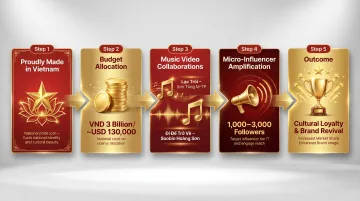
Founded in 1982, Biti's operated for over 40 years as Vietnam's number one footwear brand—but by 2016, it had drifted into irrelevance among younger consumers. The Hunter sneaker line launched that year received limited attention. The breakthrough came with the "Proudly Made in Vietnam" campaign.
Campaign Strategy: The campaign centred on a short film titled "Pride Inspiration From the Streets," articulating the message "Not perfect, but still proud." Rather than competing on product features, Biti's leaned into authentic street culture and positioned Vietnamese manufacturing as a source of pride, not a budget compromise.
The execution was disciplined and targeted. With a total budget of only VND 3 billion (approximately USD 130,000), Biti's concentrated resources on two music video collaborations:
- "Lac Troi" featuring Son Tung MTP
- "Di De Tro Ve" featuring Soobin Hoang Son and Tien Cookie
Micro-influencers with 1,000 to 3,000 followers then amplified the message organically.
Core Lesson: When a local brand aligns its identity with genuine cultural pride rather than manufactured aspiration, it earns emotional loyalty that advertising spend alone cannot buy. Biti's didn't outspend competitors; it out-resonated them by making Vietnamese identity the product benefit.
SABECO (Saigon Beer): Modernising a Legacy Icon
SABECO traces its origins to 1875, making it one of Vietnam's most heritage-rich brands. By 2019—after 144 years—the brand faced a familiar challenge: how to modernise without alienating loyal customers who had grown up with it.
Rebrand Approach: SABECO refined its dragon logo to feel more premium and contemporary, anchored by the campaign slogan "Rising like a dragon, confidence like a dragon." The visual update was incremental—the dragon remained central, redesigned against a bold red background to convey both heritage and forward momentum.
The campaign explicitly tied brand identity to Vietnamese national symbolism. The dragon isn't merely a design element—it's a cultural icon representing strength and aspiration, giving existing customers a reason to feel renewed ownership of a brand they already knew.
Post-Rebrand Performance: SABECO reported a significant rise in revenue following the rebrand, with 2024 results showing net revenue of VND 31,872 billion (approximately USD 1.27 billion), up 4.6% year-on-year, and profit after tax up 5.6%.
What This Tells Us: Legacy brands can modernise without alienating loyal customers when the visual update is rooted in an authentic brand story rather than aesthetic change for its own sake. SABECO preserved its dragon equity while making it feel current.
Baemin: Emotional Branding for a Digital-Native Audience
Baemin entered Vietnam's food delivery market in June 2019 as a challenger brand facing dominant competitors Grab (45% market share) and ShopeeFood (41%). With only approximately 12% market share, Baemin couldn't compete on scale. Instead, it competed on personality.
Campaign Progression: Baemin used emotional storytelling through three distinct music-video-driven campaigns targeting working women, each tapping into Vietnamese pop culture:
- The "Baby" music video featuring AMEE and KARIK reached 3rd on YouTube's trending list within 72 hours
- The "Women should love safe or interesting" campaign generated over 11,000 social discussions and ranked in the top 7 on BuzzMetrics
- Artist collaborations included Tran Thanh, JUSTATEE, and Rhymastic
The brand's mascot "Meo Meo" and partnerships with popular Vietnamese rap and pop artists created a brand personality that felt culturally embedded rather than imported.
The Paradox: Despite strong brand affinity, Baemin ceased operations in December 2023 due to intense competition and lack of profitability. The brand built emotional resonance but couldn't convert it into sustainable market share against operationally superior competitors.
Core Lesson: For challenger brands in a crowded category, personality and cultural resonance can differentiate far more effectively than product features. Baemin proved that. But emotional branding cannot substitute for operational fundamentals—and when the two are out of balance, even the most beloved brand personality won't hold the market.
Oreo's Tet Campaign: Localising a Global Brand
For Lunar New Year 2020, Oreo created a Vietnam-specific campaign that demonstrated how global brands can earn cultural relevance through genuine localisation.
Campaign Design:
- A special Tet gift box with Red Velvet flavour variant
- An Oreo music sheet that, when scanned by a smartphone with a cookie placed on the sheet, used AR technology to play traditional Vietnamese tunes
- Collaboration with Vietnamese pop singer Min
- 5 exclusive Tet songs unlocked through the AR experience
Why It Worked: This wasn't a translation of a global campaign. It was a ground-up cultural experience designed specifically for Vietnamese consumers at their most emotionally significant time of year. The AR music sheet tied product interaction directly to cultural celebration—Tet traditions literally came to life through the product.
Core Lesson: International brands don't fail in Vietnam because they lack resources—they fail when they underestimate the depth of cultural localisation required. Genuine market insight must precede creative execution. Oreo succeeded because it created a Vietnamese experience, not an Oreo experience adapted for Vietnam.
Rebranding in Vietnam: What Separates Success from Failure
Two Vietnamese banking rebrands from 2019-2020 illustrate the difference between strategic discipline and visual novelty.
MB Bank: The Cautionary Tale
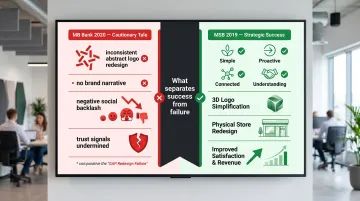
MB Bank's 2020 rebrand became "the most controversial rebranding project in Vietnam" that year. The bank restructured its logo in a stylised, fragmented way, combined with youthful colours to create a fresh, modern look.
The rebrand generated a significant volume of negative responses on social networks. Critics described the new logo as "fragmented, unreliable, and unsuitable for the bank's values" — a reaction compared to the GAP logo redesign failure, a benchmark for rebrand missteps.
The core problem: the rebrand prioritised visual novelty over strategic clarity, with no compelling brand narrative to explain the change. In banking, where trust and stability are non-negotiable, a fragmented visual identity sent exactly the wrong signal.
MSB/Maritime Bank: The Strategic Success
Maritime Bank rebranded to MSB in 2019 after 30+ years in operation. The rebrand included:
- Conversion to a shorter, more modern name (MSB)
- Logo redesigned to be simpler and more dynamic using 3D design
- Physical stores redesigned for a synchronised, eye-catching appearance
MSB communicated four clear brand values — simple, proactive, connected, and understanding — before a single visual element launched. The rebrand wasn't just a new logo; it was a repositioning grounded in values customers could understand and evaluate.
The results followed: improved customer satisfaction, increased brand recognition, and a rise in revenue.
These two cases reveal a consistent pattern. Failed rebrands treat visual identity as the main event. Successful rebrands treat it as the final step in a process that begins with positioning and internal alignment.
Before committing to any visual change, a brand should be able to clearly answer:
- What it stands for (its core values)
- Why it is changing
- What the change means for customers
This framework is particularly critical in Vietnam, where consumers scrutinise authenticity closely and use social networks to publicly validate or reject brand decisions.
Strategic Insights for Building or Repositioning a Brand in Vietnam
Insight 1: Cultural Resonance Is Non-Negotiable
Vietnamese consumers respond to brands that understand and reflect local values—pride, community, family, and aspiration. Brands that simply translate global assets into Vietnamese rarely connect at the same depth.
Cultural Brand Audit Framework: Before market entry, brands should:
- Map cultural occasions (Tet, Mid-Autumn Festival) and their emotional significance
- Identify cultural symbols (dragons, lotus flowers, street culture) and their contemporary meanings
- Understand local pride points (Vietnamese manufacturing, national achievements, cultural heritage)
- Research social conversations to identify what Vietnamese consumers value in brands
Biti's succeeded because it made Vietnamese manufacturing aspirational. Oreo succeeded because it embedded itself in Tet celebrations. MB Bank failed because its visual change felt disconnected from Vietnamese expectations of banking institutions.
Insight 2: Digital Channels Are the Primary Brand-Building Arena, But Content Must Be Native
With 76.2 million Facebook users, 62.3 million YouTube users, and 40.9 million TikTok users aged 18+, social media is where Vietnamese consumers discover, research, and validate brands.
Each platform serves a different role:
- TikTok: Short-form, entertainment-led content native to Vietnamese pop culture
- YouTube: Music videos and storytelling content (demonstrated by Baemin and Biti's)
- Facebook: Community engagement, brand research, and customer service interactions
Critical Distinction: Brands should plan content for these platforms with Vietnam-specific creative, not repurposed regional content. Baemin's music videos featuring Vietnamese artists worked because they were created for Vietnamese audiences, not adapted from Korean originals.
Insight 3: Emotional Storytelling Outperforms Feature-Led Marketing
Across every successful case study examined, the campaigns that gained traction led with a human story or cultural narrative. The product was present, but it was never the centrepiece.
How to Identify Your Brand's Emotional Territory:
- Map your customer's aspirations and anxieties
- Identify the cultural or emotional role your product plays in their lives
- Frame your brand as an enabler of that aspiration, not just a functional solution
- Express this through storytelling formats (music, short films, social content) rather than advertising formats
Biti's built its campaign around pride in Vietnamese identity — shoes were almost incidental. Baemin connected with working women by showing it understood their lives, not just their lunch orders. SABECO's most effective work leaned into heritage and confidence, treating beer as the backdrop rather than the message.
Insight 4: Brand Consistency Across Touchpoints Determines Trust
In Vietnam's mobile-first environment, consumers encounter brands across apps, storefronts, social feeds, and word-of-mouth. Inconsistency in visual identity or messaging tone creates distrust.
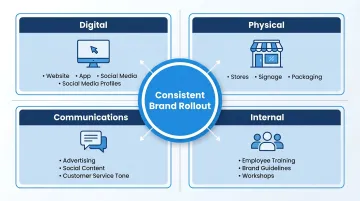
MSB redesigned physical stores to match its digital rebrand. Vascara (a Vietnamese fashion retailer) updated store environments alongside its 2019 logo refresh, creating synchronised retail experiences. The lesson: visual identity changes must roll out consistently across all customer touchpoints simultaneously.
A practical rollout covers four areas:
- Digital: website, app, social media profiles
- Physical: stores, signage, packaging
- Communications: advertising, social content, customer service tone
- Internal: employee training, brand guidelines, implementation workshops
Insight 5: The Rebrand Decision Requires Strategic Discipline
Research and define the brand's current equity before changing anything. Some elements—like SABECO's dragon or Biti's Vietnamese heritage—have cultural capital that must be preserved and evolved, not erased.
Rebrand Decision Framework:
| Current Situation | Recommended Action |
|---|---|
| Brand identity no longer reflects evolved business values | Rebrand with clear value articulation (MSB model) |
| Brand feels dated but has strong heritage equity | Modernise incrementally while preserving core assets (SABECO model) |
| Brand lacks emotional connection with target audience | Repositioning campaign before visual change (Biti's model) |
| Brand suffers from negative perception | Strategic repositioning with narrative explanation |
Warning Signal: If your rebrand rationale centres on "the logo looks old" rather than "our brand positioning has fundamentally shifted," postpone visual changes until you've completed the strategic work.
Building Your Brand in Vietnam: How the Right Partner Makes the Difference
The pattern across every successful Vietnam branding case is identical: deep market insight came before creative execution. Brands that tried to shortcut this step—as MB Bank's backlash illustrates—paid a reputational price.
Strategy must precede identity, and identity must precede communication. For regional and international brands entering Vietnam, this sequencing isn't just good practice — it's the difference between a launch that resonates and one that requires damage control. A branding partner with genuine cross-market experience in Asia can close that gap before it opens.
That's where the right agency relationship matters. Vantage Branding works with brands navigating exactly this challenge — starting with brand discovery to understand organisational purpose and market-specific dynamics, then building into strategic positioning and visual identity. The process is grounded in the same insight-first discipline the case studies in this article demonstrate:
- Start with why: Clarify brand purpose before designing anything
- Understand the audience: Research Vietnamese consumer values, not just demographics
- Sequence deliberately: Strategy → identity → communication, in that order
For brands serious about Vietnam market entry or repositioning, the question isn't whether to invest in cultural insight; it's whether to invest early (when it informs strategy) or late (when it becomes damage control).
Frequently Asked Questions
What makes branding in Vietnam different from other Southeast Asian markets?
Vietnam combines strong national cultural pride with a young, digitally active population — median age 32.4 years — and 60.6% of consumers actively research brands on social platforms. That mix makes authenticity and cultural fluency more decisive here than in most other Southeast Asian markets.
When should a brand in Vietnam consider rebranding?
Consider rebranding when your brand identity no longer reflects your business's evolved values or positioning, when pursuing a new target audience segment, or when brand perception has drifted significantly. However, as the MB Bank case illustrates, rebranding without strategic groundwork and transparent stakeholder communication can backfire badly.
How important is cultural localisation for international brands entering Vietnam?
Localisation in Vietnam goes far beyond language translation. It means understanding cultural moments like Tet and Mid-Autumn Festival, family dynamics, and local pop culture. Oreo's Tet campaign succeeded because it created a culturally embedded experience with AR-enabled traditional music — not a translated global ad.
What role do digital platforms and influencers play in brand building in Vietnam?
Social media is the primary channel for brand discovery in Vietnam. Authentic influencer collaborations amplify campaigns well beyond paid reach — Knorr's Tet music video reached 36 million YouTube views, and RealMe's launch activated nearly 100 influencers to drive widespread organic awareness.
Can a legacy brand successfully modernise in Vietnam without losing its existing customer base?
Yes—both SABECO and MSB retained core brand equity while evolving visual identity and narrative. SABECO preserved its dragon symbol while making it feel contemporary; MSB communicated clear brand values during its transformation. The key is incremental, strategy-led modernisation with transparent communication about what is changing and why.
What is the biggest branding mistake companies make when entering the Vietnamese market?
The most common failure is treating Vietnam as a homogeneous "Southeast Asian market" rather than a culturally distinct environment, and deploying generic regional assets without meaningful adaptation. This leads to brand messaging that feels distant or irrelevant to Vietnamese consumers, who respond far more strongly to brands that demonstrate genuine understanding of their cultural context.