Introduction: Why Generic Branding Fails in Vietnam
When Starbucks entered Vietnam over a decade ago, the global coffee giant expected its premium positioning and standardized experience to captivate a nation passionate about coffee. Today, with only 150 stores and less than 4% market share, Starbucks stands dwarfed by local competitor Highlands Coffee's 928 locations. The problem wasn't product quality or brand recognition—it was a fundamental misreading of Vietnam's regional diversity and coffee culture.
Vietnam is a highly connected, culturally layered market. As of January 2024, 79.1% of Vietnam's 99.19 million people are internet users, with 73.3% active on social media.
That connected population spans over 54 ethnic groups, distinct regional dialects, and consumer values that shift meaningfully across North, Central, and South. A one-size-fits-all brand strategy doesn't just underperform here—it actively erodes trust.
Understanding that complexity is the starting point. This guide covers what hyperlocal branding means in Vietnam's context, how to execute it across the three major regions, and what mistakes to avoid when entering this market.
TLDR: Key Takeaways
- Vietnam's North, Central, and South regions have meaningfully different consumer values and brand expectations requiring distinct strategies
- Micro-influencers, cultural event alignment, and local platform integration deliver higher trust and conversion than national campaigns
- Deep local knowledge creates competitive defensibility that foreign competitors struggle to replicate
- Core brand strategy must precede tactical execution—rushing into campaigns without positioning creates fragmented perception
- Successful brands adapt voice, visuals, and channel mix to regional contexts without fragmenting core identity
Why Vietnam Demands a Hyperlocal Brand Approach
Vietnam's 72.7 million social media users represent one of Southeast Asia's most digitally engaged populations. With advertising reach of 72.7 million on Facebook and 67.72 million on TikTok, brands have unprecedented access to Vietnamese consumers. Yet reach alone doesn't build trust.
89% of consumers globally most trust recommendations from people they know, versus only 23% who trust influencer ads. In Vietnam, this peer-trust dynamic is amplified by cultural emphasis on community validation and relationship-driven commerce. Purchasing decisions follow social consensus — campaigns that skip this dynamic rarely land.
That community-driven dynamic plays out differently across a remarkably fragmented country. Vietnam's cultural geography makes localization a strategic requirement, not a marketing add-on:
- 54 ethnic groups with distinct cultural identities and values
- Regional dialects that vary significantly between North, Central, and South
- Different purchasing norms across Hanoi, Da Nang, and Ho Chi Minh City
Brands treating Vietnam as a homogenous market fail to create emotional resonance in any region.
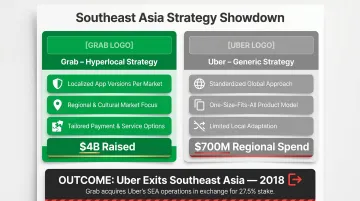
The competitive consequences are well-documented. When Grab competed against Uber in Southeast Asia, its hyperlocal strategy, including localised app versions and regional market focus, helped it raise nearly $4 billion versus Uber's $700 million regional spend. Uber sold its Southeast Asian operations to Grab in 2018.
Zalo tells a similar story. The platform built 78 million regular users and 85% market penetration by deeply understanding Vietnamese communication preferences, outperforming Facebook Messenger and Telegram in their home market.
Local brands with deep hyperlocal knowledge consistently outperform foreign entrants applying generic Southeast Asian strategies. That knowledge compounds over time — and it's the hardest thing for outsiders to acquire quickly.
Vietnam Is Not One Market: The North-Central-South Brand Divide
Vietnam's three regions share language but diverge dramatically in social values, aspirations, communication norms, and purchasing triggers. Brands that treat Vietnam as a single audience fail to create emotional resonance anywhere.
Hanoi (North): Tradition, Credibility, and Institutional Trust
Northern Vietnamese consumers emphasize tradition, formality, brand heritage, and credibility signals. According to research by Xolve Branding, Hanoi consumers are "slow to commit and often watch a brand before buying." Purchases follow multiple rounds of social validation—in F&B, customers may visit a venue several times as observers before becoming regulars.
To earn that commitment, brands need to signal trust through:
- Specific expertise or credentialed founders
- Heritage and institutional authority
- Restrained, balanced visual design
- Brand tone that emphasizes stability and long-term value
Once northern consumers commit, loyalty runs deep.
Ho Chi Minh City (South): Dynamism, Innovation, and Social Proof
Southern Vietnam's consumer culture is entrepreneurial, fast-moving, and trend-responsive. The HCMC market "rewards speed; consumers experiment readily and tolerate trial and error," according to the same Xolve research. Purchase decisions can happen in a single touchpoint, driven by FOMO (fear of missing out) and peer endorsement.
Brands win through dynamism and emotional connection. Visual preferences favor bold design and disruptive palettes. Direct-to-consumer and social commerce have stronger traction here than in the North. Southern consumers adopt new brands faster and respond powerfully to social proof and experiential branding.
Central Vietnam: Cultural Pride and Community Identity
Central Vietnam carries strong regional pride and distinct identity, yet most brands focus exclusively on Hanoi and HCMC. The region's history as the seat of the Nguyen Dynasty creates deep cultural touchpoints: heritage, royal aesthetics, and traditional values that still shape consumer identity today.
Brands that acknowledge Central Vietnamese identity (through language nuances, local traditions, and regional references) unlock a loyal, underserved audience. Color preferences run toward purples and golds tied to royal heritage. Getting this right goes beyond translation — it's an act of cultural recognition.
Case Study: Katinat Coffee
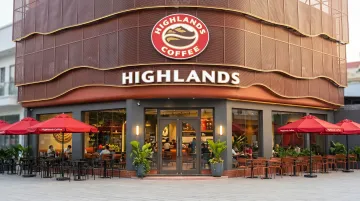
Katinat built its brand identity as "Katinat Saigon Kafe" tied to Southern culture, growing from 10 to 30+ stores in HCMC between 2021 and 2022. When expanding to Hanoi, the "Saigon" marker signaled outsider status. In 2024, Katinat officially rebranded to "Katinat Coffee & Tea House" to earn credibility in the North — a clear example of how deeply regional identity shapes brand perception.
The lesson isn't to strip regional character from a brand. It's to build a core identity strong enough to adapt without fragmenting. That's the strategic foundation Vantage Branding helps companies develop: positioning, visual systems, and brand voice guidelines that hold together across Vietnam's distinct regional markets.
Hyperlocal Branding Strategies That Work in Vietnam
Cultural Calendar Integration
Vietnam's major cultural touchpoints—Tet (January–February), Mid-Autumn Festival (August–September), and Back-to-School season—are moments of deep emotional significance, not just campaign opportunities. Tet represents the most important trading season in Vietnam's consumer economy, particularly for FMCG, when demand and promotional intensity peak.
Authentic Tet branding requires genuine narrative alignment with Vietnamese values—family reunion, ancestral responsibility, prosperity—rather than surface-level visual adaptation. Brands that reduce Tet to red packaging and discounts become invisible in a "sea of red," as Xolve Branding warns. After 3-5 years of uninspired campaigns, brands are perceived as generic, making them vulnerable to lower-priced competitors.
Authentic vs. Superficial Tet Approach:
- Turn everything red, add gold accents, and offer discounts — this is the forgettable approach
- Build narratives around family bonds, celebrate regional Tet traditions (hoa dao in the North, hoa mai in the South), and create value beyond transactions
Coca-Cola demonstrates authentic integration. Their campaigns use hoa dao (peach blossoms) in Northern Tet campaigns and hoa mai (yellow apricot blossoms) in Southern campaigns, reflecting regional flora and cultural traditions. Plan cultural campaigns months in advance with local creative and strategic input.
Micro-Influencer Partnerships for Community-Level Authenticity
National celebrity influencers deliver reach, but micro-influencers embedded in specific regional communities carry far higher trust. Nano-influencers with 5,000-20,000 followers achieve 3.69% engagement rates, significantly higher than macro or mega influencers in Southeast Asia.
Vietnamese micro-influencers speak local dialects, understand regional humor, and drive higher conversion because their endorsements feel genuine rather than broadcast. They're community members first, content creators second.
How to identify the right micro-influencers by region:
- Prioritize creators embedded in specific cities or provinces, not national reach
- Look for authentic community engagement, not just follower count
- Evaluate content for regional language nuances and cultural references
- Test partnerships with 2-3 micro-creators before scaling
Localized Content Creation—Language, Tone, and Cultural Codes
Effective Vietnamese brand content goes beyond direct translation. It incorporates local idioms, humor registers, and culturally specific aspirational cues that vary by region. A content localization framework maintains brand voice consistency while adapting expression to local context.
Regional tone varies considerably across the country:
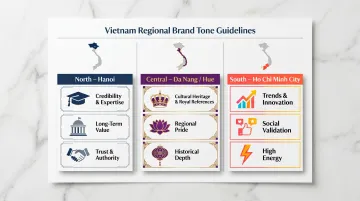
- North (Hanoi): Emphasize credibility, expertise, and long-term value
- South (Ho Chi Minh City): Lead with energy, trends, and social validation
- Central (Da Nang/Hue): Honor regional pride and cultural heritage
Community Sponsorship and Grassroots Presence
Vietnamese culture is relationship-driven and community-oriented. For new market entrants who lack established trust signals, showing up locally is one of the fastest ways to build legitimacy. Practical forms of grassroots presence include:
- Sponsoring local festivals, sports events, or school programs
- Supporting community causes tied to the brand's values
- Partnering with neighborhood institutions such as local markets or community centers
- Co-hosting events with established local organizations
Hyper-Personalized Engagement Through Data and AI
AI-powered tools enable regionally targeted messaging at scale. Nestlé's AI-driven Tet campaign achieved 95% awareness among Gen Z and 84% among 25-35-year-old adults, with a 383% increase in positive social media mentions, by using YouTube's Dynamic Creative Optimisation to produce hundreds of targeted AI-generated short videos tailored to different audience segments.
AI scales what's already culturally grounded — it doesn't substitute for it. Without a clear brand position and regional insight, AI-generated content simply produces more noise at higher volume. Vantage Branding helps brands establish the strategic foundation that gives AI-driven personalization direction and coherence.
Localizing Payment, UX, and Service Touchpoints
Hyperlocal branding extends beyond content. Every operational touchpoint is a brand signal. Key areas to localize include:
- Payments: Integrate MoMo, ZaloPay, and VNPay alongside card options
- Customer service: Offer Vietnamese-language support across all channels
- UX and interface: Adapt digital experiences to local device habits and browsing behavior
- Operating hours: Align with local schedules, including extended hours around key cultural dates
Adapting Your Brand Identity for Vietnam
Most brands localize content but not core brand expression—visual identity, color language, typography, and brand voice—which can feel foreign to Vietnamese audiences even when the message is translated correctly.
Visual Identity and Color Symbolism in Vietnamese Culture
Colors carry specific cultural meanings in Vietnam rooted in Ngu Hanh (Five Elements) philosophy:
- Red: Luck, happiness, prosperity—dominant at Tet and weddings
- Gold/Yellow: Wealth, power, royalty—associated with hoa mai blossoms in Southern Tet
- White: Traditionally associated with mourning and death—avoid at celebrations
- Purple: Loyalty, elegance, high status—particularly in Central Vietnam's royal heritage
- Green: Freshness, vitality, health, nature
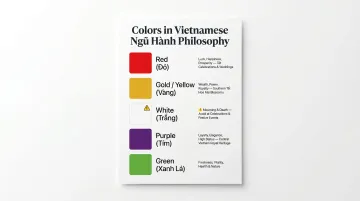
Brand visual systems need review through a Vietnamese cultural lens to avoid unintended negative associations. White packaging that signals purity in Western markets may carry funeral connotations in Vietnam.
Regional preferences also vary: North favors traditional, subdued hues; Central favors bold royal colors (purples and golds); South favors vibrant, modern palettes.
Brand Voice Localization—Formality, Warmth, and Relational Tone
Vietnamese communication culture values warmth, respect for hierarchy, and relational trust. Brand voice guidelines developed for Western or pan-Asian markets often feel cold or transactional in Vietnamese context.
Voice adaptation should be built into the brand system itself—not delegated to individual copywriters drafting in isolation. Practically, this means:
- Using relationship-oriented pronouns and address terms that reflect hierarchy
- Leading with warmth and context before making an ask or offer
- Avoiding transactional directness that reads as abrupt in Vietnamese culture
At Vantage Branding, voice localisation is embedded into the brand strategy framework from the outset—not retrofitted at the copy stage.
Storytelling as a Brand-Building Tool in Vietnam
Vietnamese consumers respond strongly to narrative-driven brands. Family legacy, community ties, and intergenerational values are not abstract concepts here—they are the emotional currency of everyday life. Brands that anchor their narrative in these themes earn genuine resonance.
That said, borrowed narrative falls apart quickly. A family-values campaign rings hollow if the brand's sourcing, hiring, or community presence says otherwise. The most effective Vietnamese brand stories are grounded in what the business actually does—a local partnership, a founder's origin, a product tied to regional craft or ingredient.
Platforms and Channels That Amplify Hyperlocal Brand Reach in Vietnam
Zalo as a Brand-Building Platform
With 85% usage among Vietnamese, Zalo is Vietnam's dominant domestic messaging and social platform. Unlike WeChat or Line, Zalo is deeply embedded in daily Vietnamese life—both personal and professional—making it a high-trust channel for brand communication, customer service, and community building.
Zalo supports Mini Apps and Official Accounts deployed across all 63 provinces for government digital services, which signals how deeply it's woven into civic and commercial life. For brands, Zalo presence is table stakes for customer service, community building, and localized content distribution.
TikTok and Livestream Commerce as Hyperlocal Brand Channels
Where Zalo builds community, TikTok drives commerce. Vietnam's TikTok livestream shopping scene has moved well beyond entertainment. TikTok Shop's GMV in Vietnam surged 148% year-on-year in H1 2025, claiming approximately 42% market share and ranking third globally among TikTok Shop markets.
For hyperlocal branding, TikTok is effective because regional micro-creators can express brand narratives in ways that resonate locally—drawing on regional dialects, humor, and cultural references that broad national campaigns rarely get right.
Local E-Commerce Platforms (Shopee, Tiki, Sendo) as Brand Touchpoints
Vietnamese consumers' purchasing journeys are increasingly anchored on local platforms. Shopee leads with 56% market share, though TikTok Shop is rising rapidly.
A brand's Shopee or Tiki storefront is often a consumer's first contact point—treat it as a brand expression, not just a fulfillment mechanism. Three elements shape that impression:
- Product presentation: visuals and copy should reflect local aesthetic preferences, not generic templates
- Customer service language: tone and dialect choices signal whether a brand understands its audience
- Promotional timing: campaigns aligned with Tết, Mid-Autumn Festival, or regional holidays outperform generic sales events
Common Mistakes Foreign Brands Make When Entering Vietnam
Treating Vietnam as a Single, Homogenous Market
The most damaging mistake is running one campaign for all of Vietnam—typically optimised for Ho Chi Minh City—and assuming it will resonate nationally. This underperforms and signals to Vietnamese consumers that the brand doesn't understand or respect their regional identity.
Prioritising Translation Over Cultural Adaptation
Brands that run word-for-word translations without adapting tone, idioms, humour, and cultural references produce content that feels hollow or even offensive. Translation converts words. Localisation converts meaning—and the emotional resonance that drives purchase decisions.
Example: A direct translation of "family values" might use correct Vietnamese words but miss regional nuances in how Northern vs. Southern families express those values—through formality and tradition in the North, or warmth and informality in the South.
Underinvesting in Brand Strategy Before Launching Tactical Campaigns
Many foreign brands rush into influencer campaigns and platform advertising without first establishing coherent brand positioning for the Vietnamese market. This creates fragmented brand perception that takes significant time and budget to repair.
Hyperlocal brand strategy must be built before hyperlocal tactics are deployed. Vantage Branding works with companies entering Southeast Asian markets to develop this strategic foundation—positioning, brand voice, and visual identity systems that hold up across regional contexts.
Real-World Examples:
- Starbucks: Premium pricing (drinks exceeding VND 200,000 / ~$7.60 USD) and a standardised global format conflict with Vietnam's deeply social, locally-rooted coffee culture
- Cafe Amazon (Thailand): Exited the Vietnamese market in 2025 after five years, unable to compete with local brands
- Mixue (China): Despite being the world's largest F&B chain by store count, its international network "has begun to contract, with underperforming stores shuttered in key markets, including Vietnam" as Vietnamese consumers prioritise brand identity over price alone
Frequently Asked Questions
Why is hyperlocal branding important for foreign brands entering Vietnam?
Vietnam's regional cultural diversity, mobile-first consumer behaviour, and high peer-trust environment make generic brand approaches ineffective. Hyperlocal brands build a competitive advantage through community-level trust that new entrants cannot quickly replicate.
How different are North and South Vietnam for branding purposes?
Northern consumers (Hanoi) value tradition, credibility, and formal brand authority, making purchasing decisions slowly after social validation. Southern consumers (HCMC) are trend-responsive and entrepreneurial, influenced by social proof and willing to experiment. This requires meaningfully different brand tone and campaign strategies.
Which platforms should brands prioritize for hyperlocal reach in Vietnam?
Prioritise platforms based on your audience and goals:
- Zalo — trusted community engagement (85% usage across Vietnam)
- TikTok — content-driven commerce and youth audiences
- Facebook — broad national reach
- Shopee/Tiki — e-commerce brand presence and conversion
Your platform mix should reflect your target audience's regional profile.
How can a brand incorporate Tet and other Vietnamese cultural festivals authentically?
Authentic festival branding requires genuine narrative alignment with Vietnamese values such as family reunion, ancestral responsibility, and prosperity — not surface-level visual adaptation. Plan campaigns months in advance with local creative input, and honour regional traditions like hoa dao in the North and hoa mai in the South.
What role do micro-influencers play in hyperlocal branding in Vietnam?
Micro-influencers embedded in specific regional communities speak local dialects and understand local humour, generating higher engagement and conversion than national celebrity endorsers. They deliver brand messages that feel locally authentic rather than broadcast.
How do you build a brand identity that works across Vietnam's regional markets?
A strong core brand identity — clear positioning, consistent visual system, defined brand voice — provides the foundation. Regional adaptation layers are then applied to tone, content, channel mix, and campaign narratives to reflect local values without fragmenting the brand. For brands entering Southeast Asian markets, working with a branding partner experienced in regional nuance — such as Vantage Branding — helps ensure these frameworks are built for long-term market fit, not just launch.