Introduction
Asia's startup ecosystem — particularly in Singapore, Malaysia, and Vietnam — is more saturated than ever. Investors receive hundreds of decks monthly, customers scroll past dozens of product ads daily, and talent evaluates competing offers on LinkedIn before lunch. In this environment, having a genuinely innovative product is table stakes, not a differentiator.
What separates funded startups from those still chasing traction — and loyal customers from skeptical browsers — is the strength and clarity of the brand itself.
Most startup founders know branding matters. The harder questions are which strategies to prioritize first, how much to invest at each stage, and how to identify an agency that can actually execute rather than just present a polished portfolio.
This guide addresses both. It covers the seven foundational branding strategies for early-stage companies and provides a practical framework for selecting the agency partner who can deliver them.
TLDR
- Brand positioning and purpose must come before visual identity; strategy is the foundation everything else builds on
- Deep audience insight separates brands that resonate from those ignored by investors and customers alike
- Consistent visual and verbal identity across every touchpoint builds credibility and drives recall
- Choose agencies with startup experience, a strategy-first process, and a collaborative approach rather than aesthetic appeal alone
- Scalable brand systems prevent costly rebrands as the business grows and markets expand
Why Startups Can't Afford to Skip Brand Strategy
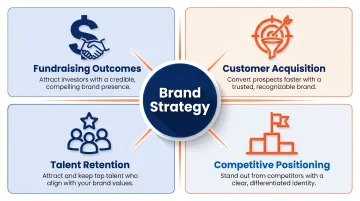
Branding for startups is not cosmetic work — it's a business growth tool that directly affects fundraising outcomes, customer acquisition costs, talent retention, and competitive positioning. Research shows that 94% of first impressions are design-related, meaning potential investors, customers, and partners form trust judgments about your startup within seconds of encountering your brand. In competitive Asian markets like Singapore, where market density is high and investor scrutiny is intense, vague or inconsistent branding actively costs founders deals.
The stakes are particularly high in Singapore's startup ecosystem, where venture capital access depends heavily on perceived professionalism and market readiness. A startup that looks early-stage — through inconsistent messaging, weak visual identity, or unclear positioning — undermines its product quality before a single demo.
Strategic branding flips this dynamic, turning first impressions into an asset rather than a liability. The seven strategies below are interconnected pillars that branding professionals consistently recommend for early-stage companies, each building on the last.
7 Best Branding Strategies for Startups
These seven strategies are what agencies use to build brands that hold up from launch through Series A and beyond. Skip any one of them and you'll likely pay to fix it later.
Strategy 1: Define Your Brand Purpose and Positioning First
Before naming, logos, or color palettes, startups must clarify three things: why they exist, who they serve, and what they uniquely offer. This brand purpose statement becomes the decision filter for every subsequent branding choice — from website copy to pitch deck structure to social media tone.
Positioning clarity prevents costly pivots. Many startups skip this step and jump straight to visual identity, only to realize months later that their messaging doesn't resonate or their brand doesn't differentiate. That misalignment requires expensive rebranding when the company should be scaling.
Practical positioning prompt for founders:
"We help [target audience] achieve [outcome] through [unique approach], unlike [alternatives]."
Example: "We help Southeast Asian SMEs achieve regulatory compliance through automated audit workflows, unlike legacy consulting firms that rely on manual processes."
This single sentence becomes the reference point for every branding decision that follows — design, messaging, and channel strategy all get measured against it.
Strategy 2: Know Your Target Audience Deeply
Effective startup branding is built on genuine audience insight — demographics alone are insufficient. What actually drives results is understanding psychographics, pain points, aspirations, and how your audience perceives the existing solutions they've already tried.
Why surface-level audience understanding fails:
- Generic personas like "marketing managers aged 30-45" provide no strategic direction
- Without understanding motivations and frustrations, messaging feels hollow
- Competitors targeting the same demographic can out-position you if they understand psychology better
Run customer discovery interviews or surveys before briefing any branding agency. Audience clarity directly improves strategy quality and design outcomes. When an agency understands not just who your customer is but what keeps them up at night, they can craft positioning that actually lands.
Key research questions to answer:
- What specific problem does your audience struggle to solve today?
- What alternatives have they tried, and why did those fail?
- What language do they use to describe their challenges?
- What would make them switch from their current solution to yours?
- Who influences their purchasing decisions?
Strategy 3: Build a Distinctive and Scalable Visual Identity
A visual identity goes far beyond a logo — it encompasses color palette, typography, iconography, imagery style, and layout principles, all of which must work cohesively across digital and physical applications. The identity system is the visual translation of your positioning and purpose.
Core components of a startup visual identity:
- Logo and brand mark — Primary logo, simplified versions, monochrome alternatives
- Color system — Primary, secondary, and accent colors with specific usage rules
- Typography — Headline fonts, body fonts, and hierarchy specifications
- Iconography — Consistent icon style that complements the overall aesthetic
- Imagery style — Photography and illustration guidelines that reinforce brand personality
- Layout principles — Grid systems and spacing rules for consistent application
The scalability requirement is critical for startups. A visual identity needs to function at small scale (app icons, social avatars, mobile interfaces) and large scale (event backdrops, signage, building wraps) without losing clarity or impact. Startups that design only for their immediate needs often find their identity breaks down when they expand channels or geographies.
Test your identity system across extremes before finalizing: does the logo remain recognizable at 16x16 pixels? Does the color palette work in low-light environments and on budget printing? Can team members apply the system without requiring agency support for every new asset?
Strategy 4: Develop a Clear Brand Voice and Messaging Framework
Brand voice is how a startup sounds — its personality, tone, and the language it consistently uses. A well-defined voice makes all content, from social posts to pitch decks to customer support emails, feel like it comes from the same coherent entity.
Distinguish between brand voice and tone:
- Brand voice is a fixed personality trait — the core characteristics that never change (e.g., confident, approachable, technical)
- Tone shifts by context and audience — formal in investor materials, conversational on Instagram, empathetic in support communications
Building a messaging framework:
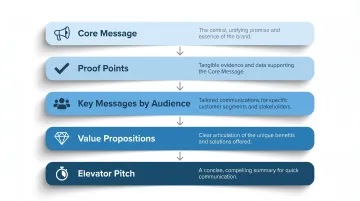
A messaging framework translates positioning into repeatable language. It typically includes:
- Core message — The single most important thing audiences should remember
- Proof points — Supporting evidence that validates your claims
- Key messages by audience — Tailored messaging for customers, investors, partners, and talent
- Value propositions — Specific benefits for each audience segment
- Elevator pitch — 30-second and 2-minute versions
This framework ensures consistency across team members. When sales, marketing, and product teams all speak the same language, the brand feels professional and trustworthy. When messaging varies wildly by department, customers notice the disconnect and question credibility.
Strategy 5: Establish a Strong Digital-First Brand Presence
For most startups, the website and digital channels are the first (and sometimes only) brand experience a customer or investor has. Research shows that users form trust judgments from a website in as little as 50 milliseconds, meaning poor digital execution undermines even the best strategy before a visitor reads a single word.
Digital-first means consistent brand expression across all digital touchpoints:
- Website (homepage, product pages, about page, blog)
- LinkedIn company page and employee profiles
- Social media (Instagram, Twitter/X, Facebook)
- Email signatures and newsletter templates
- Digital advertising (Google, LinkedIn, programmatic)
- Slide decks and sales materials
- Product interface (if applicable)
Each touchpoint should feel like part of the same brand ecosystem. Color palette, typography, imagery style, and tone of voice must remain consistent across channels, even as content and format change.
Common digital branding mistakes startups make:
- Beautiful homepage but neglected LinkedIn presence
- Professional website but amateur-looking pitch deck
- Consistent visuals but wildly different messaging across channels
- Strong social media but weak product interface branding
Investors and customers notice these inconsistencies. A polished digital presence signals operational maturity and attention to detail — qualities that matter when someone is deciding whether to invest, buy, or join your team.
Strategy 6: Ensure Brand Consistency Across Every Touchpoint
Brand inconsistency — different logos, conflicting messages, mismatched tones — erodes trust and makes a startup look early-stage even when the product is mature. Every time a customer encounters your brand, they should have the same core experience, whether they're reading an email, visiting your website, or meeting you at an event.
The role of brand guidelines:
Brand guidelines are the documented system that prevents inconsistency. They specify exactly how to use logos, which colors to apply in which contexts, how to write in the brand voice, and how to maintain visual and verbal standards across all materials.
Essential components of startup brand guidelines:
- Logo usage rules (sizing, spacing, color variations, incorrect applications)
- Color specifications (hex codes, RGB, CMYK, Pantone)
- Typography (font files, sizing hierarchy, usage contexts)
- Imagery style (photography direction, illustration approach)
- Tone of voice (personality traits, word choice, examples)
- Templates (presentations, social media, email signatures)
Agencies like Vantage Branding help startups develop comprehensive brand guidelines and identity systems that ensure consistency is maintained across internal teams, partners, and marketing channels from launch. These guidelines become the reference document that empowers team members to create on-brand materials without requiring agency approval for every asset.
Strategy 7: Build Brand Equity with Long-Term Scalability in Mind
Startups often build brands for their current stage but forget to anticipate growth. A brand built for a 5-person startup in one city needs to be able to stretch to a 50-person regional company without requiring a full rebrand. This means designing flexible systems, not rigid rules.
Scalability considerations for early-stage startups:
- Geographic expansion — Will your brand work across Singapore, Malaysia, Vietnam, and beyond? Consider cultural nuances and language adaptation early
- Product line expansion — If you launch additional products or services, does your brand architecture support that? Single brand, sub-brands, or brand portfolio?
- Channel expansion — Can your identity system work across channels you don't yet use (retail, events, partnerships)?
- Team growth — Will new employees be able to apply the brand consistently, or does it require specialized expertise?

Brand architecture planning:
Think about brand architecture early so that product line expansion or geographic growth doesn't require starting from scratch. Options include:
- Single brand strategy — All products and services under one brand (e.g., Apple)
- Sub-brand strategy — Main brand with distinct sub-brands (e.g., Marriott Bonvoy, Marriott Courtyard)
- Portfolio strategy — Multiple independent brands under one corporate entity (e.g., Unilever)
Most startups begin with a single brand strategy but should anticipate when a sub-brand or portfolio approach makes sense. Plan the architecture now, even if you don't implement it until Series A or beyond.
How to Choose the Right Branding Agency for Your Startup
Many startups choose agencies based on aesthetics alone — or hire firms that have never touched an early-stage company. Both paths lead to expensive misfires. These five criteria will help you avoid them.
Criterion 1: Startup-Specific Experience
Look for agencies that have actually worked with startups at your stage — pre-launch, seed, or Series A. Ideally, their case studies show how their branding supported fundraising, launch, or market entry, not just visual refreshes for established companies.
Why startup experience matters:
- Startups operate under different constraints than enterprises (speed, budget, uncertainty)
- Agencies experienced with startups understand how to prioritise ruthlessly
- They know how to build flexible systems that can evolve without full rebrands
- They understand investor and customer expectations in early-stage contexts
Ask potential agencies directly: "Which of your clients were at our stage when you worked with them, and what business outcomes did the branding support?"
Criterion 2: Strategy-First Process
The right agency leads with positioning, audience research, and messaging frameworks before opening any design tool. If an agency jumps straight to mood boards on first contact, that's a red flag.
Signs of a strategy-first agency:
- Discovery phase is the first phase, not an afterthought
- They ask about your business goals, not just aesthetic preferences
- Positioning and messaging are deliverables, not just inputs to design
- They challenge your assumptions constructively during discovery
- Visual identity comes after strategy is locked
Professional branding timelines typically dedicate 3-6 weeks to discovery and strategy before any visual design begins. Agencies that promise completed branding in 2-3 weeks are skipping strategy entirely.
Criterion 3: Collaborative and Clear Communication
Early-stage founders need an agency that works with them, not at them. Look for defined feedback loops, structured check-ins, and a willingness to explain the reasoning behind strategic decisions — not just present finished work.
Characteristics of a collaborative agency:
- Regular check-ins and status updates throughout the project
- Structured feedback processes (not just "here's the design, what do you think?")
- Willingness to explain strategic decisions, not just present them
- Transparency about timelines, costs, and potential challenges
- Partnership mindset rather than vendor mentality
For startup founders, this matters more than it might seem. Early branding decisions shape investor perception, hiring, and market positioning — you need a partner who surfaces tradeoffs clearly, not one who simply executes briefs.
Criterion 4: Multi-Industry Depth
An agency that has worked across industries brings fresh perspectives that category specialists cannot. This is especially valuable for startups defining new category positioning or entering fragmented markets.
Benefits of multi-industry agency experience:
- Fresh perspectives drawn from unrelated industries
- Ability to spot differentiation opportunities by applying patterns from other sectors
- Broader reference base for solving positioning challenges
- Lower risk of category-specific blindspots or tired conventions
Vantage Branding, for example, has worked across healthcare, arts, B2B, government, investment, and venture capital — which means their strategic instincts aren't shaped by a single industry's conventions. For a startup carving out new positioning, that breadth is an asset.
Criterion 5: Scalability of the Relationship
The best agency partnerships grow with the startup. Ensure the agency can support not just the initial identity build but also future brand applications, campaign work, and brand evolution as the business scales.
Questions to ask about relationship scalability:
- Can you support us beyond the initial branding project?
- Do you offer ongoing brand management or retainer arrangements?
- How do you handle new applications or touchpoints that arise post-launch?
- What does a typical long-term client relationship look like with your agency?
The answer to these questions tells you whether an agency sees your brand as a living system or a one-time deliverable. For startups moving quickly, that distinction matters from day one.
Common Mistakes Startups Make When Hiring a Branding Agency
Even with clear criteria, startups frequently make avoidable mistakes during agency selection. These patterns are common — and entirely preventable.
Mistake 1: Prioritizing Aesthetics Over Strategy
Many founders choose agencies based on a portfolio that "looks cool" rather than evaluating strategic thinking depth. Beautiful visuals without a positioning foundation rarely translate to business outcomes.
How to avoid this mistake:
- Ask agencies to walk you through their strategic process, not just show portfolio pieces
- Request case studies that explain the strategy behind the visuals
- Evaluate agencies on the questions they ask during initial consultations, not just the work they show
- Prioritize agencies that talk about business objectives before design aesthetics
Remember: the goal is not to have the prettiest logo in your category. The goal is to build a brand that drives customer acquisition, supports fundraising, and attracts talent.
Mistake 2: Hiring Too Late or After Key Decisions Are Made
Branding works best when it informs product naming, go-to-market messaging, and investor narrative. Startups that wait until launch to think about branding often have to undo poor first impressions at greater cost.
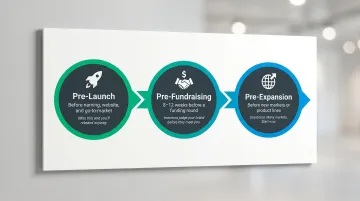
Optimal timing for startup branding engagements:
- Pre-launch — Before product naming, website development, or go-to-market planning
- Pre-fundraising — 8-12 weeks before a fundraising round to ensure materials are polished
- Pre-expansion — Before entering new markets or launching new product lines
Research shows most branding projects take 8-16 weeks for comprehensive strategy and identity development. Plan accordingly and engage agencies early enough that branding can inform other decisions rather than retrofit them.
Mistake 3: Overbuilding Too Early or Underbuilding to Save Cost
Both extremes are costly. Investing in an overly complex brand system before product-market fit wastes resources and creates overhead. Opting for the cheapest logo solution creates brand equity debt that requires rebranding later — often when the business can least afford the distraction.
Finding the right scope for your stage:
- Pre-launch or pre-seed — Focus on positioning, messaging, and essential identity (logo, colors, basic guidelines)
- Seed stage — Add comprehensive guidelines, digital presence, and investor materials
- Series A and beyond — Expand to full brand architecture, advanced digital experiences, and extensible brand systems
Agencies offering modular or phased engagements let startups invest appropriately for their current stage — without locking in a scope that outpaces where the business actually is.
Conclusion
The seven strategies outlined above — positioning first, audience depth, scalable visual identity, clear voice, digital-first presence, consistency, and long-term scalability — are not sequential tasks to check off. They are interconnected pillars, and the right branding agency partner is the connective thread that ensures all seven are executed with strategic coherence.
For startups across Singapore, Malaysia, Vietnam, and wider Asia, Vantage Branding brings multi-industry experience and a collaborative process built specifically for early-stage companies — from brand strategy through full identity development.
If you're heading into a fundraising round, market entry, or product launch, reach out to discuss how Vantage Branding can help you build a brand that works from day one.
Frequently Asked Questions
What is the most important branding strategy for a startup?
Brand positioning and purpose definition is the foundational strategy. Without clarity on who you are, who you serve, and what makes you different, all other branding work risks being misaligned or requiring expensive rework as the business evolves.
When should a startup hire a branding agency?
The optimal time is before launch or at a key growth inflection point such as fundraising, product launch, or market expansion. Early investment in strategic branding prevents expensive rebranding later and ensures your brand supports rather than hinders business objectives.
How much does startup branding typically cost in Singapore?
Costs vary widely by scope and agency type. Basic identity packages start around S$5,000–10,000, while comprehensive strategy and identity engagements typically range from S$20,000–60,000+. Eligible SMEs may also access Enterprise Development Grants (EDG) covering up to 50% of qualifying branding costs.
What should a startup look for in a branding agency in Asia?
Prioritize startup-specific experience, a strategy-first process, regional market understanding (including cultural nuances across Southeast Asia), and a collaborative working model. Agencies that have worked with early-stage companies understand the unique constraints and opportunities startups face.
How long does startup brand development typically take?
Most startup branding projects spanning discovery through brand guidelines take 8–12 weeks for comprehensive engagements, depending on scope, decision speed, and agency process. Shorter timelines are possible for identity-only projects, but work that includes research, positioning, and full identity systems realistically needs 3 months minimum.
Can a startup rebrand after launch if initial branding doesn't work?
Rebranding is possible and common as startups scale, but it carries real costs: lost recognition, customer confusion, and internal rework. The better approach is building a flexible, strategy-led brand from the start — one that evolves without requiring full replacement down the line.