Introduction
Vietnam's e-commerce sector is growing faster than almost anywhere else globally—reaching $22 billion in 2024 and projected to hit $63 billion by 2030, according to Google, Temasek, and Bain & Company's e-Conomy SEA report. Yet this explosive growth has created a paradox: as more brands flood marketplaces like Shopee and TikTok Shop, differentiation has become harder—and more critical—than ever.
That paradox creates a clear divide. Vietnamese brands and foreign entrants alike must stand out on crowded platforms while building brand equity that survives algorithm changes and platform shifts.
The brands winning market share aren't just competing on price or promotion. They're investing in coherent brand identities, cultural storytelling, and owned digital channels that give them control over customer relationships and long-term brand perception.
This article breaks down five branding trends reshaping Vietnam's e-commerce landscape—and what brands need to do to stay ahead of each one.
TL;DR
- Vietnam's e-commerce market will reach $63 billion by 2030 — brand strategy is now essential for competitive positioning
- TikTok Shop hit 41% market share in one year, making livestream commerce a brand-critical channel
- Marketplace-only brands risk losing identity and customer data — owned digital channels are now a strategic necessity
- Cultural storytelling rooted in Vietnamese heritage drives premiums, with 85% of consumers actively supporting local brands
- Brands that embed mobile-first design and sustainability credentials into their identity build stronger long-term loyalty
Trend 1: Livestream & Social Commerce as the New Brand Stage
TikTok Shop's Disruption of Traditional E-Commerce
TikTok Shop reshaped Vietnam's e-commerce market faster than most brands anticipated. Its market share surged from 29% in 2024 to 41.31% in 2025, with first-half GMV growth of 148% year-over-year, per The Investor's 2025 e-commerce report.
That growth collapsed the traditional boundaries between content, community, and commerce.
Brands can no longer rely on static product listings and optimized keywords. TikTok Shop introduced a format where brand personality must perform in real time—through livestream sessions where authenticity, entertainment value, and product demonstration happen simultaneously. A single successful livestream in early 2024 generated VND 75 billion (~$3 million) in sales, demonstrating the commercial scale livestream commerce has reached.
Why Livestream Demands a New Brand Strategy
95% of Vietnamese online shoppers make purchases via livestreaming sessions, with approximately 2.5 million sessions monthly involving over 50,000 active sellers, per NielsenIQ research. This isn't experimental anymore—it's the default transaction format.
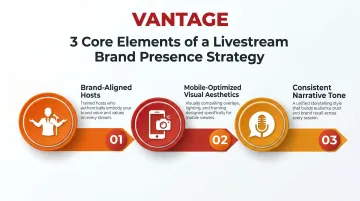
Brands need a deliberate live presence strategy built around three core elements:
- Hosts who embody brand values — Whether founders, brand ambassadors, or trained presenters, livestream hosts become the human face of your brand
- Visual aesthetics that translate to mobile screens — Background design, lighting, product staging must be consistent with broader brand identity
- Narrative tone and pacing — The conversational style, energy level, and storytelling approach during streams must align with your brand personality
Local Brands vs. International Competitors in Livestream
Vietnamese brands draw on cultural familiarity and founder authenticity to build trust at scale. Local sellers who share regional origins—mentioning ingredients from the Mekong Delta or craftsmanship from Hoi An—create immediate connection with Vietnamese audiences.
International brands often struggle to replicate this authenticity. Their livestreams can feel scripted or disconnected from Vietnamese consumer values, making it harder to convert viewers into loyal customers despite larger marketing budgets.
The Shift Toward Micro-Influencer Partnerships
While specific Vietnamese ROI data on micro versus macro influencers remains limited, regional trends show micro-influencers (typically 10,000-100,000 followers) deliver stronger engagement and trust-building in social commerce environments. Their audiences treat recommendations as peer advice rather than paid promotion—which means the brand identity behind the recommendation needs to be clear, consistent, and worth endorsing.
Trend 2: DTC Brand Identity vs. Marketplace Dependency
The Core Tension: Traffic vs. Control
Marketplaces like Shopee and Lazada offer immediate access to millions of shoppers. Shopee alone commands 56.04% of Vietnam's e-commerce GMV, while Shopee and Lazada together control approximately 75% of the market. For new brands, this traffic is invaluable.
But relying exclusively on these platforms creates what industry experts call being "stuck in the middle"—you gain volume but surrender control over:
- Brand presentation — Limited customization within marketplace templates
- Customer data — The platform owns the relationship, not you
- Shopping experience — Competitors appear immediately adjacent to your products
- Pricing power — Constant algorithmic pressure toward discounting
The result: brands become interchangeable sellers competing primarily on price, which steadily erodes margins and weakens long-term brand equity.
The Brand.com Movement in Vietnam
Vietnamese and international brands operating in Vietnam are building owned e-commerce channels to regain control:
Vinamilk, Vietnam's leading dairy company, operates a dedicated e-commerce website on Shopify Plus with AI-powered search, store locators, and a proprietary loyalty program—none of which marketplace storefronts can accommodate.
UNIQLO Vietnam treats its official website as an "independent store," not merely an auxiliary channel. The company reported that launching their branded e-commerce site actually increased physical store visits by raising overall brand awareness and allowing customers to research products before visiting locations.
Both cases point to the same insight: owned channels do more than sell products—they build the brand.
What Strong Owned-Channel Brand Strategy Requires
Building a successful Brand.com presence demands more than just launching a website:
- Maintain a unified design language across your website, social media, packaging, and marketplace storefronts
- Craft a brand narrative that answers why you exist and what sets you apart—browsers need a reason to become loyal customers
- Own your customer data: purchase history and behavioral signals that power personalized marketing and retention
- Build switching costs beyond price through loyalty programs, exclusive content, and community features

For brands ready to make this transition, working with a regional branding agency that understands both the strategic and creative dimensions can accelerate the shift. Vantage Branding, for instance, works with businesses across Asia to develop brand strategies that go beyond visual design—ensuring the identity holds up across owned channels, marketplaces, and everywhere in between.
Trend 3: Cultural Pride & Heritage-Led Brand Storytelling
"Made in Vietnam" Is Becoming a Premium Signal
Vietnamese consumers—especially younger urban segments—are actively choosing local brands over generic imports. NielsenIQ's "Vocal for Local" study found that 85% of Vietnamese consumers support authentically Vietnamese brands, with 8 in 10 Gen Z consumers backing local authenticity.
One consumer quoted in the research explained: "I trust local products more because I know where they come from—the ingredients feel familiar and real."
"Made in Vietnam" is evolving from a marker of low-cost manufacturing to a badge of cultural pride and quality. Brands that authentically embed Vietnamese identity into their positioning are gaining real pricing power as a result.
How Heritage Branding Manifests in Practice
Successful cultural branding goes beyond surface-level aesthetics:
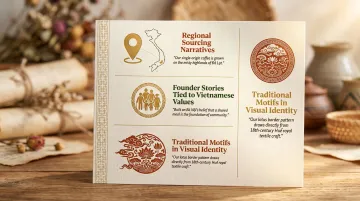
- Regional sourcing narratives: Skincare brands highlight ingredients like Vietnamese rice and houttuynia; F&B brands feature pomelo, turmeric, and ginger sourced from specific regions like Ben Tre, Nghe An, and Ha Giang, per NielsenIQ's analysis.
- Founder stories tied to Vietnamese values: Narratives rooted in community, family legacy, and perseverance create emotional bonds that international competitors cannot replicate.
- Traditional motifs in visual identity: Regional artistic traditions, historical patterns, or craft techniques in packaging signal cultural rootedness when used authentically.
The Risk of Superficial Cultural Branding
Cultural branding done poorly damages credibility faster than generic positioning. Using traditional symbols without authentic alignment to brand values feels exploitative and alienates the very consumers you're trying to reach.
Brands that genuinely embed cultural purpose into their operations tell a different story. Sourcing from local communities, investing in regional craft preservation, building supply chains that support Vietnamese producers: these choices make cultural positioning verifiable, not just marketed. That's where lasting loyalty comes from.
Cultural Identity as Competitive Positioning
That authenticity gap also explains a broader competitive reality. Vietnamese brands without clear positioning are being squeezed from two directions: low-cost Chinese platforms like Temu and Shein below, and premium international brands above. Cultural storytelling is the most effective route to a distinct mid-to-high-end market position that neither competitor can easily replicate.
Trend 4: Mobile-First Brand Identity & Short-Form Video
Mobile Commerce Is the Primary Channel
92% of Vietnamese consumers shop via smartphones, making mobile the default shopping channel, according to TGM Research. Mobile commerce is projected to represent 55% of total e-commerce sales (up from 40% in 2022), per Ken Research.
This creates non-negotiable design requirements:
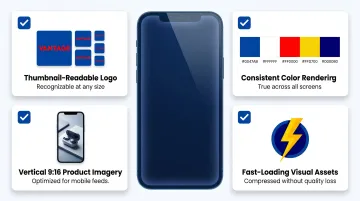
- Logos readable at thumbnail size — Your brand mark must be recognizable at 40x40 pixels
- Color palettes that render consistently — Colors must work across varied mobile screens and lighting conditions
- Product imagery optimized for vertical formats — 9:16 aspect ratios for Instagram Stories, TikTok, and mobile browsing
- Fast-loading visual assets — Heavy images kill conversion on mobile networks
Short-Form Video as Primary Brand Expression
TikTok reaches 67.72 million users aged 18+ in Vietnam with an 86.3% ad reach—higher than Facebook's 73.3%, per DataReportal's 2024 Digital report. Vietnamese internet users spend an average of 6 hours and 18 minutes online daily, with significant time devoted to short-form video platforms.
Brands must develop a clear video identity: consistent visual elements that make content instantly recognizable as viewers scroll.
- Use recurring color treatments, transitions, or graphic elements across every video
- Maintain a consistent energy — educational, entertaining, or inspirational — so the tone never shifts unexpectedly
- Build pattern recognition through a signature presenter or repeatable format structure
The "Raw and Authentic" Content Shift
Gen Z consumers in Vietnam reject over-polished corporate content. They prefer "curated-but-human" aesthetics—content that feels real, relatable, and spontaneous rather than purely aspirational.
This doesn't mean abandoning brand guidelines. It means allowing flexibility for authentic expression within strategic guardrails—behind-the-scenes content, founder-led videos, customer testimonials, and user-generated content that showcases real people using your products.
Trend 5: Sustainability & Conscious Brand Positioning
Sustainability Transitions from Niche to Mainstream
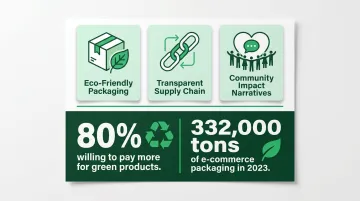
Sustainability is no longer just a differentiator—it's becoming a baseline consumer expectation. The Ministry of Industry and Trade reports 15% annual growth in green product demand, while Nielsen Vietnam found 80% of consumers willing to pay more for products with "green" or "clean" commitments.
In fashion and lifestyle categories specifically, 65% of consumers express willingness to pay more for eco-friendly options, signaling that sustainability positioning has particular resonance in consumer-facing categories.
How Brands Incorporate Sustainability into Identity
Effective sustainability branding requires integration at the foundational level, not bolted-on campaigns:
- Eco-friendly packaging: Visible commitment to recyclable or biodegradable materials communicates values at every touchpoint. Vietnam's e-commerce sector consumed over 332,000 tons of packaging in 2023, with 171,000 tons being plastic—a clear differentiation opportunity.
- Transparent supply chain messaging: Specific details about sourcing, production methods, and environmental impact build credibility. Generic "green" claims without substantiation now trigger consumer skepticism.
- Community impact narratives: Tangible investment in local producers, environmental restoration, or social programs creates emotional connection that product features alone cannot.
Bridging the Intention-Action Gap
While 80% express willingness to pay more for green products, only 31% actually commit to higher prices when purchasing. This gap reflects economic constraints, particularly among younger consumers with limited disposable income who engage with sustainability as a social value rather than a consistent purchasing habit.
Brands that close this gap build eco-conscious practices into standard offerings rather than premium-only tiers—reaching price-sensitive shoppers without asking them to choose between values and budget.
What's Driving These E-Commerce Branding Trends in Vietnam—and What Comes Next
Four Forces Reshaping the Market
1. Young, Digitally Native Population with Rising Purchasing Power
Vietnam's GDP per capita rose from $3,720 in 2021 to an expected $4,900 in 2025—a 32% increase in just four years. The middle class is projected to reach 26% of the population by 2026.
Over 61 million people shop online, with 72.5% being Gen Z or Millennials. These are consumers whose brand expectations have been shaped by global digital culture—not local market norms.
2. Platform Competition Forcing Differentiation
TikTok Shop's explosive entry—growing from 29% to 41% market share in one year—forced every brand to reconsider their platform strategy. Shopee's growth slowed to just 4% year-over-year in Q3 2025, while TikTok Shop's revenue surged 69% in the same period. This platform volatility makes brand equity more valuable than algorithmic optimization.
3. Post-Pandemic E-Commerce Acceleration
COVID-19 compressed a decade of digital adoption into a few years, creating millions of first-time online shoppers. It also reset consumer expectations permanently.
Seamless digital experiences, fast delivery, transparent communication, and brand authenticity are now baseline requirements—not premium features.
4. Foreign Brand Competition Intensifying Pricing Pressure
Chinese platforms Temu and Shein entered Vietnam with aggressive discounting—up to 94% off for first orders on Temu. Local retailers report inability to compete on price alone, forcing a strategic shift toward brand differentiation, quality positioning, and cultural resonance as defensive strategies.
From Growth-at-All-Costs to Sustainable Profitability
The number of active sellers declined 7.43% to approximately 601,800 in 2025 despite GMV rising 34.75%, signaling market consolidation. That gap tells a clear story: undifferentiated sellers competing on price are being consolidated out, while brands with clear positioning and customer loyalty are capturing disproportionate share.
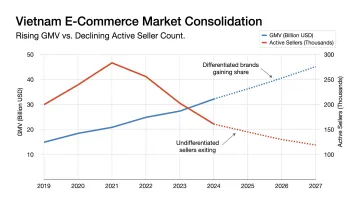
Promotional discounting as a growth strategy is losing ground to brand sustainability. Brands that invested early in coherent identity, customer relationships, and owned channels now hold compounding advantages over competitors still fighting marketplace price wars.
Emerging Signals: What's Coming Next
Four signals are worth watching closely:
- AI-powered personalization is proving out commercially on Vietnamese platforms. Zalo's homegrown AI reached GPT-4-level performance, with 20% of monthly users engaging with AI features. Zing MP3's AI-driven recommendations already account for 40% of listens.
- Community commerce on Zalo offers high-reach, low-competition channels for relationship-driven selling. With 77.8 million monthly active users and 31 million Mini App users, Zalo gives brands an audience distinct from TikTok's discovery model or Shopee's transactional flow.
- Hybrid online-offline experiences are gaining traction—livestream-to-store models, pop-up events, and integrated digital-physical formats show that online and offline channels reinforce rather than cannibalize each other, as UNIQLO Vietnam's growth trajectory demonstrated.
- Cross-border expansion is accelerating. Vietnamese products sold on Amazon rose 35% year-over-year in 2025, with Amazon positioning Vietnam as a top Southeast Asian export hub. Brands with strong domestic identity are increasingly using that foundation to enter regional markets.
Regulatory Shifts May Accelerate DTC Strategies
Vietnam's 2025 Draft E-Commerce Law introduces formal regulation of livestream selling, real-time content monitoring, and cross-border platform registration requirements. Potential government scrutiny of dominant platforms like TikTok Shop—especially regarding tax compliance and content moderation—may shift the balance back toward owned-channel brand strategies, reinforcing the case for brands to build identity and audience relationships they fully control.
Conclusion
Vietnam's e-commerce branding landscape is being reshaped by five converging forces: social commerce's rise, the DTC imperative, cultural storytelling, mobile-first design, and sustainability expectations. The brands capturing market share are those with coherent, strategic brand identities that work effectively across all these dimensions—not just one or two.
For Vietnamese e-commerce businesses, investing in brand strategy early creates a foundation that compounds over time. Brands with a clear identity today are better positioned to navigate platform disruptions, regional expansion, and rising consumer expectations tomorrow.
For businesses ready to build that strategic foundation, Vantage Branding works with businesses across Asia to develop brand strategies and identities that turn these trends into clear, actionable direction — built for where your market is heading.
Frequently Asked Questions
What makes e-commerce branding in Vietnam different from other Southeast Asian markets?
Vietnam's combination of a young, mobile-first population (92% shop via smartphones), strong local brand loyalty (85% consumer support), and a platform landscape dominated by Shopee and TikTok Shop demands branding tailored to Vietnamese values—authenticity, cultural resonance, and real-time engagement—rather than generic regional approaches.
Should brands in Vietnam focus on marketplace storefronts or build their own website?
Both channels serve different strategic functions and the most effective approach typically combines them. Marketplaces like Shopee and TikTok Shop drive discovery and transaction volume, while owned websites build brand depth, customer data ownership, and loyalty. The strongest brands use both: marketplaces for reach and acquisition, owned websites for depth and lasting customer relationships.
How important is cultural storytelling for e-commerce brands entering Vietnam?
Brands that authentically reflect Vietnamese values, regional heritage, or community purpose consistently outperform generic international competitors in customer trust and willingness to pay premiums. With 85% of consumers actively supporting local brands, cultural storytelling is foundational—not optional.
Is TikTok Shop replacing traditional marketplaces like Shopee in Vietnam?
TikTok Shop has disrupted rather than replaced traditional platforms—it excels at discovery and impulse purchases through livestream commerce, while Shopee remains strong for repeat buying and transactional trust. Treat them as complementary: TikTok for awareness, Shopee for conversion and retention.
How do you build brand loyalty in Vietnam's price-sensitive e-commerce market?
Loyalty is built through emotional connection—storytelling, cultural alignment, and strong post-purchase experiences—not discounting alone, which erodes positioning over time. Price-conscious consumers still choose brands they trust when the value difference is clearly and consistently communicated.
What role does sustainability play in Vietnamese e-commerce consumer decisions?
Urban and younger Vietnamese consumers increasingly factor sustainability into brand choice, with eco-conscious packaging and ethical sourcing shifting from premium differentiators to baseline expectations. Brands that integrate affordable sustainability—rather than premium-only green positioning—reach the widest segment of values-aligned, price-conscious buyers.