Introduction
Malaysian businesses spend millions on loyalty points, tiered memberships, and discount campaigns — yet many still watch customers defect to competitors offering better deals. A 2024 Harvard Business Review study found that 63% of consumers make buying decisions based on loyalty programs, yet the same research warns these programs create a "race to the bottom" where customers remain only as long as the subsidy is highest. The root problem? Transactional incentives alone cannot create true brand loyalty.
Corporate branding — the deliberate shaping of a company's identity, values, and perception — is the deeper engine behind lasting customer loyalty. While loyalty programs drive short-term repeat purchases, corporate branding builds emotional connections that outlast any promotional offer.
This article explores how Malaysian businesses can move beyond transactional loyalty to build durable brand loyalty through strategic corporate branding. Inside, you'll find:
- The distinction between corporate branding and loyalty tactics
- The five pillars of brand loyalty
- Malaysia-specific branding considerations
- Actionable strategies for a market shaped by three distinct consumer cultures
TLDR
- Corporate branding builds the strategic foundation that makes customers choose you repeatedly — not just when you offer the best deal
- Malaysia's multicultural, mobile-first consumer base demands culturally intelligent brand experiences delivered consistently across all touchpoints
- Emotional brand loyalty rooted in trust and shared values outlasts loyalty driven by discounts or points
- Consistent brand delivery turns repeat buyers into advocates who recommend you without being asked
Corporate Branding vs. Loyalty Programs: Why the Distinction Matters
Transactional vs. Emotional Loyalty
Loyalty programs — points, tiers, cashback, member-exclusive deals — drive transactional loyalty. Customers return for the reward, not the brand. Corporate branding drives emotional loyalty — customers return because they believe in what the brand stands for.
The difference is critical in competitive markets like Malaysia's retail and F&B sectors. Transactional loyalty is fragile because it doesn't change the customer's underlying preference for your brand. Research published in Advances in Consumer Research found that price discounts showed the weakest pathway to long-term loyalty, while emotional brand attachment correlated with loyalty at r = 0.68 (p < .001).
Loyalty Programs Are Easily Replicated
Loyalty programs can be copied within weeks. Every major retail chain offers points, cashback, or birthday discounts. These programs create temporary switching costs, but competitors can neutralise them by offering slightly better terms.
Corporate brand identity — your values, positioning, story, and the way customers feel about you — is far harder to replicate. It requires years of consistent delivery and genuine differentiation.
The Most Successful Malaysian Brands Do Both
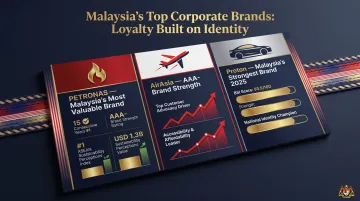
According to Brand Finance Malaysia 100 2025, brands like PETRONAS, AirAsia, and Proton combine loyalty mechanisms with powerful corporate brand identities. But it's their corporate brand identity — sustainability leadership for PETRONAS, regional affinity for AirAsia, public trust for Proton — that earns loyalty even when competitors offer cheaper alternatives.
What that looks like in practice:
- PETRONAS — Malaysia's most valuable brand for 15 consecutive years; ranks #1 in ASEAN on the Sustainability Perceptions Index (USD 1.3 billion Sustainability Perceptions Value)
- AirAsia — Holds an AAA- brand strength rating built on customer advocacy and regional affinity, not just low fares
- Proton — Named Malaysia's strongest brand in 2025 (BSI 93.9/100) after building public trust through its e.MAS 7 EV launch
The Key Pillars of Brand Loyalty in Corporate Branding
Building brand loyalty through corporate branding requires attention to five interconnected pillars. Weakness in any one area undermines the entire structure.
Pillar 1: Brand Trust
Trust is the foundation of all loyalty. Customers must believe your brand will consistently deliver on its promise. A 2025 Bloomreach study found that 88% of marketers stated that lack of trust in a brand is a "dealbreaker" for consumers.
Trust is built through:
- Transparent communication — honest messaging about what you do and don't offer
- Consistent quality — delivering the same standard every time
- Reliable brand behaviour — keeping promises over time, especially during crises
In Malaysia's comparison-driven market, where word-of-mouth recommendations carry significant weight in tight-knit community networks, trust is the currency that drives brand preference.
Pillar 2: Brand Identity Consistency
Every brand touchpoint — visual identity, tone of voice, messaging, packaging, customer service interactions, employee behaviour — must communicate a cohesive identity. Inconsistency signals unreliability and erodes loyalty.
This matters acutely in Malaysia's omnichannel environment. With smartphone penetration exceeding 99% and internet penetration at 97.7%, consumers encounter brands across multiple digital and physical touchpoints every day.
A polished website paired with an unprofessional social media presence — or premium positioning alongside poor customer service — creates cognitive dissonance that erodes loyalty quickly.
Pillar 3: Emotional Connection
Customers who feel an emotional bond with a brand — through shared values, compelling storytelling, or personal relevance — are significantly harder to lose to competitors. This is the concept of brand affinity: when customers don't just recognise your brand, but actively prefer it and recommend it to others.
In Malaysia's collectivist culture, social networks and family recommendations heavily influence purchasing decisions — making emotional brand loyalty a driver of powerful word-of-mouth advocacy.
Research shows that Gen Z and Millennials, who now represent the majority of purchasing power, are "loyalty skeptics" who reject transactional programmes in favour of values-aligned brands.
Pillar 4: Brand Values and Purpose
Purpose-driven branding is gaining traction across Malaysia's consumer landscape. According to YouGov research, 67% of Malaysian residents prefer sustainable brands, and 64% are willing to pay more for eco-friendly products (rising to 73% among sustainable shoppers).
A clearly articulated brand purpose — sustainability, community impact, social responsibility — creates loyalty among value-aligned customers. That commitment needs to show up in business practices, product design, and brand communications — not just in marketing copy.
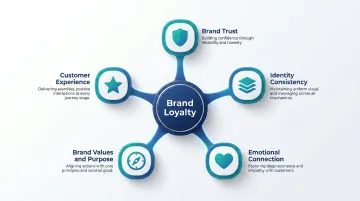
Pillar 5: Customer Experience as Brand Expression
Every interaction a customer has with your company is a brand experience. Experiences that consistently reflect your brand's identity and values reinforce loyalty. A gap between the two — polished branding alongside poor service, or values-driven messaging alongside unethical practices — damages trust in ways that take years to repair.
In Malaysia's digitally connected market, negative experiences spread quickly through social media and messaging platforms, making customer experience consistency critical to brand reputation.
Understanding Malaysia's Unique Branding Landscape
Multicultural Market Dynamics
Malaysia's three major communities — Malay, Chinese, and Indian — have distinct cultural values, languages, communication preferences, and consumption patterns. Brands that successfully build loyalty navigate this diversity by anchoring on cross-cultural values that resonate broadly:
- Family and community ties
- Trust and authenticity
- Respect for tradition and religion
- Quality and reliability
The risk of cultural missteps is real. In 2025, government-owned transport operator Prasarana pulled a deodorant advertisement from Klang Valley's LRT lines after it depicted a dark-skinned man with religious markings alongside text saying "it stinks" — condemned as racially and religiously insensitive. Similar failures have damaged brands like Watsons (blackface Hari Raya ad) and online gambling platforms promoting haram activities during religious festivals.
Cultural intelligence is a baseline requirement for brand trust in Malaysia, not an optional consideration.
Digital and Mobile-First Consumers
Malaysian consumers engage with brands primarily through mobile. As of Q3 2024, smartphone penetration exceeded 99%, with internet penetration at 97.7%. Brand consistency must extend seamlessly to apps, social media, e-commerce platforms, and digital communications — not just physical stores.
According to DataReportal's Digital 2024: Malaysia report, 55.1% of Malaysian internet users research brands on social networks, 36.7% discover brands via search engines, and 33.1% discover them through social media ads. Every touchpoint is a brand impression — and an inconsistent digital presence is noticed.
The Role of Trust in a Competitive Market
Malaysian consumers are selective and comparison-driven, particularly in retail, F&B, and financial services. A brand with a proven reputation for reliability and authenticity holds a measurable loyalty advantage here.
Southeast Asian consumer loyalty is described as "less stable" than in other markets, with low switching costs and consumers who "readily switch" in response to promotions or superior experiences. Loyalty must be "earned continuously."
Brand perception is closely tied to word-of-mouth recommendations in Malaysia's tight-knit community networks, making trust-building essential for long-term loyalty.
Local vs. Regional and Global Brands
Malaysian brands face positioning challenges when competing with well-resourced regional and global brands. Local brands can close that gap by leaning into cultural identity, community roots, and genuine understanding of Malaysian consumers' daily lives — advantages that no global playbook can replicate.
Proton's rise to Malaysia's strongest brand in 2025 (BSI 93.9/100) illustrates this directly: public trust built over decades, combined with a locally relevant electric vehicle launch, produced brand strength that foreign competitors struggled to match despite larger budgets.
How to Build Brand Loyalty Through Corporate Branding in Malaysia
Develop a Clear and Differentiated Brand Strategy
Brand loyalty begins with a clearly defined brand strategy: who you are, what you stand for, who you serve, and what makes you different. Without this foundation, branding becomes cosmetic.
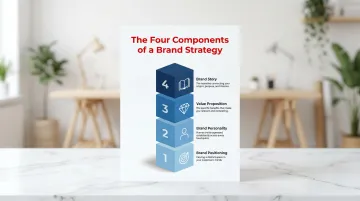
Core components of brand strategy:
- Brand positioning — defines the distinct space you hold in customers' minds, making you the obvious choice over alternatives
- Brand personality — the human traits your brand expresses consistently, shaping how people feel when they interact with you
- Value proposition — the clear, specific benefits customers gain — and why those benefits matter to them
- Brand story — the narrative connecting your origins, purpose, and mission into something customers want to be part of
For Malaysian markets, research and cultural insight are non-negotiable. Understanding your target customer's language preferences, aspirations, and community values requires genuine local knowledge — not assumptions.
Businesses entering or growing in Malaysia benefit from working with a branding partner experienced in Southeast Asian markets. Vantage Branding, for instance, works with clients across Malaysia and the broader region to build brand strategies grounded in cultural context rather than generic frameworks.
Build Consistent Brand Identity Across All Touchpoints
With strategy in place, visual and verbal identity must show up consistently at every touchpoint:
- Digital: website, social media, apps, email communications
- Physical: retail environments, signage, packaging, uniforms
- Communications: advertising, PR, customer service scripts, internal messaging
- Experience: staff interactions and service standards — often the most memorable touchpoint of all
Inconsistency sends mixed signals that confuse customers and weaken loyalty. A premium brand positioning paired with a low-quality digital presence, or sustainability messaging contradicted by wasteful packaging, creates the perception of inauthenticity.
Anchor Branding to Authentic Values and Storytelling
Malaysian consumers respond to authentic brand stories — particularly narratives rooted in local heritage, community impact, or genuine mission. Storytelling makes a brand memorable and earns trust that advertising alone can't buy.
PETRONAS is the clearest example. Their 2025 Merdeka film "With All Our Hearts" followed a teacher helping students understand Malaysia's Rukun Negara — not as a civics lesson, but as a living promise of unity, loyalty, and morality.
The campaign reinforced PETRONAS's core brand values of sincerity and collective pride. Those values, consistently expressed over decades, have contributed to their 15-year standing as Malaysia's most valuable brand and their #1 ranking on ASEAN's Sustainability Perceptions Index.
The lesson isn't to replicate PETRONAS's scale — it's that stories built on something real, told repeatedly, compound into brand equity that no single campaign can create alone.
Branding Mistakes That Erode Customer Loyalty in Malaysia
Inconsistent Brand Messaging Across Channels
One of the most common mistakes is presenting different brand voices or visual identities across platforms — a polished website alongside unprofessional social media, or messaging that contradicts stated brand values.
In Malaysia's digitally connected market, where 55.1% of internet users research brands on social media, Malaysian consumers quickly notice and share inconsistencies. Each misalignment signals a brand without a clear identity — one that isn't serious about its positioning.
Ignoring Cultural Sensitivity
Tone-deaf campaigns or branding that inadvertently excludes or misrepresents one of Malaysia's communities can cause serious reputational damage and loyalty loss.
The 2025 Prasarana deodorant ad failure and the 2017 Watsons "blackface" Hari Raya campaign demonstrate how cultural missteps become viral controversies that damage brand trust across all communities. In Malaysia's multicultural market, cultural intelligence is a baseline requirement — not a differentiator brands can choose to invest in later.

Over-Relying on Promotions at the Expense of Brand Building
Discounting and promotional campaigns can erode brand equity over time by training customers to wait for deals rather than developing genuine loyalty.
StoreHub notes that frequent discounting in Malaysia's F&B and retail scene "trains customers to wait for promotions" and "cheapens the product," eroding perceived value. Loyalty built solely on price is fragile because it's based on the deal, not brand affinity.
Across Malaysian retail, brands that leaned heavily on promotions now compete almost entirely on price — a race that erodes margin and makes switching effortless for customers. Sustainable loyalty requires brand affinity that discounts cannot replicate.
Frequently Asked Questions
What are the key pillars of brand loyalty in corporate branding?
The five core pillars are brand trust, identity consistency, emotional connection, brand purpose and values, and customer experience. Together, they form the foundation of lasting loyalty through differentiation that's hard to copy.
What is the difference between brand loyalty and customer loyalty?
Customer loyalty is often transactional — driven by rewards, habit, or convenience. Brand loyalty is emotional: customers actively prefer your brand even when alternatives are cheaper or more convenient, and they recommend you to others.
How does corporate branding help retain customers in Malaysia?
Strong corporate branding builds trust, creates emotional connection, and signals consistency — making customers less likely to switch even in Malaysia's competitive, price-sensitive market. Brands with clear identity and authentic values earn preference that transcends promotional offers.
What role does cultural context play in building brand loyalty in Malaysia?
Malaysia's multicultural population means brands must be culturally intelligent — understanding shared values across communities (trust, family, respect) while avoiding messaging that alienates any segment. Cultural missteps damage brand trust rapidly and spread through digital channels.
How long does it take to build brand loyalty through corporate branding?
Brand loyalty is built through repeated, consistent positive experiences over time. It typically requires months to years of deliberate brand building, though clear strategy and consistent execution can accelerate meaningful progress.
What are examples of Malaysian companies with strong corporate brand loyalty?
Three Malaysian brands stand out for loyalty built on identity, not just transactions:
- PETRONAS — most valuable Malaysian brand for 15 years; AAA- rating; #1 in ASEAN Sustainability Perceptions Index
- AirAsia — AAA- brand strength driven by customer advocacy and regional affinity
- Proton — Malaysia's strongest brand in 2025 (BSI 93.9/100), fuelled by public trust and EV innovation