Introduction
Malaysia's healthcare sector has grown sharply — the industry hit RM37.8 billion in 2023, up at a 7.8% annual rate since 2015. With 207 private hospitals and nearly 10,000 private clinics now competing for patients, standing out is no longer optional.
Yet many healthcare organisations pour resources into marketing tactics—SEO, social media, paid advertising—while overlooking the foundational layer that makes those tactics work: branding. Marketing may get your clinic noticed, but branding determines whether patients choose you, trust you, and return.
Malaysian patients are more discerning than ever. With 54.7% actively searching online for health information, most conduct thorough research before selecting a provider. They read reviews and compare credentials long before booking an appointment. In this environment, a strong brand isn't a luxury—it's a clinical and commercial asset that shapes perception before the first consultation.
That perception gap is exactly what this article addresses. Using real case studies, it examines the branding challenges specific to Malaysia, the elements that make healthcare brands work, and what separates providers that earn patient loyalty from those that don't.
TLDR:
- Healthcare branding establishes trust and differentiation before marketing tactics can work effectively
- Malaysia's multicultural landscape requires culturally intelligent brand expression across Malay, Chinese, and Indian communities
- Regulatory compliance (Ministry of Health guidelines) constrains advertising but makes strategic branding more critical
- Case studies show successful market entry, eldercare differentiation, and mental health destigmatisation through brand-first approaches
- Healthcare providers with consistent multilingual brand identities attract more patients and build stronger long-term loyalty
Healthcare Marketing vs. Healthcare Branding: Why the Distinction Matters
Marketing reaches patients. Branding is why they choose you.
Healthcare marketing encompasses the tactical channels that generate visibility: Google Ads, SEO optimisation, social media content, email campaigns. These tools drive traffic and awareness. Branding, by contrast, defines your identity, values, positioning, and promise: the strategic foundation that determines whether that traffic converts into trust and loyalty.
Many Malaysian healthcare providers conflate the two, investing heavily in campaigns that generate clicks but not commitment. A clinic might rank first on Google for "dermatology Kuala Lumpur" yet struggle with patient retention because its brand communicates nothing distinctive.
Without a clear brand promise, marketing spend generates diminishing returns.
Branding amplifies marketing effectiveness because positioning creates preference. A clinic that stands for something specific — the compassionate family clinic, the advanced specialist centre, or the accessible community provider — sees stronger ROI from every ringgit spent. Patients return to providers they recognise and trust, not just providers they found.
In healthcare specifically, branding must earn trust before physical contact occurs. Your brand encompasses:
- Visual identity (logo, colours, typography)
- Tone of voice (clinical yet warm, authoritative yet approachable)
- Staff experience (how receptionists communicate, how doctors listen)
- Values communication (what you stand for beyond treatment)
Together, these elements form the perception framework patients use to evaluate risk. Healthcare decisions carry significant weight, so brand signals function as decision-making shortcuts. When your website promises premium care but your waiting room feels generic, that inconsistency creates doubt — and doubt costs you patients.
What Makes Healthcare Branding in Malaysia Unique
Navigating a Multicultural Landscape
Malaysia's demographic composition demands culturally intelligent branding. The population breaks down as 58.1% Malay, 22.4% Chinese, 6.5% Indian, and 12.3% other Bumiputera groups, each bringing distinct cultural associations around health, medicine, and trust.
What signals credibility to one community may alienate another. The same brand element can read very differently across groups:
- Colour choices carry religious or mourning connotations that vary by community
- Iconography — hands, hearts, human forms — requires evaluation through multiple cultural lenses
- Language adaptation goes beyond translation; tone, formality, and health metaphors shift across Bahasa Malaysia, Mandarin, and Tamil
Traditional health beliefs remain influential. Approximately 54% of psychiatric patients consult traditional healers (bomoh for Malay communities, sinseh for Chinese, vaidya for Indian) before seeking professional medical care. Healthcare brands that ignore these cultural health paradigms risk appearing tone-deaf or culturally insensitive, losing credibility with significant patient segments.
The Regulatory Constraint
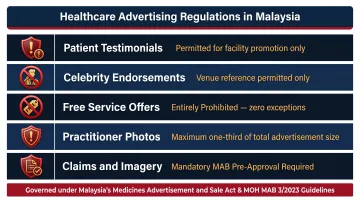
Malaysia's healthcare advertising operates under strict governance. The Medicines (Advertisement and Sale) Act 1956 and Ministry of Health guidelines (MAB 3/2023) impose clear boundaries:
- Patient testimonials may only promote facilities (cleanliness, environment), never clinical skills or treatment outcomes
- Celebrity endorsements are restricted to venue promotion, not medical expertise
- Free offers of healthcare services are prohibited entirely
- Practitioner photographs cannot exceed one-third of advertisement size
- Claims and imagery require pre-approval by the Medicine Advertisements Board
These constraints make strategic branding more valuable, not less. When you cannot rely on promotional claims or celebrity endorsements, authentic brand identity becomes your primary differentiation tool. A healthcare branding agency with sector expertise helps navigate compliance without sacrificing brand impact.
The Dual Audience Challenge
Malaysian healthcare brands must speak credibly to two distinct audiences simultaneously: medical professionals (doctors, pharmacists, key opinion leaders) and end-patients. Each requires differentiated brand expression.
Clinicians evaluate institutional credibility, research capabilities, and professional standards. Patients prioritise empathy, accessibility, and reassurance. A brand that leans too heavily on clinical authority may alienate patients seeking warmth; one that leans too heavily on emotional appeal may lose professional respect. Effective healthcare brands create cohesive yet adapted expressions for each stakeholder group.
Trust as the Primary Driver
Research identifies trust as the dominant factor in healthcare provider selection. Malaysia scored 68 in the 2024 Edelman Trust Barometer, ranking as the 7th most trusting nation among 28 countries surveyed. Business institutions earned the highest trust rating at 75, indicating that corporate healthcare providers benefit from strong baseline institutional trust.
Trust in healthcare is multidimensional, spanning fidelity, competence, honesty, confidentiality, and global trust. These dimensions are built through brand-level signals — institutional reputation, community credentials, visible social proof — not just marketing messages.
Brand architecture signals competence. Tone of voice either earns empathy or loses it. Visual consistency across every touchpoint tells patients and clinicians whether an organisation can be relied upon before a single consultation takes place.
Digital-First Patient Behaviour
With 97.4% internet penetration and 33.59 million internet users, Malaysia is highly digitally connected. 54.7% of primary care patients use the internet to search for health information, with 96.2% using Google as their primary tool.
This means your digital brand expression often constitutes a patient's first and most decisive brand interaction. A poorly designed website or inconsistent social presence signals unprofessionalism before clinical quality can even be evaluated. That first impression is difficult to reverse. For healthcare brands, this makes the following non-negotiable:
- A website that reflects institutional credibility through design, content, and structure
- Social media presence that is consistent in tone and updated regularly
- Online reviews managed actively as part of the brand's trust-building strategy
Key Elements of a Strong Healthcare Brand in Malaysia
Defining Brand Positioning and Purpose
Effective healthcare brands begin with clarity: what you stand for, who you serve, and how you differ.
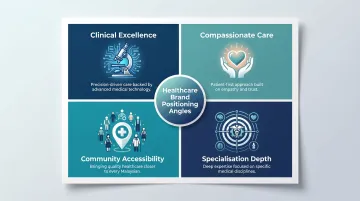
Positioning angles in Malaysian healthcare include:
- Clinical excellence (advanced technology, specialist expertise)
- Compassionate care (patient-centred approach, empathy-led service)
- Community accessibility (affordable, neighbourhood-based, culturally familiar)
- Specialisation depth (niche expertise in specific conditions or demographics)
Beyond positioning, brand purpose has become a genuine differentiator. Healthcare brands that articulate missions tied to community health outcomes, preventive care, or health equity attract both patients and talent more effectively. Purpose-driven brands signal commitment beyond profit — and patients notice when a provider's values mirror their own.
Vantage Branding's work with the Asia Centre for Health Security demonstrates purpose-led positioning. The organisation's brand narrative—"Together, we advance health security for Asia"—anchors its identity as a collaborative thought leader addressing biosecurity from an Asian perspective. This clear purpose attracted strategic partnerships across government, healthcare, and academia.
Visual Identity and Cultural Sensitivity
Colour, typography, and imagery carry psychological and cultural weight that varies across Malaysia's ethnic communities.
Colour associations differ:
- Red signals prosperity and good fortune in Chinese culture but may carry different connotations for Malay or Indian communities
- Green holds religious significance in Islamic contexts
- White suggests purity in some traditions, mourning in others
Iconography requires cultural intelligence:
- Depictions of the human form, hands, or hearts must consider religious sensitivities
- Symbolic imagery should resonate across communities without alienating any segment
Visual consistency is non-negotiable. A fragmented visual identity—mismatched signage, outdated website design, inconsistent social media—signals unprofessionalism. Visual coherence across touchpoints reinforces credibility and trust.
Brand Voice and Patient Communication
Healthcare brand voice must balance clinical authority with empathy and approachability.
In Malaysia's multilingual context, this means maintaining consistency across Bahasa Malaysia, English, and often Mandarin or Tamil, without losing warmth or credibility in translation. Direct word-for-word translation fails; cultural adaptation of tone, values framing, and messaging is essential.
Every patient touchpoint is a brand touchpoint:
- Appointment reminder messages
- Wayfinding signage
- Staff telephone interactions
- Post-visit follow-up communications
Taken together, these micro-interactions either reinforce or erode your brand promise. A clinic positioning itself as compassionate yet sending terse, transactional appointment reminders creates brand disconnect.
Case Studies: Healthcare Branding in Action in Malaysia
Case Study 1: Entering a New Market with a Brand-First Strategy
When Swedish medical products company Mölnlycke entered the Malaysian market, it didn't lead with product features or pricing. Instead, it anchored its brand narrative to sustainability and local economic development.
According to Elliot & Co's published case study, the market entry campaign resulted in 43 media placements reaching an estimated cumulative potential audience of 830 million readers across major Malaysian publications including New Straits Times, Astro Awani, Berita Harian, Utusan Malaysia, and Nanyang Siang Pau.
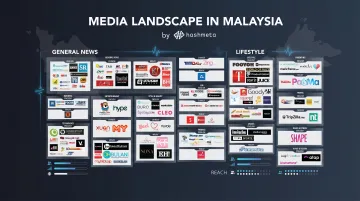
The lesson: A healthcare brand entering Malaysia must anchor itself to locally relevant stories, not just global credentials. Mölnlycke's positioning around sustainability and economic contribution (a new manufacturing facility in Kulim, Kedah) resonated with Malaysian values and media priorities, generating credibility before product-level marketing began.
Case Study 2: Branding for Eldercare—Differentiating in a Commoditised Space
Eldercare often appears commoditised, with families selecting providers based primarily on proximity or price. Vantage Branding's work with Allium Healthcare—a premium aged care provider in the Singapore-Malaysia region—shows how strategic branding reframes how families make decisions.
The brand challenge: differentiate a sector where services look identical on paper and emotional decision-making dominates.
Vantage Branding developed a brand strategy built around dignity, family trust, and professional care excellence. The work covered:
- Brand identity system and visual language
- Naming architecture across multiple care facilities
- Patient and family communications guidelines
Together, these elevated Allium from a service provider to a trusted partner in family care decisions.
The lesson: In commoditised healthcare categories, branding is not cosmetic—it's strategic. A clear brand promise reframes the selection conversation from price to values alignment, enabling premium positioning and stronger patient loyalty.
Case Study 3: Digital Health and Mental Wellness Branding
Where physical healthcare brands compete on facilities and reputation, digital health brands face a different problem entirely. Mental health branding in Malaysia must reduce stigma while simultaneously building clinical credibility.
Vantage Branding's work with ThoughtFull, a digital mental wellness platform operating across Singapore, Malaysia, Hong Kong, and the Philippines, exemplifies this balancing act. The platform addresses a critical gap: in Malaysia, 50% of adults with depression do not seek professional help, often due to fear of social stigma.
The brand positioning, visual identity, and tone of voice were strategically designed to normalise help-seeking behaviour while maintaining clinical authority. The identity needed to feel accessible and non-threatening (reducing stigma) yet credible and professional (establishing therapeutic legitimacy).
The lesson: In emerging or stigmatised health categories, branding has a public health function. Strategic brand expression can shift cultural attitudes, making clinical services more accessible by reframing perceptions at the category level, not just the provider level.
ThoughtFull's regional expansion demonstrates that culturally adapted branding—consistent in values yet localised in expression—can scale across Southeast Asian markets with varying cultural contexts.
Common Healthcare Branding Mistakes to Avoid
Mistake 1: Over-Relying on Credentials Without Personality
Listing qualifications, accreditations, and awards is necessary but insufficient.
Patients want to know who the brand is, not just what it has. A website filled with credentials but devoid of warmth, story, or values feels institutional and distant. Patients choose providers they trust emotionally, not just clinically.
Balance is essential: clinical credibility establishes competence; brand personality establishes connection.
Mistake 2: Inconsistent Brand Experience Across Touchpoints
When a clinic's Instagram presents a premium aesthetic but its waiting room feels generic, or its staff communicates impersonally, patients sense a disconnect.
Brand is experienced, not just seen. Every touchpoint—digital, physical, interpersonal—must tell the same story. Fragmentation undermines trust faster than any single marketing campaign can rebuild it.
Mistake 3: Ignoring the Multilingual and Multicultural Dimension
Translating English brand copy word-for-word into Bahasa Malaysia or Mandarin is not localisation. Cultural adaptation requires rethinking tone, values framing, and even visual elements for each community.
Each language community brings distinct expectations. Elements that need community-specific adaptation include:
- Tone register — English copy often reads as too formal in Bahasa Malaysia or too casual in Mandarin
- Colour and imagery — cultural associations vary significantly and can undermine trust if misread
- Metaphors and values framing — what signals care in one culture may signal distance in another
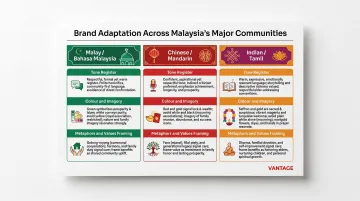
Treating translation as a technical task, rather than a strategic branding decision, is how healthcare brands lose the communities they're trying to reach.
Approximately 54% of psychiatric patients in Malaysia consult traditional healers before seeking professional services. Healthcare brands that acknowledge this reality — rather than ignore it — can build positioning that bridges conventional and traditional health paradigms, earning trust from a wider patient base.
Frequently Asked Questions
Frequently Asked Questions
What makes healthcare branding in Malaysia different from other industries?
Healthcare branding requires earning life-or-death trust, complying with strict Ministry of Health advertising regulations, and speaking authentically to Malaysia's culturally diverse population. That combination makes it meaningfully more complex than branding a consumer product.
How does a strong brand identity help Malaysian healthcare providers attract patients?
A clear, consistent brand signals credibility before the first appointment, lowers the hesitation patients feel before booking, and builds the kind of loyalty that generates referrals. In healthcare, where the stakes are personal, a recognisable brand often determines who gets the first call.
What role does cultural sensitivity play in healthcare branding in Malaysia?
Colour associations, language tone, imagery, and values messaging must resonate across Malay, Chinese, and Indian communities. Cultural misalignment damages trust at scale, while culturally intelligent branding builds authentic connection.
What are the core components of a healthcare brand strategy?
Foundational components include brand positioning, visual identity system, brand voice and messaging, patient experience guidelines, and internal brand culture. When these elements align, every patient interaction — from signage to staff tone to digital presence — reinforces the same brand promise.
Can small clinics and private practices in Malaysia benefit from professional healthcare branding?
Yes—differentiation through branding often matters most for smaller providers competing against established hospital groups. A distinct brand identity helps attract the right patients and command appropriate pricing despite resource constraints.
How long does it typically take to build a healthcare brand in Malaysia?
A brand strategy and identity project typically spans two to four months depending on scope, with ongoing brand management required to maintain consistency as the organisation grows. Larger rebrands or multi-facility projects may extend to six months or more.
Ready to build a healthcare brand that earns trust and drives growth in Malaysia? Vantage Branding specialises in culturally intelligent, strategically rigorous healthcare branding across Southeast Asia. Contact us at +65 6698 9257 or hello@vantagebranding.com.sg to start your brand transformation.