Introduction
Malaysia's business landscape is crowded. Over 1.5 million registered companies compete for attention across a multicultural market where Bumiputera, Chinese, and Indian communities each bring distinct cultural values, language preferences, and purchase behaviours.
Most companies look the same — generic logos, interchangeable colour palettes, marketing messages that could belong to anyone. In this environment, a strong brand identity earns trust, commands loyalty, and justifies premium pricing.
Yet many Malaysian businesses treat branding as a cosmetic exercise. They invest in logo redesigns or polished websites but skip the strategic groundwork—the brand positioning, audience definition, and competitive analysis—that makes an identity actually work. Without that foundation, rebrands fail to connect. Identities look polished but say nothing. Businesses blend into the background despite the investment.
This article walks through what a brand identity case study in Malaysia actually looks like: the brief, the strategy, how the creative comes together, what rollout looks like across digital and physical touchpoints, and the lessons other businesses can take away.
TLDR:
- Malaysian market complexity demands culturally intelligent brand identity, not generic design
- Strategic brand briefs and positioning platforms must precede any design work
- Full brand identity systems deliver better ROI than piecemeal logo projects
- Successful rollouts require multilingual adaptation and consistent application across touchpoints
- Trademark registration through MyIPO protects your brand investment legally
Why Brand Identity Is a Business-Critical Investment in Malaysia
Malaysia's Multicultural Market Demands Strategic Design
Malaysia's consumer base is uniquely complex. The population of 34.1 million breaks down as 69.4% Bumiputera, 23.2% Chinese, and 6.7% Indian, with official communications in Malay alongside widespread use of English, Mandarin, and Tamil. This trilingual, multicultural reality means that brand identity choices—colour symbolism, visual motifs, language tone—carry cultural weight that generic, template-driven design cannot navigate.
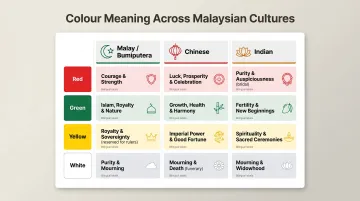
Colour choices alone illustrate the challenge. The same hue can carry opposite meanings across communities:
- Red: joy and prosperity in Chinese culture, bravery in Malay tradition
- Green: Islamic faith and paradise for Malay-Muslim communities, renewal in Chinese contexts
- Yellow: royalty in Malay culture, imperial power in Chinese heritage
- White: purity in some traditions, mourning connotations in others
Research on Malaysian Ang Pow design documented this directly: gift envelopes adapted across communities—red for Chinese recipients, green for Malay, and purple for Indian.
A 2025 study on consumer behaviour in Malaysia found that perceived quality, brand image, and perceived value significantly influence purchase decisions across Malaysia's multicultural market. These are measurable drivers of revenue and customer loyalty, not abstract branding theory.
Competitive Pressure Makes Differentiation Essential
Malaysia's MSME landscape is staggering in scale. As of 2024, MSMEs contributed RM652.4 billion in value added, representing 39.5% of GDP and employing 8.10 million people—48.7% of total employment. In 2024 alone, SSM registered 55,595 new companies and 343,561 new businesses, adding to a cumulative total of 1,590,140 companies and 9,344,360 businesses.
This competitive density means differentiation through branding is not a luxury—it's strategic survival. When thousands of new businesses enter the market annually, a strong brand identity becomes the asset that helps customers remember you, trust you, and choose you over interchangeable alternatives.
Research confirms that brand strength delivers measurable financial returns. Brand Finance's 2026 analysis found that stronger branded B2B businesses command a 65% premium in forward price-to-earnings ratios compared to weaker peers. Brand value now accounts for approximately 11% of total enterprise value across the world's 300 most valuable B2B brands.
Digital Acceleration Demands Consistent Brand Presence
Malaysian consumers now encounter brands primarily through screens. As of January 2024, Malaysia had 33.59 million internet users (97.4% penetration) and 28.68 million social media user identities—83.1% of the population.
Social media users grew 20% year-on-year, adding 4.8 million accounts. Malaysians spend an average of 8 hours 17 minutes online daily, with 2 hours 48 minutes on social media.
Key platforms by reach:
- TikTok: 28.68M users (83.1% of population)
- Facebook: 22.35M users (84.9% monthly usage among ages 16-64)
- Instagram: 15.70M users (77.0% monthly usage)
- WhatsApp: 90.7% monthly usage, averaging 16 hours 4 minutes per user
Brand identity must perform consistently across these digital touchpoints—not just on physical signage or packaging. A logo that works on a billboard but breaks at Instagram thumbnail size fails half its job. Colour palettes that wash out in print, or a brand voice that shifts between platforms, erode the consistency customers need to trust and recognise you.
The digital-first consumer journey means 40.1% of Malaysians discover brands via social media ads and 55.6% research brands via search engines before purchase. That means your brand identity is forming opinions before a single conversation takes place.
The Brand Identity Brief: Defining the Challenge Before the Design
Why Most Rebrands Fail: Missing Strategic Foundation
Every successful brand identity case study starts not with a logo but with a brief—a strategic document that captures the business challenge, target audience, competitive landscape, and core brand promise. Skipping this step is the root cause of most failed rebrands.
Documented rebrand failures illustrate the cost of strategic insufficiency. PwC Consulting rebranded to "Monday," spending approximately $100 million on a confusing name that IBM scrapped after acquisition. Royal Mail rebranded to "Consignia," wasting $3 million before reverting in just 16 months because the public didn't understand the change. Standard Life Aberdeen rebranded to "Abrdn," removing vowels and attracting widespread public mockery. Analysis of these failures concludes that most rebrands fail because they're vanity projects driven by new leadership ego rather than genuine strategic repositioning.
The Business Context Audit
A thorough brief begins with auditing current brand perception. The brand team interviews stakeholders, maps customer perceptions, and identifies the gap between how the brand currently appears and how it needs to be positioned.
For Malaysian businesses operating across multiple cultural communities, this audit is critical. A brand perceived as "premium and exclusive" by urban Chinese consumers in Kuala Lumpur may read as "inaccessible and foreign" to Malay consumers in regional markets—a misalignment that derails even well-funded launches.
Defining the Audience with Precision
The brief must answer: who is the brand for, what do they value, and how do they currently relate to the category? In Malaysia, the same product may need to speak to meaningfully different audience segments—urban millennials comfortable with English-language digital brands versus regional consumers who prefer Bahasa Malaysia and value community endorsement.
The brand identity must resolve this tension without becoming generic. A healthcare brand serving both Chinese-educated seniors and English-speaking professionals must find visual and verbal language that resonates across both groups while maintaining coherent identity.
Brand Positioning: The Single Decision That Shapes Everything
Brand positioning defines what the brand will stand for, what it will not stand for, and how it will be different from competitors. This single decision shapes every subsequent design choice.
Agencies like Vantage Branding apply an insight-led, collaborative process to pressure-test brand positioning before any design work begins. This involves stakeholder interviews, collaborative brand workshops, and surveys that gather both quantitative and qualitative data on audience perceptions.
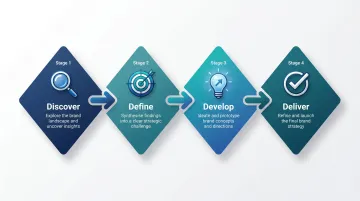
The Design Council's Double Diamond framework provides a proven structure for this process:
- Discover — explore the problem broadly across stakeholders and market context
- Define — narrow to the specific brand challenge that needs solving
- Develop — generate and test positioning concepts with real audiences
- Deliver — refine and implement the validated solution
Two cycles of divergent and convergent thinking ensure the strategy is stress-tested before execution begins.
The Brand Strategy Platform Deliverable
A completed brief produces a brand strategy platform—a document capturing purpose, values, personality, and promise—that acts as the creative brief for all design work. This platform ensures design decisions are anchored in business strategy rather than aesthetic preference.
Typical components include:
- Brand story and positioning statement
- Target audience definitions and personas
- Value proposition and key differentiators
- Brand personality and tone of voice
- Competitive landscape analysis
- Design requirements and creative direction
With this platform in place, every design decision—colour, typography, tone of voice—has a clear strategic rationale that stakeholders can evaluate objectively, not just intuitively.
The Creative Process: From Brand Strategy to Visual Identity
Translating Strategy into Visual Direction
The first stage of visual identity development translates brand strategy into mood boards and visual direction. Designers explore colour psychology, typographic tone, and iconographic language—each signalling something specific to Malaysian consumers.
Experienced brand designers navigate cultural colour symbolism carefully. A tech startup targeting young urban Malaysians might embrace bold red for energy and disruption, while a halal financial services provider would centre green to signal Islamic values and trustworthiness.
A premium wellness brand serving Chinese communities might incorporate gold and red for prosperity and vitality — yet those same choices require careful consideration when the same brand targets Malay consumers.
Logo Development: Strategic Strength vs. Aesthetic Appeal
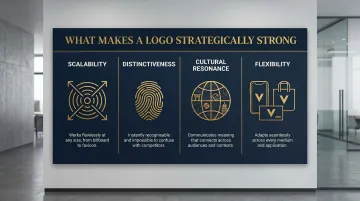
Logo development moves from conceptual exploration and hand sketches to refined digital options. A strategically strong logo differs from a merely attractive one through:
- Scalability: Works at thumbnail size and billboard scale
- Distinctiveness: Recognisable and memorable in competitive context
- Cultural resonance: Appropriate symbolism for target audiences
- Flexibility: Performs across different media (print, digital, embroidery, signage)
AirAsia's logo exemplifies strategic strength. The bold, clean typeface was designed to be recognisable from distance on aircraft tails and billboards, and the dominant red palette signalled passion, bravery, and excitement — aligning with the brand's disruptive positioning of democratising air travel.
The tagline "Now Everyone Can Fly" was not merely marketing copy but a core business philosophy, aimed squarely at Southeast Asia's price-sensitive consumers who had long perceived flying as a luxury.
PETRONAS demonstrates cultural embedding. The logo's emerald green represents seas and land (the origins of energy), solid white signals trust and integrity, and the triangle points to the future while representing the tripartite relationship between Federal Government, State Government, and PETRONAS.
The brand story spans defined eras from Hustle (1974–1979) through Moving Forward (2020–present), with the PETRONAS Twin Towers serving as both architectural icon and global brand asset.
Colour Palette and Typography Systems
Colour and typography are selected not just for beauty but for consistency and function—to work across print, digital, packaging, and environmental applications. Pre-made decisions in a strong identity system reduce future design costs considerably.
Functional requirements include:
- Primary and secondary colour palettes with precise specifications (Pantone, CMYK, RGB, HEX codes)
- Typography hierarchy (headlines, body text, captions) with specific font families and weights
- Clear usage rules for different contexts (light backgrounds vs. dark, small vs. large scale)
- Accessibility considerations (colour contrast ratios for readability)
When a business scales — hiring new designers, working with external vendors, expanding to new locations — these pre-defined rules keep the brand visually consistent without starting from scratch each time.
The Brand Style Guide: Protecting Consistency
The brand style guide (brand guidelines) is the final critical deliverable that protects brand consistency as the business grows. It contains:
- Logo usage rules (minimum sizes, clear space requirements, incorrect usage examples)
- Colour codes for all applications
- Typography rules and font files
- Imagery direction (photography style, illustration approach)
- Tone of voice guidelines
- Application examples across touchpoints
This document becomes the reference for everyone who touches the brand—internal teams, external agencies, vendors, partners—ensuring the brand presents consistently regardless of who creates the materials.
Iterative Client-Agency Collaboration
The best brand identity outcomes come from genuine collaboration throughout the process, not a single big reveal at the end. Agencies typically present multiple design directions to clients, gather feedback, and iterate. This refinement process tests both creative strength and strategic alignment.
Vantage Branding's approach includes collaborative workshops where teams engage in brainstorming and strategic thinking, ensuring multiple voices contribute to the brand strategy foundation before design work begins. The result is a brand identity grounded in the organisation's actual values and direction — not just what looks good on a mood board.
Bringing the Brand to Life: Rollout Across Touchpoints
Applying Identity Across Brand Touchpoints
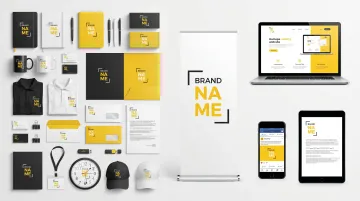
Once core brand identity is approved, it's applied across brand touchpoints—business cards, packaging, signage, social media templates, website, uniforms, and digital ads. This rollout phase is where brand identity becomes tangible customer experience. Done well, a consistent rollout is what converts brand awareness into brand recall.
Common touchpoints in a comprehensive rollout:
- Business stationery (letterhead, business cards, envelopes)
- Digital assets (email signatures, social media templates, presentation decks)
- Marketing materials (brochures, flyers, advertisements)
- Packaging and product design
- Environmental graphics (signage, vehicle wraps, office interiors)
- Website and digital platforms
- Uniforms and staff materials
Malaysia-Specific Rollout Challenges
Rolling out brand identity in Malaysia presents specific challenges:
Multilingual Adaptation: Malaysian law requires Bahasa Malaysia on business signboards and public-facing materials. As reported by Bernama, "signboards in public spaces and signs used by business premises must be written in proper Malay before permits are issued." Many brands also require English and Mandarin versions, with each language requiring careful typographic treatment to maintain visual consistency while respecting linguistic requirements.
The GrabTaxi-to-Grab rebrand (2016) demonstrates multilingual adaptation. Originally known as "MyTeksi" in Malaysia (using a Malay-language name), the company unified under the English-language "Grab" brand across all Southeast Asian markets, reflecting the need for a brand name that works across Malaysia's multilingual landscape and the wider ASEAN region.
Urban vs. Regional Context: Brand identity performs differently in urban Kuala Lumpur versus regional towns. Digital-first presentation may work for urban millennials but miss regional consumers who encounter brands primarily through physical shopfronts and word-of-mouth recommendations.
Digital Platform Dominance: With Facebook reaching 84.9% monthly usage, Instagram 77.0%, and TikTok 83.1% of Malaysians, social media platforms are where most Malaysians first encounter and engage with brands. Brand assets must be optimised for these platforms—profile images, cover photos, story templates, and post formats that maintain brand consistency while fitting platform specifications.
Managing Internal and External Brand Launch
A brand launch has two critical audiences: external (customers) and internal (staff and partners). Each audience requires a distinct approach:
- External launch: Coordinated campaigns, social media announcements, and updated touchpoints introduce the new identity to customers
- Internal adoption: Workshops, brand guidelines training, and team briefings align staff on brand behaviour—not just brand visuals
For service businesses, internal adoption is often the more critical of the two. A polished logo means little if the people delivering the service can't articulate what the brand stands for. Staff who understand the brand's purpose communicate it more naturally and more convincingly.
Trademark Registration: Legal Protection Through MyIPO
Securing legal ownership through trademark registration protects your brand investment—and should happen early, not after launch. Malaysia's Intellectual Property Corporation (MyIPO) manages trademark registration using the Nice Classification system with 45 classes.
Filing fees:
- RM950 per class (if goods/services are from pre-approved list)
- RM1,100 per class (if not from pre-approved list)
- Optional Preliminary Advice and Search: RM250
Malaysia joined the Madrid Protocol in December 2019, allowing Malaysian brand owners to file a single international application to protect marks across all 122+ member territories. This is particularly valuable for businesses planning regional expansion across ASEAN and beyond.

Measuring What Matters: Brand Identity Outcomes
Quantitative Indicators
Brand identity results aren't always immediately quantifiable, but meaningful indicators include:
- Brand recognition and recall: Measured via customer surveys tracking aided and unaided brand awareness
- Website traffic and engagement: Increases in direct traffic, time-on-site, and pages per session following rebrand
- Social media engagement: Higher engagement rates on branded content, follower growth, and share rates
- Sales conversion improvements: Reduced purchase friction where stronger brand identity builds trust and credibility faster
61.9% of Malaysians aged 16-64 made an online purchase in 2024, with brand discovery heavily influenced by social media ads (40.1%) and search engines (55.6%). For Malaysian businesses, a distinctive brand identity directly affects how well you convert those discovery moments into customers.
Qualitative Markers of Success
The quantitative gains are only part of the picture. A well-executed brand identity also shifts perception in ways that compound over time:
- Positive customer feedback and unsolicited referrals
- Ability to attract better-quality partners or talent who align with brand values
- Improved cross-cultural audience reach—particularly important for Malaysian businesses serving diverse communities
- Internal alignment and employee pride in representing the brand
- Media coverage and industry recognition reflecting elevated brand perception
Key Lessons from Brand Identity Case Studies in Malaysia
Brand Identity Is Business Strategy, Not Cosmetic Exercise
The most successful Malaysian brand identity projects share one trait: they start with a clear strategic question — what does this brand need to achieve in the market? — and let design serve that answer.
AirAsia: Strategy-Led Identity
AirAsia's identity centred on democratising air travel. The bold red palette, approachable tone, and Tony Fernandes in a casual red baseball cap all reinforced the positioning against state-owned competitors.
The result: a turnaround from RM40 million in debt to profitability within the first year — and "World's Best Low-Cost Airline" from Skytrax multiple years running.
PETRONAS: National Pride as Brand Equity
Where AirAsia disrupted through accessibility, PETRONAS built its identity on national pride. Positioning itself as a "National Icon" with the tagline "Passionate about Progress," the brand wove together colour, architecture — the Twin Towers as living symbol — and festival advertising to create economic value by associating the brand with what matters most to Malaysians.
Choose Strategy-First Partners with Cultural Intelligence
When selecting a branding partner for the Malaysian market, prioritise agencies that begin with discovery and strategy — not design — and deliver a complete brand system with guidelines, not just a logo.
Agencies with cross-market experience across Singapore, Malaysia, and broader Asia — like Vantage Branding — bring regional brand intelligence that purely local or purely international agencies often lack. They navigate cultural colour symbolism, develop multilingual brand assets, and build identities that hold up across Malaysia's diverse consumer segments without losing strategic consistency.
What to prioritise when selecting an agency:
- Clear strategy-first process including discovery, stakeholder interviews, and brand positioning before design
- Portfolio of full brand identity systems (not just logo collections)
- Cultural fluency in Malaysian market and multilingual requirements
- Transparent communication and collaborative approach
- Specific expertise relevant to your industry or audience
Frequently Asked Questions
What is the difference between brand identity and a logo?
A logo is a single visual mark, while brand identity is the complete system of visual and strategic elements—logo, colour palette, typography, imagery style, tone of voice, and guidelines—that define how a brand appears and communicates. The distinction matters because a logo alone cannot deliver consistent brand presence across all touchpoints.
How much does brand identity design cost in Malaysia?
Cost varies significantly based on scope (logo-only vs. full brand identity system), the agency's experience, and whether strategic discovery is included. Malaysian agencies typically charge RM5,000–RM15,000 for startup foundational work, RM15,000–RM35,000 for comprehensive SME brand identity systems, and RM35,000+ for corporate end-to-end projects.
How long does a brand identity project typically take in Malaysia?
Discovery and strategy typically take several weeks, followed by design exploration and iterations. Full brand identity projects range from 6 to 16 weeks depending on scope, complexity, and client responsiveness. Corporate rebrands with extensive stakeholder engagement and rollout requirements may extend to 8–16 weeks.
Why do Malaysian businesses need professional brand identity services rather than doing it themselves?
Professional brand identity requires strategic depth, cultural knowledge, and technical expertise that DIY tools cannot replicate. Effective Malaysian branding demands fluency in colour symbolism across Malay, Chinese, and Indian cultural contexts, multilingual asset development, and systems built to perform consistently across digital and physical touchpoints.
When should a Malaysian business consider rebranding its existing identity?
Common triggers include a business pivot, new market entry, merger or acquisition, or a brand that no longer differentiates from competitors. If customers struggle to recall your brand—or your identity no longer reflects your current positioning—it's time to consider rebranding.
What should I look for when choosing a brand identity agency in Malaysia?
Prioritise agencies with a clear strategy-first process, experience across industries, a portfolio of full brand identity systems (not just logos), cultural fluency in the Malaysian market, and transparent communication throughout the project. Ask about their discovery methodology, how they handle multilingual adaptation, and what deliverables are included in brand guidelines.