In B2B markets, this gap is costly. Research shows that 57-70% of the buyer's journey happens before any sales contact, and weak brand presentation creates friction at precisely the moment when credibility matters most. As Malaysian manufacturers pursue export growth and higher-value contracts, brand is no longer optional — it's the competitive edge that separates premium suppliers from price-driven commodity players.
This article examines how one Malaysian manufacturer underwent a comprehensive brand transformation with Vantage Branding, what drove the decision, and the measurable changes it produced.
TLDR:
- Malaysian manufacturers moving from OEM to OBM face a 57x profit gap — brand ownership is the bridge
- 62% of B2B buyers use web search as one of their first three resources when evaluating suppliers
- Strong B2B brands command a 65% valuation premium and 45% higher EBIT multiples versus weaker peers
Why Branding Matters for Malaysian Manufacturers Today
Malaysia's manufacturing sector generated RM1.9 trillion in total sales in 2024, with manufactured goods comprising 86.7% of total exports. The sector employs 2.4–2.7 million people and represents approximately 23–24% of GDP. Yet despite this scale, most manufacturers remain trapped in low-margin OEM relationships.
The Federation of Malaysian Manufacturers (FMM) has formally partnered with universities to drive the shift from Original Equipment Manufacturing (OEM) to Original Brand Manufacturing (OBM). The economic case is clear: the Top 100 Asia Pacific OBMs generated US$228 billion in profit compared to only US$4 billion for the Top 100 OEMs — a roughly 57x difference that quantifies the cost of remaining unbranded.
The Specific Branding Gap Manufacturers Face
Most Malaysian manufacturers operate with brand identities created decades ago — if they exist at all. Common issues include:
- Logos designed in the 1980s–1990s that read "legacy factory" rather than "precision engineering partner"
- No brand guidelines, leading to inconsistent presentation across business cards, sales decks, websites, and trade fair materials
- No articulated positioning or value proposition beyond "quality products, competitive pricing"
- Websites that fail to reflect actual capabilities, undermining credibility with international buyers
These gaps erode credibility at every touchpoint. McKinsey research surveying 700+ global executives found that buyers highly value "honest and open dialogue," "specialist market knowledge," and "effective supply-chain management." Yet those themes were among the least emphasised by B2B suppliers, who instead led with social responsibility and global reach — neither of which had meaningful influence on brand perception.
B2B Buyers Research Suppliers Digitally Before Contact
The buying process has shifted. Before a supplier ever gets a call, buyers have already done their research:
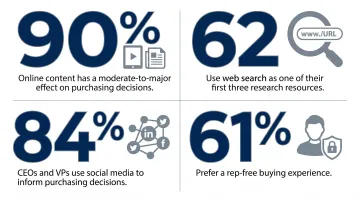
- 90% of B2B buyers say online content has moderate-to-major effect on purchasing decisions
- 62% use web search as one of their first three resources
- 84% of CEOs and VPs use social media for purchasing decisions
- 61% prefer a rep-free buying experience, spending only 17% of their time meeting potential suppliers
A manufacturer's brand, website, and digital presence now determine whether they make the shortlist. Brand investment is no longer optional for manufacturers pursuing international buyers — it is the first qualification hurdle.
Client Background: A Malaysian Manufacturer at a Crossroads
Malaysian manufacturers typically reach a brand crossroads at the same point: when operational excellence stops winning contracts. A stronger product or tighter tolerances no longer differentiates them from regional competitors — and leadership recognizes the gap is brand perception, not production capability.
What Triggers the Rebranding Decision
Malaysian manufacturers commonly pursue rebranding when facing:
Export market expansion: Entering ASEAN, US, European, or Chinese markets where brand credibility directly affects supplier selection. Malaysian exports to key markets include:
- ASEAN: RM40.68 billion (April 2025)
- United States: RM19.22 billion
- China: RM14.4 billion
- European Union: RM9.49 billion
Leadership transition: New management recognizes that the existing brand no longer reflects the company's capabilities or ambitions.
Competitive pressure: Losing contracts to better-branded regional competitors, particularly from Taiwan, South Korea, or Singapore.
Talent attraction challenges: Difficulty recruiting technical talent who perceive the company as outdated based on its brand presentation.
The Brand Before Engagement
Typical pre-engagement brand conditions include:
- Logo designed 20+ years ago using dated visual conventions that communicate age rather than expertise
- No brand guidelines resulting in every department creating materials independently
- Inconsistent collateral across sales presentations, product catalogs, and digital channels
- Website that undermines credibility — slow, difficult to navigate, lacking technical depth
- Trade fair materials that blend into commodity supplier displays rather than commanding attention
Strategic Objectives
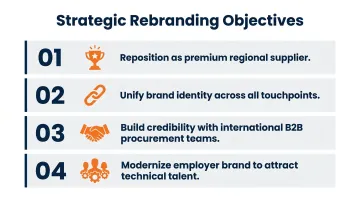
These brand gaps translate directly into goals. Manufacturers pursuing comprehensive rebranding typically prioritize:
- Repositioning as a premium regional supplier rather than a price-driven commodity vendor
- Unifying brand identity across all touchpoints so every buyer interaction reinforces the same message
- Building credibility with B2B procurement teams in target export markets through stronger visual and verbal presentation
- Modernizing employer brand perception to attract and retain technical talent
Constraints and Sensitivities
Reaching those objectives means working within real-world constraints that shape every decision:
- Preserving equity with long-term clients who have 10-20 year relationships with the existing brand
- Internal stakeholder alignment across sales (who interface with clients), operations (who implement changes), and ownership (who approve investment)
- Budget considerations that require phased rollout across digital, print, signage, and physical assets
- Timeline pressures to launch before key industry events or export market entry
Phase 1: Brand Discovery and Audit
Vantage Branding's Brand Discovery service provides the strategic foundation through structured research before any design work begins. In manufacturing contexts, this involves stakeholder interviews, competitive landscape mapping, and comprehensive review of existing brand assets.
Uncovering the Perception Gap
The most critical output of discovery is identifying the gap between how the company sees itself and how clients and prospects actually perceive it.
A manufacturer might believe its core differentiator is "50 years of manufacturing heritage," yet buyer interviews often reveal clients actually value "technical problem-solving capability" and "delivery reliability." That gap must be resolved before any visual identity work begins. Without it, the new brand communicates what the company wants to say — not what buyers need to hear.
McKinsey's research across six B2B sectors found that most B2B companies emphasize the same themes, leading to "follow the herd" messaging rather than unique positioning. The discovery phase identifies where genuine differentiation exists.
Competitive Positioning Analysis
The team maps what regional competitors communicate across:
- Where competitors stand on price, speed, technical expertise, sustainability, or industry specialization
- Which visual conventions (colors, typography, imagery) dominate the category — and where whitespace exists
- What competitors lead with on websites and sales materials
The output is a clear view of which positioning territories are overcrowded and which remain open — precision engineering heritage, sustainability practices, regional delivery reliability, or technical depth in a specialized sub-sector.
Discovery Outputs
The phase concludes with a brand brief or positioning platform that defines:
- Core purpose: Why the company exists beyond making products
- Brand personality: How the brand should feel in all interactions
- Values: Principles that guide decisions and behavior
- Target audience: Specific buyer personas and their decision criteria
With this platform in place, the identity design phase has a clear brief to work from — not just aesthetic preferences, but a defined story to tell.
Phase 2: Building the Brand Strategy and Visual Identity
Developing the Brand Positioning Statement
The positioning statement stakes out specific emotional and functional territory that differentiates the manufacturer from price-driven competitors.
Effective B2B manufacturing positioning avoids generic claims like "quality and reliability" (which every competitor claims) and instead focuses on:
- Specific technical capability: "Precision injection molding for medical device components requiring ISO Class 7 cleanroom standards"
- Application expertise: "Industrial coatings engineered for extreme marine environments across Southeast Asia"
- Process differentiation: "The only Malaysian manufacturer combining automated inspection with 100% traceability across aerospace supply chains"
Positioning choices must reflect authentic operational truths, not aspirational marketing language — buyers in technical B2B markets quickly dismiss claims that aren't backed by demonstrable capability.
Visual Identity Development Process
With positioning established, visual identity work begins. Logo development explores multiple conceptual directions that reflect both the company's heritage and its forward ambition. For manufacturers, the identity must balance two things simultaneously:
- Heritage: Industrial geometry, precision lines, or material-inspired elements that communicate established capability
- Forward momentum: Modern color applications, clean typography, and confident simplicity that signal where the company is headed
Multiple directions are explored and refined with stakeholder input before a final concept is selected. This collaborative process ensures the identity feels owned by the organisation, not imposed on it.
Color Palette and Typography Decisions
Color and typography are strategic tools in B2B manufacturing — each choice carries meaning that buyers read, consciously or not.
Common color choices for industrial brands and what they communicate:
- Deep blues — trust, stability, and technical credibility
- Industrial greys — precision and engineering rigour
- Accent colors (reds, oranges) — energy and differentiation without sacrificing professionalism
Typography decisions follow similar logic. Sans-serif typefaces signal modernity and clarity, while considered font weights create information hierarchy across technical documents, proposals, and facility signage. Legibility at every scale — from a screen to a warehouse wall — is non-negotiable.
Building the Complete Brand System
Research shows consistent brand presentation correlates with 23–33% higher revenue, yet 71% of brand professionals struggle to maintain that consistency across channels.
A complete brand identity system addresses every environment where the manufacturer is seen:
- Digital touchpoints: Website, email signatures, LinkedIn presence, online catalogs
- Sales materials: Presentations, proposals, capability statements, case studies
- Physical environments: Reception signage, wayfinding, facility branding, uniforms
- Packaging and shipping: Product labels, shipping boxes, documentation
- Trade fair presence: Booth graphics, banners, promotional materials
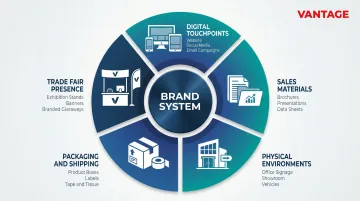
The brand guidelines document how each element works together, ensuring consistency as the system expands across departments and geographies.
Vantage Branding's Collaborative Methodology
Vantage Branding works closely with internal stakeholders at each stage to ensure the brand reflects how the organisation actually operates — not just how it wants to be perceived. In practice, this means:
- Brand implementation workshops that train sales and operations teams on how to use new brand assets
- Iterative refinement based on stakeholder feedback at each stage
- Stories built from operational realities — specific processes, certifications, and capabilities — rather than borrowed industry language
This collaborative process ensures the brand can be authentically championed across the organisation rather than living only in marketing materials.
The Results: What Changed After the Rebrand
Tangible Business Outcomes
Successful manufacturing rebrands generate measurable impact across several dimensions:
- Secures new export contracts in target geographies, with improved RFQ response rates from multinational buyers who previously passed
- Increases qualified digital inquiries, with prospects arriving at sales conversations already convinced of credibility
- Strengthens trade fair results — better booth traffic and higher follow-up conversion where first impressions decide everything
- Improves channel partner confidence through consistent marketing support and clearer brand presentation
While outcomes differ by project, the Manufacturers Alliance reports that successful rebrands synchronise rollout with production cycles and internal readiness, while poorly executed launches can result in waste exceeding $750,000 in scrapped materials.
Internal Culture and Alignment
Beyond external perception, rebranding reshapes how employees understand and communicate the company's direction:
- Employees connect with a clear, modern brand identity they're willing to champion externally
- Sales teams work from consistent materials that tell a coherent story across every customer interaction
- Leadership can articulate positioning with precision rather than improvising around an outdated message
In practice, this means salespeople, leadership, and customer-facing staff all tell the same story — which removes friction from every business development conversation.
The external results matter. So does what happens inside the company. But some of the most valuable outcomes from a rebrand aren't planned for at all.
Unexpected Benefits
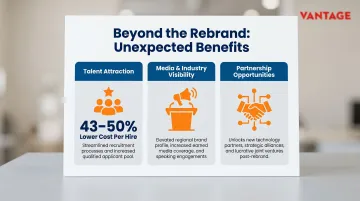
Manufacturers often discover secondary benefits including:
- Attracts engineering and management talent who perceive the company as forward-thinking. Strong employer brands reduce cost per hire by 43–50% and turnover by up to 28%
- Generates media and industry visibility — conference invitations, association participation, and trade publication contributions that raise regional profile
- Opens doors to technology partners, research collaborators, and joint ventures where brand credibility makes the introduction
Key Lessons for Malaysian Manufacturers Considering a Rebrand
Lesson 1: Brand Strategy Must Precede Visual Design
Manufacturers who lead with "we just need a new logo" consistently get weaker results than those who invest in defining what they stand for first.
The discovery and positioning work identifies:
- What actually differentiates the company in buyers' minds
- Which positioning territory is credible and defensible
- How to align internal stakeholders around shared direction
Visual identity without this foundation risks creating a beautiful brand that communicates the wrong message.
Lesson 2: Internal Buy-In Is as Important as the Final Output
The most beautifully designed identity will fail if:
- The sales team doesn't understand how to use it
- Operations views it as "marketing's project" rather than company-wide transformation
- Leadership hasn't committed to consistency across all touchpoints
The 40% failure rate of rebranding campaigns is typically attributable to execution misalignment, not the rebrand concept itself. Internal readiness should precede external launch by at least 6 months.
Lesson 3: Branding Is a Long-Term Asset, Not a One-Time Project
That internal discipline pays off — because the real ROI compounds over time. The brand:
- Earns credibility in new export markets through repeated professional interactions
- Reduces perceived risk for buyers, making it easier for them to choose you over an unfamiliar competitor
- Builds trust with clients, distributors, investors, and employees over years of consistent delivery
Kantar BrandZ data tracked since 2006 shows that strong brands delivered +88% return versus the S&P 500 and +251% versus the MSCI World Index. For Malaysian manufacturers entering export markets, the financial case for brand investment is no longer just anecdotal.
Frequently Asked Questions
Frequently Asked Questions
Why do manufacturing companies in Malaysia need professional branding?
B2B buyers, distributors, and export partners evaluate credibility visually before any conversation begins. A weak or outdated brand silently costs manufacturers contracts and premium pricing opportunities by creating friction at the first impression stage.
How is a full brand identity different from just getting a new logo?
A full brand identity includes strategy (positioning, messaging, values) plus a complete visual system (logo, color, typography, brand guidelines) that ensures consistency across every customer and partner touchpoint — digital, physical, and print.
How long does a manufacturing company rebrand typically take?
A comprehensive rebrand — including discovery, strategy, identity design, and rollout — typically takes 3 to 6 months, depending on scope, stakeholder complexity, and the number of touchpoints involved. Larger organizations with multiple product lines or regional markets should plan toward the longer end of that range.
When is the right time for a Malaysian manufacturer to rebrand?
Common triggers include entering export markets, leadership transitions, mergers or acquisitions, losing ground to better-branded competitors, or when the existing brand no longer reflects the company's capabilities or ambitions.
Can branding help a manufacturer win more B2B contracts?
Yes. A credible brand reduces the perceived risk a buyer associates with choosing a new supplier. Consistent, professional brand presentation across sales materials, digital presence, and facilities directly improves conversion in competitive RFQ situations.
How much does branding cost for a manufacturing company in Malaysia?
Investment varies based on scope — logo-only versus a full brand strategy and identity system — and the number of touchpoints covered. Branding delivers measurable returns: strong B2B brands command a 65% premium in forward P/E ratios and 45% higher EBIT multiples, making it one of the highest-ROI strategic investments a manufacturer can make.