Malaysia's construction sector is experiencing explosive growth, with the market valued at MYR 66.33 billion in 2025 and projected to reach MYR 89.86 billion by 2030. With urbanization hitting 79.2% and major infrastructure projects accelerating across the country, competition for government tenders and private development contracts has intensified. Yet 89% of Malaysia's construction industry consists of SMEs, with over 123,000 registered contractors—most fighting for the same contracts using nearly identical pitches.
This case study walks through how one mid-sized Malaysian general contractor identified its branding gap, developed a strategic positioning framework, and transformed how clients, consultants, and talent perceive the company—ultimately opening doors to higher-value projects and unsolicited referrals.
TLDR:
- Malaysian construction companies compete in a crowded market where strong branding creates competitive advantage before the first tender conversation
- B2B buyers complete 70% of their research independently before engaging vendors, making digital presence and credibility signals critical
- Strategic positioning around a specific construction niche differentiates firms from generic competitors and commands premium pricing
- Consistent visual identity across sites, websites, and materials signals professionalism that influences shortlisting decisions
Why Malaysian Construction Companies Struggle to Stand Out
The Commodity Trap
Most construction companies fall into what branding strategists call the "commodity trap"—competing purely on price, past project lists, and technical qualifications. When every contractor presents similar portfolios and pricing structures, procurement teams and developers have no meaningful way to differentiate between firms. The result: races to the bottom, shrinking margins, and purely transactional client relationships.
The problem intensifies in Malaysia's G2-G4 contractor grades, where thousands of companies chase the same mid-tier projects. Without clear brand positioning, companies become interchangeable in client eyes. Developers default to selecting the lowest bidder or companies they've worked with previously, leaving capable but unbranded contractors locked out of opportunities.
The Research Reality
"Our work speaks for itself" is no longer a viable strategy. Research shows 74% of business buyers conduct more than half of their research online before engaging vendors. B2B buyers now spend 70% of their journey researching independently—typically waiting 8 months into an 11-month buying cycle before speaking with sellers.
For construction companies, this means property developers, government procurement teams, and private clients are evaluating you long before you receive a tender notification. They're searching your website, reviewing project photography, and checking your LinkedIn presence. When your digital presence is outdated or inconsistent, you've already lost the opportunity.
Critical Credibility Signals
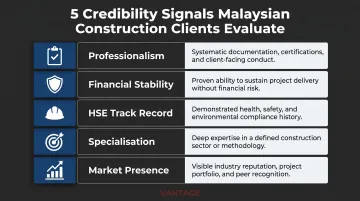
Malaysian construction clients evaluate five core credibility signals during research:
- Professionalism: Consistent visual identity across websites, tender documents, site signage, and team presentations signals that your operations are organised and client-ready
- Financial stability: A polished brand presence implies established operations—clients read it as a signal that you'll still be around to complete their project
- HSE track record: Visible safety culture communicated through site signage, case studies, and company materials—not just certification documents
- Specialisation: Defined expertise in specific sectors (industrial, commercial, infrastructure) rather than a generic "we handle everything" pitch
- Market presence: Regular project showcases, industry contributions, and LinkedIn activity that demonstrate you're active and growing—not just surviving
Research demonstrates that 81% of B2B buyers already knew the brand they eventually selected before the purchase process formally began. For construction companies, branding determines whether you're on the shortlist at all—before a single tender document is opened.
The Internal Impact
The cost of weak branding doesn't stop at lost tenders. It compounds internally too:
- Talent acquisition difficulties: With Malaysia's construction sector facing shortages of skilled engineers and workers, companies without strong employer brands struggle to recruit senior project managers and technical specialists
- Low employee pride: Inconsistent identity and unclear market positioning reduce team morale and make staff less likely to refer talented contacts
- Weak referral networks: Architects, engineers, and consultants recommend contractors they perceive as established and professional—branding directly influences these word-of-mouth referrals
Meet the Company: A Snapshot Before the Rebrand
The subject of this case study is a mid-sized Malaysian general contractor with over 10 years of operational history. Their portfolio spans commercial buildings, light industrial facilities, and logistics developments across Selangor and Johor — yet despite consistently completing projects worth RM 5–15 million, the company had never invested in a cohesive brand identity.
The Visual Chaos
A basic brand audit revealed significant inconsistencies:
- Three different logo versions used across vehicles, letterheads, and social media profiles
- No defined color palette—marketing materials used random colors
- Project photography taken on mobile phones that undersold construction quality
- Website last updated in 2018, with broken links and outdated project information
- No brand guidelines, resulting in each department creating materials independently
The Wake-Up Call
The turning point came after losing a RM 12 million logistics facility tender. The company made the technical shortlist, but during post-decision feedback, the developer's procurement manager admitted: "Your technical submission was solid, but your presentation materials and company website made you feel less established than [competitor name], even though they're actually smaller than you."
The message was blunt: clients were judging reliability by brand presence, and the company's inconsistent identity was costing them real business.
Initial Research Findings
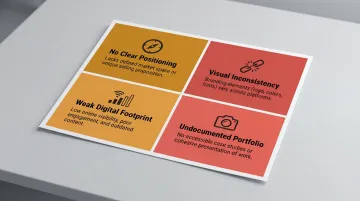
That lost tender prompted a formal brand audit. It surfaced four critical gaps:
- Presenting itself as a general contractor serving "all sectors" left clients unable to identify any specific expertise or reason to choose them over competitors
- Mismatched logos, colors, and design styles across every touchpoint quietly undermined credibility with prospective clients
- An outdated website, minimal LinkedIn activity, and no published content gave the company almost no digital footprint
- Completed projects — many of genuine quality — were documented only through phone photography and generic one-paragraph descriptions
The Strategy: Positioning a Construction Brand for Trust and Growth
Step 1: Define Brand Positioning
The first strategic decision was choosing where to compete. After analyzing the company's strongest project case studies and most profitable contracts, leadership identified industrial and logistics facility construction as the sweet spot—a niche with growing demand, lower competition than commercial high-rise, and where the company had deepest technical expertise.
This positioning shift meant deliberately narrowing focus from "we build everything" to "we specialize in industrial and logistics construction." While counterintuitive, this specialization made the company immediately more relevant to logistics developers, warehouse operators, and industrial property REITs.
Step 2: Develop Brand Messaging Framework
The messaging framework articulated three core value pillars:
- Delivery certainty: On-time, on-budget project completion backed by proven track record and project management discipline
- Safety culture: Industry-leading HSE standards with measurable safety performance metrics
- Technical specialization: Deep expertise in industrial building systems, loading dock design, and logistics facility requirements
This messaging was crafted specifically for procurement managers and property developers—using their language, addressing their concerns, and speaking to their decision criteria rather than generic marketing jargon.
Step 3: Visual Identity Overhaul
The visual rebrand included:
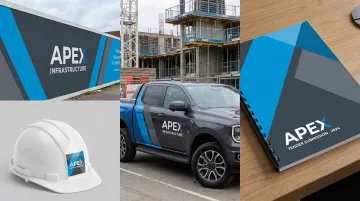
- Modernised logo: Clean, professional mark conveying precision and reliability
- Refined colour palette: Industrial blue and charcoal grey suggesting technical expertise and stability
- Design system: Consistent typography, iconography, and layout templates applied across all materials
- Touchpoint application: New identity rolled out across site signage, safety helmets, uniform patches, vehicle livery, tender documents, and corporate presentations
Step 4: Build Content-Led Digital Presence
The website rebuild prioritised client decision journey over information dumping:
- Clear navigation organised by facility type (logistics warehouses, manufacturing plants, cold storage) and service (design-build, fit-out, HSE consulting)
- Professional project photography showcasing completed facilities with detailed case studies
- Downloadable capability statements for each sector
- Contact flow designed to convert developer inquiries with clear CTAs and quick-response commitment
The Branding Partner Advantage
What this transformation illustrates is a gap that most construction firms don't realise they have. The technical capability is there. The project track record is there. What's missing is the ability to translate both into a brand that procurement teams and developers trust before the first meeting.
This is where Vantage Branding's cross-industry B2B experience came into play. By working with construction clients across Malaysia and the wider region, the team understood how procurement decisions are made — and built a positioning framework designed to influence shortlisting, not just awareness.
For Malaysian construction companies targeting higher-value contracts, the strategic question isn't whether to invest in branding. It's whether your current brand reflects the quality of work you already deliver.
Execution: Turning Brand Strategy into Market Presence
Execution: Turning Brand Strategy into Market Presence
The brand rollout spanned four fronts: digital presence, social media, physical identity, and sales materials. Each one reinforced the same positioning the strategy had defined.
Website Rebuild Priorities
The new website was structured around client decision-making, not company org charts:
- Sector-focused landing pages: Separate pages for logistics facilities, industrial buildings, and warehousing with sector-specific case studies and credentials
- Service clarity: Plain-language explanations of design-build capabilities, project management approach, and HSE systems
- Downloadable assets: PDF capability statements, safety performance reports, and project portfolios formatted for tender submissions
- Mobile optimization: Responsive design recognizing that clients often research contractors on tablets during site visits
LinkedIn Presence Launch
With the website live, the company launched a LinkedIn presence targeting three distinct audiences:
- Property developers and REITs: Project milestone posts, construction progress updates, and facility completion announcements
- Procurement professionals: HSE achievement posts, on-time delivery records, and thought leadership on industrial construction trends
- Engineering talent: Company culture features, team spotlights, and career development content
The content approach leaned on project storytelling over promotional messaging — letting completed work speak to the industrial property development audience.
Internal Brand Rollout
Getting external audiences to see the brand differently also required internal consistency. Physical implementation covered:
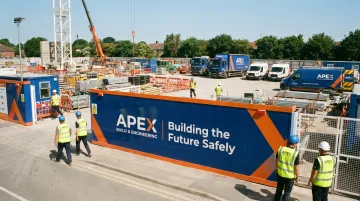
- Site signage: Professional hoarding and project boards at every active site displaying the new brand identity
- Safety equipment: Branded helmets, vests, and PPE creating consistent visual presence on the ground
- Vehicle livery: Company trucks and site vehicles wrapped with the new identity and contact information
- Internal communications: All-hands meetings giving teams shared language to describe company expertise
Sales Material Transformation
Vantage Branding redesigned tender documents and pitch decks from scratch to match the credibility the brand now projected:
- Consistent visual language matching the quality of the construction work itself
- Structured narrative leading with delivery certainty, safety performance, and technical specialisation
- Professional project photography and technical drawings throughout
- Value proposition statements tailored specifically to industrial and logistics clients
What Changed: The Business Impact of Getting Branding Right
Qualitative Outcomes
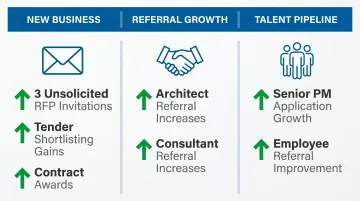
Within six months of brand launch, the company experienced measurable perception shifts:
- Inbound inquiries: Three unsolicited RFP invitations from logistics developers the company had never previously engaged
- Referral increase: Architects and M&E consultants began recommending the company by name to clients planning industrial facilities
- Tender shortlisting: Qualification for two government tenders that had previously felt out of reach based on company size and profile
One developer specifically mentioned during a project kickoff: "Your website and tender submission gave us confidence you understand logistics facility requirements—that's why we shortlisted you."
Talent Acquisition Shift
Recruitment became markedly easier:
- Senior project manager applications increased without recruitment agency involvement
- Engineering graduates specifically mentioned the company's LinkedIn presence and professional image during interviews
- Employee referrals improved as existing team members felt increased pride in company identity
The Strategic Lesson
Taken together, these outcomes point to the same conclusion: construction branding is fundamentally about building trust signals — the kind that clients, partners, and talent weigh before deciding who to work with. Aesthetics matter, but they're a vehicle, not the destination.
In Malaysia's competitive construction landscape, B2B buyers form favored vendor opinions before ever engaging sellers, and those shortlisted vendors win approximately 80% of the time. Positioning, identity, and professional presence determine who makes that list. Companies that get this right accumulate advantages — repeat RFP invitations, stronger referral networks, a talent pipeline that recruits itself — that competitors competing purely on price cannot easily match.
Frequently Asked Questions
How much does branding cost in Malaysia?
For construction companies in Malaysia, comprehensive branding programs—covering strategy, identity, and digital presence—typically range from RM 20,000 to RM 200,000+. Scope varies based on what's included, so contact a branding agency for a tailored quote.
Why do construction companies in Malaysia need branding?
Branding helps construction firms stand out in competitive tender environments where procurement teams shortlist companies based on perceived credibility and specialization before evaluating technical proposals. Strong branding attracts better clients, improves talent recruitment, and enables companies to command higher project values by communicating reliability and expertise before face-to-face engagement occurs.
What does a construction brand identity include?
A construction brand identity typically covers logo system, color palette, typography, brand voice guidelines, website, tender document templates, site signage, vehicle livery, and uniform branding. Together, these ensure a consistent presence across every client and site touchpoint.
How long does a construction branding project take?
A full branding engagement typically takes 2-4 months, covering discovery, strategy, identity design, and initial rollout. Physical assets like signage and vehicle livery roll out over subsequent months as they're applied across active sites and fleet.
Can branding help a construction company win more tenders in Malaysia?
Branding improves shortlisting probability by shaping first impressions before technical proposals are even reviewed. Well-branded firms are perceived as more capable and established—a meaningful advantage when competing firms have similar qualifications. Procurement teams read professional brand presence as a signal of lower project risk.
What is the difference between branding and marketing for construction companies?
Branding defines who you are—your positioning, values, and market reputation. Marketing is how you promote your services to target audiences. For construction companies, branding comes first; marketing then amplifies it across channels like LinkedIn, tender submissions, and industry events.