Introduction
Many B2B companies in Malaysia operate with outdated or underdeveloped brands, despite competing in one of Southeast Asia's fastest-growing business ecosystems.
Consumer brands invest heavily in emotional positioning and visual identity. B2B organisations, by contrast, often treat branding as an afterthought — a logo refresh or website redesign tackled only when everything else is sorted.
Yet in Malaysia's relationship-driven business culture, where buying committees scrutinise vendors over months-long sales cycles, brand credibility shapes who gets shortlisted. A clear, consistent brand accelerates conversations and differentiates you in competitive tenders — before a single meeting takes place.
This article examines real B2B branding case studies from Malaysia across energy, finance, technology, construction, and manufacturing. Each shows the specific decisions, positioning shifts, and identity changes that drove commercial results — so your organisation can draw practical lessons from them.
TL;DR
- B2B branding in Malaysia is maturing fast, with companies investing strategically to win larger deals and build institutional trust
- Strong brands solve positioning problems, not just design problems: they clarify who you are, who you serve, and why it matters
- Consistent brand expression across proposals, LinkedIn, trade shows, and all stakeholder touchpoints separates growing brands from stagnating ones
- Each case study reveals a repeatable branding principle that Malaysian B2B companies across sectors can apply directly
Why B2B Branding Matters in the Malaysian Market
B2B purchasing in Malaysia operates differently than in Western markets. Decisions are committee-driven, relationships matter, and trust compounds over time. The average B2B sales cycle globally now exceeds 10-11 months, with APAC cycles running even longer due to consensus-based decision-making. Malaysian buyers prioritise stability, ROI clarity, and risk reduction—all brand signals, not just product specifications.
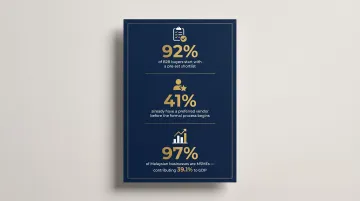
This cultural context makes branding a core commercial asset. Approximately 92% of B2B buyers start with a shortlist, and 41% already have a preferred vendor before the formal process begins. Your brand determines whether you make that shortlist.
The scale of opportunity is real. MSMEs account for approximately 97% of total business establishments in Malaysia, contributing 39.1% to GDP in 2023—within an economy that grew 5.11% in 2024. A growing, competitive market raises the stakes for differentiation.
Yet most local B2B companies still under-invest in brand strategy compared to regional peers in Singapore or Hong Kong.
The following case studies show what changes when they do: faster shortlisting, clearer market positioning, and brands that hold up under scrutiny from risk-averse buying committees.
Top B2B Branding Case Studies in Malaysia
The companies below were selected to represent diverse industries and branding challenges. Each demonstrates how strategic brand investment leads to measurable commercial and reputational outcomes.
Petronas (Energy & Industrial)
Petronas balances its role as Malaysia's national energy corporation with a global-facing brand for industrial, engineering, and government clients. Its brand narrative—anchored by the tagline "Passionate about Progress"—communicates reliability, national pride, and technical authority simultaneously.
What makes Petronas stand out is its consistent brand identity applied across partnerships, sponsorships, and procurement relationships. The brand projects credibility even in high-stakes international contracts, supported by visible commitments like becoming the first Southeast Asian energy company to declare Net Zero Carbon Emissions by 2050.
| Branding Challenge | Projecting global credibility as a Malaysian state enterprise competing with multinational energy companies |
|---|---|
| Branding Strategy | Unified brand architecture, consistent visual identity, and a brand narrative anchored in national purpose and technical excellence |
| Brand Outcome | Brand value of USD 14.6 billion (2024), ranked #1 Most Valuable ASEAN Brand with an AAA brand rating and Brand Strength Index of 87.8/100 |
Petronas operates across 50 countries and has delivered over 13,000 LNG cargoes to industrial markets. It ranks #167 in the Fortune Global 500. That brand equity opens doors: from international procurement to joint ventures with the world's largest energy companies.
CIMB Group (Financial Services)
CIMB Group transformed from a traditional Malaysian bank into a pan-ASEAN financial services brand targeting corporate and institutional clients. The repositioning followed the 2007 ASEAN Economic Community vision and required consolidating multiple sub-brands and regional identities into one coherent corporate brand.
CIMB now operates in 7 markets—Malaysia, Indonesia, Singapore, Thailand, Cambodia, Philippines, and Vietnam—serving 28 million customers through 600+ branches. Its vision: "To be the leading focused ASEAN bank." Operating philosophy: "Simpler, Better, Faster."
| Branding Challenge | Consolidating multiple sub-brands and regional identities into one coherent pan-ASEAN corporate brand |
|---|---|
| Branding Strategy | Unified regional brand architecture with a consistent visual and messaging system tailored for institutional and B2B audiences |
| Brand Outcome | Annualised Total Shareholder Return of 34.6% vs. FBM KLCI at 0.7% (2020-2024); share price rose from RM 3.49 to RM 8.20 |
Former Group CEO Nazir Razak (now ASEAN-BAC Chairman) described CIMB's pan-ASEAN brand consolidation as an effort to "tap into regional scale" despite fragmented markets. The Forward30 plan emphasises a "one-bank view" for clients—a single touchpoint for regional aspirations.
Axiata Group (Technology & Telecommunications)
Axiata rebranded from TM International Berhad to Axiata Group Berhad on April 2, 2009, with the tagline "Advancing Asia." In 2019, it announced a vision to become the "Next Generation Digital Champion by 2022", shifting its corporate identity from a regional telco operator to an enterprise technology and data services brand.
The rebrand wasn't just visual—it repositioned the entire brand narrative. Axiata's digital businesses now include ADA (Axiata Digital & Analytics), a data transformation and AI solutions provider valued at USD 550 million following a USD 58 million investment by Mitsui in 2023.
| Branding Challenge | Moving from a legacy telecommunications identity to a credible enterprise digital and technology brand |
|---|---|
| Branding Strategy | Strategic brand repositioning with updated messaging, refreshed identity, and a new corporate narrative centred on data, AI, and enterprise technology services |
| Brand Outcome | ADA operates 14 offices across Asia with 1,400+ professionals; Axiata serves 175 million subscribers across Malaysia, Indonesia, Sri Lanka, Bangladesh, and Cambodia |
Today, ADA counts global enterprises among its clients—a direct result of the brand repositioning that gave Axiata a credible seat at the enterprise technology table.
Sunway Group (Construction, Property & Healthcare)
Sunway Group built a unified parent brand that lends credibility across distinctly different B2B sectors: construction, property development, healthcare, education, and hospitality. The branding challenge was managing a complex portfolio under one coherent identity.
Sunway employs a master brand architecture with consistent values and visual identity, supplemented by sector-specific messaging for each business unit. The group celebrated its 50th anniversary in 2024, employs a 16,000-strong workforce, and was the first company in Malaysia to implement an internal carbon pricing framework.
| Branding Challenge | Creating a coherent B2B brand that works credibly across highly different industry verticals under one corporate identity |
|---|---|
| Branding Strategy | Master brand architecture with consistent values and visual identity, supplemented by sector-specific messaging for each business unit |
| Brand Outcome | Gold winner of Malaysia's Best Managed Companies 2024 (Deloitte Private) for four consecutive years; secured RM 2.6 billion+ government contract with MRT Corporation |
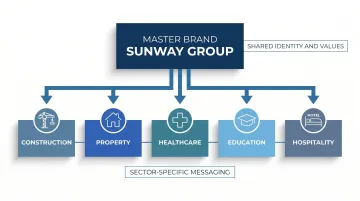
Sunway's brand positioning supports relationships with government agencies, institutional investors, and major corporate clients. Winning a RM 2.6 billion government contract while simultaneously expanding into healthcare and hospitality shows what a well-managed master brand can do: carry credibility into entirely new commercial territories.
Top Glove (Manufacturing & Healthcare Supply)
Top Glove built a global B2B brand from Malaysia, becoming the world's largest rubber glove manufacturer. The company operates 51 factories with 784 production lines across Malaysia, Thailand, and Vietnam, producing 95 billion gloves annually and exporting to over 2,000 customers in 195 countries.
Top Glove's brand credibility is built on quality certifications and transparency. The company holds 12+ management system certifications including ISO 13485, ISO 9001, ISO 14001, ISO 45001, and MDSAP. Product certifications include USA FDA 510K, Health Canada Medical Device License, and China NMPA Registration.
| Branding Challenge | Building international B2B brand trust as a Malaysian manufacturer in a commoditised, heavily scrutinised industry |
|---|---|
| Branding Strategy | Brand credibility built on quality certifications, transparency in manufacturing standards, and consistent corporate communications for B2B buyers |
| Brand Outcome | Revenue of RM 1 billion (2QFY2026); market capitalisation of RM 5.09 billion; 40% of management KPIs linked to social and environmental performance |
Despite reputational challenges—including a 2021 U.S. import ban over forced labour allegations that was lifted in 2024 after over USD 30 million in remediation—Top Glove's brand reputation helped retain B2B clients through severe demand volatility.
In commoditised industries, where products are functionally interchangeable, certifications and compliance records do the work that advertising cannot—they become the brand itself.
What These Case Studies Teach Us About B2B Branding
The strongest B2B brands in Malaysia made a deliberate strategic choice: what position do we want to own in the minds of business buyers? Everything else—visual identity, messaging, channel presence—followed from that decision.
Brand architecture matters. Sunway, Axiata, and CIMB all used either a master brand or unified sub-brand approach that allowed them to grow into new sectors without losing core brand equity. Forrester research confirms that "in B2B, the master brand strategy is far more prevalent, and for good reason." A strong master brand unites employees around a single mission, while multiple sub-brands divide companies into "warring camps."
Institutional credibility is a brand asset. Buyers in Malaysia place significant weight on perceived stability, institutional credibility, and relationship signals. This means B2B brand touchpoints like annual reports, proposals, trade presentations, and LinkedIn presence matter as much as advertising. Research from the LinkedIn B2B Institute shows that 97% of B2B decision-makers state that branding influences awareness, and 95% say it drives differentiation.
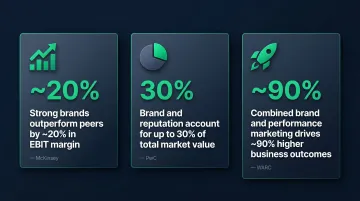
Brand investment drives measurable outcomes. McKinsey analysis shows stronger brands can outperform peers by approximately 20% in EBIT margin. PwC research indicates brand and reputation can account for up to 30% of a company's total market value.
WARC research adds another dimension: combining brand and performance marketing drives approximately 90% higher business outcomes than performance marketing alone.
These lessons from Malaysia's leading B2B brands apply broadly across Southeast Asia. For organisations looking to act on them, the starting point is always the same: define the position you want to own, then build a brand that earns it. That's the work Vantage Branding does with B2B clients across the region.
How We Selected These B2B Branding Examples
These companies were chosen based on the clarity of their brand positioning challenge, the deliberateness of their branding response, and the commercial relevance of their brand to B2B buyers—not based on size alone or advertising spend.
Common mistakes Malaysian B2B companies make when evaluating branding success include:
- Treating a logo redesign as a brand strategy, without addressing positioning or market differentiation
- Measuring brand investment against short-term lead generation, when brand equity compounds over years through trust and recognition
- Launching an external rebrand before securing internal stakeholder alignment, causing inconsistency at critical buyer touchpoints
Each company featured here approached branding as an integrated business decision—one that shaped how buyers, partners, and internal teams understood their value.
Conclusion
Malaysian B2B companies across energy, finance, technology, manufacturing, and property have shown that strategic branding drives real commercial outcomes — building trust with buyers, separating companies from look-alike competitors, and accelerating the path to high-value relationships.
Assess your own brand against one straightforward question: Does your brand clearly communicate who you are, who you serve, and why a business buyer should choose you over a competitor?
If the answer isn't clear yet, Vantage Branding works with B2B companies across Malaysia and Singapore to develop brand strategies that answer that question — and act on it. Get in touch to start the conversation.
Frequently Asked Questions
What is a case study in B2B marketing?
A B2B marketing case study documents how a business solved a specific marketing or branding challenge, what strategy was used, and what measurable outcome was achieved. Branding case studies focus on positioning shifts and long-term brand equity, not short-term campaign metrics.
What are examples of B2B brands?
Well-known global B2B brands include Salesforce, Maersk, and McKinsey. Malaysian examples include Petronas, CIMB, and Axiata. Unlike B2C brands, B2B brands sell to other businesses and must communicate value across entire organisations, not just a single buyer.
What is the B2B branding theory?
B2B branding theory holds that even in rational, logic-driven purchase decisions, brand perception shapes buyer trust and shortlists decisions. Strong B2B brands build credibility and reduce perceived risk — making it easier for buyers to justify their choice internally.
How is B2B branding different from B2C branding?
B2B branding must address multiple stakeholders — procurement, finance, technical, and executive teams — instead of a single consumer. It prioritises long-term credibility over emotional impulse, across sales cycles that can stretch months or years.
Why is branding important for B2B companies in Malaysia?
Malaysia's B2B market is relationship-driven and trust-oriented, meaning a clear, credible brand accelerates business development conversations, differentiates companies in competitive tenders, and supports expansion into regional markets where the brand must carry weight without a personal referral.