Introduction
Malaysia's marketplace is increasingly crowded. Brands compete across digital feeds, physical shelves, festive campaigns, and word-of-mouth all at once. If a potential customer saw your brand today, would they remember it tomorrow?
Building brand awareness in Malaysia requires a specific approach. The country's multicultural population, one of Southeast Asia's highest social media penetration rates, and a rich festive calendar create real opportunities—and real pitfalls. Generic strategies won't work here.
Success depends on understanding which cultural signals resonate with which audiences, when to participate in festive moments, and how to balance global credibility with local authenticity.
This guide is for SMEs, growth-stage companies, and brand managers navigating Malaysia's competitive market. We'll cover the digital and on-ground strategies that actually work, the common mistakes to avoid, and how to measure whether your efforts are paying off.
TLDR
- Malaysia's 85% social media penetration and 99.5% mobile usage make digital channels non-negotiable
- Malay, Chinese, and Indian audiences each require culturally tailored campaigns
- Brand positioning and storytelling drive recall more reliably than ad spend alone
- TikTok, Instagram, and nano-influencers (4.79% engagement rates) deliver the highest reach
- OOH advertising in the Klang Valley achieves 70% recall within 24 hours
Why Brand Awareness Is Uniquely Challenging (and Rewarding) in Malaysia
The Multicultural Imperative
Malaysia's multicultural population—Malay, Chinese, Indian, and diverse other communities—means one-size-fits-all branding falls flat. Brands that resonate understand which cultural signals matter to which audience segments.
Research from Malaysian universities shows that brand trust in Malaysia is heavily influenced by religious commitment and cultural relevance. Consumers expect signals of compliance with religious requirements regardless of whether a brand is global or local. Local brand equity is built on three interconnected factors:
- Emotional attachment to the brand's story and purpose
- Cultural familiarity through language, imagery, and community references
- Authentic representation of community values (including Halal certification where relevant)
The Festive Marketing Calendar
Malaysia's festive calendar—Hari Raya, Chinese New Year, Deepavali, Malaysia Day—offers real awareness opportunities, but only for brands that engage authentically. Tone-deaf campaigns don't just underperform—they generate public backlash that can outlast the festive season itself.
Documented cases include:
- Gambling platforms exploiting Hari Raya themes for promotional content (GDBet333 and IBC003 in 2021)
- Petronas misrepresenting "dappankuthu" folk dance in a Deepavali advertisement
- Watsons portraying blackface as unattractive in a Hari Raya ad
Cultural sensitivity isn't just courtesy—it's a strategic imperative in Malaysia.
Malaysia's Digital Dominance
Malaysian consumers are among the most digitally connected in Southeast Asia. According to DataReportal's Digital 2026 report, Malaysia had 30.7 million social media users as of October 2025, representing 85% of the total population. Mobile phone usage stands at 99.5% per the Department of Statistics Malaysia.
This creates both opportunity and intense competition. Digital channels aren't optional—they're the primary battleground for brand awareness.
Platform dominance has shifted:
| Platform | Users (Ad Reach) | % of Internet Users |
|---|---|---|
| TikTok | 30.7M | 86.8% |
| YouTube | 23.6M | 66.7% |
| 23.0M | 65.0% | |
| 16.1M | 45.5% |
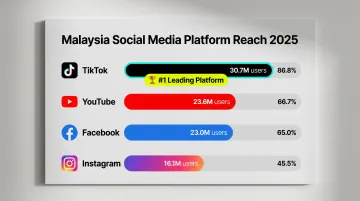
TikTok now leads in ad reach, surpassing traditional platforms like Facebook and YouTube.
The Global-Local Brand Tension
Malaysian consumers weigh both global prestige and local authenticity when evaluating brands. Academic research shows clear differences in how trust and purchase intent are formed for international versus local brands.
Brands that signal both quality and cultural relevance tend to win on both dimensions. The challenge is striking this balance by design—and that requires understanding what Malaysian consumers actually value, not just what global brand playbooks assume they do.
Key factors that shape trust across the global-local spectrum:
- Global brands gain credibility through perceived quality and consistency
- Local brands gain loyalty through familiarity, language, and community alignment
- Brands that combine both signals outperform on purchase intent
A Fiercely Competitive Market
Malaysia's market features intense competition from regional players and international brands. The brands that cut through this noise share one thing: they treat cultural context as a strategic input, not an afterthought.
Start with a Brand Strategy, Not Just Tactics
The most common mistake Malaysian businesses make is jumping straight to executional tactics—ads, posts, videos—without a clear brand strategy. Without defined positioning, audience clarity, and a compelling brand story, even well-funded campaigns produce weak recall.
What Brand Strategy Actually Covers
Brand strategy defines:
- Your core purpose and values — what your brand fundamentally stands for
- Your specific target audience — who you're building the brand for
- Your competitive advantage — what sets you apart in the market
- The emotional territory you own — how you want people to feel
This foundation determines which tactics will work and ensures consistency across every touchpoint.
Brand Positioning in the Malaysian Context
Malaysian businesses need to decide whether they want to be perceived as locally rooted and culturally authentic, globally credible and aspirational, or strike a balance between the two. This decision shapes everything from visual identity to messaging tone.
A property developer might emphasize heritage and community ties. A tech startup might signal innovation and international standards. Neither approach is wrong—but the choice must be intentional.
The Power of Brand Storytelling
Malaysian audiences respond strongly to narratives that reflect shared values, community, and purpose. Brands like RHB and JobStreet used emotionally driven storytelling to deepen audience connection rather than simply advertising products.
RHB Banking Group's festive campaigns consistently feature true stories of ordinary Malaysians championing community causes. Their 2025 Hari Raya campaign "Sulaman Kebersamaan" told the story of Adib Khalid and the Baju Raya Project (providing pre-loved Raya clothing to orphans). The campaign achieved 5.5 million views in five days and collected close to 9,000 Raya clothes donated to 16 orphanages.
JobStreet's Raya 2022 campaign reframed the tradition of "flexing" material goods by positioning a new career as the ultimate aspiration. The 2.5-minute short film drove unprecedented sign-ups for both candidates and hirers.
Getting positioning right before launching campaigns is where specialist partners add the most value. Vantage Branding works with businesses across Malaysia and Asia to define brand positioning, develop compelling narratives, and build brand architecture designed for long-term growth.
Digital Brand Awareness Strategies That Work in Malaysia
Social Media and Content Marketing
Malaysian consumers are among the most active social media users in Southeast Asia. Brands need a platform-specific strategy—not identical content pushed everywhere.
Platform-Specific Approach:
- TikTok (86.8% reach): Short-form video, trending sounds, challenges, behind-the-scenes content
- Instagram (45.5% reach): Visual storytelling, Reels, Stories, aesthetic consistency
- Facebook (65.0% reach): Community building, longer-form posts, group engagement
- YouTube (66.7% reach): Long-form content, tutorials, brand stories
Malaysians spend an average of 38 hours 49 minutes monthly on TikTok and 35 hours 34 minutes on YouTube per Meltwater's Global Digital Report.
Community-Building Over Broadcasting
The most effective Malaysian brands use social media to start conversations and build loyal communities rather than just promoting products.
Matrix Concepts' "Metaraya Matrix" campaign combined a futuristic Raya musical video featuring celebrity Janna Nick with a TikTok dance challenge. Results:
- 3.7 million video views (83% above KPI)
- 4,000+ new followers
- 24,000 total page views
- 963 RSVPs and nearly 3,000 event attendees
- 200+ leads generated
The campaign worked because it invited participation rather than just delivering a message.
Influencer and KOL Marketing
Malaysian consumers place high trust in peer recommendations and online personalities. INSG research shows:
| Influencer Tier | Follower Range | Engagement Rate |
|---|---|---|
| Nano | 1K–5K | 4.79% |
| Micro | 5K–20K | 1.62% |
| Mid-tier | 20K–100K | 1.24% |
| Macro | 100K–1M | 1.16% |
Nano influencers achieve 4.79% engagement versus 1.16% for macro influencers—a 4x differential favouring smaller creators. 75% of Malaysian consumers rely on influencers to find solutions, and 58% have purchased products endorsed by influencers.
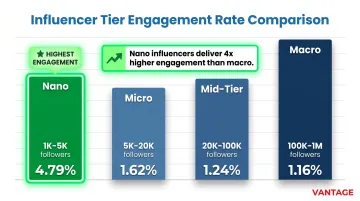
For SMEs, partnering with nano and micro-influencers (who cost RM100–RM300 per post versus RM5,000–RM6,000 for macro influencers) delivers higher engagement at lower cost. Choose partners whose values align with your brand positioning.
Video Marketing and Storytelling
The community-building dynamics that drive social media success in Malaysia extend naturally into video. High monthly streaming rates across YouTube, TikTok, and Instagram Reels mean brands that invest in narrative-driven video create stronger emotional impact than static ads.
Effective video doesn't require large production budgets:
- Behind-the-scenes content showing your team or process
- Founder stories explaining your mission
- Customer testimonials demonstrating real impact
- Culturally relevant short films tied to festive moments
RHB Bank's festive campaigns demonstrate this approach. Their emotionally resonant stories consistently achieve millions of views by centring real people and authentic community contributions rather than the bank itself. The formula is consistent: lead with a human story, tie it to a shared cultural moment, and let the brand play a supporting role.
SEO and Content Discovery
Blogging and SEO-driven content marketing build visibility with audiences actively searching for solutions—creating organic, long-term exposure.
Brands should publish content that:
- Addresses local concerns and contexts
- Uses Malaysia-specific language and examples
- Targets both Bahasa Malaysia and English-language search queries where relevant
- Answers questions your target audience is actually asking
Unlike social media reach—which fades when posting stops—search visibility compounds. Each piece of well-optimised content continues attracting high-intent readers months or years after publication.
Traditional and Experiential Tactics That Still Deliver in Malaysia
Out-of-Home Advertising
Despite the digital shift, out-of-home advertising remains highly effective in Malaysia's urban centres. Commuter culture in Klang Valley, Penang, and Johor Bahru means repeated daily exposure to well-placed ads.
Market data from Astute Analytica shows:
- Malaysia's billboard advertising market valued at US$170.43 million in 2024
- Projected to reach US$334.50 million by 2033 (CAGR 7.78%)
- 70% of people who see a billboard remember the message within 24 hours
- Commuters spend an average of 90 minutes daily in traffic
Joey Mattress's cheeky billboard campaign across Klang Valley demonstrates the power of human, witty messaging. Taglines like "Try us in bed, you won't regret it" and "Wake me up when 2020 ends" generated:
- 16% increase in website visitors
- 10% increase in total revenue for August
- Documented rise in Google searches for "Joey Mattress"
- Viral organic social sharing
Investment: just RM31,800 for one month.
Event Sponsorship and Experiential Marketing
Events tied to cultural moments or community causes do something a logo placement cannot: they create a memory. The brands that invest in experiences tend to earn recall that outlasts the event itself.
The Great Eastern Viper Challenge, Asia's first night-time obstacle challenge, attracted close to 10,000 participants across multiple events. Great Eastern used title sponsorship to position the brand around physical and mental wellness, targeting Gen-Y demographics and integrating their LIVE GREAT loyalty programme.
RHB Banking Group complemented their digital storytelling with real-world community actions including ICU ventilator donations, beach clean-ups, and book drives—creating tangible brand associations beyond advertising.
Branded Merchandise and Workshops
Well-designed merchandise and workshops are low-cost tactics that build awareness long after the initial touchpoint. Customers wearing or using branded items become passive advocates, while workshops establish credibility in a way paid ads rarely can.
Both work especially well for B2B brands and professional services. Practical examples include:
- Branded notebooks, tote bags, or apparel distributed at industry events
- Co-branded merchandise tied to CSR campaigns or product launches
- Hands-on workshops that demonstrate expertise (for example, a logistics firm hosting a supply chain risk workshop)
- Thought leadership sessions that draw media coverage and social sharing
Lessons from Malaysian Brands That Got It Right
Two Malaysian brands offer clear proof that the right brand awareness approach delivers measurable results — not just engagement numbers.
Alliance Bank's "Bank in Your Pocket" Campaign
Alliance Bank identified a genuine consumer insight: COVID-19 disrupted traditional face-to-face banking, and consumers needed digital-first solutions.
Strategy:
- Launched e-KYC (electronic Know Your Customer) enabling remote digital account opening
- Six campaign waves with A/B testing
- Demonstration videos featuring children and seniors to show ease of use across demographics
- Targeted early adopters as mini-advocates to create credibility before public launch
Results:
- High user retention among existing customers
- Healthy growth in transaction numbers
- Impressive new account openings
- Multiple global and local digital innovation awards
- Customer acquisition cost dropped 83% compared to traditional channels
- 40% of new acquisitions now digital
What made it work: one clear insight, one memorable idea, and visual proof delivered consistently across every wave.
RHB Banking Group's "People, Purpose and Progress" Campaign
RHB's purpose-led brand awareness strategy centred real stories of ordinary Malaysians rather than the bank itself. The campaign released three short films during Deepavali, Chinese New Year, and Hari Raya, combined with real-world community actions.
Measurable Outcomes:
- 18 million+ digital engagements across platforms
- 10% increase in unaided brand awareness year-on-year
- Significant spikes in brand consideration and preference scores
- Became the most followed Malaysian financial brand on social media
The 2025 Hari Raya campaign alone achieved 5.5 million views in five days and mobilised 9,000 donated Raya clothes to 16 orphanages.
Both campaigns succeeded for the same underlying reasons. Here's what they have in common.
Common Thread: Transferable Lessons
Winning Malaysian brand awareness campaigns share four characteristics:
- Deep audience understanding – They start with genuine consumer insights, not assumptions
- Single compelling idea – They build around one memorable concept, not scattered messages
- Culturally resonant storytelling – They reflect shared values and community, not just product features
- Consistent multi-channel execution – They deploy across digital and physical touchpoints with unified messaging
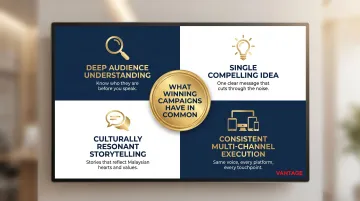
The industry doesn't matter. What matters is whether your brand strategy is built on a real insight — and whether every execution stays true to that single idea.
How to Measure Brand Awareness in Malaysia
Three Core Measurement Methods
1. Website Traffic and Branded Search Volume
Use Google Analytics and Google Search Console to track:
- Direct traffic to your website (indicates people specifically seeking you)
- Branded search queries (people searching your company name)
- Search volume trends over time
An increase in branded queries signals growing recall. Joey Mattress documented a rise in Google searches directly correlating with their billboard campaign.
2. Social Listening Tools
Track brand mentions, sentiment, and share of voice across platforms using tools like:
- Brandwatch (enterprise solution)
- Meltwater (available in Malaysia with local content)
- Mention (SME-friendly alternative)
These tools reveal how often your brand is discussed, the context of those discussions, and how you compare to competitors.
3. Brand Surveys
Conduct periodic customer surveys asking:
- "How did you hear about us?"
- "Which brand comes to mind when you think of [your category]?"
- "Have you heard of [your brand]?" (aided awareness)
- "Name any brands in [your category]" (unaided awareness)
Use Google Forms or SurveyMonkey to distribute quick pulse polls. Establish baseline measurements before launching campaigns to track growth accurately.
A Fourth Signal Worth Watching: Google Business Profile
These three methods cover most tracking needs, but Google Business Profile adds a simple, often underused layer. A growing volume of reviews — especially positive ones — shows that more consumers are actively remembering and engaging with your brand. Monitor it regularly alongside your other metrics.
Balanced Metrics Approach
Effective measurement combines two types of signals:
- Quantitative metrics: traffic, search volume, follower growth, reach
- Qualitative indicators: sentiment, customer recall, brand associations
Neither tells the full story alone.
Track:
- Social media follower growth and engagement rates
- Reach and impressions across campaigns
- Share of voice versus competitors
- Sentiment analysis (positive/neutral/negative mentions)
- Aided and unaided brand recall from surveys
- Direct and branded search traffic trends
Frequently Asked Questions
What is the objective of Malaysia Brand Day?
Malaysia Brand Day is a government-backed initiative endorsed by the Prime Minister's Office that promotes homegrown Malaysian brands domestically and internationally. It connects local businesses with global opportunities through showcases, exhibitions, and business matching events.
Why is brand awareness important for businesses in Malaysia?
Strong brand awareness builds consumer familiarity and trust in Malaysia's competitive, saturated market. When customers recognise and remember your brand, they're more likely to choose you over an unknown competitor. That familiarity lowers long-term acquisition costs and drives stronger purchase intent.
What are the most effective digital channels for brand awareness in Malaysia?
Social media platforms—particularly TikTok (86.8% reach), Instagram, Facebook, and YouTube—are the most impactful digital channels in Malaysia given the country's 85% social media usage rate. Complement these with SEO-driven content marketing for organic long-term discovery.
How does Malaysia's multicultural society affect brand awareness strategy?
Malaysia's Malay, Chinese, and Indian communities expect culturally attuned messaging—especially during festive occasions like Hari Raya, Chinese New Year, and Deepavali. Campaigns that ignore these cultural nuances can alienate audiences and damage brand trust quickly.
How do you measure brand awareness in Malaysia?
Use a mix of quantitative and qualitative methods:
- Track branded search volume and website traffic via Google Analytics
- Survey customers to test unaided and aided brand recall
- Monitor social mentions and sentiment with tools like Brandwatch or Meltwater
What is the difference between brand awareness and brand recognition?
Brand recognition refers to a consumer's ability to identify a brand when exposed to visual cues like logos or colours. Brand awareness is broader—it covers whether consumers recall the brand unprompted and what associations they hold, including emotional connections and how they place it relative to competitors.