This scenario plays out repeatedly for brands entering Vietnam. The core tension? Vietnam is not a single, homogeneous market. Its 63 provinces—recently consolidated to 34 administrative units—carry distinct cultural identities, consumer values, and trust signals that fundamentally shape how brands are perceived. A regional brand audit is the intelligence tool that surfaces these differences before they cost your brand market share, credibility, or both.
This article covers what regional brand audits reveal in Vietnam, how regional differences manifest in brand perception, and how to turn audit insights into sharper, more effective brand strategy.
TLDR: Key Takeaways
- Vietnam's regional diversity creates meaningfully different brand environments across major cities and provinces
- Regional brand audits map how consumers perceive, associate with, and compare brands across Vietnam's distinct markets
- Common insights include gaps between intended brand positioning and how each region actually receives it
- The North-South cultural divide is one of the most impactful variables affecting brand perception and trust
- Audit findings should directly shape brand messaging, visual identity, and regional go-to-market decisions
Vietnam Is Not One Market: Why Regional Diversity Changes Everything for Brands
Vietnam's economic and cultural geography operates in layers. Hanoi in the north is more conservative, hierarchical, and tradition-oriented. Ho Chi Minh City in the south is entrepreneurial, cosmopolitan, and faster to adopt new brands. Da Nang and the Central region occupy a middle ground with their own distinct identity.
Administrative Consolidation Doesn't Erase Local Identity
Vietnam's recent administrative consolidation from 63 to 34 provinces became official in July 2025. While this reform streamlines governance, it doesn't erase regional identity. Local communities and consumers continue to carry strong provincial affiliations. The proportion of coastal provinces increased from 44% to 62%, potentially reshaping trade corridors and regional brand positioning.
Central Highlands provinces merged with south-central coast provinces, altering the geopolitical identity of regions long associated with distinct agricultural heritage products like Buon Ma Thuot coffee. This makes regional brand differentiation more important, not less.
Heritage Brands Show Geography Shapes Trust
That consolidation makes origin-based brand equity harder to ignore, not easier. Vietnam has 39 protected Geographical Indications (GIs) under the EU-Vietnam Free Trade Agreement. Phu Quoc fish sauce received Vietnam's first national GI certificate in 2001 and commands a 30–50% price premium based solely on regional origin. Buon Ma Thuot coffee from Dak Lak province accounts for over 30% of Vietnam's total coffee export volume.
These heritage brands show the same pattern as "Idaho potatoes" or "Champagne": geography shapes consumer trust. International brands face an equivalent dynamic — where they enter, and how they're positioned relative to local identity, directly affects how they're received.
Structural Market Differences Define Brand Presence
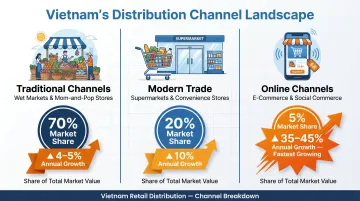
Distribution channels vary sharply across Vietnam:
- Traditional channels (wet markets, mom-and-pop stores): ~70% of consumer goods distribution
- Modern trade (supermarkets, convenience stores): ~20% of total sales
- Online channels: ~5% of total sales
According to Vietnam Briefing, traditional channels grow at 4–5% annually while modern channels grow at 10% and online channels at 35–45%. A brand present in Lotte or Co.opmart operates in a completely different context than one selling through district markets in Nam Dinh or Vinh Long.
Brands that apply a single positioning across all regions risk resonating with one segment while being irrelevant or misunderstood in others. A brand audit identifies exactly where that gap has opened — and which regional signals are driving it.
What a Regional Brand Audit in Vietnam Actually Covers
A regional brand audit is a structured diagnostic exercise examining how a brand is perceived, positioned, and experienced across different geographic markets. It covers awareness levels, trust signals, competitive standing, and messaging consistency — as understood by local consumers and stakeholders in each geography.
Core Audit Dimensions for Vietnam
Brand Awareness and Recall
- Unaided vs. aided awareness levels across provinces
- Which cities the brand has penetrated vs. where it's unknown
- Awareness gaps between Tier 1 cities (HCMC, Hanoi) and Tier 2/3 markets
Brand Perception and Associations
- Attributes, emotions, and values consumers in each region link to the brand
- Whether those associations align with the brand's intended positioning
- How local culture shapes interpretation of messaging and visual identity
Competitive Landscape by Region
- Dominant local and international competitors in each market
- How the brand performs on key purchase drivers by geography
- Competitive intensity differences between urban and rural areas
Touchpoint and Channel Audit
- Where consumers encounter the brand — digital, retail shelf, outdoor, word-of-mouth
- Whether the brand experience is consistent across touchpoints in each region
- Channel performance gaps between modern trade and traditional trade
A thorough audit goes beyond perception surveys. Integrating competitive analysis, stakeholder interviews, and cultural context review produces a clear picture of brand equity by region — and gives decision-makers the evidence needed to prioritise where to invest, consolidate, or reposition.
Key Regional Brand Audit Insights: What Brands Typically Discover in Vietnam
Insight 1: Positioning Disconnect
Many brands discover their core positioning lands differently by region. A "premium quality" message may require institutional credibility and longevity to resonate with Northern consumers, while Southern consumers respond more to aspirational lifestyle cues and peer recommendation.
Insight 2: Awareness Gaps by Geography
Kantar's Brand Footprint Vietnam 2024 documents significant urban-rural brand gaps. Hao Hao instant noodles achieved 78.9% household purchase rate in urban areas versus 65.7% in rural areas. In Health and Beauty, Diana leads in urban areas while P/S toothpaste leads in rural areas.
Brands often find strong awareness in one or two major cities but near-zero presence in secondary cities or provinces. This visibility gap directly impacts market penetration potential.
Insight 3: Visual and Linguistic Identity Misfires
Vietnamese uses six distinct tones that change word meanings entirely. Research shows that a technology company used a Vietnamese phrase where incorrect tone marks caused "breakthrough" to read as "break."
An international food brand failed in Southern Vietnam because it used exclusively Northern voice-overs—the formal tone felt off-putting to Southern consumers. After correcting with dual-dialect versions and local slang, engagement increased sharply.
Key dialect differences include:
- Northern dialect uses six tones; Southern effectively merges two tones into five
- "D" sounds like "z" in the North but "y" in the South
- Vocabulary varies (motorcycle is "xe may" in North vs. "xe Honda" in South)
These aren't cosmetic differences — tone and dialect errors can flip consumer perception from positive to negative before a brand has any chance to recover.
Insight 4: Trust Signals Differ
What builds consumer confidence varies by region. In some areas, local partnerships, in-language communication, and community-level presence matter more than media presence. In others, international credentials and modern retail visibility are primary trust drivers.
Research on the Vietnam consumer market shows these differences break along recognizable lines:
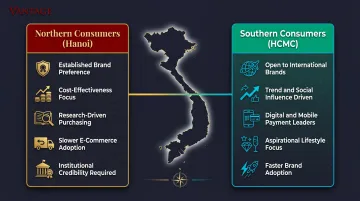
- Northern consumers favor established brands; cost-effectiveness and practicality drive purchase decisions
- Southern consumers are quicker to adopt international, premium, and innovative brands, with social influence and trend adoption playing a larger role
Insight 5: Competitive Context Looks Different by Region
A brand may be market leader in HCMC's modern trade but face a crowded and unfamiliar competitive set in Da Nang's general trade or a Mekong Delta province. The Top 5 FMCG brand owners in urban areas are Vinamilk, Unilever, Masan, Nestlé, and Suntory-PepsiCo. In rural areas, Nestlé and Suntory-PepsiCo are replaced by Wilmar and Acecook.
A brand that benchmarks only against HCMC competitors may be measuring itself against the wrong field entirely once it moves into provincial markets.
North vs. South: Navigating Vietnam's Most Important Brand Divide
The Hanoi vs. Ho Chi Minh City divide is the most significant axis in Vietnam brand audits.
Hanoi consumers:
- Value restraint, quality heritage, and relationship-driven trust
- Research products extensively before purchasing
- Allocate higher share of income to essentials
- E-commerce adoption is slower
- Prefer institutional credibility and formal communication
HCMC consumers:
- More experimental and responsive to novelty
- Influenced by trend-forward peers and social media
- Lead in digital adoption and mobile payments
- Actively seek status-symbol items and new experiences
- Prioritize modernity and aspirational lifestyle cues
Income and Economic Differences
According to Vietnam's General Statistics Office, average monthly per capita income is:
- Hanoi: ₫6.86 million ($270)
- Ho Chi Minh City: ₫6.51 million ($256)
- National average: ₫4.96 million ($195)
Binh Duong ranks first at ₫8.29 million ($326), driven by industrial development outside the major cities. In practice, this income spread means premium positioning lands differently across regions — what reads as aspirational in HCMC can feel out of reach or culturally misaligned in Hanoi, where value-for-quality framing tends to perform better.
For foreign brands entering Vietnam, the key audit question isn't whether your brand story is compelling — it's whether the same story works equally well in both cities. Most of the time, it doesn't.
Turning Regional Brand Audit Insights Into Strategy
The primary output of a regional brand audit is a brand positioning map by region. This map identifies where the brand is strong, where it's misaligned, and where opportunity gaps exist—becoming the brief for brand strategy, visual identity refresh, or go-to-market planning.
How to Prioritize Using Audit Findings
Not every region requires the same investment or the same message:
- Build awareness: Where brand recognition is low but market potential is high
- Refine positioning: Where awareness exists but perceptions don't align with brand intent
- Activate demand: Where perception is strong but purchase barriers exist
- Expand channels: Where modern trade presence is strong but traditional trade is untapped
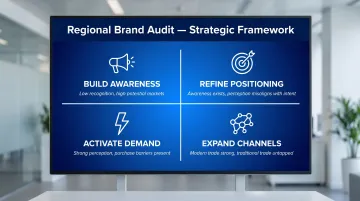
The audit tells you which strategy fits which market.
Adapting Messaging and Visual Identity
Best practice for Vietnam is creating separate Northern and Southern versions of key marketing materials—particularly voice-overs, subtitles, and conversational content. Register and pronoun choices vary significantly by audience:
- Youth audiences: Informal pronouns like "minh" (I) and "ban" (friend) create peer-level intimacy
- Older demographics: "Quy khach" (valued customer) or kinship terms like "co" (aunt) and "bac" (uncle) convey respect
- Formal and signage content: Standard written Vietnamese, based on the Hanoi dialect, is the appropriate default
Getting these distinctions right is where language strategy meets brand positioning.
Vantage Branding's Role in Strategy Development
For brands ready to act on audit findings, Vantage Branding translates regional insights into concrete deliverables: messaging frameworks tailored by region, visual identity systems that account for Northern and Southern audience differences, and content strategies grounded in what the audit actually revealed. The goal is a brand approach that reflects how Vietnam's markets actually work—not how they're assumed to.
Frequently Asked Questions
What is a brand audit and why is it important for brands operating in Vietnam?
A brand audit is a systematic review of how a brand is perceived, positioned, and experienced across its markets. Vietnam's regional diversity—cultural, linguistic, economic—makes this especially critical. Without understanding these differences, brands risk applying uniform strategies that resonate in one region while failing in others.
How does brand perception typically differ between Hanoi and Ho Chi Minh City?
Hanoi consumers prefer trust built through institutional credibility, heritage, and formal relationships. HCMC consumers are more open to novelty, aspiration, and social influence. Messaging that works in HCMC can feel out-of-touch in Hanoi, and vice versa. Each market requires its own communication strategy.
What does a regional brand audit in Vietnam include?
A regional brand audit typically covers:
- Brand awareness measurement across geographies
- Consumer perception analysis by region
- Competitive review and positioning gaps
- Touchpoint audit across selected markets
- Surveys, stakeholder interviews, and cultural context analysis
The output is a set of clear recommendations tailored to each regional market.
How often should a brand conduct a regional audit in Vietnam?
Run a baseline audit before major market entries or brand refreshes to establish clear benchmarks. Follow up with lighter pulse audits every 12–18 months to track shifts in consumer perception and competitive positioning as conditions change.
Can a brand audit help a foreign brand entering Vietnam for the first time?
Yes. A pre-entry audit reveals consumer awareness gaps, competitor positioning, and cultural fit considerations before you invest in brand development. This reduces the risk of costly misfires and helps you enter the market on solid footing.
What are common mistakes brands make when entering Vietnam without a regional brand audit?
Common pitfalls include:
- Assuming uniform consumer behaviour across regions
- Applying a single brand positioning to all markets
- Missing regional trust signals and dialect differences
- Overestimating brand awareness outside major cities
A regional audit surfaces these blind spots before they become expensive problems.