
Introduction
Private clinic rebranding in Malaysia has moved far beyond simple logo refreshes. Today's initiatives represent strategic transformations in how clinics communicate their identity, values, and patient promises. As Malaysia's private healthcare sector grows more competitive—corporate hospital groups expanding aggressively and digital health platforms gaining traction, independent clinics face mounting pressure to differentiate themselves through authentic, patient-centred brand positioning.
Malaysian patients now evaluate clinics as they would consumer brands, weighing service quality, digital presence, and brand perception alongside clinical credentials. For clinic owners and healthcare administrators, knowing which rebranding strategies are working—and why—is what separates practices that grow from those that stagnate.
TLDR
- Patient experience now drives clinic brand identity, replacing purely clinical messaging
- Digital touchpoints such as websites, social media, and telehealth have become primary brand encounters
- Specialty niche positioning helps independent clinics compete against large hospital groups
- Multi-clinic networks consolidate under unified masterbrands for credibility and scale
- Regulatory changes and medical tourism ambitions accelerate rebranding urgency
From Clinical to Patient-Experience-Led Brand Identity
The most significant shift reshaping Malaysian private healthcare branding is the pivot from clinical credentials toward patient-centred narratives. Major hospital groups have led this transformation—IHH Healthcare's "Care. For Good." framework and KPJ Healthcare's August 2024 rebrand around "Care for Life" exemplify how healthcare brands now prioritise emotional trust and patient journey over equipment lists and procedure catalogues.
For smaller private clinics, this manifests in tangible ways:
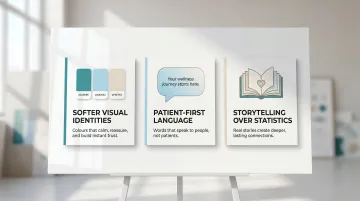
- Softer visual identities: Rounded typography, calming colour palettes (teal, soft blue, warm neutrals), and approachable design systems replace sterile clinical aesthetics
- Patient-first language: Communications emphasise outcomes and experiences—"Live better," "Your wellness journey," "Care that sees you"—rather than technical procedures
- Storytelling over statistics: Brand narratives highlight patient outcomes, compassionate care moments, and holistic wellness rather than machinery specifications
This trend responds to changing patient behaviour. Research shows Malaysian patients increasingly seek information to participate in healthcare decisions, becoming more discerning consumers who compare clinics on service quality and brand perception alongside clinical expertise.
That shift in patient expectations puts real pressure on clinic positioning. Branding partners with healthcare experience—Vantage Branding has worked with healthcare clients including Allium Healthcare and Jurong Health—help clinics build identities that hold together across every patient touchpoint, from signage to digital presence to staff communications.
Digital-First Branding: Where Clinics Now Make Their First Impression
For most Malaysian patients, the first brand encounter with a clinic is now digital, not physical. Google search results, social media profiles, patient review platforms, and clinic websites all shape brand perception before a patient ever steps through the door.
The numbers support this shift. Mobile phone usage in Malaysia reached 99.5% in 2024, with household internet access at 96.8%. Meanwhile, Malaysia's telemedicine market is projected to reach USD 6,515.4 million by 2030, up from USD 1,848.6 million in 2023.
Progressive Clinic Digital Branding Strategies
Core digital touchpoints:
- Professional websites with online booking functionality
- Active Instagram and Facebook presence providing health education
- Optimized Google Business Profiles with current information
- Consistent visual identity across all digital platforms
Branded digital interfaces:
- Patient portal apps for appointment management
- Telehealth consultation platforms
- Prescription management systems
- Automated appointment reminders
Clinics that brand these digital interfaces consistently signal modernity and patient-centricity. Every digital touchpoint, from a WhatsApp Business profile to a telehealth platform, carries the clinic's brand — and clinics that treat each one with the same visual and tonal discipline build recognition that compounds over time.

Niche Specialization as a Rebranding Strategy
Independent private clinics increasingly rebrand around specific specialties or patient segments to carve distinct positioning. Rather than competing head-to-head with corporate hospital groups on breadth of services, they focus depth on aesthetics, women's health, sports medicine, mental health, or geriatrics.
How Specialty Positioning Manifests
Naming and identity:
- Specialty-specific clinic names (e.g., "Serenity Mental Wellness," "Glow Aesthetics Clinic")
- Visual identities reflecting the niche—clinical minimalism for aesthetic clinics, warm tones for mental health practices
- Targeted content marketing addressing specialty-specific patient concerns
Market Opportunity
The Malaysian aesthetic medicine market demonstrates the potential. Non-invasive aesthetic treatments now represent a USD 1.2 billion market, driven by rising disposable income and social media influence.
Mental health is another area where unmet demand is reshaping clinic positioning. Depression prevalence in Malaysia doubled from 2.3% in 2019 to 4.6% in 2023, with 29.2% of adults reporting mental health issues in 2024.
"Increasing prevalence of mental disorders in Malaysia, with a growing need to improve access to timely and efficient mental healthcare." — 2021 research study
For smaller clinics, a focused brand identity makes premium pricing defensible—patients actively seek out specialists, not generalists, when the condition feels personal.
Multi-Clinic Consolidation and Masterbrand Building
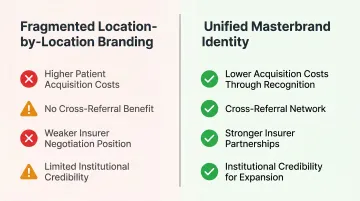
Groups of private clinics under common ownership (or franchised networks) are moving away from clinic-by-clinic branding toward unified masterbrand identities. The corporate hospital model shows what this looks like at scale: IHH Healthcare operates 89 hospitals across 10 countries under a unified "Care. For Good." purpose, while KPJ maintains consistent brand architecture across 31 hospitals.
Practical Brand Elements
Physical consolidation:
- Standardized clinic interiors and signage systems
- Shared brand name or clear sub-brand architecture
- Consistent patient journey across locations
Digital unification:
- Group-level websites with location selectors
- Unified patient portals and loyalty programs
- Centralized online booking systems
Strategic Significance
Consolidated brand identities deliver measurable advantages:
- Lower patient acquisition costs through brand recognition
- Cross-referral networks between clinic locations
- Stronger negotiating position with insurers and corporate health partnerships
- Institutional credibility that facilitates investment and expansion
The competitive pressure is significant. Malaysia's private hospital industry operates as a "highly concentrated oligopoly" where the top four firms hold 62-73% of market share. Independent clinic groups that present a fragmented, location-by-location identity are competing at a structural disadvantage against players with established national brands.
What's Driving Private Clinic Rebranding in Malaysia
Private clinic rebranding in Malaysia isn't happening by chance. Specific market pressures, policy shifts, and changes in how patients make healthcare decisions are pushing clinics to reconsider how they present themselves.
Rising Patient Expectations and Health Literacy
Malaysia's increasingly informed patients now evaluate clinics on service quality, environment, and brand perception—not clinical credentials alone. Health literacy research confirms patients increasingly seek information to participate in healthcare decisions—and clinics that communicate clearly earn greater patient confidence.
Intensified Competitive Dynamics
Independent private clinics face mounting pressure from multiple directions:
- Corporate hospital groups (KPJ, IHH) expanding their network and marketing reach
- Digital-first telehealth providers competing on convenience and price
- Corporate panel clinics offering standardised care at scale
Without clear positioning, independent clinics risk being treated as interchangeable—competing on price alone rather than distinct value.
Regulatory and Policy Environment
Malaysia's Health White Paper, tabled in Parliament in June 2023, proposes a 15-year phased reform creating a "Strategic Purchaser" that will purchase services from both public and private providers using value-based payment models. Private providers face new accountability requirements under this framework, prompting clinics to align their brand messaging with quality, transparency, and value-based care standards before these expectations become mandatory.
Medical Tourism Aspirations
Malaysia welcomed 1.6 million healthcare travellers in 2024, generating RM2.72 billion in revenue—a 21% increase from the previous year. The government's Malaysia Year of Medical Tourism 2026 (MYMT 2026) targets RM12 billion in industry revenue by 2030. This positioning incentivises private clinics in specialist fields to develop brand identities that communicate credibility and specialism to patients arriving from overseas.
Future Signals for Private Clinic Rebranding in Malaysia
The rebranding trends shaping the sector today signal deeper shifts. In the next 1-3 years, clinic owners and healthcare brand managers should watch for:
AI-Powered Patient Personalization as a Brand Driver
As AI tools enable hyper-personalized patient communications and digital health interactions, clinics that embed this into their brand experience — personalized content, smart appointment reminders, AI-assisted triage — will create differentiated brand equity.
Malaysia's healthcare services market is projected to surpass USD 48 billion by 2028, though AI adoption remains in early stages. Most Malaysian hospitals currently lack AI governance committees and dedicated AI leads — a gap that represents real opportunity for clinics willing to move first.
Sustainability and ESG as Brand Values
Following IHH Healthcare's sustainability roadmap—which commits to reducing carbon footprint, greenhouse gas emissions, single-use virgin plastics, and environmentally harmful anesthetic gases—private clinics are expected to incorporate environmental and social responsibility into brand positioning. Clinics that act on ESG commitments — through green clinic design, community outreach, and ethical sourcing — will earn trust with patients who expect healthcare providers to reflect their own values.
Internationalization-Ready Brand Standards
As cross-border patient acquisition grows and Malaysian clinics compete for regional patients, brand identities will need to meet international legibility standards. Clinics without these will struggle to compete for regional patients:
- Multi-language communications that serve diverse patient demographics
- Internationally recognizable visual systems, including JCI accreditation signage
- Digital-first patient journeys that reduce friction from inquiry to appointment
Frequently Asked Questions
Can a non-doctor own a clinic in Malaysia?
Under Malaysia's Private Healthcare Facilities and Services Act 1998, a private clinic must be owned and operated by a registered medical practitioner with a valid Annual Practising Certificate. For company-owned clinics, at least one board member must be a registered medical practitioner.
What does private clinic rebranding typically involve in Malaysia?
Rebranding typically covers the clinic name, logo, visual identity, signage, and digital presence. Strategic rebrands go further — addressing brand positioning, messaging frameworks, and patient communications to ensure consistency across every touchpoint.
When should a private clinic consider rebranding?
Common triggers include an outdated visual identity, change in ownership or specialty focus, expansion into a multi-clinic network, shifts in target patient demographics, or increased competition from newer providers. Rebranding is also worth considering when your current brand perception no longer reflects where the clinic is headed.
How does rebranding affect patient trust and retention?
A well-managed rebrand builds patient confidence through consistent visuals, clear messaging, and a seamless experience across all touchpoints. A poorly handled one — particularly sudden name changes with no forewarning — creates confusion and erodes trust. Keeping patients informed throughout the transition is essential.
What regulations should private clinics be aware of when rebranding in Malaysia?
Rebranded clinic names and signage must comply with the Private Healthcare Facilities and Services Act 1998 and Ministry of Health guidelines. All advertising and promotional materials must adhere to the Malaysian Medical Council's ethical advertising standards and the MOH's Medicine Advertisements Board guidelines (MAB 3/2023).