Introduction
A mid-sized Malaysian B2B services company had invested consistently in marketing for over a decade. They refreshed their website twice, maintained active social media profiles, and kept sales decks updated. By most measures, the brand was well-maintained.
Then leadership prepared to pitch a major enterprise account in Singapore. Prospective clients couldn't articulate what made the company different. Internal teams described the business in contradictory terms. The brand that felt clear inside the organisation was nearly invisible to those who mattered most.
This gap between brand visibility and brand clarity costs Malaysian companies more than missed opportunities—it erodes competitive positioning in an increasingly sophisticated ASEAN market. Malaysia's MSMEs contributed RM652.4 billion to GDP in 2024, growing faster than the national economy. Yet many of these businesses operate with organically evolved brands that have never been formally evaluated.
This article walks through a real brand audit journey: what the diagnostic revealed, how findings translated into strategy, and what Malaysian companies expanding regionally can take away from the process.
TLDR:
- Brand audits diagnose gaps between internal narrative, external perception, and competitive positioning
- Malaysian companies expanding into ASEAN face compounded brand clarity needs across multicultural markets
- 68% of B2B buyers already have a preferred vendor before formal evaluation begins—making brand visibility critical
- Audit findings only create value when translated into prioritised action with clear ownership
- Choose audit partners with cross-market ASEAN experience and rigorous stakeholder engagement methodology
What Is a Brand Audit and Why Malaysian Companies Need One Now
A brand audit is a structured, evidence-based assessment of how your brand is perceived — internally by employees and leadership, externally by customers and the market, and competitively against peers. It goes far beyond reviewing a logo or tallying social media metrics. A rigorous audit diagnoses the gap between what your company believes it stands for and what stakeholders actually experience at each point of contact.
Why Now Matters for Malaysian Businesses
Regional competition is intensifying. Singapore's DBS overtook Malaysia's PETRONAS as ASEAN's most valuable brand in 2025, with brand value jumping 56% to USD17.2 billion. The gap between brand leaders and laggards in ASEAN is widening fast.
B2B buyers have also changed how they evaluate vendors. Research shows brand reputation accounts for approximately 50% of B2B purchase decisions — yet buyers claim to assign only 5% conscious weight to brand. That tenfold gap means your brand is shaping decisions before you ever enter a formal pitch.
That dynamic becomes even more consequential when you factor in trust. The Edelman Trust Barometer 2026 reveals Malaysia shows an 18-point domestic trust advantage for local companies over foreign-headquartered ones. For Malaysian companies expanding into Singapore or Indonesia, this means domestic brand equity doesn't automatically transfer across borders — you must actively build credibility in each new market.
The Strategic Misconception
Many Malaysian businesses still treat branding as a cost centre or design function, not a strategic asset. Companies that treat brand as strategy use audit findings to inform decisions across the business — not just communication updates:
- Market entry timing and positioning
- Pricing strategy and value communication
- Talent acquisition messaging
- Investor and stakeholder narrative
When Malaysia's MSME exports grew 31.3% in 2024 to reach RM196.8 billion, driven heavily by services sector expansion, the companies capturing that growth were the ones whose brands could credibly compete beyond domestic markets.
When Should Malaysian Companies Conduct a Brand Audit?
Key inflection points that signal an audit is overdue:
- Regional expansion into ASEAN markets — especially when moving from Malaysia into Singapore, Indonesia, or Vietnam
- Merger or acquisition activity — when two brand identities must be reconciled or repositioned
- Stagnant customer acquisition — marketing spend remains consistent but lead quality or conversion rates plateau
- Narrative disconnect — leadership describes the company differently than frontline teams, or different departments use conflicting positioning
- IPO or fundraising preparation — investors evaluate brand equity as a material component of corporate valuation
- Multicultural market navigation — expanding across Malaysia's Malay, Chinese, and Indian audience segments with inconsistent messaging
Reactive vs. Proactive Auditing
Most companies wait until something breaks visibly: declining leads, talent attrition, competitor leapfrogging, or sales cycles lengthening without explanation. The most prepared companies audit at strategic turning points before problems surface.
Research recommends comprehensive brand health assessments at least once annually. A practical audit cadence looks like:
- Annual: Full brand health assessment covering positioning, perception, and competitive standing
- Quarterly: Key metric reviews calibrated to industry volatility and growth stage
- Post-event: Immediate audits after product launches, leadership changes, or competitive landscape shifts
Malaysia-Specific Context
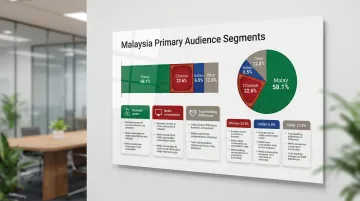
Companies expanding across Malaysia's multicultural market face brand clarity challenges. Malaysia's population comprises 58.1% Malay, 22.6% Chinese, and 6.5% Indian citizens, each with distinct business relationship norms, media consumption patterns, and trust-building mechanisms. What resonates with one segment may not translate to others. An audit surfaces these misalignments before they become market entry failures.
Cross-border expansion adds a separate layer of brand complexity. Malaysian companies invested RM33.9 billion abroad in 2024, with RM26.5 billion flowing into Asia—primarily Singapore and Indonesia.
Moving from domestic to regional operations requires brand narratives that travel across borders. Audit findings help identify which elements of your brand are market-specific and which can scale regionally.
Case Study: A Malaysian Company's Brand Audit Journey — The Setup
The Company
A mid-sized Malaysian B2B services company had operated successfully for over a decade, building a loyal customer base through strong delivery and deep domain expertise. Despite consistent marketing investment, the company struggled to win new enterprise accounts and attract younger talent. Leadership recognised that as they prepared to expand from Malaysia into Singapore and Indonesia, their organically evolved brand had never been formally evaluated.
The Problem That Prompted the Audit
Different departments described the company in contradictory ways:
- Sales positioned the company as a low-risk, relationship-first partner
- Marketing emphasised technical capability and innovation
- Senior leadership wanted to project thought leadership and strategic vision
The website reflected positioning from five years earlier. Sales decks, LinkedIn tone, and office collateral were visually and narratively inconsistent. No single coherent story existed—and this fragmentation showed up in every external interaction.
Setting Up the Audit
Leadership began by aligning on objectives: What decisions would audit findings need to support? The answer was threefold—market entry strategy for Singapore, talent attraction messaging, and enterprise sales positioning. Leadership assembled a cross-functional team from sales, marketing, HR, and operations.
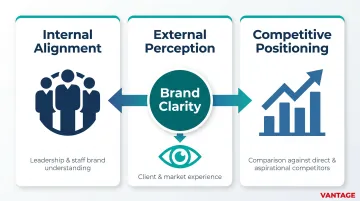
The audit framework covered three dimensions:
- Internal alignment — how leadership and staff understood and articulated the brand
- External perception — how existing and prospective clients experienced the brand
- Competitive positioning — how the company compared to direct and aspirational competitors
Data Collection Phase
The audit process included:
- Stakeholder interviews with leadership and frontline teams across departments
- Customer perception surveys with existing clients and prospective accounts who had engaged but not converted
- Competitive benchmarking reviewing three direct competitors and one "stretch" comparator—a regional consultancy with strong thought leadership presence
- Touchpoint review systematically auditing website, proposals, LinkedIn presence, email templates, and physical collateral
Initial Picture
The company had clear strengths going in: deep domain expertise, client relationships spanning 8–10 years, and a delivery culture that consistently exceeded project expectations. None of this came through in the brand.
Externally, the company read as reliable but undifferentiated — a capable vendor, not a trusted authority. Clients who knew them well valued them highly. First-time encounters with the brand, however, offered no reason to choose them over a cheaper alternative.
What the Audit Revealed: Internal, External, and Competitive Gaps
Internal Alignment Gap
Stakeholder interviews revealed conflicting brand narratives. Sales framed the company as risk-averse and relationship-focused—emphasising continuity and stability. Marketing materials highlighted innovation and technical sophistication. Leadership aspired to thought leadership positioning, speaking at industry events and publishing insights.
No coherent narrative existed to unify these perspectives. The fragmentation wasn't a communication problem—it reflected a deeper strategic misalignment about what the company stood for and who it served.
External Perception Gap
Customer survey data showed a troubling split. Existing clients gave high satisfaction scores (NPS of 68), citing responsiveness and quality delivery. But prospective clients who had encountered the brand via website, LinkedIn, or industry events demonstrated low brand recall and weak differentiation.
When asked "What makes [Company] different from competitors?", fewer than 30% of prospects could articulate a meaningful answer. In short:
- Known clients: high trust, strong satisfaction
- New prospects: low recall, no clear differentiator
Research shows that 68% of B2B buyers already have a front-runner vendor in mind before formal buying begins—and that front-runner wins 80% of the time. This company was rarely that front-runner. Without early brand visibility, it wasn't earning consideration before the shortlist was already set.

Competitive Gap
The benchmarking exercise compared the company against three direct competitors and one aspirational comparator—a regional consultancy operating across Singapore, Malaysia, and Indonesia.
Direct competitors had similarly underdeveloped brands: functional websites, inconsistent messaging, minimal thought leadership. The competitive set was weak, creating an opportunity.
The stretch comparator told a different story. They generated inbound leads, spoke at major industry conferences, published quarterly research reports, and charged fees 20–30% higher than the category average. That gap—in visibility, authority, and pricing power—showed exactly what was being left on the table.
Malaysia-Specific Finding
The audit revealed that messaging was written primarily for a single audience segment. Brand tone, language choices, and visual cues all skewed narrow—missing the range needed to communicate credibly across Malaysia's multicultural market. This became a sharper liability when expanding toward Singapore's more internationally oriented business environment.
Overall Diagnostic
The audit identified three priority gaps:
- Internal narrative fragmentation — no single, coherent brand story existed across departments
- External invisibility — the brand was unknown to new-to-brand segments despite strong delivery for existing clients
- Competitive underinvestment — minimal brand authority-building compared to aspirational competitors
Each gap pointed to a specific action. The next phase was translating this diagnostic into a sequenced brand strategy—starting with the internal narrative before any external repositioning could hold.
Turning Audit Findings into a Brand Strategy
From Diagnosis to Direction
Audit findings were translated into a prioritised brand strategy brief. The first priority: establishing a clear, singular brand narrative that all teams could use consistently—from sales to HR to marketing. This required leadership alignment workshops before any external communication was updated.
The workshops surfaced a fundamental choice: position as a safe, reliable partner (the sales team's preference) or as an innovative, forward-thinking authority (leadership's aspiration). The data made the decision clear. The market already had abundant "safe vendor" options.
The real opportunity lay in authoritative positioning. The condition: delivery and thought leadership had to credibly support the claim before any external messaging changed.
External Brand Repositioning
With internal alignment achieved, the company moved to external repositioning:
- Rewrote website and sales materials to lead with client outcomes, not capabilities lists
- Launched a thought leadership programme: quarterly industry reports, senior leadership articles on LinkedIn, and targeted conference speaking slots
- Refined the visual identity to reflect the company's repositioned market ambition — not a full rebrand, but a deliberate step up
Nothing was cosmetic. Each decision traced back to a specific audit finding.
Measurement and Monitoring Plan
The company established baseline brand health metrics and committed to 12-month tracking:
- Brand recall among target enterprise segments, measured via quarterly surveys
- Inbound inquiry quality: what percentage of leads matched the ideal client profile
- Share of Search: a predictive proxy for market share that responds quickly to brand-building activity
- Sales cycle length from first contact to closed deal
- NPS trends across both existing clients and new client onboarding
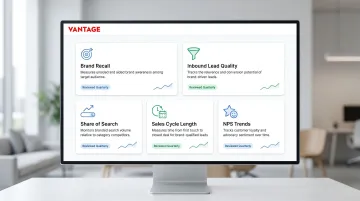
These KPIs created accountability. Leadership reviewed metrics quarterly, adjusting tactics based on what moved.
Lessons for Malaysian Companies
The most common audit failure is a simple one: completing the process, receiving a thorough report, then doing nothing with it.
This company succeeded because:
- Leadership committed to acting on findings within a defined 90-day implementation window
- Each initiative had clear ownership—one person accountable for delivery
- Quick wins (website messaging update) built momentum for longer-term initiatives (thought leadership content)
- Metrics were reviewed regularly, not just measured once
Choosing the Right Brand Audit Partner for Your Malaysian Business
What to Look For
Not all agencies offering "brand audits" conduct the same depth of analysis. A rigorous audit requires:
- Cross-functional stakeholder engagement — not just interviews with marketing, but sales, operations, HR, and leadership
- Integration of qualitative and quantitative data — combining stakeholder interviews with customer surveys and competitive analysis
- Clear analytical framework — structured methodology, not ad-hoc observations
- Experience with multi-stakeholder organisations — especially culturally complex or regionally distributed businesses
Be cautious of audits that only assess visual identity or digital metrics. These are surface-level assessments, not strategic diagnostics. For Malaysian businesses with regional ambitions, this distinction matters even more — because the gaps that limit growth are rarely visible on the surface.
The Value of Cross-Market Experience
Agencies that work exclusively in domestic Malaysian markets can miss positioning opportunities that only become visible through cross-border comparison. A partner with regional experience helps identify where your brand holds up — and where it doesn't — across different markets.
Vantage Branding works across Singapore, Malaysia, and broader Asia, bringing direct insight into how brands translate across ASEAN markets. Their work with ThoughtFull, a mental health platform operating across Singapore, Malaysia, Hong Kong, and the Philippines, and Teehai, positioned for global expansion from Singapore, reflects the brand clarity that regional growth demands.
Practical Evaluation Checklist
When evaluating a brand audit partner, ask:
- Stakeholder interviews, not just desk research — direct engagement with internal teams and customers reveals what data alone misses
- Strategic brief, not just a report — output should guide decisions, not merely document findings
- Industry or business-stage experience — domain familiarity sharpens the relevance of findings
- Implementation support beyond the audit — diagnosis without execution guidance leaves the hard work undone
Vantage Branding's collaborative approach includes not just audit delivery but brand implementation workshops designed to help organisations translate findings into action—closing the gap between strategic insight and real organisational change.
Frequently Asked Questions
How long does a brand audit typically take for a Malaysian company?
A comprehensive brand audit typically takes 6 to 12 weeks depending on company size, geographic spread, and stakeholder complexity. This timeframe covers data collection (stakeholder interviews, customer surveys, competitive benchmarking) and analysis before final recommendations are delivered.
What is the difference between a brand audit and a brand refresh?
A brand audit is a diagnostic exercise that evaluates current brand performance and identifies perception gaps. A brand refresh is the action taken in response—updating messaging, visual identity, or positioning based on evidence. You audit first to understand what needs to change, then refresh based on data.
Can a Malaysian SME conduct a brand audit internally?
While internal teams can gather data, internal bias often limits objectivity. External auditors bring fresh perspective, surface blind spots insiders miss, and add credibility when presenting findings to leadership or investors—strengthening the business case for brand investment.
How often should Malaysian companies conduct a brand audit?
Conduct a comprehensive audit every 12–18 months, with lighter quarterly reviews of key metrics like Share of Search, NPS, and inbound lead quality. Trigger an unscheduled audit when major events occur: expansion, restructuring, leadership changes, or significant competitive shifts.
What are the most common brand weaknesses found in Malaysian company audits?
The most frequent findings are:
- Inconsistent messaging across departments — sales, marketing, and leadership each describe the company differently
- A gap between how leadership positions the brand and how customers actually perceive it
- Underinvestment in brand visibility relative to operational capability: strong delivery, weak market presence