Introduction
Many business owners use "brand values" and "brand personality" interchangeably, yet they serve fundamentally different roles in a brand strategy. This confusion goes beyond semantics: it leads to messaging that feels inauthentic, inconsistent, or disconnected from what the business actually stands for.
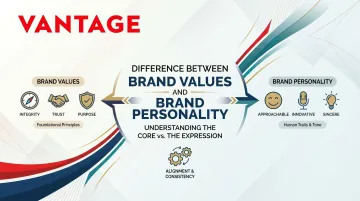
The distinction matters because values define what a brand stands for internally—the principles that guide every decision, partnership, and behaviour—while personality defines how the brand expresses itself externally through tone, style, and character. Getting both right, and keeping them aligned, is what separates forgettable brands from those that build lasting customer loyalty.
According to a Forbes report, 82% of consumers want brand values to align with their own, and 75% will walk away over a values conflict.
This post clarifies what each concept means, compares them side-by-side, provides real-world examples, and explains how alignment between the two drives stronger, more credible brands — particularly for businesses in Singapore and across Asia.
TL;DR
- Brand values are core beliefs and principles that guide operations and decisions: the internal "why" and "how"
- Brand personality is the external expression of those values through human traits, tone, and style
- Values are the foundation; personality is the face
- Misalignment between the two creates confusion, erodes trust, and weakens authenticity
- Defining both clearly is what makes a brand strategy credible and consistent
Brand Values vs Brand Personality: At a Glance
| Aspect | Brand Values | Brand Personality |
|---|---|---|
| Definition | Core beliefs and principles that govern how a business operates | Human traits and characteristics attributed to the brand |
| Role in the Brand | Internal compass for decision-making, culture, and partnerships | External expression that shapes communication style and customer perception |
| Audience | Internal (employees, leadership) and external (customers evaluating alignment) | External (customers forming emotional connections) |
| How It's Expressed | Through actions, policies, hiring practices, and strategic choices | Through tone of voice, visual identity, messaging, and customer interactions |
| Example in Practice | Patagonia's "Environmentalism: Protect our home planet" | Innocent Drinks' playful, conversational, and cheerful tone |
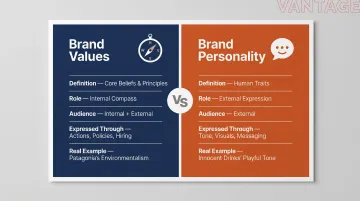
The two are closely linked: brand values shape what a brand stands for, while brand personality determines how that stance comes across to the outside world.
- Brand values: 3–6 concrete principles that guide decisions, culture, and behaviour
- Brand personality: A set of human character traits (bold, empathetic, authoritative) that make the brand relatable and memorable
What Are Brand Values?
Brand values are the core beliefs and non-negotiable principles that govern how a business conducts itself. They answer the "why" behind a brand's existence and the "how" behind its decisions. Simon Sinek's "Start With Why" framework, introduced in 2009, reinforces this concept: organisations that communicate from purpose outward—starting with why they exist—inspire greater loyalty and trust than those that lead with products alone.
Brand values play a dual role:
- Externally: They help customers decide whether a brand aligns with their own beliefs. Nielsen research shows that 52.3% of U.S. consumers purchase from brands that support causes they care about — a pattern increasingly mirrored across Asian markets
- Internally: They act as a compass for employees, guiding decision-making, hiring, partnerships, and behaviour standards
What Makes Brand Values Strong?
Strong brand values are specific and actionable—not generic buzzwords like "integrity" or "innovation." They should be expressed in ways that employees can translate into real behaviours and customers can tangibly feel.
Consider these examples:
Patagonia's Core Values:
- "Protect our home planet" (Environmentalism)
- "Build the best product, provide the best service and constantly improve everything we do" (Quality)
- "Be just, equitable and antiracist as a company and in our community" (Justice)
- "Do it our way" (Not Bound by Convention)
Each value is specific, memorable, and tied to observable actions—from donating 1% of sales to environmental causes to refusing to sell to companies with poor environmental records.
Grab's 4H Values (Southeast Asia):
- "We lead with Heart by putting our users and communities first"
- "We build fast, test early, and embrace bold ideas"
- "We take ownership of our words, decisions, and actions—because trust isn't just given, it's earned"
- "We coach, not criticise. We believe that getting 1% better every day adds up to something extraordinary"
Notice how each statement describes a specific behaviour, not an abstract ideal. That specificity is what makes values usable day-to-day.
Why Brand Values Matter to Employees
Values aren't just marketing tools—they're cultural anchors. Deloitte's 2022 survey of 4,000 UK workers found that 84% want meaningful work and 83% want to feel proud of their organisation. Yet only 52% agreed that external purpose communications match internal practices.
That gap is costly. As Patrick Lencioni warned in his 2002 Harvard Business Review article, empty value statements breed cynical employees, alienate customers, and erode managerial credibility. A value only earns its place when people inside and outside the organisation can point to concrete proof of it.
What Is Brand Personality?
Brand personality is the set of human traits and characteristics attributed to a brand. It's how a brand shows up across every touchpoint: tone of voice, visual identity, messaging style, customer interactions, and how it responds to challenges.
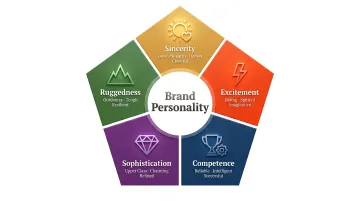
Jennifer Aaker's Five Dimensions of Brand Personality, published in 1997 and cited over 17,800 times, remains the foundational framework:
- Sincerity: Down-to-earth, honest, wholesome, cheerful
- Excitement: Daring, spirited, imaginative, up-to-date
- Competence: Reliable, intelligent, successful
- Sophistication: Upper class, charming
- Ruggedness: Outdoorsy, tough
How Brand Personality Humanises a Brand
Brand personality transforms abstract values into something audiences can feel and relate to emotionally. Values define what a brand stands for; personality determines how that brand speaks, looks, and behaves.
Channels Through Which Brand Personality Is Expressed:
- Copywriting and tone of voice (formal, playful, authoritative)
- Logo and visual identity (minimalist, bold, organic)
- Colour palette and typography (vibrant, muted, elegant)
- Social media content style (educational, humorous, inspirational)
- Customer service interactions (warm, efficient, empathetic)
Consistency across all of these builds recognition and trust. The examples below show how this plays out across very different brands.
Brand Personality Examples
Apple: Sophisticated and minimalist
Apple's personality maps to Excitement (imaginative, up-to-date) and Sophistication (charming, upper class), with elements of Competence (reliable, successful). Everything from product launches to retail design communicates innovation, simplicity, and elegance.
Innocent Drinks: Playful and warm
Innocent's personality is distinctly Sincerity (down-to-earth, cheerful, honest) with elements of Excitement (spirited, imaginative). Their tone is conversational, humorous, and quirky—yet never dismissive or superficial. Even as the brand has evolved visually over the years, the underlying personality has remained instantly recognisable.
Why Personality Differentiates Within Industries
Brand personality is what differentiates brands within the same industry. Two healthcare companies can both value "care and trust," but express very different personalities that appeal to different audience segments. One might be warm and conversational, the other clinical and authoritative—both rooted in the same values but resonating with different patients.
Brand Values vs Brand Personality: What's the Difference?
Brand values are about internal conviction — what the brand believes and stands for. Brand personality is about external expression — how the brand comes across to the people it's trying to reach. One drives decisions; the other shapes perception.
A Practical Scenario
Imagine a company with the value of "transparency." This value might be expressed through a personality that is straightforward and no-nonsense—using plain-language copy, honest social media communication, and direct customer service. The value is internal (a principle guiding decisions); the personality trait is the outward behaviour (how that principle shows up).
Common Misconception
Brand values and brand personality do not need to be identical. A brand whose value is "empowerment" doesn't need to have an "empowering" personality trait per se. Instead, the personality should be consistent with and reinforce that value—through a bold, confident tone that makes customers feel capable and inspired.
Practical Application Difference
Values guide:
- Shapes internal culture and hiring decisions
- Filters partnerships and vendor selection
- Informs operations and employee behaviour
- Anchors long-term strategic direction
Personality guides:
- Drives creative decisions and campaign tone
- Defines communication style across all channels
- Informs visual design and brand aesthetics
- Shapes every customer-facing interaction
When values and personality are misaligned — say, a brand that claims to value "approachability" but communicates in cold, corporate language — customers notice the disconnect. Alignment between the two is what makes a brand feel coherent and trustworthy.
Why Aligning Brand Values and Brand Personality Matters
When brand values and brand personality are misaligned, customers sense the disconnect. Imagine a brand claiming "community and inclusivity" as core values, yet communicating with a cold, formal, and transactional personality. The gap erodes trust and makes it difficult for employees to represent the brand authentically.
What Happens When Alignment Breaks Down
Edelman's 2025 Trust Barometer Special Report found that 73% of people trust brands more when they authentically reflect today's culture. Conversely, only 27% trust brands that ignore culture and focus solely on products. Perceived inauthenticity directly damages trust.
Deloitte's research reinforces this: nearly 1 in 3 employees stated their organisation takes no action to pursue its stated purpose, creating cynicism and disengagement.
The Compounding Benefits of Alignment
When values and personality are consistent:
- Marketing becomes more effective — messaging feels genuine and resonates emotionally
- Brand storytelling becomes more coherent — every touchpoint reinforces the same identity
- Customer loyalty deepens — 80% of people trust the brands they use, and trust is now as significant as quality and price
- Internal team alignment strengthens — employees know what the brand stands for and how to communicate it
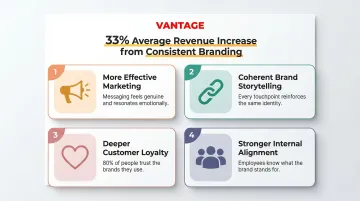
Lucidpress research from 2019 found that organisations estimate an average 33% increase in revenue if their brand is always presented consistently. Among respondents, 25.7% said brand consistency substantially contributed to revenue growth, while 37.4% said it modestly contributed.
Building Alignment in Singapore and Asia
That revenue impact is only achievable when values and personality are developed together — not retrofitted after the fact. For businesses in Singapore and across Asia, this alignment also needs to account for regional audience expectations and cultural context.
Defining and aligning these two elements is a foundational step in any brand strategy engagement. Vantage Branding works with organisations across Singapore and Asia to develop brand values and personality that are grounded in audience research, culturally relevant, and built to hold up across every market they operate in.
Frequently Asked Questions
What is the difference between brand values and personality?
Brand values are the internal principles guiding how a brand operates—its core beliefs and decision-making compass. Brand personality is the external expression of those values through tone, style, and character. Values define what a brand stands for internally; personality is what customers actually experience.
What is the difference between brand value and brand values?
"Brand value" (singular) typically refers to the financial or perceived worth of a brand in the market—its equity or monetary contribution to the parent company. "Brand values" (plural) are the ethical and philosophical principles that define how a brand behaves and what it stands for.
What are the 4 V's of branding?
The 4 V's of branding are Vision, Values, Voice, and Visuals. Vision sets direction, Values define guiding principles, Voice shapes communication style, and Visuals create recognition through design. Together, they form a practical framework for cohesive brand strategy.
Can a brand's values and personality ever conflict?
Yes—misalignment happens when external personality doesn't reflect internal values. For example, a brand claiming innovation as a value but communicating in a rigid, outdated tone creates confusion. This disconnect weakens brand credibility and undermines customer trust.
How many brand values should a company have?
Most businesses should define 3–6 brand values—enough to cover key principles without becoming difficult to communicate consistently. Fewer than three may lack depth; more than six often signals that not all values are truly core.
How does brand personality affect customer loyalty?
Brand personality builds emotional connection. When customers recognise and relate to a brand's character—whether bold, empathetic, or playful—they return, advocate, and stay loyal well beyond product features or price.