Introduction
Many Singapore businesses invest heavily in logos, websites, and campaigns, but struggle to articulate what their brand actually stands for — and customers can tell. When your team can't explain why your brand makes the decisions it does, or when your messaging feels inconsistent across touchpoints, the problem often traces back to undefined or unclear brand values.
This guide covers what brand values are, why they matter in Singapore's competitive market, how to define them, and how to embed them across your organisation — from hiring decisions to customer touchpoints.
What Are Brand Values?
Brand values are the core principles that guide how a business behaves, makes decisions, and shows up for customers and employees — beyond products, prices, or promotions. They answer the question: "What do we believe in that we'd never compromise on, even when it costs us?"
Values Are Lived, Not Displayed
Brand values are not taglines, marketing copy, or aspirational posters. They must be lived out daily by everyone in the organisation — from leadership to frontline staff.
Harvard Business Review's foundational study on organisational values famously opened with Enron's stated values of "Communication, Respect, Integrity, Excellence" — all prominently displayed but never practised, contributing to one of history's largest corporate scandals.
Patrick Lencioni, writing in HBR, defines core values as "the deeply ingrained principles that guide all of a company's actions; they serve as its cultural cornerstones." The distinction matters: values only become meaningful when they inform hiring, performance management, and difficult decisions.
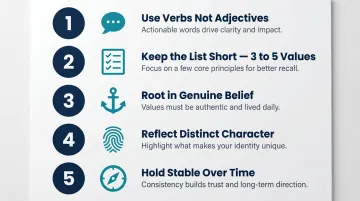
Five Qualities of Effective Brand Values
- Use verbs, not just adjectives — instead of "Integrity," write "We tell the truth even when it's uncomfortable." Research shows employees struggle to translate abstract nouns into daily action.
- Keep the list short — three to five values stick; a long list gets ignored.
- Root them in genuine belief, not borrowed from competitors or industry templates.
- Reflect your brand's distinct character, not generic clichés like "excellence" or "innovation."
- Hold them stable over time — values should be a reliable compass during growth or crisis, even as messaging evolves.
How Values Differ from Mission, Vision, and Personality
Brand values inform related concepts but remain distinct from them:
- Values answer "How we behave"
- Mission answers "What we do and who we do it for"
- Vision answers "Where we're going"
- Personality expresses "How we communicate"
Keeping these distinct creates stronger, more actionable brand foundations — each concept does a different job.
Values Already Exist Within Your Business
Brand values are not invented from scratch — they already exist within a business's culture and behaviour. The work is in identifying and articulating them clearly. This requires honest observation of how your team makes decisions, not how you wish they would.
Why Brand Values Matter for Singapore Businesses
Singapore's Unique Competitive Context
As a compact, highly internationalised market with a discerning, multicultural consumer base, Singapore businesses face intense competition where product parity is common. Singapore ranked #1 most competitive economy globally in the 2024 IMD World Competitiveness Ranking, with 358,300 enterprises competing across every sector. When products and prices are similar, brand differentiation through values becomes critical.
The Consumer Trust Factor
Research from the 2023 Edelman Trust Barometer reveals that 67% of consumers are more likely to stay loyal to and advocate for a brand they trust. Among Gen Z — an increasingly important consumer segment — 79% say it's more important than ever to trust the brands they buy.
Additional data shows the purchasing power of values alignment:
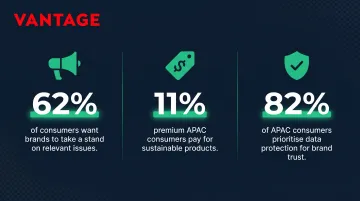
- 62% of customers want companies to take a stand on current and broadly relevant issues
- APAC consumers will pay an average 11% premium for sustainable products
- 82% of APAC consumers consider data protection the top priority for influencing brand trust
Internal Impact: Employees as Brand Ambassadors
When employees understand and believe in a brand's values, they become brand ambassadors — making decisions consistent with the brand's promise without needing a manager's approval at every step. Even young, junior staff can embody values authentically when those values are truly internalised rather than imposed from above.
Yet Gallup research finds that only 23% of employees strongly agree they can apply their organisation's values to their work. That gap between stated and lived values creates organisational cynicism — and drives turnover.
Long-Term Business Outcomes
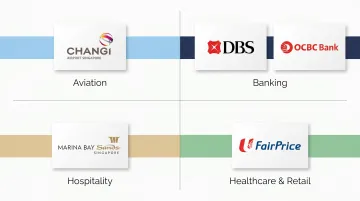
The compounding returns on strong brand values show up most clearly when businesses face pressure. DBS Bank is a local case in point. The bank has been named "World's Best Bank" eight times since 2018 and "Asia's Safest Bank" for 16 consecutive years — a track record that spans both the Global Financial Crisis and COVID-19 pandemic.
DBS CEO Tan Su Shan credits this resilience to the bank's purpose-driven identity: "Being purpose-driven is part of our DNA... we have believed in good citizenship." Its PRIDE! values framework (Purpose-driven, Relationship-led, Innovative, Decisive, Everything Fun!) gave staff a decision-making compass during uncertain periods — maintaining customer confidence when it mattered most.
Brand Values vs. Mission and Vision: What's the Difference?
Brand values answer "how we behave," the mission answers "what we do and for whom," and the vision answers "where we are headed." All three must be aligned, but they serve different functions.
Many Singapore businesses conflate these concepts or combine them into a single statement. This creates confusion about what guides daily behaviour versus strategic direction. When values, mission, and vision remain distinct, they form a clear brand architecture:
| Element | Question It Answers | Time Horizon | Example |
|---|---|---|---|
| Values | How do we behave? | Timeless | "We prioritise transparency in every client interaction" |
| Mission | What do we do and for whom? | Present | "We help SMEs build memorable brands that drive growth" |
| Vision | Where are we going? | Future | "To become Southeast Asia's most trusted branding partner" |
Getting this separation right matters in practice: when employees face a difficult decision, they look to values — not the mission statement or the vision. Keeping the three distinct means each one can do its job without stepping on the others.
Examples of Strong Brand Values (And What Makes Them Work)
Singapore Airlines: Excellence Through Consistency
Core values: Safety, Excellence, Customer-Focus, Care, Integrity, and Teamwork.
These values show up in observable ways:
- Cabin crew trained to anticipate passenger needs before being asked
- Consistently high service standards held across all routes
- A reputation for reliability built over decades
The airline's legendary "Singapore Girl" campaign isn't just marketing — it reflects values-driven training that has stayed consistent for over 50 years.
DBS Bank: Purpose-Driven Innovation
Purpose: "Best Bank for a Better World" Core values (PRIDE!): Purpose-driven, Relationship-led, Innovative, Decisive, Everything Fun!
Each value maps to a concrete action:
- Banking services for migrant workers (purpose-driven)
- Democratised financial planning tools (innovative)
- A S$1 billion commitment over the next decade to support vulnerable communities (relationship-led)
That grounding in values is what allowed DBS to push through a major digital transformation without losing customer trust.
Changi Airport Group: People-Centered Excellence
Purpose: "Exceptional People, Connecting Lives" Core commitments: Innovation, Service Excellence, and Sustainable Development
Changi's values appear in tangible ways: staff empowerment to solve passenger problems on the spot, continuous innovation in airport experiences (butterfly gardens, entertainment zones), and environmental initiatives visible throughout the terminals. The values create a consistent experience that differentiates Changi as more than a transit point.
IHH Healthcare: Healthcare With Integrity
Core values: Patients First, Empathy, Integrity, Teamwork, Excellence
Operating across Asia — including Singapore through Mount Elizabeth hospitals — IHH translates these values into practice through transparent pricing, patient education programmes, and clinical protocols that prioritise outcomes over throughput. The healthcare context shows something worth noting: strong values aren't sector-specific. They work just as well in clinical environments as in consumer ones.
What Makes These Examples Work
The common thread across these brands is specificity and proof. Each organisation can point to concrete decisions, policies, or behaviours — not just words on a website. Customers experience the values; employees are trained to deliver them. That's the difference between values that shape a brand and values that merely decorate it.
How to Define Your Brand Values
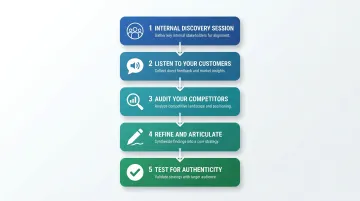
Step 1 — Run an Internal Discovery Session
Facilitate an honest, open-ended brainstorm with your team across levels (not just leadership). Create a safe environment for authentic conversation, not corporate speak.
Ask questions like:
- What do we believe in that we'd never compromise on?
- Why do customers come back to us?
- When have we made a difficult decision we're proud of? What principle guided it?
- What would we refuse to do, even if competitors do it?
Aim for 5–10 candidate words or phrases before filtering. Capture actual stories and examples, not abstract concepts.
Step 2 — Listen to Your Customers
Analyse reviews, feedback, and conversations to understand what customers value about your brand. There is often a gap between what a company thinks it stands for and what customers actually experience.
Look for patterns in:
- Google reviews and testimonials
- Customer service transcripts
- Social media mentions
- Win/loss interview data (why customers chose you or went elsewhere)
This data grounds your values in reality rather than aspiration.
Step 3 — Audit Your Competitors
Identify the values your competitors are claiming and find the gaps. Look for principles your brand is already living out that others are not. That gap — between what you genuinely do and what others only claim — is where real differentiation lives.
Create a simple comparison:
- What values do competitors explicitly claim?
- What values do their actions actually demonstrate?
- Where are the white spaces your brand authentically occupies?
Step 4 — Refine and Articulate
Narrow the list to 3–5 core values, then write each one as an actionable statement rather than a single adjective.
Instead of: "Innovation"
Write: "We experiment with new approaches even when the path isn't clear"
Instead of: "Customer service"
Write: "We solve customer problems first, then worry about internal processes"
If you find it difficult to reach consensus internally, an external facilitator can help. Vantage Branding runs structured brand discovery workshops that surface the authentic values teams often struggle to articulate on their own — aligning what the culture genuinely is with how the brand shows up externally.
Step 5 — Test for Authenticity
Before finalising, pressure-test each value by asking:
- Can we prove this through a real story or behaviour? If not, it's aspirational, not actual.
- Would we uphold this value even when it costs us? If the answer is "maybe," it's not truly a value.
- Can a frontline employee explain what this means for their daily work? If not, it's too abstract.
If the answer to all three is yes, it belongs in the list.
How to Bring Brand Values to Life
Embed Values Into Internal Processes
Values only matter if they influence hiring decisions, onboarding, performance reviews, and everyday interactions. Without that integration, they stay words on a page.
Practical integration points:
- Include values-based interview questions (for example: "Tell me about a time you had to choose between speed and quality")
- Cover not just what the values are during onboarding, but why they matter and what they look like day-to-day
- Evaluate how team members demonstrated values in performance reviews — not just what results they hit
- Recognise employees who lived the values, especially when doing so required a difficult trade-off
Apply Values Consistently Across All Customer Touchpoints
From your website copy and social media tone to how your team handles complaints — every interaction is an expression of your values. Inconsistency erodes trust quickly.
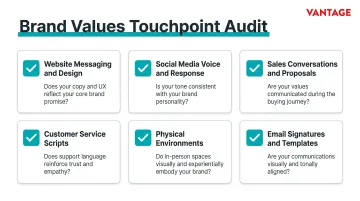
Key touchpoints to audit:
- Website messaging and design
- Social media voice and response protocols
- Sales conversations and proposals
- Customer service scripts and escalation policies
- Physical environments (if applicable)
- Email signatures and templates
If your value is "transparency" but your pricing is hidden behind "contact us," customers notice the gap. If your value is "responsiveness" but emails go unanswered for days, the value is just a word.
Review and Reinforce Over Time
Brand values should stay stable at their core, but businesses need to check periodically whether those values are still being lived out as the company grows.
Signals values may need re-articulation (not change, but refreshed expression):
- Low employee recall of what the values are
- Visible "say-do" gaps between leadership behaviour and stated values
- Values that no longer differentiate (competitors now claim the same principles)
- Organisational growth that introduced new behaviours not captured in original values language
Annual or biannual check-ins — through employee surveys, customer feedback analysis, and leadership reflection — keep values meaningful rather than ceremonial.
Frequently Asked Questions
What are brand values and examples?
Brand values are guiding principles that shape a brand's behaviour and decisions at every level. Examples include "We prioritise transparency in every client interaction" (integrity), "We experiment with new approaches even when the path isn't clear" (innovation), or "We solve customer problems first, then worry about internal processes" (customer-centricity). DBS Bank's PRIDE! framework demonstrates real-world application across a major Singapore institution.
How are brand values different from a mission statement?
Brand values define how a company behaves — the principles guiding daily decisions and interactions. A mission statement defines what the company does and for whom — its core business purpose. Both are essential, but they serve different purposes: values set the standard for behaviour, while the mission defines the business direction.
How many brand values should a company have?
Three to five core values is the practical sweet spot — enough to cover diverse situations while staying memorable. More than five risk becoming a list no one remembers; fewer than three may not provide enough guidance.
How do you communicate brand values to employees?
Embed values into onboarding, internal communications, and performance conversations — explaining not just what they are, but what they look like in practice. Lead by example at the management level. Employees watch what leaders do far more than what they say.
Can brand values change over time?
Core values rarely change, but how they are expressed may evolve as the business grows — what "transparency" means for a 10-person startup differs from a 500-person company. Any significant shift should be communicated clearly to avoid appearing inconsistent.
Why are brand values important for Singapore businesses specifically?
Singapore's highly competitive, multicultural market means consumers have abundant choices and high expectations. With 358,300 enterprises competing and product parity common across sectors, strong, authentic brand values build the trust and differentiation needed to stand out and retain loyal customers. Regional research shows APAC consumers will pay an 11% premium for brands demonstrating authentic values alignment.
Need help defining or refining your brand values? Vantage Branding's Brand Discovery process helps Singapore businesses identify authentic values and build them into a clear brand strategy. Contact us at +65 6698 9257 or hello@vantagebranding.com.sg.