Introduction
Brand managers and business owners frequently confuse "brand awareness" and "brand equity," treating them as synonyms when they're actually distinct strategic concepts. This conflation leads to misaligned marketing strategies, wasted budgets, and campaigns optimised for the wrong outcomes.
The distinction matters. Awareness tells the world you exist. Equity determines whether they trust and choose you. A business can be widely recognised yet poorly regarded — and no amount of visibility spending fixes that gap.
This article breaks down what each concept means, where they diverge, and how to build both with intention.
TL;DR
- Brand awareness is how well people recognise your brand; brand equity is the value, trust, and loyalty it holds
- Awareness is a component of equity, not a substitute—you can't build the latter without the former
- High awareness with low equity is a strategic liability: widely known but poorly trusted
- Building equity requires consistent quality, positive experiences, and genuine emotional connection
- Both need separate metrics and distinct strategies to measure and grow effectively
Brand Awareness vs. Brand Equity: A Quick Comparison
| Dimension | Brand Awareness | Brand Equity |
|---|---|---|
| Definition | The degree to which consumers can recognise or recall your brand | The commercial value derived from consumer perception, trust, and loyalty |
| What It Measures | Recognition and recall (aided and unaided) | Perceived quality, emotional associations, loyalty, and willingness to pay a price premium |
| Primary Goal | Enter the customer's consideration set | Build lasting preference, trust, and competitive advantage |
| Key Metrics | Share of search, aided/unaided recall surveys, website traffic | NPS, price premium tolerance, market share, brand valuation |
| Relationship to Brand Value | Opens the door to brand relationships | Determines how deep, durable, and commercially valuable those relationships become |
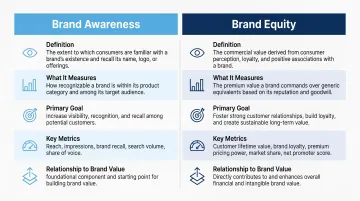
Awareness gets you noticed. Equity determines whether being noticed actually translates into preference, loyalty, and long-term revenue.
What is Brand Awareness?
Brand awareness refers to the strength of a brand's presence in consumer memory—whether people can recognize or recall it when making purchase decisions.
Kevin Lane Keller's foundational framework distinguishes between two types:
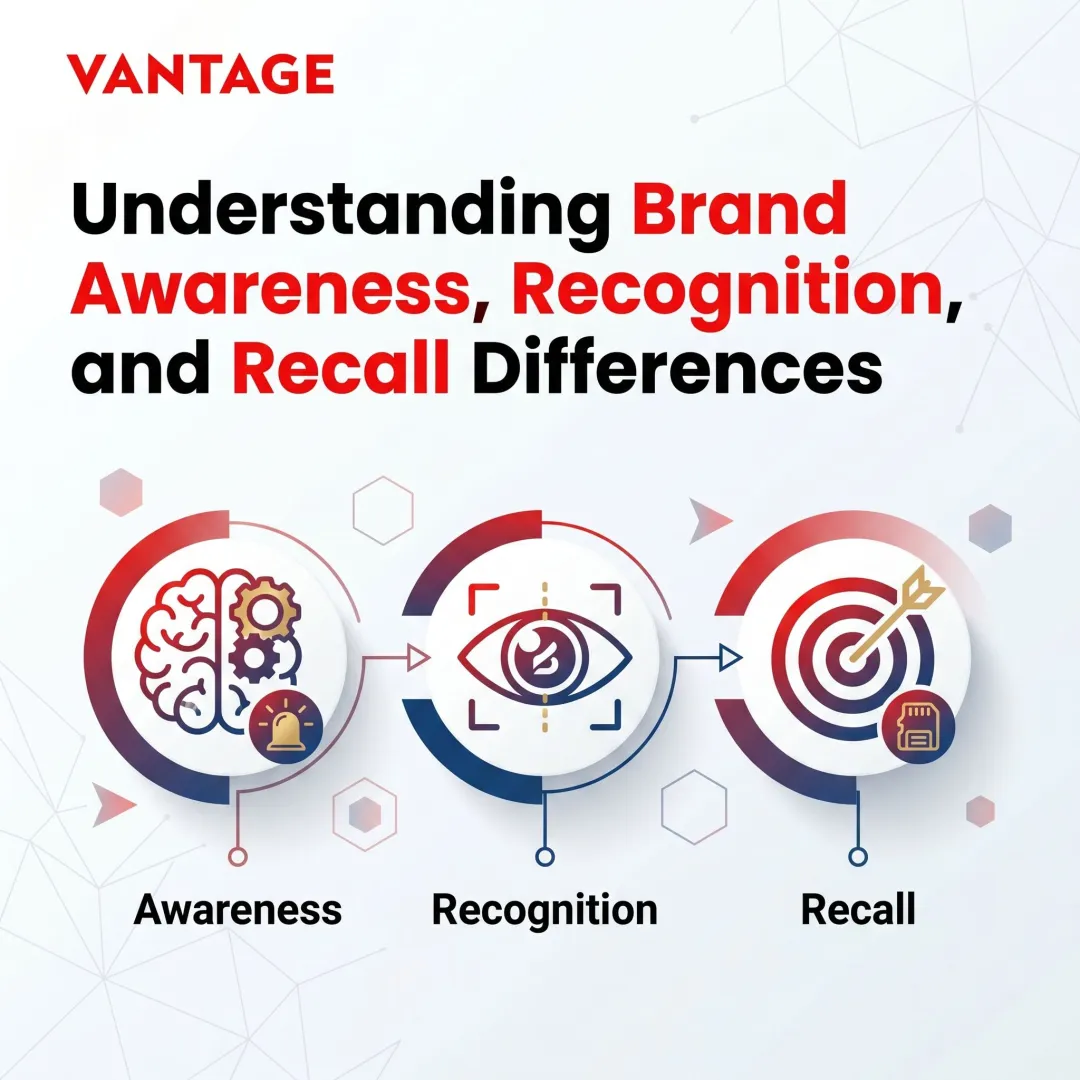
- Brand recognition (aided awareness): Consumers confirm prior exposure when given the brand as a cue (for example, recognizing a logo on a shelf)
- Brand recall (unaided awareness): Consumers spontaneously retrieve the brand when given a product category or need (for example, thinking "Coca-Cola" when asked to name a soft drink)
Both matter because awareness serves three critical functions in consumer decision-making:
- Consideration set formation: Raising awareness increases the likelihood that your brand makes the shortlist of options consumers evaluate
- Decision heuristics: In low-involvement purchase settings, consumers adopt rules like "buy only familiar, well-established brands"
- Association formation: Awareness influences how strongly other brand associations form in memory
Research confirms this familiarity effect: 71% of consumers prefer purchasing from brands they know. Without awareness, your brand is invisible at the moment of purchase—regardless of product quality or price.
Practical strategies to build brand awareness:
- Consistent brand identity: Apply your logo, colours, fonts, and messaging uniformly across all channels
- Content marketing: Publish relevant content that answers customer questions and positions you as an authority
- Referral programmes: Incentivise existing customers to introduce your brand to new audiences
- Influencer collaborations: Partner with trusted voices in your industry to reach targeted audiences
- Paid advertising: Use targeted campaigns on search, social, and display channels to drive recognition
Real-world example: Coca-Cola's "Share a Coke" campaign addressed declining awareness among millennials. Launched in Australia in 2011 and rolled out across 80+ countries, it replaced the Coca-Cola logo on bottles with popular first names and drove engagement through the hashtag #ShareaCoke.
In the United States, results were concrete:
- Participating package sales rose 11%
- Market share increased by 1.6 percentage points
- Teen consumption grew 5 points in eight weeks
- ShareaCoke.com attracted 6.8 million visits and 6.1 million virtual bottles created
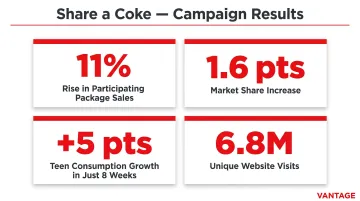
Personal relevance—putting consumers' own names on the product—turned passive familiarity into active purchase behaviour.
How to Measure Brand Awareness
Key measurement methods include:
- Aided and unaided recall surveys: Ask consumers to recognize your brand when prompted (aided) or name brands in your category without prompting (unaided)
- Share of search: Track your brand's proportion of total branded search volume in your category—correlates with market share and serves as a predictive measure
- Social listening tools: Monitor unprompted brand mentions across social media and digital channels
- Brand tracking surveys: Continuously measure awareness, consideration, and perception over time
- Website and branded search traffic: Analyse trends in direct brand searches and site visits as proxies for awareness growth
What is Brand Equity
Brand equity is the commercial value that comes from consumer perception of your brand—going beyond recognition to encompass trust, emotional associations, loyalty, and willingness to pay a premium.
Keller's Customer-Based Brand Equity (CBBE) model defines it as "the differential effect of brand knowledge on consumer response to the marketing of the brand." A brand has positive equity when consumers react more favourably to its products than to identical products from unknown or generic brands.
Four Core Components of Brand Equity
- Brand awareness: The entry point (recognition and recall)
- Perceived quality: Consumer evaluations of product/service quality, credibility, and superiority
- Brand associations: Emotional and functional attributes linked to the brand in memory
- Brand loyalty: Behavioural loyalty (repeat purchases) and attitudinal attachment (preference and advocacy)
Positive vs. Negative Brand Equity
Positive brand equity lets brands command premium prices. Apple is the clearest example: reaching a brand value of $1,015.9 billion in 2024, it became the world's first trillion-dollar brand. Customers pay more because they associate it with innovation, intuitive design, and status.
Negative brand equity occurs when being known damages rather than builds value. Wells Fargo's 2016 fake account scandal illustrates this: impression scores plunged to -32.6 by December 2016 and most brand health metrics remain negative eight years later.
Awareness without trust creates friction, not value.
Business Impact of Strong Brand Equity
Strong brand equity delivers measurable business advantages:
- Premium pricing power: Customers willingly pay more for trusted brands
- Faster customer acquisition: Strong equity reduces marketing costs and shortens sales cycles
- Crisis resilience: Toyota recalled 3.8 million vehicles in 2009, and brand perception dropped from 83% positive to 59%. By 2011 it recovered to 70% positive. Today, Toyota ranks #6 globally with $72.8 billion in brand value—proof that pre-crisis equity enables recovery
- Market leverage: Higher conversion rates, greater stock price stability, and stronger negotiating position
The collective value is significant. According to Kantar BrandZ 2024, the total brand value of the global top 100 brands reached $8.3 trillion, up 20% year-over-year.
How to Build Brand Equity
- Define brand identity: Establish name, logo, tone, story, values, and positioning
- Maintain quality and consistency: Deliver on brand promises at every customer touchpoint
- Foster emotional connections: Use storytelling to create meaningful associations beyond functional benefits
- Engage customers: Build trust through community, feedback loops, loyalty programs, and responsiveness
- Ensure organisational alignment: Equip internal teams to embody and communicate the brand consistently
For businesses in Singapore and across Asia, this is where a branding partner adds tangible value. Vantage Branding works with organisations to translate brand strategy into consistent identity and communications—so every channel and interaction builds equity rather than diluting it.
How to Measure Brand Equity
Brand equity measurement requires a mix of customer perception data and market performance data:
- Net Promoter Score (NPS): Likelihood of customer recommendation—a proxy for loyalty and advocacy
- Customer satisfaction (CSAT): Contentment with brand experience
- Price premium tolerance: Willingness to pay more versus competitors—direct indicator of perceived value
- Perceived quality ratings: Survey-based evaluations of quality, credibility, and superiority
- Brand loyalty metrics: Repeat purchase rates and attitudinal attachment
- Market share: Brand's proportion of category sales
- Financial valuation: Methodologies like Interbrand's three-part model assess economic profit, brand contribution to demand, and brand strength
How Brand Awareness and Brand Equity Work Together
Brand awareness is one of the foundational components of brand equity, not a synonym. Awareness is the prerequisite: without it, there is no audience to build equity with. But recognition alone does not create equity.
The Dangerous Gap: When Awareness Outpaces Equity
When awareness outpaces equity, brands become widely recognised but poorly trusted. This creates friction: longer sales cycles, more justification required at every stage, and customers hesitating despite knowing the brand.
Wells Fargo demonstrates this gap. Despite universal awareness, brand health metrics remained negative eight years after its 2016 scandal. Being known didn't translate into being valued or chosen.
The Progression from Awareness to Equity
Keller's CBBE Pyramid outlines the journey:
- Salience (Awareness): "Who are you?"—depth and breadth of recognition
- Performance + Imagery (Meaning): "What are you?"—functional and emotional associations
- Judgments + Feelings (Response): "What about you?"—perceived quality, credibility, emotional reactions
- Resonance (Equity): "What about you and me?"—loyalty, attachment, community, engagement
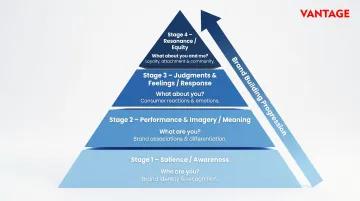
Each stage demands a different strategy. Brands that skip steps — jumping straight from awareness campaigns to loyalty programmes — rarely close the trust deficit in between.
Situational Guidance
- Early-stage brands: Prioritise awareness first. Focus on consistent visual identity, content marketing, and targeted campaigns to build recognition before investing heavily in equity-building
- Established brands: Shift focus to deepening equity. Invest in consistency, quality, customer experience, and emotional connection to convert recognition into lasting value
How to Build Brand Awareness and Brand Equity (Practical Strategies)
Strategies That Build Awareness First
- Consistent brand identity: Apply logo, colours, fonts, and messaging uniformly across all channels
- Content marketing and guest publishing: Create valuable content that answers customer questions and positions you as an authority
- Referral programs: Incentivise existing customers to introduce your brand to new audiences
- Targeted paid campaigns: Use search, social, and display advertising to drive recognition within a defined target audience, not a wide net
Strategies That Deepen Equity
- Authentic brand story: Develop narratives that resonate emotionally and communicate your purpose beyond products
- Deliver on promises: Ensure every touchpoint—website, customer service, product experience—reflects brand values
- Engage beyond the transaction: Build communities, create feedback loops, offer loyalty programs, and respond actively to customer needs
- Manage brand perception: Monitor reputation, respond to issues transparently, and maintain quality consistently
The Foundation: Coherent Brand Strategy
Building awareness and equity together only works when both are grounded in a clear, consistent brand position. Without that foundation, visibility stays superficial — recognition without meaning.
For businesses in Singapore and across Asia, Vantage Branding structures this process by anchoring awareness-building activities in a defined brand position from the outset. The result is that marketing spend on visibility also builds trust and long-term value — not just reach.
Vantage's process covers brand discovery, research, strategy, and identity development before any campaigns launch. Organisations that define their values and positioning first find that every channel they activate reinforces the same brand story.
Frequently Asked Questions
Are brand awareness and brand equity the same?
No. Brand awareness measures recognition and recall — how well consumers know your brand exists. Brand equity captures the deeper perceived value, trust, loyalty, and commercial advantage your brand holds. Awareness is one component of equity, not a substitute.
What is the meaning of brand awareness?
Brand awareness is the degree to which consumers can recognise or recall a brand. It includes aided awareness (recognising the brand when prompted) and unaided awareness (spontaneously recalling the brand when given a category cue).
Can a brand have high awareness but low brand equity?
Yes. A brand can be widely recognised yet hold low perceived value if customer experiences are negative, brand promises are inconsistent, or the brand carries unfavourable associations. Being known does not automatically mean being trusted or preferred.
Which should I prioritise first — brand awareness or brand equity?
Early-stage brands should focus on awareness first, since equity cannot be built if the audience doesn't know you exist. As recognition grows, shift strategic priority to quality, consistency, and emotional connection to convert awareness into equity.
How do you measure brand equity?
Measure brand equity using a combination of:
- Customer surveys on perceived quality and brand associations
- Loyalty metrics such as repeat purchase rates and NPS
- Price premium tolerance and market share data
- Financial valuation methods
What are the main components of brand equity?
Keller's CBBE model identifies four core components:
- Brand awareness — recognition and recall
- Perceived quality — evaluations of credibility and superiority
- Brand associations — emotional and functional attributes
- Brand loyalty — repeat purchases and attitudinal attachment