Introduction
Many businesses look at repeat purchase data and assume they've earned loyalty — but a customer who buys repeatedly because your brand is on promotion is not loyal, they're simply preferring you at the right price. This distinction is not just semantic — it has real consequences for brand strategy and budget allocation.
Research from the Journal of Marketing found that 65% to 85% of customers who defected said they were "satisfied" or "very satisfied" with their previous provider. This demonstrates that satisfaction scores and repeat purchase metrics systematically misclassify preference as loyalty, leading brands to invest in the wrong strategies.
This article clarifies the definitions of brand loyalty and brand preference, how they differ across key dimensions, and how to identify which one your customers actually display. That clarity directly shapes how you allocate resources between brand-building and promotional tactics — and where that investment will actually hold when a competitor cuts their price.
TL;DR
- Brand loyalty = deep emotional commitment — customers stay consistent regardless of price or competing offers
- Brand preference = a rational inclination to choose one brand over others, but vulnerable to switching when conditions change
- Loyalty delivers higher customer lifetime value, stronger word-of-mouth, and greater resilience to competition
- Preference is often the first step toward loyalty, but only if the brand invests in deepening emotional connection
- Knowing which one your customers display shapes how you should invest in brand-building vs. promotional tactics
Brand Loyalty vs. Brand Preference: At a Glance
Here's how brand loyalty and brand preference differ across six key dimensions:
| Dimension | Brand Loyalty | Brand Preference |
|---|---|---|
| Definition | Sustained emotional commitment that persists across changing circumstances | Tendency to favour one brand based on accumulated perceptions but without deep emotional lock-in |
| Primary Driver | Emotional connection and identity alignment | Rational cost-benefit assessment and familiarity |
| Price Sensitivity | Low — accepts premium pricing within reasonable range | High — susceptible to competitor promotions and discounts |
| Likelihood to Switch | Very low — high psychological switching costs | Moderate to high — low psychological switching costs |
| Long-term Business Value | High lifetime value, pricing power, advocacy, resilience | Moderate value, vulnerable to competitive pressure |
| Typical Measurement | Willingness to pay premium, resistance to competitor offers, unprompted recommendation | Repeat purchase rate, stated preference, Net Promoter Score |
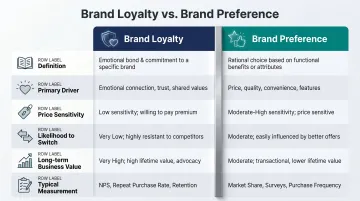
While this table presents clear distinctions, most customer bases contain a spectrum — some fully loyal, many in the preference zone, and some purely transactional. The sections that follow unpack what drives each state, how to identify where your customers sit, and what it takes to move them up the spectrum.
What is Brand Loyalty?
The Definition
Brand loyalty is a sustained, emotionally driven commitment to a specific brand that persists across changing circumstances — including price increases, competitor promotions, and product shortfalls. It goes beyond behaviour (repeat purchases) to include attitude: the customer actively chooses the brand even when switching would be rational.
Research published in the Journal of Marketing Research identified six conditions that define true brand loyalty. A purchase must be:
- Biased (non-random)
- A behavioural response
- Expressed over time
- Made by a decision-making unit
- With respect to alternative brands
- A function of psychological processes
If those psychological processes aren't present, it's repeat purchasing — not loyalty.
The Two Dimensions
True brand loyalty requires both:
- Behavioural loyalty — consistent purchasing patterns
- Attitudinal loyalty — emotional preference and brand advocacy
Behavioural loyalty alone can mask what is actually situational preference. A customer who buys your brand every week because it's conveniently stocked at their local shop displays behavioural loyalty — but will switch immediately if they change locations or if a competitor offers better availability.
Key Drivers of Brand Loyalty
Brand loyalty is built through:
- Consistent quality that establishes trust over time
- Emotional resonance that connects the brand to personal values
- Strong brand identity that customers recognise and relate to
- Personal identity alignment, where the brand reflects the customer's sense of self
- Meaningful experiences that reinforce the relationship
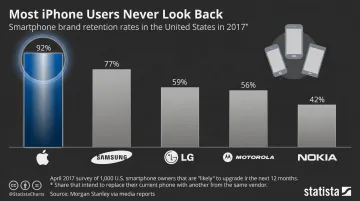
Apple is a clear example. The company holds a 92% iPhone retention rate, significantly outpacing Samsung's approximately 77%. iPhone users are 21 times less likely to switch brands compared to Samsung owners. Notably, 73% of iPhone users self-identify as loyal, and over 50% cite "pride" in using Apple products — demonstrating identity-based commitment rather than purely functional choice.
The Business Impact
Acquiring a new customer is anywhere from 5 to 25 times more expensive than retaining an existing one, according to research by Frederick Reichheld of Bain & Company published in Harvard Business Review. The same research found that increasing customer retention rates by just 5% increases profits by 25% to 95%.
Loyal customers generate compounding long-term value through:
- Higher lifetime value (they purchase repeatedly and spend more)
- Reduced price sensitivity (they accept premium pricing)
- Word-of-mouth referrals (they actively recommend the brand)
- Resilience to competitive attacks (they ignore competitor promotions)
What Loyalty Looks Like in Practice
A loyal customer waits for a new product release rather than buying from a competitor. They recommend the brand unprompted. They defend the brand when it makes mistakes, giving it the benefit of the doubt.
A customer exhibiting preference, by contrast, will purchase your brand regularly — but only when it's the best option available at that moment. If a competitor runs a compelling promotion or your brand is out of stock, they switch without hesitation or emotional discomfort.
What is Brand Preference?
Preference Without Commitment
Brand preference is a consumer's tendency to favour one brand over alternatives based on accumulated perceptions, past experiences, and perceived value — but without the deep emotional lock-in that characterises loyalty. The preferred brand sits at the top of the consideration set, but it does not occupy an exclusive position.
Research defines brand preference as a "favourable inclination toward one brand over competing alternatives" — a predisposition shaped by perceived value, emotional connection, and past experience. Loyalty, by contrast, requires enduring commitment and repeated choice over time. Preference alone does not guarantee either.
What Drives Brand Preference
Brand preference is built on largely rational and contextual factors:
- Positive prior experiences that create familiarity
- Availability and convenience at point of purchase
- Price-value perception and competitive positioning
- Quality consistency that meets expectations
- Effective advertising that builds awareness
Because these drivers are rational and contextual, they are also more fragile than the emotional drivers of loyalty. A competitor can replicate quality, undercut price, or improve availability — immediately eroding preference.
The "False Loyalty Trap"
Standard market research tools (repeat purchase tracking, brand awareness surveys, and customer satisfaction scores) frequently misclassify preference as loyalty. A customer who says your brand is their "favourite" and purchases it regularly may still be doing so primarily because it is on promotion or readily available, not because of genuine emotional commitment.
Byron Sharp's research at the Ehrenberg-Bass Institute found that loyalty levels within a category are typically similar and generally low for all brands. Even top brands experience churn rates of nearly 50% annually. Brands stand out because more people buy them, not because their customers are more loyal.
Sharp also found that attitudes reflect behaviour, not the other way around — people think more frequently about brands they already use, inflating stated "preference" for familiar brands. This creates the illusion of loyalty when what exists is simply conditioned preference.
Preference as a Gateway
That conditioned preference, however, is not a dead end. Brand preference is often the earliest stage of a relationship that can deepen into loyalty. Brands that recognise this distinction can invest in the right experiences to shift customers toward genuine emotional commitment.
Brand Loyalty vs. Brand Preference: Key Differences Explained
Emotional Depth vs. Rational Evaluation
Loyalty is rooted in an emotional connection — the brand means something to the customer personally. Preference is driven by a rational cost-benefit assessment at the time of purchase.
This distinction matters because competitor actions affect each differently. A discount from a competitor threatens preference but rarely touches loyalty. A loyal Apple customer doesn't switch to Samsung when Samsung offers a promotion — the emotional connection and identity alignment override the rational price consideration.
Price Sensitivity
Loyal customers are relatively price-insensitive within a reasonable range — they accept premium pricing because they trust the brand and feel connected to it.
Research published in Marketing Science found that "loyal consumers will be less price sensitive in the choice decision than nonloyal consumers." A 2024 study confirmed that brand attachment is the strongest direct driver of willingness to pay a price premium (beta = 0.351), followed by brand strength (beta = 0.329) and brand loyalty (beta = 0.219).
Preferred-brand customers, by contrast, are significantly more price-sensitive. A meaningful promotion from a competitor is often enough to trigger a switch. This is why brands that over-rely on promotional pricing to maintain repeat purchases are often eroding loyalty rather than building it.
Switching Behaviour and Competitive Vulnerability
Loyal customers have high psychological switching costs — they would feel a sense of loss or identity disruption if they switched. Research on customer-brand identification during the iPhone launch found that relative brand identification inhibited switching behaviour (beta = -0.37) and its effect grew stronger over time. Customers with high identification used "social creativity" — motivated reasoning to downplay competitor advantages and bolster their brand identity.
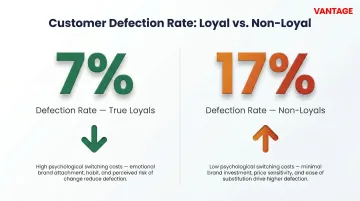
Preference customers have low psychological switching costs — they feel little discomfort switching to a comparable alternative. This directly affects a brand's resilience in competitive markets. One study found a stark gap: true loyals had a defection propensity of just 7%, compared to 17% for non-loyals.
Measurement Gap
Standard brand health metrics can fail to distinguish between loyalty and preference accurately:
- Net Promoter Score (NPS): Research found NPS correlated only modestly with two-year retention (r = 0.170), and raw NPS scores showed almost no correlation with changes in share of wallet (r = 0.067)
- Repeat purchase rate: Can indicate habit, convenience, or lack of alternatives rather than true loyalty
- Stated preference in surveys: Reflects familiarity and recent exposure more than commitment
More reliable indicators of true loyalty include:
- Willingness to pay a premium (validated measure with R-squared = 0.723)
- Resistance to competitor trial offers and promotions
- Unprompted brand recommendation behaviour
- Customer-brand identification scales that measure identity alignment
Strategic Investment Implications
Loyalty is built through long-term brand strategy — consistent identity, emotional storytelling, community, and values alignment. Preference is built through visibility, competitive positioning, and tactical promotions.
Research by Binet & Field identified three findings with direct budget implications:
- Emotional brand-building campaigns are twice as efficient as rational campaigns
- Price-related promotions increase price sensitivity and damage long-term profitability
- The optimal marketing budget split is 60% brand building, 40% sales activation
Investing in the wrong strategy for the wrong goal is a common and expensive mistake. Brands that rely on promotions to maintain repeat purchases are often training customers to wait for deals rather than value the brand intrinsically.
Which Should Your Brand Focus On?
Context Matters
For early-stage brands, achieving preference in a crowded market is a legitimate and necessary goal. You need awareness, trial, and repeat purchase before you can build loyalty.
For established brands, the strategic priority should be converting preference into loyalty through brand-building investment. The risk is treating preference as the finish line and continuing to use promotional tactics that ultimately train customers to wait for deals rather than value the brand intrinsically.
The Preference-to-Loyalty Pathway
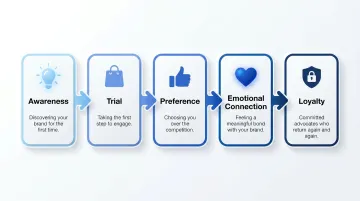
The progression typically follows this path:
- Awareness — customer becomes familiar with brand
- Trial — customer makes first purchase
- Preference — customer chooses brand when conditions are favourable
- Emotional connection — customer develops personal attachment and identity alignment
- Loyalty — customer commits despite competitive alternatives
What moves a customer along this spectrum is not more promotions but consistent, resonant brand experiences — strong brand identity, clear values, and meaningful storytelling that builds personal connection.
Getting Strategic Clarity
For brands unsure where their customers currently fall on this spectrum, a structured brand audit and strategy development process can map customer sentiment, identify gaps between preference and loyalty, and create a roadmap to deepen emotional brand commitment over time.
Vantage Branding works with organisations across healthcare, government, retail, and B2B sectors to develop brand strategies grounded in authentic values and emotional storytelling. The goal is to shift brands away from promotional dependency and toward the kind of consistent identity that earns genuine loyalty over time.
Conclusion
Brand preference is a positive starting point, but it is inherently fragile — dependent on conditions that can change. Brand loyalty is what gives a brand competitive resilience, pricing power, and a base of customers who advocate on its behalf. The goal is not to dismiss the value of preference but to understand that it requires deliberate investment to convert it into something more durable.
That confusion has real costs. Brands that mistake preference for loyalty tend to over-invest in short-term promotions and under-invest in long-term brand building. Understanding where your customers actually stand — and building your strategy from there — is how brands move from being chosen to being kept.
Frequently Asked Questions
What is the difference between brand loyalty and brand preference?
Brand loyalty is an emotional, price-insensitive commitment to a brand, whilst brand preference is a rational inclination to choose a brand when conditions favour it. Loyal customers are far less likely to switch even when competitors offer better deals, whereas preferred-brand customers will switch based on price, availability, or promotions.
What does brand preference mean?
Brand preference is a consumer's tendency to favour one brand over alternatives based on past experience and perceived value. Unlike loyalty, it shifts when conditions change — the customer likes your brand, but hasn't formed an exclusive emotional commitment to it.
Can brand preference turn into brand loyalty?
Yes, but only when the brand consistently delivers experiences that build emotional connection. The shift happens when a customer moves from rational evaluation to personal identification — driven by values alignment and experiences that go beyond the transactional.
Which is more valuable to a business — brand loyalty or brand preference?
Brand loyalty delivers more long-term value through higher customer lifetime value, pricing power, and advocacy. That said, preference is a necessary stage — for newer or growing brands, it represents the foundation upon which loyalty is built.
How do you measure brand loyalty vs. brand preference?
Standard metrics like repeat purchases or stated favourites can conflate the two. True loyalty is better indicated by willingness to pay a premium, resistance to competitor promotions, and unprompted recommendations — more reliably than NPS or satisfaction scores alone.
What are some real-world examples of brand loyalty and brand preference?
Apple exemplifies clear brand loyalty — customers reliably choose the brand regardless of pricing (92% iPhone retention rate) and actively recommend it, with 73% self-identifying as loyal. Brand preference might be a consumer who regularly buys a specific coffee brand but only when it is on promotion, switching to alternatives when it isn't discounted.