Introduction: Why Brand Loyalty Is Harder to Win in Singapore
Singapore's market presents unique challenges for building brand loyalty. With 95.8% internet penetration and 88.2% social media usage, consumers are perpetually connected, perpetually comparing. The population is highly educated, multicultural (Chinese 73.9%, Malay 15.2%, Indian 8.9%), and has instant access to global brands with minimal switching costs.
The average Singaporean consumer uses 7.2 social media platforms monthly, scrutinising every brand touchpoint before committing. In this environment, transactional loyalty driven by discounts and points is fragile. Research shows 98% of price promotions have zero long-term effect on sales.
Customers revert to old habits the moment promotions end. That pattern repeats across every category.
Genuine brand loyalty works differently. It's emotional, rooted in trust and shared values — and it survives competitive offers. Building it in Singapore means going beyond tactics to develop an authentic brand identity that holds up across every touchpoint, every time.
TLDR:
- Singapore's hyper-connected, multicultural market makes brand loyalty difficult to win
- Transactional loyalty (discounts, points) fails 98% of the time
- Genuine loyalty requires emotional connection, trust, and values alignment
- Emotionally connected customers deliver 303% higher lifetime value
- Consistent brand experiences across touchpoints are directly linked to stronger revenue retention
Understanding Singapore's Consumer Landscape
Singapore's consumer base defies one-size-fits-all branding. The resident population spans Chinese (73.9%), Malay (15.2%), Indian (8.9%), and other ethnic groups, plus a significant expatriate community. Cultural relevance isn't optional—content created specifically for Singapore achieves 68% higher engagement rates.
Digital Saturation and Platform Fragmentation
Singapore has 5.16 million social media users—88.2% of the population—across an average of 7.2 platforms monthly. Mobile connections total 10.5 million (179% of population), with 99.3% on broadband. Consumers spend 2 hours and 2 minutes daily on social media, a figure that has been gradually declining.
Platform usage varies by generation:
- Facebook: 62% monthly usage (highest among Gen X at 72%)
- YouTube: 59% (Gen Z reaches 71%)
- Instagram: 55% (Gen Z peaks at 76%)
- TikTok: 31% (Gen Z at 44%)
- LinkedIn: 25% (equal among Gen Z and Millennials at 28%)
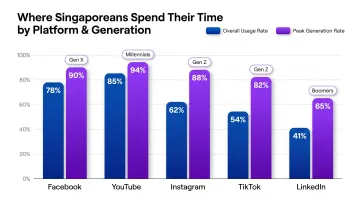
No single channel reaches everyone. Every touchpoint — from an Instagram story to a website visit to a WhatsApp Business chat — gets evaluated and compared against competitors in real time. Platform behaviour also signals what consumers value, and that's where the branding challenge deepens.
Values-Driven Purchasing Is Rising
Sustainability and ethics now influence purchase decisions. According to Deloitte's 2024 survey, 60% of Gen Z and 79% of Millennials in Singapore are willing to pay more for sustainable products. Beyond willingness to pay, 29% of Gen Z have already stopped or reduced relationships with brands over environmental impact.
Singlife research found that 7 in 10 Singapore consumers feel sustainability is important, though only 3 in 10 are actively contributing. This gap reveals opportunity: brands that make sustainable choices easy and authentic can bridge the intention-action divide.
That intention-action gap is also a trust gap. Globally, 84% of consumers say they need to share values with a brand to buy from it. In Singapore's multicultural, high-scrutiny market, brands that demonstrate values clearly — not just claim them — are the ones that earn lasting loyalty.
Why Strong Brand Identity Is the Foundation of Loyalty
Most businesses rush to loyalty tactics—programmes, discounts, campaigns—before establishing clear brand identity. This is backwards. Without a consistent identity, customers have nothing to connect with emotionally. They're buying products, not brands.
Brand identity encompasses your story, visual system, voice, messaging, and values across all touchpoints. When these elements are coherent, they create familiarity and trust—the psychological prerequisites for loyalty.
Story Differentiates Beyond Price
Vantage Branding's philosophy—"Everyone loves a great story"—reflects a fundamental truth: narrative is what separates brands from commodities. Your brand story isn't your company history. It's the authentic reason you exist, the problem you solve, and where your customers see themselves in that journey.
In Singapore's crowded market, product features and price are easily matched. Story cannot be replicated. When your narrative resonates, customers who see themselves in it become advocates, not just buyers.
Consistency Builds Trust at Scale
Research shows consistent brand presentation across touchpoints increases revenue by up to 33%. Yet only 30% of organisations enforce their own brand guidelines. This gap represents real competitive advantage for those who get it right.
Consistency doesn't mean rigid repetition. It means your visual identity, brand voice, and messaging feel recognisably yours whether a customer encounters you on Instagram, in-store, or through customer service. Inconsistency triggers doubt—customers subconsciously question whether you're reliable.
What consistent brand presentation looks like in practice:
- Visual identity applied uniformly across digital, print, and physical environments
- Brand voice that stays recognisable across social media, email, and in-person interactions
- Messaging that reinforces the same core promise at every touchpoint
- Internal teams aligned on brand guidelines, not just marketing
Emotional Connection Drives Value
Harvard Business Review research demonstrates that emotionally connected customers are 52% more valuable than highly satisfied customers. In one retail study:
| Metric | Highly Satisfied | Emotionally Connected |
|---|---|---|
| Annual spend | $200 | $400 |
| Shopping frequency | Baseline | 2.1x higher |
| Share of wallet | 45% | 99% |
| Attrition rate | Baseline | 50% lower |
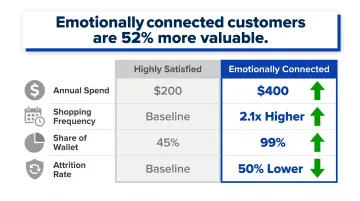
Emotionally connected customers made up only 22% of the customer base but delivered 37% of total revenue. Moving a customer from satisfied to emotionally connected increases their value by 52%—nearly three times the 18% gain from moving dissatisfied to satisfied.
Values Alignment Attracts Like-Minded Advocates
When you clearly articulate what your brand stands for—and prove it through actions—you attract customers who share those values. These customers don't just buy more; they defend your brand publicly and recruit others.
This dynamic is especially pronounced in B2B contexts in Singapore, where loyalty functions differently from consumer markets. B2B relationships run on institutional trust, consistent delivery, and reputation—not points programmes.
In Singapore's tightly connected professional community, your brand reputation precedes every sales conversation. Thought leadership, demonstrated expertise, and values that show up in how you operate shape stakeholder confidence long before a contract is signed.
Vantage Branding's Approach
Vantage Branding works with organisations across healthcare, retail, F&B, government, and B2B sectors to build brand identities grounded in genuine audience insight. Their work with clients like Enterprise Singapore, Allium Healthcare, and the Singapore Symphony Orchestra reflects a consistent focus: identifying the authentic story a brand can own, then making it coherent across every touchpoint.
For businesses in Singapore looking to move beyond transactional relationships, that foundation—a clear identity, a consistent voice, and values that hold up under scrutiny—is where loyalty begins.
Proven Strategies to Build Brand Loyalty in Singapore
Personalise Experiences Using Customer Data
Personalisation in Singapore goes beyond addressing someone by first name. It means using behavioural data, purchase history, and lifecycle stage to serve relevant offers and communications.
McKinsey research shows companies excelling at personalisation generate 40% more revenue than average players. 71% of consumers now expect personalised interactions—and 76% get frustrated when it doesn't happen.
Start with simple segmentation:
- Group customers by purchase frequency (new, occasional, frequent)
- Segment by product category preference
- Identify lifecycle stage (onboarding, active, at-risk, dormant)
- Use demographic and behavioural signals to tailor messaging
As your data capabilities grow, move into dynamic personalisation: product recommendations based on browsing patterns, triggered emails based on behaviour, and personalised landing pages.
Respect data privacy expectations. Singapore's Personal Data Protection Act (PDPA) sets clear rules for marketers. Trust is the prerequisite for collecting the data personalisation depends on.
PDPA compliance requires:
- Express opt-in consent before sending marketing communications
- Notification of data purposes prior to collection
- The right to withdraw consent honoured within 10 business days
- Checking the Do Not Call Registry before SMS or voice outreach
Design Loyalty Programs That Reward More Than Purchases
Traditional point-based programs attract deal-seekers, not loyal customers. The moment a competitor offers better rewards, those customers leave.
Multi-dimensional loyalty programs reward reviews, referrals, community participation, and content creation. This builds deeper engagement in Singapore's social-proof-driven market where 63% of consumers trust peer recommendations more than traditional advertising.
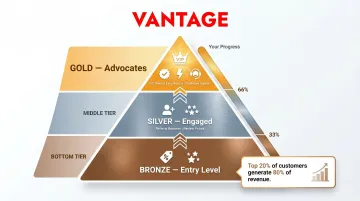
Tiered structures work because they tap into psychological motivation:
- Bronze/Silver/Gold tiers create genuine aspiration to reach higher status
- Exclusive top-tier benefits—early access, VIP events, dedicated support—make customers feel valued beyond the transaction
- Progress indicators showing proximity to the next tier encourage incremental engagement
The Pareto Principle applies: approximately 20% of customers generate 80% of revenue. Tiered programs let you nurture these high-value customers strategically. Bain & Company research shows loyalty leaders achieve 2x industry revenue growth, with typical implementations yielding 10+ point NPS gains and 20% reduction in customer attrition.
Build Emotional Connections Through Storytelling and Experience
Singaporean consumers now value experiences as much as—often more than—the transaction itself. Brands that create memorable touchpoints—exclusive events, personalised moments, behind-the-scenes access—form bonds that price-matching competitors cannot replicate.
Storytelling is the vehicle for emotional connection. How you communicate your origin, purpose, and customer impact shapes how consumers see themselves in relation to your brand. Consider how local café chains use founder narratives and neighbourhood ties to compete against global giants. They're selling belonging, not just coffee.
Create experience-driven loyalty:
- Host customer appreciation events that feel genuinely exclusive
- Share customer success stories and user journeys
- Offer behind-the-scenes content that humanises your brand
- Personalise milestone recognition (anniversaries, birthdays, achievement tiers)
Demonstrate Commitment to Sustainability and Social Responsibility
Sustainability is no longer a differentiator in Singapore—it's becoming a baseline expectation. Deloitte's 2024 survey found 60% of Gen Z and 79% of Millennials are willing to pay more for sustainable products, while 29% of Gen Z have already stopped or reduced brand relationships over environmental impact.
Consumers detect greenwashing quickly, particularly in Singapore's educated, digitally connected market where information spreads fast.
Embed responsible practices authentically:
- Make sustainability commitments specific and measurable
- Report progress transparently with third-party verification where possible
- Connect initiatives to your core business model, not just CSR add-ons
- Communicate what you're doing without exaggeration or virtue signalling
Leveraging Digital Engagement and Community Building
Singapore has one of the highest smartphone penetration rates in Asia, and consumers here expect brands to show up where they already spend their time. Community building — through social media groups, brand forums, user-generated content campaigns, and live events — converts passive customers into active brand participants.
Effective community management means:
- Responding quickly and authentically to comments and messages
- Creating spaces for customers to connect with each other, not just with you
- Featuring customer stories and user-generated content prominently
- Moderating communities to maintain positive, supportive environments
- Recognising and rewarding active community members
Platform Strategy for Singapore
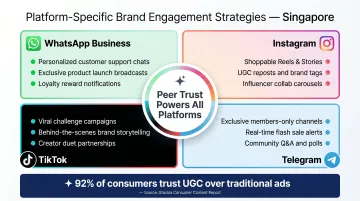
WhatsApp Business, Instagram, TikTok, and Telegram are particularly relevant to Singapore's digital habits. Prioritise responsiveness and authenticity over production value. Consumers distrust polished advertising. They want real interaction.
Platform-specific engagement approaches:
- Use WhatsApp Business for direct service, order updates, and personalised offers
- Use Instagram for visual storytelling, behind-the-scenes content, and real-time Stories
- Use TikTok to show brand personality through short-form content and trending formats
- Use Telegram for community channels, exclusive content drops, and direct communication
What works across all these platforms is the same underlying force: peer trust. That's where user-generated content becomes one of your strongest tools.
Harness User-Generated Content
In Singapore's social-proof culture, peer recommendations carry extraordinary weight. Research shows 92% of consumers trust user-generated content more than traditional advertising.
Encourage and showcase UGC:
- Create branded hashtags and feature the best customer posts
- Run photo contests rewarding creative customer content
- Request reviews and testimonials, then display them prominently
- Share customer success stories with permission
- Repost customer content to your brand channels with credit
Hashmeta research found that authentic, locally relevant content generates 3.7x higher engagement than generic materials. Food micro-influencers in Singapore achieve 8.1% engagement rates. That's the highest figure among all categories studied.
Common Mistakes That Undermine Brand Loyalty in Singapore
The Loyalty Program Trap
Brands that rely solely on discounts and points aren't building loyalty—they're buying it temporarily. Harvard Business Review analysis of over 400 brands found 98% of price promotions had zero long-term impact on sales. Customers quickly return to old patterns once promotions end.
Price promotions also reset consumers' internal reference price — making standard pricing feel like a penalty over time. Incentives should complement genuine brand value, not replace it. Use them sparingly, and invest the rest in product quality, service, and emotional connection.
Inconsistency Destroys Trust
A brand delivering excellent digital experience but poor in-store service destroys trust. In Singapore's word-of-mouth environment where 88.2% of the population uses social media, a single poor experience spreads quickly through social channels and review platforms.
Consistency requirements:
- Visual identity remains cohesive across all touchpoints
- Brand voice sounds recognisable in emails, social posts, and customer service
- Service quality holds up regardless of channel
- Messaging aligns across marketing, sales, and support teams
Ignoring Cultural Nuance
Generic global campaigns, applied without local context, consistently miss the mark in Singapore's multicultural market. Research shows 76% of consumers prefer information in their native language and cultural context.
Culturally intelligent marketing means:
- Recognising major cultural events (Ramadan, Deepavali, Lunar New Year) authentically
- Using local references and examples in content
- Featuring diverse representation in visuals and narratives
- Adapting messaging to resonate with different ethnic communities without stereotyping
- Noting that 52% of Singaporeans trust local brands over global ones — and earning that trust through relevance, not just familiarity
Measuring Brand Loyalty Over Time
Key Metrics to Track
Track these five metrics consistently to build a reliable picture of loyalty over time:
- Net Promoter Score (NPS): Likelihood to recommend, scored 0–10. Subtract Detractors (0–6) from Promoters (9–10). Above 70 is excellent; 30–70 is solid; below 30 needs attention.
- Customer Lifetime Value (CLV): Total revenue a customer generates across their entire relationship with your brand. Helps identify your most profitable segments and where to invest.
- Repeat Purchase Rate: Share of customers who buy more than once — calculated as (customers with 2+ purchases ÷ total customers) × 100. A rising rate signals improving retention.
- Referral Rate: Percentage of new customers who arrive through existing customer recommendations. High referral rates point to genuine advocacy, not just satisfaction.
- Social Sentiment: Brand mentions, comment tone, and share-of-voice across social platforms. Watch how the conversation shifts quarter to quarter.
Qualitative Signals to Watch
Brand loyalty measurement should include qualitative feedback — customer interviews, community participation levels, unsolicited advocacy, and review content. These signals reveal why customers stay loyal, not just whether they do.
A simple quarterly review cadence works for most businesses:
- Track NPS, CLV, and repeat purchase rate monthly; review trends quarterly
- Conduct 5–10 customer interviews per quarter asking why they stay loyal
- Monitor social sentiment and review themes
- Track loyalty programme tier movement and engagement rates
- Evaluate customer service satisfaction and resolution times
Small and medium businesses can run this cadence without a dedicated analytics team. What matters most is measuring the same metrics the same way each period — that consistency is what separates a genuine trend from noise.
Frequently Asked Questions
What is the difference between brand loyalty and customer loyalty?
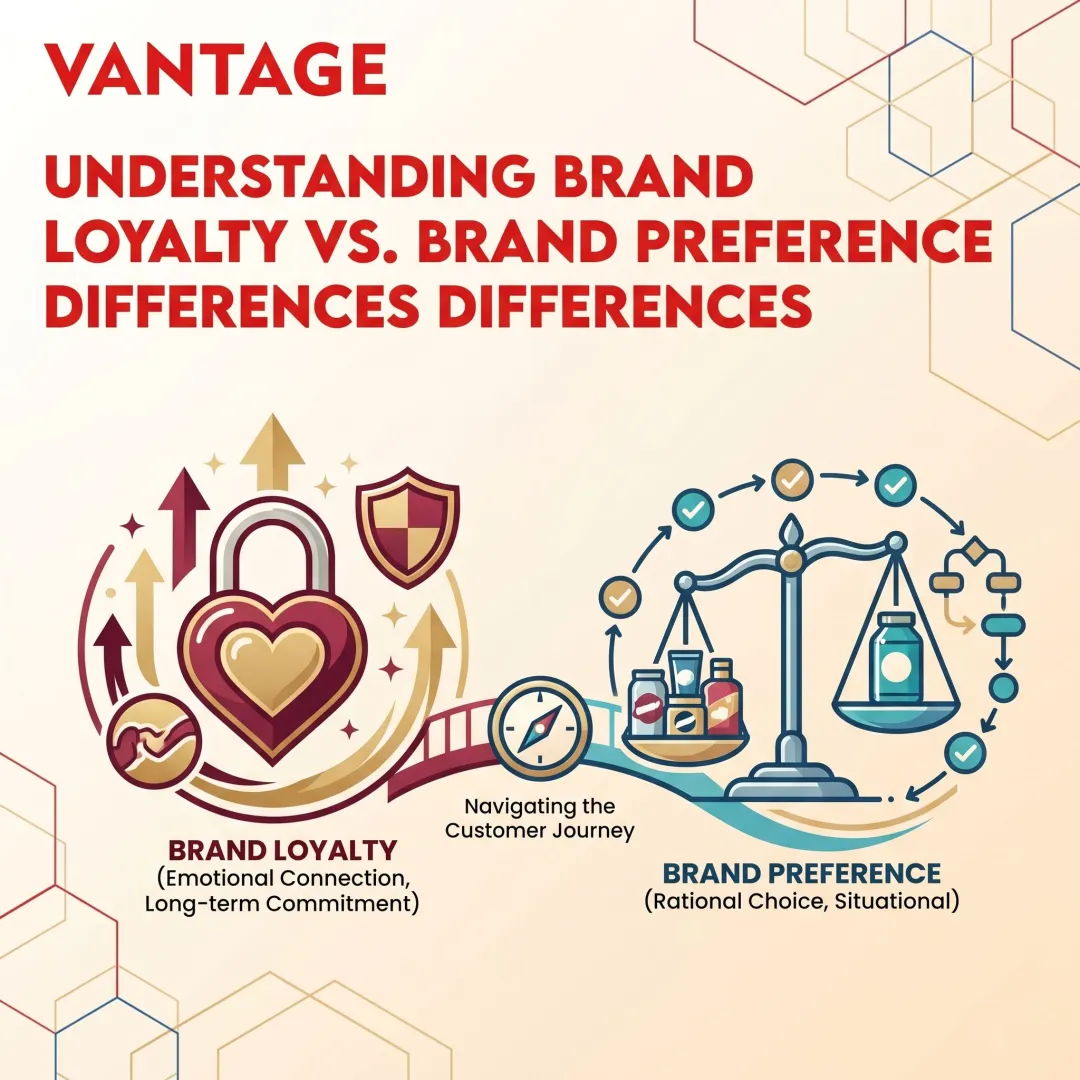
Customer loyalty is often transactional, maintained through rewards, convenience, and habit. Brand loyalty is emotional—customers choose your brand even when alternatives are cheaper or more accessible, because they connect with your values and identity.
How long does it take to build brand loyalty in Singapore?
Meaningful brand loyalty typically develops over 6-18 months of consistent brand experience and engagement. Early positive signals like repeat visits and referrals can appear within the first few months, but deep emotional connection requires sustained consistency.
Do loyalty programs alone guarantee brand loyalty?
No. Loyalty programs are useful tools but not substitutes for strong brand identity, consistent quality, and emotional connection. Programs lacking these foundations attract deal-seekers who leave when competitors offer better incentives.
How does brand identity influence customer loyalty?
A clear, consistent brand identity gives consumers something to connect with on an emotional level. It reduces decision fatigue, builds familiarity, and communicates values that attract like-minded customers who become loyal through shared identity.
What makes Singaporean consumers loyal to a brand?
Singapore consumers are loyal to brands that consistently deliver quality, demonstrate cultural relevance, personalise the experience, and align with their values—particularly around service excellence, sustainability, and authenticity.
Is building brand loyalty different for B2B businesses in Singapore?
Yes. B2B loyalty is built on institutional trust, consistent delivery, and relationship depth rather than consumer-style programmes. Brand reputation and thought leadership play an outsized role in retaining business clients where word-of-mouth carries significant weight.