Introduction
Singapore's B2B landscape has matured beyond recognition. Companies no longer compete on product specifications or pricing alone — they compete on brand perception and the credibility they've built with stakeholders. As the market grows more crowded and buyers become more discerning, reputation has become a decisive commercial asset.
In a relationship-driven B2B economy like Singapore's, a strong brand shapes how prospects evaluate vendors, how talent chooses employers, and how stakeholders assign long-term value.
Research from McKinsey and Harvard Business Review shows that B2B companies investing in brand see 5% to 10% revenue increases. Those where the CEO puts marketing at the heart of growth strategy are twice as likely to achieve 10%+ annual growth.
This article delivers a curated set of real B2B branding case studies from Singapore, the strategic decisions that drove them, and the measurable outcomes that followed — so you can see exactly what separates brands that grow from those that stall.
TL;DR
- B2B branding in Singapore is a strategic business lever affecting pipeline, credibility, and enterprise value — not just design
- Effective transformations begin with deep audience and market insight, not aesthetics
- Across technology, maritime, investment, and government sectors, brand clarity drives stakeholder alignment and stronger market positioning
- The right branding agency brings strategic depth, sector experience, and a clear link between brand work and business results
Why B2B Branding Is a Strategic Priority in Singapore
B2B branding in Singapore encompasses brand strategy, positioning, identity, and narrative — all designed to build trust with business buyers, investors, partners, and regulators rather than end consumers. This differs fundamentally from B2C branding: longer sales cycles, multiple stakeholder audiences, and a premium placed on credibility over emotional appeal.
Singapore's market conditions make branding especially critical. The domestic market is small and competitive, where reputation travels fast. As the most popular regional headquarters destination in Asia, Singapore hosts major firms like Deloitte, Accenture, PwC, and McKinsey — and the professional services sector contributes 5.6% of GDP, employing 230,000+ professionals.
That regional hub position means Singapore-based brands must resonate across Southeast Asia while meeting increasingly sophisticated buyer expectations.
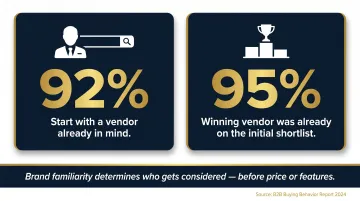
The stakes are high: 92% of B2B buyers start their purchasing journey with at least one vendor already in mind, and 95% of the time, the winning vendor is already on that initial shortlist. Brand familiarity and mental availability determine who makes the list — before product features or price are even considered.
The case studies below show how B2B organisations across Singapore have translated strategic branding into measurable business outcomes.
Top B2B Branding Case Studies in Singapore
These case studies span different B2B sectors and represent branding challenges common across Singapore's enterprise landscape — from legacy brand modernisation to building credibility in new markets.
PSA International
PSA International is a global port operator headquartered in Singapore, managing over 70 deepsea, rail, and inland terminals across 45 countries. In 2024, PSA became the first global terminal operator to handle more than 100 million TEUs in a single year. Keeping a coherent brand identity across that scale — serving shipping lines, logistics partners, governments, and enterprise clients across dozens of markets — required a deliberate structural approach.
PSA's branding work focused on creating consistency across international operations while strengthening stakeholder engagement. The strategic approach addressed brand architecture and visual identity systems that could scale across diverse markets and audiences.
| Aspect | Details |
|---|---|
| Branding Challenge | Managing brand consistency across 70+ terminals in 45 countries serving multiple stakeholder groups with different needs and expectations |
| Branding Approach | Strategic brand architecture, unified positioning framework, and scalable visual identity system designed for international consistency |
| Outcome | Improved stakeholder clarity and stronger global positioning through cohesive brand expression across operations |
CrimsonLogic
CrimsonLogic is a Singapore-based technology company and wholly-owned subsidiary of PSA International, specialising in trade facilitation, customs automation, and government digital services.
With over 37 years of experience, 1,400 employees across 20 offices, and solutions deployed in more than 40 countries, CrimsonLogic operates where credibility with government and enterprise clients is non-negotiable.
Operating across 19 countries, CrimsonLogic needed a brand that could support ambitious growth and set it apart in a crowded govtech and trade facilitation market.
The core need: clear positioning as a "Total Trade" enabler — one that could communicate capabilities spanning G2G, G2B, and B2B interactions from pre-trade through to post-trade phases.
Vantage Branding developed the brand positioning "Simpler trade. Smarter tech." and created a comprehensive visual identity system centred around a distinctive trade arrow symbolising parallel synergy between government and business trade. This positioning reflected CrimsonLogic's core ethos of empowering users through intuitive experiences and innovative solutions.
| Aspect | Details |
|---|---|
| Branding Challenge | Establishing market leadership and differentiation as a total trade solutions partner in a competitive govtech and trade facilitation space |
| Branding Approach | Brand strategy, positioning development ("Simpler trade. Smarter tech."), complete visual identity system redesign, website design, and brand implementation workshops |
| Outcome | Strengthened international positioning with a cohesive brand narrative communicating comprehensive trade ecosystem capabilities across multiple stakeholder groups |
Golden Equator Group
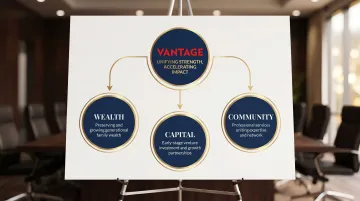
Golden Equator Group is a Singapore-based investment and advisory group founded in 2012, operating across asset management, venture capital, and professional services. With subsidiaries including Golden Equator Wealth (multi-family office), Golden Equator Capital (venture capital), and SPECTRUM (business club), the group must convey institutional credibility, strategic sophistication, and regional expertise to attract investors and enterprise clients.
The core branding challenge centred on creating a unified framework for communicating synergies across numerous businesses within the group. Multiple business divisions operated without a cohesive brand narrative or central organising principle, making it difficult for stakeholders to understand how the ecosystem worked together.
Vantage Branding developed a central brand promise — "Bringing capital and community together to unlock limitless value" — which served as the organising principle for all brand identity work. This promise unified the group's diverse offerings under a single strategic narrative, enabling each business division to maintain its distinct identity while clearly communicating its role within the larger ecosystem.
| Aspect | Details |
|---|---|
| Branding Challenge | Fragmented group identity across multiple business units (Wealth, Capital, Learning) without a cohesive narrative showing how divisions work together synergistically |
| Branding Approach | Group brand architecture, central brand promise development, comprehensive brand identity system, website design, and implementation workshops |
| Outcome | Unified brand framework enabling clear communication of powerful synergies across business divisions while maintaining distinct identities for each unit |
Enterprise Singapore
Enterprise Singapore is the government agency championing enterprise development and international growth for Singapore companies. As a statutory board under the Ministry of Trade and Industry, it serves a unique B2B audience involving multiple stakeholder groups — SMEs, MNCs, international partners, and government bodies — each requiring different brand experiences.
The scale of EnterpriseSG's reach makes brand clarity a real challenge:
- Supported 11,700 enterprises in 2025
- Projected S$12.3 billion in revenue growth and 10,000 skilled jobs for programme participants
- Backed 2,600 internationalisation projects in 2024
Keeping messaging consistent and relevant across that range of stakeholders — from local SMEs to multinational partners — demands careful brand architecture.
Vantage Branding's work addressed this multi-audience complexity through programme branding, segment-specific messaging, and communication frameworks that helped EnterpriseSG maintain institutional authority while resonating with private sector enterprises.
| Aspect | Details |
|---|---|
| Branding Challenge | Communicating effectively across diverse stakeholder groups (SMEs, MNCs, international partners) while maintaining government authority and private sector appeal |
| Branding Approach | Programme branding, messaging strategy tailored to different stakeholder segments, and communication frameworks supporting adoption by target enterprises |
| Outcome | Improved stakeholder reach and clarity in communicating support programmes, driving higher engagement from target enterprises across Singapore's business ecosystem |
Key Lessons From These B2B Branding Case Studies
The most consistent finding across all case studies is that effective B2B branding starts with strategic clarity, not design. Every successful brand transformation began with understanding the audience's decision-making context, the competitive landscape, and the organisation's unique position — before a single visual element was created.
For B2B companies evaluating a rebrand, this matters because design without strategy creates visual appeal but fails to differentiate or communicate value to buyers who conduct extensive due diligence.
That strategic foundation also shapes how Singapore's strongest B2B brands handle one of the field's defining challenges: building for multiple stakeholders at once. A single brand must resonate with:
- Procurement teams evaluating risk and compliance
- C-suite buyers focused on strategic fit
- Investors assessing long-term value
- Regulators and employees with their own expectations
The case studies above navigated this through brand architecture frameworks that maintained group-level consistency while giving individual business units the flexibility to speak to their specific audiences.
Brand consistency across touchpoints — from pitch decks and digital presence to office environments and sales materials — is especially important in B2B contexts where every interaction is evaluated for professionalism. 73% of B2B marketing executives rank word-of-mouth and peer recommendations as the most influential factor in deciding which vendors to consider. Inconsistent brand expression undermines the credibility those recommendations carry.
The long-term commercial return on B2B branding is often underestimated because it's harder to measure than a campaign click or lead form. The most meaningful outcomes — shorter sales cycles, stronger pricing power, higher-quality inbound inquiries, and improved talent attraction — are lagging indicators that compound over time.
Research shows that companies integrating creativity, analytics, and purpose grow 2.3 times faster than peers. Strong brands can also command a price premium of 20% to 25% over generic competitors.
How to Choose a B2B Branding Agency in Singapore
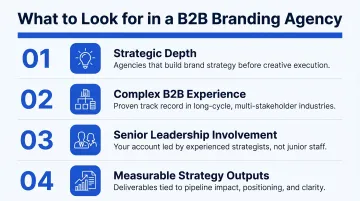
The most important evaluation criteria for selecting a B2B branding agency in Singapore are:
- Strategic depth — not just design capability, but the ability to conduct research, develop positioning frameworks, and build brand architecture
- Demonstrated experience with complex B2B brands — track record working with multi-stakeholder organisations, government clients, or enterprise companies
- Collaborative process involving senior leadership — methodology that engages decision-makers, not just marketing teams
- Measurable brand strategy outputs — deliverables beyond visual assets, including positioning statements, messaging frameworks, and brand guidelines
The common mistake is selecting agencies based solely on portfolio aesthetics rather than strategic process. Beautiful design that doesn't differentiate your organisation from competitors or clarify your value proposition wastes investment.
Industry experience matters. An agency that understands the regulatory, relational, and reputational dynamics of B2B sectors — whether technology, financial services, healthcare, or government — produces brand work that is commercially grounded, not just visually polished.
Vantage Branding's work across government bodies, investment firms, healthcare providers, and enterprise B2B clients in Singapore reflects this: sector knowledge shapes every strategic and creative decision, from positioning to visual identity.
The best branding partnerships include brand governance support, brand guidelines implementation, and the capability to evolve the brand as the business grows or enters new markets. Ask prospective agencies how they support brand rollout and long-term consistency.
Delivery of a brand strategy is a starting point, not an endpoint. What matters is whether the agency can support ongoing coherence as your organisation scales.
According to market data, comprehensive B2B brand strategy and identity projects in Singapore typically range from SGD 20,000 for smaller engagements to SGD 100,000+ for complex organisations with multiple stakeholder groups or regional ambitions. The Enterprise Development Grant (EDG) can cover up to 50% of qualifying branding project costs for eligible Singapore SMEs, making strategic brand investment more accessible.
Conclusion
In Singapore's competitive B2B market, brand functions as a business asset, not just a communications tool. The case studies above demonstrate that organisations willing to invest in strategic brand clarity — not just visual refresh — see tangible improvements in how they are perceived, trusted, and chosen by the buyers and partners that matter most.
Your brand should be working as hard as your team. If the patterns in these case studies reflect challenges your organisation is facing, the next step is a clear-eyed look at your own brand positioning. Connect with Vantage Branding to explore how your brand can be built for credibility and growth in Singapore and across the region.
Frequently Asked Questions
What is B2B branding and how is it different from B2C branding?
B2B branding focuses on building trust and credibility with business buyers, investors, and stakeholders across longer sales cycles. Unlike B2C branding that targets emotional consumer responses, B2B requires clarity, authority, and consistency across multiple decision-maker audiences who conduct extensive due diligence.
Why does branding matter for B2B companies in Singapore?
Singapore's B2B market is highly competitive and relationship-driven, meaning brand reputation directly influences vendor selection, partnership decisions, and investor confidence. Research shows that 92% of B2B buyers start their purchasing journey with at least one vendor already in mind — a well-positioned brand shortens sales cycles and improves the quality of inbound opportunities.
How long does a B2B branding project typically take?
A comprehensive B2B brand strategy and identity project typically ranges from 3 to 6 months depending on organisational complexity, stakeholder alignment needs, and scope of deliverables. Compressed timelines tend to compromise strategic depth and stakeholder alignment.
What should be included in a B2B branding project?
Core components include brand strategy and positioning, brand architecture, messaging framework, visual identity system, brand guidelines, and rollout support. The strongest outcomes come when strategy and design are developed together, not in isolation.
How do you measure the ROI of B2B branding?
ROI from B2B branding is typically measured through lagging indicators such as improvements in lead quality, deal conversion rates, pricing premium, talent acquisition, and stakeholder perception surveys. Only 29% of companies can link sales leads back to specific brand investments, but direct revenue attribution becomes measurable over 12–24 months post-rebrand.
How much does B2B branding cost in Singapore?
Costs vary based on scope and complexity. A comprehensive B2B brand strategy and identity project in Singapore typically ranges from SGD 20,000 for smaller engagements to SGD 100,000+ for organisations with multiple stakeholder groups or regional expansion plans.