Introduction: Post-Merger Branding in Singapore
When two companies merge, the brand decision is often more consequential than the deal structure itself. Do you absorb one brand into the other, create something new, or retain both? The answer determines whether the combined entity projects strength and unity—or creates market confusion that drives customers away.
Singapore's business landscape makes these decisions especially complex. The city-state's multicultural market, regional gateway role, and high stakeholder expectations demand careful brand stewardship. In sectors like healthcare, financial services, and government-linked entities, trust and institutional credibility matter enormously. Singapore's trust in business stands at 63% and trust in government at 77%, so brand missteps here are particularly costly.
This guide covers what you need to navigate that process with clarity:
- The four main brand architecture options for post-merger scenarios
- How to run a structured brand audit before any naming or design decisions
- A step-by-step execution framework
- Common mistakes that derail Singapore rebrands
- How to choose the right branding partner
TLDR
- Poor brand integration drives up to 17% in sales losses—a leading reason M&A deals underperform
- Choose one of four brand architectures based on strategic rationale and brand equity
- Conduct a structured brand audit before making naming or design decisions
- Launch internally first—employees must champion the brand before external announcement
- Singapore SMEs can tap the Enterprise Development Grant (EDG) to offset up to 50% of qualifying brand strategy costs
Why Post-Merger Branding Decisions Can Make or Break Your Deal
83% of M&A deals fail to boost shareholder returns, and historically, 70% of mergers have been classified as failures. The culprit is rarely financial engineering—it's poor integration execution. Unclear brand positioning ranks among the top drivers of customer attrition, employee disengagement, and market confusion post-merger.
The Dual Risk: Internal and External
Internally, employees from both organisations watch brand decisions for signals of whose culture "wins." Externally, customers and partners scrutinise every change for signs of instability. Ambiguity on either front creates defection risk.
The numbers bear this out:
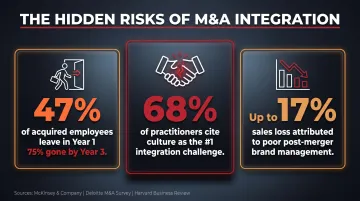
- 47% of acquired employees leave within Year 1; 75% are gone by Year 3
- 68% of M&A practitioners cite culture as the biggest integration challenge
- Poor brand management during M&A can result in sales losses of up to 17%
Singapore's High-Trust, High-Stakes Context
In Singapore, where institutional credibility is a competitive asset, a poorly handled rebrand can erode decades of brand equity rapidly. Singapore's top 100 brands are valued at USD 78.4 billion, with banking alone accounting for 39.3% of total brand value.
For financial services and healthcare firms especially, trust is the dominant lever. Healthcare sector trust globally stands at 77%, and Singapore's reputation-driven market means that erosion happens faster — and is harder to reverse — than in less relationship-dependent economies.
The Four Post-Merger Brand Architecture Options
Choosing the right brand architecture after a merger is one of the highest-stakes decisions in the integration process. The right option depends on the strategic rationale of the deal — whether you're pursuing scale, scope, adjacency, or market redefinition — and getting it wrong can erode the very equity the transaction was meant to capture.
Absorb: Replace One Brand with the Other
How it works: The acquiring company retires the acquired brand and migrates everything to the dominant brand.
Best for: Scale-driven mergers where one brand is substantially stronger in recognition and customer loyalty. This approach consolidates brand equity and simplifies go-to-market execution.
Example: When Grab acquired Uber's Southeast Asia operations in 2018, Uber's brand was phased out with a two-week transition window. Grab absorbed UberEats into GrabFood and gained 95% market share in third-party taxi hailing across the region.
Risk: Alienating loyal customers of the absorbed brand if the transition lacks care and communication.
Retain Both Brands Independently
How it works: Both legacy brands continue operating under separate identities, with the parent entity remaining largely invisible to end customers — a "house of brands" model.
Best for: Adjacency or scope mergers where both brands serve distinct segments. A premium brand and a mid-market brand, for instance, can coexist without cannibalising each other.
Cost implication: Maintaining two full brand ecosystems requires disciplined governance. Budget separately for:
- Marketing and campaign management
- Visual identity and digital properties
- Customer support infrastructure
- Brand guidelines and compliance oversight
Create an Entirely New Brand
How it works: Both legacy brands are retired and replaced with a completely new brand identity.
Best for: Mergers where both brands carry equal weight, or where one or both carry reputation issues the deal is intended to resolve.
Challenge: This is the most resource-intensive option. Without comprehensive internal and external communication, a perception gap opens — stakeholders don't understand what the new brand stands for or why the change happened at all.
Hybrid: Endorsed or Sub-Brand Architecture
How it works: One master brand is retained while the other is kept as an endorsed or sub-brand (for example, "CompanyA, a CompanyB company").
Best for: Professional services and B2B sectors in Singapore, where client relationships are tied to specific brand names but the parent entity needs strategic coherence.
Example: DBS Bank acquired POSBank in 1998 for SGD 1.6 billion and explicitly retained the POSB brand under the DBS Group umbrella — a decision that preserved POSB's strong community loyalty among retail customers. Similarly, IHH Healthcare refreshed its corporate identity in 2025 to unite eight hospital brands — Gleneagles, Mount Elizabeth, Parkway, Pantai, and others — under the IHH parent identity while keeping each hospital brand distinct.
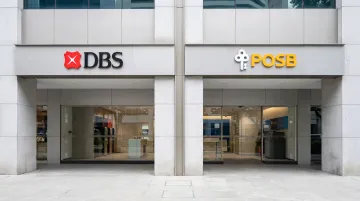
The hybrid model often serves as a stepping stone before full integration, with endorsed brands gradually transitioning over 2–3 years.
Conducting a Post-Merger Brand Audit
Before making any naming or visual decisions, conduct a rigorous brand audit. Skipping this step is one of the most common and costly post-merger mistakes—it leads to strategy built on assumptions rather than evidence.
A structured brand audit assesses:
- Each legacy brand's equity, awareness levels, and customer associations
- The competitive landscape and how competitors will respond
- Internal culture alignment and employee identity
- White spaces in the market the combined entity can occupy
Each of these dimensions maps to a distinct phase of the audit. The sub-sections below break down how to approach each one.
Audience Research Across Stakeholder Groups
Map how customers, partners, employees, and investors perceive each legacy brand separately. In Singapore's multicultural market, this may require research across English, Mandarin, Malay, and Tamil-speaking communities, particularly for consumer-facing or government-linked brands.
Key questions to answer:
- Which brand has stronger unaided awareness?
- What attributes does each brand "own" in the minds of stakeholders?
- Are there negative associations tied to either brand?
- How do employees identify with their current brand?
Competitive Landscape Analysis
Map how competitors are likely to respond once the merger is public. Some will use the transition window to recruit your customers — particularly if your brand presence goes quiet during the rebrand. Others may rush to claim positioning territory you've vacated.
This analysis should identify:
- Competitors most likely to poach customers during the transition
- Positioning territory currently unclaimed in the market
- Brand attributes the combined entity can credibly own
Consistent brand presentation across all platforms increases revenue by up to 23%. Achieving that consistency post-merger requires knowing exactly where you stand competitively before committing to a direction.
Internal Culture Audit
Alongside the external competitive view, you need an honest read of what's happening inside both organisations. Assess how each team communicates, what they value, and how strongly employees identify with their existing brand.
A new brand that feels imposed rather than earned will face internal resistance — and that resistance directly undermines external execution.
In Singapore, where only approximately 20% of mergers involve complete cultural integration, this step is critical.
Step-by-Step: Executing Your Post-Merger Brand Strategy
Step 1 — Establish a Brand Integration Team Early
Brand decisions should not be left to the marketing department alone. Assemble a cross-functional team including communications, HR, legal, and leadership from both merging entities before the deal closes. This allows branding timelines to be planned in parallel with operational integration.
Step 2 — Define the Brand Strategy Before Designing Anything
Lock in the following before naming or visual identity work begins:
- Positioning statement for the combined entity
- Value proposition and differentiation
- Target audience definition
- Brand personality and tone of voice
Moving straight to design without a strategic foundation is a costly shortcut that leads to rebrands requiring revision within 2-3 years.
Step 3 — Set the Naming and Architecture Decision Timeline
Naming decisions should be made within the first 90 days post-close. Uncertainty around the brand name fuels speculation among customers, employees, and the wider market.
Factor in legal considerations: IPOS trademark registration in Singapore takes approximately 9 months assuming no objections. The SG Trade Marks Fast programme is suspended as of January 2026, so plan accordingly.
Step 4 — Execute Internal Launch Before External Launch
Employees must understand, believe in, and be able to articulate the new brand before it is announced externally. Critical internal steps include:
- Brand narrative documents explaining the rationale and vision
- Leadership communication toolkits for consistent messaging across levels
- Brand training sessions for all customer-facing staff
- Internal Q&A sessions to address concerns
Once internal alignment is in place, the external rollout has a much stronger foundation to build on.
Step 5 — Manage the External Rollout with a Phased Communication Plan
Sequence external communications strategically:
- Key clients and partners first — personal, direct communication before public announcement
- Broader market announcements — press release, media engagement, website update
- Full visual rollout — digital properties, physical signage, stationery, uniforms
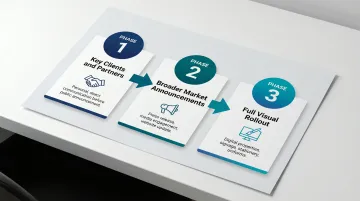
In Singapore's relationship-driven business culture, personally communicating the change to key accounts before public announcement is standard practice.
Common Post-Merger Branding Mistakes in Singapore
Mistake 1 — Moving Too Fast on Visual Identity
Companies often rush to launch a new logo as a signal of progress before the underlying brand strategy is defined. This results in a visual identity without strategic roots that needs revision within 2-3 years. Three out of four acquisitions lead to a subsequent rebrand, suggesting many occur reactively rather than strategically.
Mistake 2 — Underestimating Internal Culture Clash
Singapore's merger landscape—particularly in healthcare, financial services, and government-linked companies—often involves combining organisations with distinctly different cultures. 70% of cross-border M&A failures are attributed to cultural differences. Failing to address the "human brand" dimension leads to talent attrition and brand inconsistency at the customer-facing level.
This plays out in measurable ways. A Forrester study of Singapore financial services firms found that local banks command "blind trust" among prospects, while foreign brands outperform on "substantiated trust" from existing customers. That gap between brand promise and lived customer experience is where post-merger trust erosion typically begins.
Mistake 3 — Neglecting Digital Brand Governance
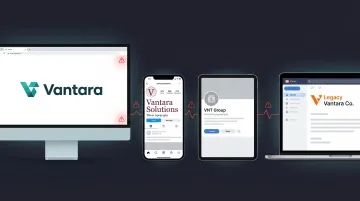
In a merger context, digital touchpoints often fall into a governance gap where neither team takes ownership of updating or aligning them. This creates a fragmented brand experience that erodes trust—particularly damaging in Singapore's digitally sophisticated market.
In a merger context, digital touchpoints often fall into a governance gap where neither team takes ownership of updating or aligning them. This creates a fragmented brand experience that erodes trust — particularly damaging in Singapore's digitally sophisticated market.
Common signs of digital governance failure include:
- Conflicting brand messaging across the merged companies' websites
- Outdated logos or names persisting on social media profiles and app store listings
- Inconsistent email signatures and campaign templates across business units
- Duplicate or abandoned microsites that still rank in search results
How to Choose the Right Branding Partner for a Post-Merger Rebrand
Select a branding agency with:
- Demonstrated experience in brand strategy, not just visual design
- Knowledge of Singapore's business landscape and regulatory context
- Ability to facilitate stakeholder workshops across two different organisational cultures
- Experience rolling out brand systems across digital and physical touchpoints simultaneously
These criteria matter most in post-merger contexts, where the stakes are high and stakeholder alignment is rarely straightforward.
Vantage Branding has managed post-merger brand engagements across B2B, healthcare, and government sectors in Singapore. Past clients include Enterprise Singapore, Jurong Health, PSA, MPA, and the Singapore Symphony Orchestra — organisations where board-level sign-off, multi-stakeholder input, and public-facing identity changes are the norm.
Practical Considerations
Confirm that the agency can:
- Manage stakeholder-heavy processes (board presentations, employee town halls, client communication templates)
- Navigate Enterprise Development Grant (EDG) applications that may help offset qualifying branding costs
- Understand trademark clearance timelines and regulatory requirements in Singapore
Qualifying SMEs may access up to 50% funding for eligible brand strategy and consultancy costs through Enterprise Singapore's EDG programme. "Strategic brand and marketing development" is explicitly listed as a qualifying activity — worth confirming with your agency before scoping the engagement.
Frequently Asked Questions
How long does post-merger rebranding typically take in Singapore?
A full post-merger rebrand typically takes 6 to 12 months, covering the brand audit phase (4–8 weeks), strategy development, naming, trademark clearance (approximately 9 months via IPOS), identity design, and rollout. Rushing the process is one of the most common causes of failure.
Should you keep both brand names after a merger?
It depends on the merger's strategic rationale, the relative equity of each brand, and the target audiences involved. The four architecture options—absorption, house of brands, new brand creation, or hybrid endorsement—each suit different scenarios. A structured brand audit provides the objective basis for making this call.
Can Singapore companies get government support for post-merger rebranding?
Yes. Qualifying SMEs may access the Enterprise Development Grant (EDG) through Enterprise Singapore to offset up to 50% of eligible brand strategy and consultancy costs. Companies should work with an experienced branding partner familiar with the grant application process.
How do you communicate a rebrand to customers and employees after a merger?
Sequence matters: employees first, then key clients, then broader market announcement. In Singapore's relationship-driven business culture, direct personal communication to key accounts before public announcement is expected and critical to maintaining trust.
What is the biggest post-merger branding mistake companies make?
Leading with visual identity before brand strategy. A new logo without strategic grounding will not resolve underlying market confusion or internal alignment gaps. Positioning, value proposition, and audience definition must be locked in before any design work begins.
How much does post-merger rebranding cost in Singapore?
Costs depend on scope—a visual refresh sits at the lower end, while a full rebrand covering multiple entities runs significantly higher. In Singapore, post-merger brand strategy and identity projects typically range from S$20,000 to S$100,000+, depending on research depth, number of entities, and rollout complexity. Eligible SMEs can apply for the EDG grant to offset up to 50% of qualifying costs.