Introduction
When companies execute a merger, the financial details get scrutinised. Due diligence, valuation models, and integration budgets command the boardroom's attention. Yet the brand narrative — how the merged entity presents itself to employees, customers, and the market — often gets pushed to "phase three."
That delay is a costly mistake. A financially sound deal can still haemorrhage customer trust, talent, and market positioning when brand communication is left too late. Research by Bain & Company shows that 83% of failed deals cite poor integration as the primary cause, with cultural incompatibility costing an average of $200 million in lost net income within three years.
Those numbers look even more serious when the deal is headquartered in Singapore. As Asia's top regional HQ hub, mergers here typically involve cross-border teams spanning Southeast Asia — multiple languages, regulatory environments, and cultural norms, all at once. Getting the brand message wrong doesn't just confuse local staff. It can derail regional operations before integration even begins.
TLDR:
- Poor brand communication erodes value faster than financial integration creates it
- Singapore's multicultural workforce and regional HQ role require culturally adapted messaging
- Leadership must choose a brand architecture strategy before any public announcement
- Internal communication comes first—employees who learn from the media become brand detractors
- A phased communication roadmap protects brand equity and accelerates integration
Why Post-Merger Brand Communication Matters in Singapore
Brand communication is treated as an afterthought in most M&A deals. Leadership prioritises financial integration, systems consolidation, and synergy capture. The brand narrative? That can wait until "things settle down."
This vacuum creates chaos. Without clear messaging, employees speculate about redundancies, customers worry about service continuity, and media coverage fills the silence with conjecture. Brand equity that took years to build can evaporate in weeks.
Singapore's Unique M&A Context
Singapore's role as a regional command centre makes this more consequential. The city-state is the #1 most popular regional headquarters destination in Asia, hosting the Asia-Pacific operations of Amazon, Dyson, Unilever, 3M, and hundreds of other multinational corporations. When a Singapore-based entity merges, the ripple effects extend across multiple markets, currencies, and regulatory jurisdictions.
This means brand communication can't be a single-market exercise. A merger announcement in Singapore may simultaneously affect operations in Malaysia, Thailand, Indonesia, and Vietnam. Each market has different customer expectations, competitive dynamics, and cultural norms around corporate change.
The Cultural Dimension
Singapore's multicultural workplace adds another layer of complexity. According to the 2020 Census, 48.3% of residents speak English most frequently at home, 29.9% speak Mandarin, 9.2% Malay, and 2.5% Tamil. This linguistic diversity reflects deeper cultural differences in how people interpret organisational change.
Research shows that "face-saving" considerations — the concept of mianzi in Chinese business culture — mean abrupt or top-down brand announcements can cause long-term disengagement. Employees rarely voice concerns in town-hall settings, suppressing feedback that leadership needs to hear.
Surfacing genuine sentiment requires deliberate channel design:
- Anonymous feedback tools that remove fear of attribution
- Small-group sessions where candour is easier than in all-hands forums
- One-on-one manager conversations that catch concerns early
Legal and Regulatory Considerations
Singapore's legal framework creates specific communication obligations that teams often overlook:
- PDPA (Personal Data Protection Act): The business asset transaction exception permits data transfer without consent during a merger, but mandates notification to affected individuals once the transaction completes. Customer communication isn't optional — it's a statutory requirement.
- CCCS (Competition and Consumer Commission of Singapore): Merger notification is voluntary, but deals where the combined entity reaches 40% market share or higher should file. Regulatory filings can trigger media coverage before internal communications are ready.
This makes early coordination between legal and communications teams essential, not an afterthought.
The Cost of Getting It Wrong
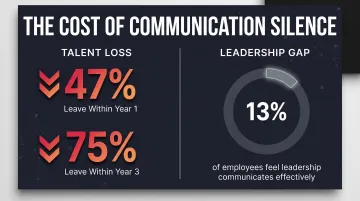
A Gallup study citing EY research found that 47% of key employees leave within one year of a merger, and 75% leave within three years. Only 13% of employees strongly agree their leadership communicates effectively during M&A transitions.
Those numbers represent real revenue loss, institutional knowledge walking out the door, and leadership credibility that takes years to rebuild. Getting the communication right from the start protects all three.
Choosing Your Post-Merger Brand Communication Approach
Before drafting a single press release, leadership must make a strategic choice: which brand identity will the merged entity carry forward? This decision determines every aspect of your communication plan—tone, content, timeline, and stakeholder messaging.
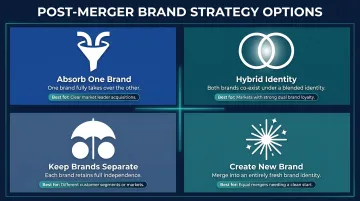
There are four broad brand architecture approaches, each with distinct communication requirements:
Absorb One Brand Into a Dominant Identity
The stronger or better-known brand is retained; the acquired brand is phased out. Communication focuses on continuity and quality preservation. This works best when the acquirer has dominant brand equity and efficiency is the priority — common in financial services consolidations and technology acquisitions.
Singapore example: When DBS Bank acquired POSBank in 1998 for SGD 1.6 billion, leadership made a strategic decision to retain the POSB brand as a "national heirloom" rather than absorb it. The brand had deep emotional ties to Singaporeans, with nearly 70% of customers who opened passbook accounts as children still holding them today. The communication strategy emphasised continuity through the tagline "Neighbours first, bankers second" and preserved service touchpoints customers trusted.
Customers of the acquired brand need reassurance that the best elements of their experience are being preserved. Direct outreach — customer letters, account manager calls, staff briefings — must happen before any public announcement. Silence creates fear; transparency builds trust.
Merge Two Brand Names Into a Hybrid Identity
Both brand names are retained in some form, signalling continuity for both audiences while establishing a new combined identity. It suits situations where both brands hold strong equity in complementary markets or customer segments.
Singapore example: RICE Communications now operates as "RICE, A FINN Partners Company" following its 2025 acquisition. The 60-strong Singapore-based consultancy retained its local brand equity whilst gaining access to FINN's global network. Managing Partner James Brasher explained the strategy: "This partnership enables our team and clients to tap on FINN's capabilities, expertise, resources and network—just as we complement theirs with our deep roots, diversity of perspectives and capabilities across Asia Pacific."
Hybrid identities can confuse audiences if not explained clearly. The messaging must articulate the why — what combined capabilities or market access this unlocks — not just announce a name change. Customers need to understand what they gain, not just what's different.
Keep Brands Separate Under One Corporate Umbrella
Both brands continue operating independently, with corporate ownership communicated discreetly. Client loyalty to a specific brand or practitioner is typically high here — making it common in professional services, healthcare, and hospitality.
This is primarily an internal and investor-facing exercise. Customers of each brand may not need to know about the merger at all. The critical audience is employees and partners, who must understand:
- New governance structure and reporting lines
- Shared services and resource access
- How each brand fits within the broader portfolio
Without this clarity, staff from different brands miss cross-selling opportunities or end up with conflicting market positioning — both costly outcomes that internal communication prevents.
Create an Entirely New Brand Identity
Neither brand is retained; a new identity is launched to represent the merged entity. This approach fits when neither brand has sufficient equity, or when both carry legacy challenges that a fresh start can resolve.
This approach demands the most intensive communication investment. Both existing customer bases must be introduced to who the new entity is, what it stands for, and why it matters to them.
A new brand requires a phased communication runway: internal alignment first, controlled media launch second, customer migration communications third. Harvard Business Review research found that corporations using a "fusion" of merging companies' identities typically enjoy higher returns compared to absorption or separation strategies. The catch: those returns only materialise when the new brand carries a clearly articulated value proposition — not just a new name.
Internal Brand Communication: Getting Your People On Board
Employees who learn about a merger from LinkedIn or the news before their own leadership has briefed them become instant brand detractors.
McKinsey research warns that companies that "go dark" on internal communication during mergers see top talent more likely to consider leaving or interviewing with competitors. The vacuum allows misinformation and myths to damage morale before integration even begins.
The Cascading Communication Model
Effective internal communication follows a cascading structure:
Executive team co-creates the brand narrative – Leadership from both organisations must first align on the shared ambition, brand positioning, and integration vision. Without this foundation, middle managers receive conflicting messages.
Senior leadership workshops – Directors and heads of department receive detailed briefings and are equipped to answer "what does this mean for my division?" before passing the message down.
Team-level briefings – Managers communicate directly with their teams, addressing role-specific concerns and providing clarity on reporting lines, systems, and processes.
Each layer must be able to answer "what does this mean for me?" before cascading the message further. Generic corporate announcements rarely satisfy that need. People require specific, relevant information tied to their role and team.
Singapore's Multilingual Communication Challenge
Singapore's workforce diversity means a one-size-fits-all communication template will fail. Frontline and operational staff may require materials in English and Mandarin at minimum, and potentially Malay depending on sector and workforce composition.
Internal brand communication that works across Singapore's four official languages (English, Malay, Mandarin, Tamil) requires culturally adapted messaging—not just literal translation. Concepts like "brand vision" or "strategic alignment" may not translate directly; examples and context must be culturally relevant.
Equipping Middle Managers as Brand Ambassadors
That cultural complexity lands squarely on middle managers. They are the primary communication conduit during a merger—yet often the least equipped to handle it. When managers cannot answer questions about job security, reporting structures, or integration timelines, staff stop waiting for answers and start looking for other jobs.
Best practice includes:
- Prepare briefing toolkits with pre-written FAQs, key messages, and approved responses to common questions
- Run live Q&A sessions so managers can clarify their own doubts before facing their teams
- Create anonymous feedback channels that let managers surface concerns without attributing them to specific individuals
This is where a Singapore branding partner such as Vantage Branding can add value—helping leadership teams translate the merged entity's strategic vision into a coherent brand narrative and employee-facing communication materials that reflect the combined culture, values, and future direction.
External Brand Communication: Maintaining Customer and Stakeholder Trust
External communication must follow internal alignment, not precede it. Once employees are briefed, the focus shifts to the three external audiences that matter most in Singapore's post-merger context:
1. Existing customers of both entities
2. B2B partners and distributors
3. Media and regulatory bodies
Each requires tailored messaging and different levels of detail.
Customer-Facing Merger Communication
Effective customer communication answers three questions:
- What is changing? Brand name, contract terms, service delivery model
- What is not changing? Account manager, service quality, pricing structure
- What does this mean for my relationship with you? Data migration, new login details, support channels
In Singapore's B2B market, personal relationship continuity is often as important as brand messaging. The reassurance that "your account manager remains the same" can carry more weight than a polished brand positioning statement.
Communication channels for customer messaging include:
- Direct email or letter to all active accounts
- Account manager outreach (for high-value clients)
- Updated website banner or announcement page
- LinkedIn company page update (essential in Singapore's well-networked B2B environment)
Timing matters: customers should receive direct communication on the same day as the public announcement, not days later.
Media and Digital Channels
Singapore's business media landscape is concentrated. SPH Media operates over 40 brands including The Straits Times and The Business Times, reaching a combined weekly audience of 3.1 million. A press release to these outlets, Channel NewsAsia, and relevant trade publications establishes the official narrative.
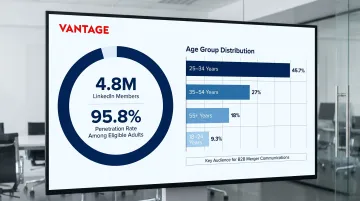
LinkedIn deserves equal weight. Singapore has 4.8 million LinkedIn members—a 95.8% penetration rate among eligible adults. The 25-34 age group (middle management) dominates at 45.7% of users, with 35-54 year olds (C-suite and strategic decision-makers) representing 27%. For B2B mergers, LinkedIn company page updates and executive posts are channels you cannot skip.
The Consistency Imperative
Running communications across this many channels introduces one serious risk: inconsistency. Different messages on the website, press release, LinkedIn page, and customer emails create confusion and erode the trust you're working to protect.
Best practice requires:
- A single source of truth document with approved key messages
- Simultaneous release across all channels on announcement day
- A sequenced release plan so internal, customer, and media communications go out in the right order, within the same window
A Phased Brand Communication Roadmap for Singapore Companies
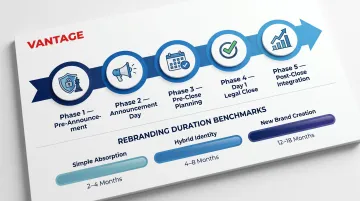
Post-merger brand communication unfolds across months, not a single announcement. McKinsey outlines five communication phases that Singapore companies should follow:
Phase 1: Pre-Announcement (Strategy and Governance)
Timing: Before the deal is publicly announced
Key actions:
- Establish communication governance and control information leaks
- Conduct brand audit of both entities to assess relative brand equity
- Develop core "deal narrative" and key messages
- Secure legal clearance from MAS or CCCS if required
- Brief executive team and align on brand architecture decision
Singapore consideration: If CCCS notification is required, public filings may trigger media coverage before internal readiness. Coordinate with legal counsel on disclosure timing.
Phase 2: Announcement Day
Timing: The day the merger is publicly announced
Key actions:
- Simultaneous internal briefing and external press release
- CEO-led announcement to employees (live or video)
- Direct customer communications sent same-day
- Press release to Singapore business media (Business Times, Straits Times, CNA)
- LinkedIn and website updates go live
Singapore consideration: Singapore's time zone (GMT+8) means coordination with regional offices across ASEAN may require staggered announcement times to ensure all employees are briefed during working hours.
Phase 3: Pre-Close Planning (Between Announcement and Day 1)
Timing: From announcement to legal completion
Duration: Weeks to months, depending on regulatory approvals
Key actions:
- Biweekly employee updates on integration progress
- Talent retention communications and employee value proposition reinforcement
- Customer reassurance communications addressing specific service concerns
- Brand rollout planning (collateral, digital assets, signage)
Singapore consideration: PDPA notification to affected individuals must occur once the transaction completes, not before. Prepare customer notification templates in advance for Day 1 release.
Phase 4: Day 1 (Legal Close)
Timing: The day the transaction legally completes
Key actions:
- Clarity on new roles and reporting lines
- Operational change communications (email addresses, systems access, support channels)
- Customer notification of data transfer as required by PDPA
- Public confirmation that the transaction has completed
Phase 5: Post-Close Integration
Timing: Months after Day 1
Duration: 3-18 months depending on merger complexity
Key actions:
- Phased brand rollout (website, collateral, signage, digital assets)
- Ongoing employee communications on integration milestones
- Customer migration communications (if systems, platforms, or contracts are changing)
- Monitoring tools: employee pulse surveys, customer retention tracking, media sentiment analysis
Singapore consideration: Brand strategy and identity development should begin in Phase 1, not post-close. Waiting until after Day 1 to define brand positioning leaves a communication vacuum during the months when stakeholder confidence is most fragile.
Timeline Benchmarks
Timelines vary significantly by merger type:
- Simple brand absorption (one brand phased out): 2-4 months from announcement to completed brand rollout
- Hybrid identity (endorsed brand): 4-8 months from announcement to full implementation
- New brand identity creation: 12-18 months from strategy development to completed market rollout
Singapore's major bank mergers illustrate how long these timelines run in practice. UOB's acquisition of Citigroup's consumer banking business across four ASEAN markets took approximately 22 months from announcement (January 2022) to final market completion (November 2023). OCBC's brand unification under its "One Group" strategy in July 2023 involved legal name changes for subsidiaries, with regulatory approvals extending into late 2023.
Monitoring and Course Correction
The plan evolves as the integration does. Best practice includes establishing:
- Employee pulse surveys – Weekly or biweekly sentiment tracking during the first 100 days
- Customer retention signals – Monitoring churn, complaints, and support ticket volume
- Media coverage analysis – Tracking tone and themes in business media and social channels
This allows leadership to course-correct messaging where confusion or resistance is detected, responding to real signals rather than relying on the original rollout plan alone.
Frequently Asked Questions
How to handle internal communications during a merger?
Start before the public announcement: align executives first, then cascade through management layers using briefing toolkits and live Q&A sessions. Every employee should understand the brand vision and what it means for their role before the news goes public.
How long does post-merger rebranding typically take in Singapore?
Timelines range from a few weeks for simple brand absorption to 12-18 months for creating an entirely new brand identity. Singapore's regulatory environment and multicultural communication needs sometimes extend the timeline compared to single-market mergers.
Should we keep both brands or create a new identity after a merger?
The decision depends on the relative brand equity of each entity, the degree of customer overlap, and the long-term strategic vision. A brand equity audit should be conducted during the pre-announcement phase to inform all communication planning.
How do we communicate a merger to customers without losing their trust?
Tell customers directly what is changing, what is not, and who their point of contact is. Direct email, account manager outreach, and updated digital channels should all go live on the same day as the public announcement.
What are the biggest brand communication mistakes companies make after a merger in Singapore?
The most common errors are communicating externally before employees are briefed, applying a single message across culturally diverse audiences, and treating the announcement as a one-time event rather than an ongoing programme spanning months.
How does Singapore's multicultural context affect post-merger brand messaging?
Singapore's Chinese, Malay, Indian, and expatriate communities can respond differently to brand change. Messaging often needs cultural adaptation and multilingual materials—particularly given the concept of "face" in Chinese business culture, which shapes how openly employees raise concerns.