Introduction
Many Malaysian loyalty programmes are hitting a wall. Declining re-engagement rates and stagnant redemptions signal that the loyalty brand identity no longer resonates with consumers. A refresh means rethinking the value proposition, the member engagement narrative, and how the brand communicates at every touchpoint — not just swapping out a logo.
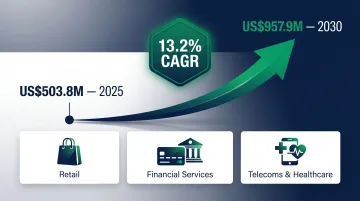
With Malaysia's loyalty market projected to nearly double from US$503.8 million in 2025 to US$957.9 million by 2030 (Research and Markets), the window to differentiate is narrowing. Retail, financial services, healthcare, and telecoms are all expanding their programmes — each competing for the same member attention.
Brands that move now set the identity benchmarks others will follow.
This article covers five strategic trends reshaping loyalty brand identities in Malaysia, the market forces behind them, and what to prepare for as embedded loyalty and AI-driven personalisation redefine member expectations.
TLDR
- Malaysia's loyalty market will reach US$957.9 million by 2030 (13.2% CAGR), making differentiated brand identity a competitive necessity
- Leading brands like BInfinite and GrabCoins are shifting from transactional points narratives to purpose-driven brand stories and digital loyalty currencies
- Over 90% of Malaysians use e-wallets, forcing loyalty brands to redesign for mobile-first, seamless O2O experiences
- Coalition models — BonusLink's 14.9M members, BInfinite's 1,200+ merchants — demand structured brand architecture to prevent partner dilution
- AI personalisation drives 4.3x higher member spending — tailored rewards outperform generic offers by a wide margin
From Transactional Points to Purpose-Driven Loyalty Brand Stories
Malaysia's most forward-thinking loyalty brands are moving away from "earn and spend points" mechanics toward narratives centred on empowerment, community, and shared values.
BInfinite's February 2025 relaunch is a clear example. Formerly known as BCard, the programme repositioned as "a digital loyalty platform that empowers businesses of all sizes," shifting from a lifestyle points programme to an ecosystem enabler focused on data-powered merchant engagement.
This narrative shift shapes several branding decisions:
- Updated brand language emphasising business empowerment and sustainable engagement
- Mission-led messaging highlighting ecosystem value, not just rewards
- Visual identity refreshed to reflect platform positioning versus programme positioning
- Campaign narratives showcasing merchant success and community impact
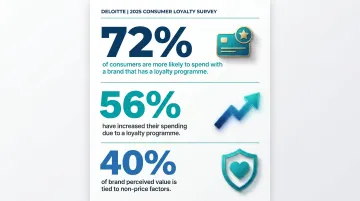
The consumer data reinforces why this shift matters. Deloitte's 2025 Consumer Loyalty Survey found that 72% of consumers say loyalty programmes make them more likely to spend with a preferred brand, and 56% have increased spending specifically because of a programme. Up to 40% of a brand's perceived value is tied to non-price factors — including brand alignment and how the loyalty programme is designed.
If your programme isn't resonating, the following signals often appear before the data catches up:
Signs your loyalty brand story needs refreshing:
- Declining programme re-engagement rates
- Low redemption despite healthy earning activity
- Members consistently describing the programme as "just discounts"
- Brand perception drifting from organisational values or business model direction
Making this shift stick requires more than a name change or visual update. It demands a clear strategic foundation — one that connects the programme's identity to what the business actually stands for. That's where brand discovery, positioning work, and a cohesive identity system become essential tools, not afterthoughts. Vantage Branding works with organisations across Malaysia and Singapore navigating exactly this kind of repositioning.
Mobile-First and O2O Brand Identity Overhauls
Over 90% of Malaysians now use e-wallets, and Bank Negara Malaysia recorded 409 e-payment transactions per capita in 2024 — a 19% year-on-year increase. In response, loyalty brands are redesigning their visual identity, UX, and brand experience specifically for mobile interfaces and online-to-offline (O2O) integration.
GrabRewards to GrabCoins: On December 1, 2025, Grab rebranded GrabRewards to GrabCoins across seven Southeast Asian countries. The refresh repositioned the programme from a tier-based points system to a "digital loyalty currency" with instant checkout discounts. Members now redeem GrabCoins as immediate discounts at checkout — removing friction from mobile redemption and making the value exchange feel instant.
Tealive Rewards: Tealive's mobile-first loyalty app offers up to 4X points per RM1 spent, with birthday treats, monthly surprise deals, and in-app ordering integrated with in-store barcode scanning. This creates a consistent O2O experience where brand identity remains consistent whether members order through the app or scan at the counter (Tealive Official).
When a loyalty programme appears on a physical stamp card, a mobile push notification, a POS display, and a social media campaign all at once, inconsistency erodes trust. Research shows brands that present themselves consistently across touchpoints can see up to 33% higher revenue (PR Newswire).
What to prioritise in an O2O brand refresh:
- Build a unified design system with iconography, colour palettes, and typography that hold up from a 6-inch smartphone screen to 6-foot retail signage
- Write for range — brand voice should work in a 40-character push notification and a longer in-app onboarding journey
- Simplify logos and lockups so they stay recognisable when rendered small on mobile
- Map every member touchpoint and ensure brand guidelines cover each one explicitly
Coalition and Ecosystem Brand Architecture in Malaysian Loyalty
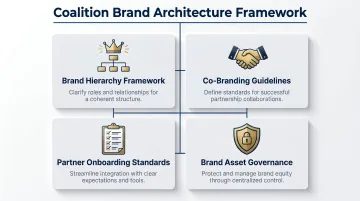
Coalition loyalty programmes—where multiple brands share a loyalty ecosystem—create unique brand refresh challenges. When BonusLink spans Shell, AmBank, Parkson, and other partners, or when BInfinite operates across 1,200+ merchant outlets, maintaining brand distinction while operating under a shared loyalty identity requires structured brand architecture.
Two Coalition Models in Practice
BonusLink's November 2024 refresh with Shell introduced a dynamic three-tier system (Silver, Gold, Platinum) serving 14.9 million members (CarSifu). The refresh extended reward periods and encouraged members to switch to the Shell App, demonstrating how coalition brands manage partner-specific experiences within a shared programme identity.
BInfinite takes a different route — building breadth through partnerships with Caltex, Starbucks, Krispy Kreme, Kenny Rogers Roasters, Berjaya Hotels, and 7-Eleven, serving 4.5 million members across its merchant network (Digital News Asia).
How brands are refreshing coalition identities:
- Clear brand hierarchy frameworks defining which brand leads (the loyalty programme or the merchant partner)
- Co-branding guidelines ensuring consistent visual treatment across partner touchpoints
- Partner onboarding brand standards that maintain ecosystem coherence while allowing partner expression
- Structured governance for brand asset usage and messaging approval
These governance investments aren't cosmetic. Academic research on cross-reward effects shows that coalition partner dynamics can weaken over time, creating financial losses for popular partners (ScienceDirect). Brands that address this through structured architecture refresh build credibility with both consumers and prospective partners — reducing member churn when individual partners underperform.
AI-Driven Personalisation Reshaping Loyalty Brand Voice and Communication
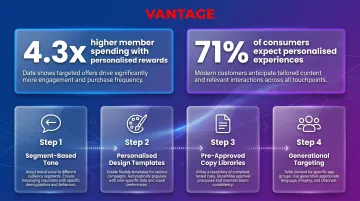
AI-powered loyalty platforms like Capillary Technologies and Antsomi CDP 365 (both active in Malaysia) enable hyper-personalised member communications. Members redeeming personalised rewards spend 4.3x more than those receiving generic offers, and 71% of consumers expect personalised experiences (Envive.ai).
When every member receives different offers, messages, and product recommendations, brands must develop flexible, modular brand voice and visual systems that remain coherent across millions of personalised variations. A static brand identity built around a single tone and fixed templates simply cannot keep up.
Two live examples illustrate this shift. Capillary Technologies powers Caring Pharmacy's loyalty programme across 110+ Malaysian outlets using its Loyalty+, Engage+, and Insights+ platforms (ACN Newswire). Star Media Group, meanwhile, selected Antsomi CDP 365 in March 2025 to drive first-party data strategy with AI-driven audience segmentation and hyper-personalised messaging (Yahoo Finance).
Key opportunities in AI-driven brand refresh:
- Build modular brand voice guidelines that adjust tone based on member segment, lifecycle stage, and behaviour
- Create design templates that personalise imagery and colour emphasis while maintaining core brand recognition
- Develop pre-approved copy libraries that AI can recombine for relevant, on-brand communications
- Target generationally: 89% of Gen Z and 87% of Millennials share personal data for tailored offers, versus just 64% of Baby Boomers (Deloitte Insights)
The practical implication for brand teams: the brand guidelines document itself needs a rebuild — from a single-voice rulebook into a system of permissioned variations that scale with AI.
Cultural Resonance as a Loyalty Brand Refresh Imperative in Malaysia
Malaysia's multicultural population—Malay, Chinese, Indian, and other communities—means loyalty brand refreshes must go beyond translation. Brands need visual languages, values messaging, and campaign timing that authentically resonate with specific audience segments.
According to The Edge Malaysia, festivals act as "behavioural resets" that disrupt routine and soften consumer resistance to trying new brands. 70% of consumers worldwide have switched brands because they enjoy experimenting, and festivals amplify this openness (Capgemini, 2025).
Festival-specific loyalty strategies:
- Ramadan and Hari Raya reward best through charity-linked redemptions, family-oriented perks, and night-time engagement timed to iftar
- Chinese New Year responds to coalition models that enable cross-category earning across gifting, dining, travel, and home refresh — outperforming single-brand offers
- Deepavali audiences expect market-specific adaptations, not generic national campaigns
Two 2025 examples illustrate this well: Lotus's Malaysia ran a "RamRaya 2025 campaign" blending festive savings with community giving, while Tealive's "Raya Penuh Rezeki" contest integrated festive theming directly into its loyalty app experience (Tealive).
The most effective approach embeds cultural flexibility into the programme's core identity. Brand guidelines should include pre-approved visual adaptations, messaging frameworks, and campaign templates for each major cultural moment. Treating these as structural brand assets — rather than seasonal bolt-ons — is what separates programmes that feel genuinely local from those that simply look it.
What's Driving Loyalty Brand Refresh Strategies in Malaysia
Three forces are converging in 2025 to push Malaysian loyalty programmes into brand refresh territory.
Market growth and competition
Malaysia's loyalty market is growing from US$503.8 million (2025) to US$957.9 million by 2030 at a 13.2% CAGR (Research and Markets). This creates a crowded field where differentiated brand identity becomes a genuine competitive advantage. Programmes that refreshed early—like BInfinite and GrabCoins—are already capturing member share through clearer positioning and better mobile UX.
Consumer expectations and digital maturity
The average Malaysian completed 409 e-payment transactions in 2024, and digital payment penetration reached 67.4% (Electronic Payments International). Consumers now expect seamless, visually polished, and digitally native loyalty experiences. Outdated brand aesthetics and clunky app experiences drive member churn.
New entrants and cross-sector expansion
The loyalty space is expanding well beyond retail and F&B. New entrants include:
- Healthcare — Caring Pharmacy
- Financial services — Maybank TreatsPoints
- Telecoms — new programme launches from mobile operators
Each sector entry brings fresh brands competing for member mindshare, raising the bar for existing programmes to refresh and differentiate.
Future Signals for Loyalty Brand Refreshes in Malaysia
The strategies shaping loyalty brand refreshes today are early indicators of bigger shifts coming. Brands should watch and prepare for:
Embedded loyalty within payment ecosystems: Touch 'n Go eWallet's GOrewards and Maybank's TreatsPoints show loyalty migrating into payment and banking apps. When a programme becomes a sub-feature rather than the primary interface, brands need sub-brand frameworks and micro-identity guidelines — ones that account for constrained logo space, compressed messaging, and reduced visual real estate.
Blockchain-enabled loyalty programmes: Singapore Airlines launched KrisPay in 2018 as a blockchain-based digital wallet letting members convert miles into digital currency. Blockchain adoption in loyalty is still maturing, but it promises transparency and cross-brand point portability. Brands that build trust narratives into their refresh now won't need to scramble to explain the shift after launch.
The narrowing window for first-mover brand equity: As Malaysia's loyalty market approaches US$1 billion, rebranding grows costlier as programmes scale in complexity and membership. Brands that refresh in 2025 can establish their position before the market consolidates — securing recognition among members while competitors are still finding their footing.
Conclusion
Loyalty brand refresh strategies in Malaysia are shaped by rapid market expansion, rising digital consumer expectations, and a clear shift from transactional rewards to meaningful brand experiences. The programmes earning lasting member loyalty in 2025 share a common thread:
- Repositioning around purpose-driven narratives
- Designing mobile-first visual identities
- Managing coalition brand architecture with intent
- Enabling AI-powered personalisation at scale
- Embedding cultural resonance into the core brand framework
Brands that invest in structured, insight-led refreshes—covering brand story, visual identity, O2O consistency, and cultural relevance—position themselves for long-term retention in one of Southeast Asia's most competitive loyalty markets.
With Malaysia's loyalty market projected to nearly double by 2030, programmes that delay risk refreshing against a crowded field rather than ahead of it. The window for strategic repositioning is open now—but it won't stay that way.
Frequently Asked Questions
What is a loyalty brand refresh and how does it differ from a programme relaunch?
A brand refresh updates the programme's identity, messaging, and visual language to stay current with consumer expectations and market positioning. A relaunch typically involves structural changes to programme mechanics, earning rules, or business model. The two often happen together but address different aspects of programme evolution.
How do I know when my loyalty programme needs a brand refresh?
Key warning signs include declining redemption rates, outdated visual identity relative to competitors, and member feedback that the programme feels disconnected from your brand's current values. Programmes more than 3-5 years old without a refresh are overdue for assessment.
How often should a loyalty brand identity be refreshed?
Loyalty brands should assess brand health every 2-3 years. Refresh proactively when market positioning shifts, new audience segments are targeted, major technology changes occur (like mobile app launches), or coalition partnerships are added or removed.
What makes a loyalty brand refresh in Malaysia different from other markets?
Malaysia's multicultural consumer base (Malay, Chinese, Indian communities) requires culturally nuanced brand solutions, not just translation. Near-universal e-wallet adoption (90%+) and a rapidly growing competitive market also demand mobile-first execution and differentiated positioning from the outset.
Can SMEs in Malaysia afford a loyalty brand refresh?
Yes. Plug-and-play platforms like BInfinite Biz have lowered barriers for SMEs considerably. Phased refreshes focusing on digital touchpoints first—mobile app, social media, email—are cost-effective and deliver immediate member-facing impact without a full overhaul.
How does brand consistency across O2O touchpoints affect loyalty programme performance?
Inconsistent branding across in-store, app, and online channels erodes member trust and creates disjointed experiences that reduce engagement. Consistent identity across all touchpoints reinforces programme recognition, builds trust, and drives higher engagement and redemption rates—research shows up to 33% revenue increases from brand consistency.