Introduction
Many companies launch rebrand initiatives only to end up with a fresh logo and new business cards. That's not a rebrand — it's a cosmetic update. True corporate rebranding is a strategic transformation that reshapes market position, stakeholder perception, and long-term growth potential.
This guide is for business leaders, brand managers, and decision-makers evaluating whether — and how — to rebrand their organisation. Research analysing 166 rebranded companies found that 53% of corporate rebrands were driven by mergers and acquisitions, making structural change the dominant catalyst.
Yet despite best intentions, many rebrands fail. The reason is consistent: teams treat branding as a design project rather than a strategic business initiative.
This article covers:
- What corporate rebranding actually involves
- When a rebrand is (and isn't) warranted
- How the process works, step by step
- What separates successful rebrands from costly misfires
TL;DR
- Corporate rebranding overhauls positioning, messaging, and identity — not just visuals
- Common triggers: market shifts, M&A activity, reputational damage, or a brand that no longer fits the business
- Success follows a structured process: audit, strategy, identity development, employee alignment, and phased rollout
- Most rebrands fail by skipping research, treating it as a design project, or ignoring internal buy-in
- Not every brand problem needs a full rebrand — a refresh or repositioning often fits better
What Is Corporate Rebranding?
Corporate rebranding is the deliberate process of reshaping a company's identity—including its name, visual identity, positioning, messaging, and values—to better reflect its current direction, target audience, and competitive context. It is not simply a logo redesign.
Three Levels of Rebranding
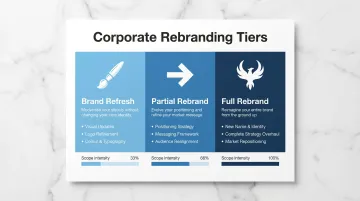
Companies may undertake rebranding at three distinct levels:
- Brand Refresh: Visual updates while preserving core identity—modernising logos, colour palettes, or typography without changing strategic positioning
- Partial Rebrand: Updating specific elements such as positioning or messaging to reflect product evolution or market expansion
- Full Rebrand: Comprehensive transformation of name, identity, strategy, and market presence, typically triggered by fundamental business change
Strategic Intent vs. Aesthetic Preference
Corporate rebranding is distinct from marketing campaign refreshes or product redesigns—it is driven by strategic intent, not cosmetic updates. McKinsey found that B2B companies with strong brands outperform weak-branded competitors by 20%. That gap makes brand a measurable financial asset, not just a creative exercise.
When Should Your Company Consider Rebranding?
Common Business Triggers
Legitimate rebrand triggers include:
- Industry disruption or competitive shifts that demand repositioning
- Mergers and acquisitions requiring brand consolidation (the single largest rebrand driver globally)
- Expansion into new demographics, geographies, or market segments
- Reputational damage that requires rebuilding stakeholder trust
- Growing misalignment between what the brand promises and what the business actually delivers
Internal Warning Signs
Red flags indicating brand-business misalignment:
- Customer confusion about what the company does
- Inconsistency across touchpoints
- Employee disengagement from brand values
- Stagnating growth despite strong products or services
Evidence-Based Decision-Making
Rebranding decisions should be grounded in research, not gut feeling. Customer perception studies, competitive audits, and stakeholder interviews surface the real issues—so any changes you make target root causes rather than surface symptoms.
How to Implement Corporate Rebranding Step by Step
Skipping or rushing any phase is among the leading causes of unsuccessful rebrands. A structured, phased approach ensures strategic discipline — and having an experienced branding partner, such as Vantage Branding, helps ensure each phase is built on genuine insight rather than guesswork.
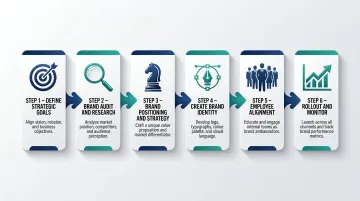
Step 1: Define Strategic Goals and Rebrand Objectives
Every rebrand must begin with clear articulation of what the business is trying to achieve.
Examples include:
- Entering a new market
- Recovering trust after a crisis
- Reflecting post-merger consolidation
- Repositioning for evolving customer needs
These goals shape every subsequent decision, from positioning to design. Without clear objectives, rebrands lack direction and accountability.
Step 2: Conduct a Brand Audit and Market Research
A thorough brand audit establishes the honest baseline from which strategy is built.
This includes:
- Reviewing all existing brand assets (visual identity, messaging, digital presence, sales collateral)
- Assessing current customer perceptions through surveys or interviews
- Mapping the competitive landscape
- Identifying gaps and opportunities for differentiation
The audit surfaces what is working, what is not, and where the clearest differentiation opportunities lie.
Step 3: Develop Brand Positioning and Strategy
Brand strategy defines the company's unique value proposition, target audience, differentiated positioning, and the story the brand will tell.
This is where the real strategic work happens:
- It determines what the visual and verbal identity must communicate
- It ensures the brand reflects authentic business capabilities
- It creates a framework for consistent decision-making
All identity decisions must be traceable back to the positioning strategy, not driven by aesthetic trends or executive preferences.
Step 4: Create the New Brand Identity
Brand identity development covers:
- Logo and visual elements
- Color palette and typography
- Imagery style and tone of voice
- Messaging frameworks
Design without strategy produces surface-level change that fails to shift market perception.
Step 5: Align Employees and Internal Stakeholders
Internal alignment is critical and often underestimated. Employees who don't understand or believe in the new brand cannot deliver on it consistently.
Best practices include:
- Early engagement in the rebrand process
- Internal launch events
- Training sessions on brand values and messaging
- Development of brand standards guides
- Ongoing communication reinforcing the "why" behind the change
Prosci's research found that projects with effective executive sponsors achieved a 79% success rate versus 27% without—highlighting that leadership commitment is the top success predictor.
Step 6: Roll Out the Rebrand and Monitor Performance
A phased external rollout includes:
- Updating all customer-facing touchpoints (website, social media, signage, collateral)
- Coordinating a public launch narrative
- Briefing key stakeholders including investors and partners
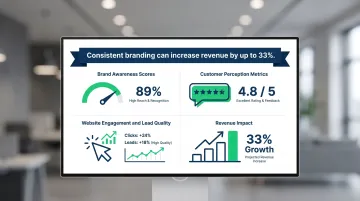
Establish KPIs before launch:
- Brand awareness scores
- Customer perception metrics
- Website engagement and lead quality
- Revenue impact
Monitor these benchmarks at defined intervals post-launch. Consistent brand presentation can increase revenue by up to 33%, making post-rebrand consistency critical to performance.
Key Factors That Determine Rebranding Success
Five factors consistently separate rebrands that gain traction from those that stall after launch.
Research Quality Underpins Everything
Rebrands built on assumption rather than validated customer and market insight almost always miss the mark. Data-driven brand decisions outperform intuition-led ones because they ground strategy in market reality.
Leadership Commitment
A rebrand requires executive sponsorship and cross-functional buy-in. When leadership treats it as a marketing side project rather than a company-wide strategic initiative, execution falters. Without that top-down commitment, even well-designed brand work struggles to take hold across the organisation.
Consistency Across Touchpoints
Post-launch consistency matters more than most teams anticipate. Inconsistency after a rebrand can undermine credibility faster than the old brand did. The Lucidpress/Demand Metric study found that consistent brand presentation increases revenue by up to 33%, demonstrating that execution discipline compounds business value.
Collaborative Agency Partnership
Organisations without dedicated brand expertise in-house benefit from agencies like Vantage Branding, which bring cross-industry experience and structured methodologies that internal teams often cannot replicate alone. An insight-led agency partnership ensures objectivity and a repeatable process grounded in outside perspective.
Realistic Timeline and Budget
Rebranding done under pressure or with insufficient resources leads to shortcuts that compromise outcomes. Published benchmarks show brand refreshes typically take 3-4 months, partial rebrands 5-6 months, and full overhauls 8-10 months. Investment ranges vary significantly by scope, but treating cost as proportional to strategic value rather than a line item is critical.
Common Rebranding Mistakes and Misconceptions
Treating Rebranding as a Design Project
The most pervasive misconception is that rebranding is a design project. Many organisations invest in a new visual identity without updating positioning, messaging, or internal culture, resulting in surface-level change that fails to shift market perception.
Alienating Existing Customers
Changing too much too fast without a clear communication strategy can confuse or disengage loyal audiences. The brand equity built over years can unravel quickly when customers feel the change was done to them rather than for them.
Case in point: Gap's 2010 logo change, estimated at approximately $100M, was reversed in six days after overwhelming customer backlash. Tropicana's 2009 redesign caused a 20% sales drop and $30M loss within two months.
Dunkin's 2018/2019 name change took the opposite approach. It succeeded because it formalised how customers already spoke about the brand — and backed the shift with a $100M investment in store experience and operations, not just a new logo.

Rebranding Reactively Without Strategic Rationale
Rebranding in response to short-term competitive pressure or purely because leadership wants a fresh look — without a strategic foundation — rarely produces lasting results. Common reactive triggers that rarely justify a full rebrand include:
- A competitor launches a visual refresh
- Leadership wants to signal change without addressing underlying business issues
- The brand feels "dated" but still resonates with core customers
A rebrand without a clear strategic trigger tends to cost significant resources while leaving the real problem untouched.
When a Full Rebrand May Not Be the Right Move
A full rebrand is not always the right answer. When the core identity is solid but the visual identity feels dated, a brand refresh is often enough.
Where customer perception is positive but messaging lacks clarity, targeted repositioning can resolve the problem — no wholesale change required.
Scenarios Where Rebranding Would Be Premature
- When the company is in operational crisis and lacks the bandwidth to execute properly
- When strong brand equity would be eroded by change
- When the underlying business problem is operational rather than brand-related
Signals of Default Rather Than Necessity
Warning signs that a rebrand is being pursued by default:
- No clear strategic trigger
- Vague goals like "modernising the look"
- Decision made without customer or stakeholder research to validate the need
If any of these apply, it's worth stepping back. The better question to ask first: what specific outcome do you need the brand to achieve?
Frequently Asked Questions
What is corporate rebranding?
Corporate rebranding is the strategic process of reshaping a company's identity—including its positioning, visual identity, and market narrative—to better align with its business direction and audience. It goes well beyond logo changes, touching strategy, messaging, and how the company presents itself at every level.
How much does a typical rebrand cost?
Costs vary based on scope, company size, and agency involvement. Rather than chasing a benchmark figure, request scoped proposals — what you invest should reflect the strategic value you're trying to create.
What is the difference between a brand refresh and a full rebrand?
A brand refresh updates visual elements and messaging while preserving the core identity. A full rebrand involves a root-level transformation of positioning, identity, and market narrative. What's right for you depends on how fundamentally the business has changed — or needs to.
How long does a corporate rebrand take?
Timelines vary widely depending on scope. A brand refresh may take a few months, while a full corporate rebrand involving research, strategy, identity development, and rollout typically takes 8–10 months or longer. Rushing the process compromises outcomes.
Should I rebrand my company myself or hire an agency?
DIY rebranding is risky — internal teams are too close to the brand to evaluate it objectively. A specialist agency brings an outside perspective, structured process, and cross-industry experience that most in-house teams simply don't have.
How do I know if my rebranding was successful?
Establish clear KPIs before the rebrand launches—such as brand awareness scores, customer perception surveys, website engagement, and lead quality—and measure against those benchmarks at defined intervals post-launch. Without pre-launch benchmarks, you have no meaningful baseline to measure against.