In markets where features and pricing converge quickly, the brands that endure are those that create distinctive brand experiences. This article examines three Singapore brands that have mastered this discipline and extracts actionable lessons other organisations can apply immediately.
TLDR:
- Singapore Airlines engineered brand experience as a competitive moat, maintaining consistency for over 50 years
- Sentosa transformed from a military base to a world-class destination through total brand redesign
- BreadTalk built emotional connection through transparency and culturally resonant product naming
- Successful brands treat every touchpoint — from meal service to signage — as a brand decision
- Long-term consistency outperforms short-term creative campaigns in building brand equity
What Is Brand Experience? (And Why Singapore Demands More of It)
Brand experience is the sum of every interaction a customer has with a brand. According to research published in the Journal of Marketing, brand experience encompasses "sensations, feelings, cognitions, and behavioural responses evoked by brand-related stimuli" — from the first visual impression and messaging to physical environments, service delivery, and complaint handling.
This differs fundamentally from branding (often just visual identity) and marketing (campaign-driven promotion). Brand experience is the lived reality of what a brand promises.
Why Singapore's Market Raises the Stakes
Singapore's specific context creates unique pressure on brand consistency:
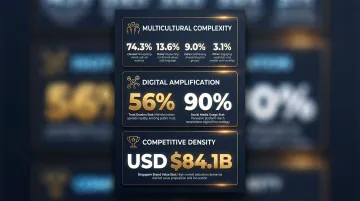
Multicultural audience complexity: Singapore's citizen population comprises 75.6% Chinese, 15.1% Malay, 7.6% Indian, and 1.7% Others, with approximately 31% of the total population being non-residents. Brands must resonate across distinct cultural codes simultaneously — a misstep in one community can undermine credibility across all segments.
Digital amplification of inconsistency: In a market where 90% of the population actively engages on social media, brand inconsistencies get amplified rapidly. Research cited in Campaign Asia found that over 56% of consumers in Asia-Pacific will stop doing business with a brand after a single trust-eroding experience.
Intense competitive density: Singapore's top 100 brands are collectively valued at USD $84.1 billion, up 7% year-on-year. This concentration of brand value means consumers can easily switch to well-capitalised competitors if experiences disappoint.
So what does strong brand experience actually look like in practice? The case studies below show how Singapore brands have navigated these pressures — and what made the difference.
Case Study 1 — Singapore Airlines: Engineering Brand Experience as a Competitive Moat
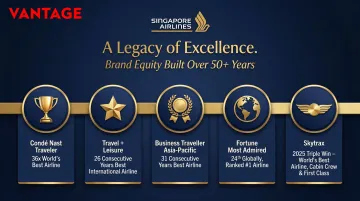
Few brands demonstrate the commercial power of consistent experience better than Singapore Airlines (SIA). Since launching the "Singapore Girl" ambassador concept in 1972, SIA has maintained one of the most disciplined brand identities in global aviation — and the results are measurable. At the 2025 Skytrax World Airline Awards, SIA took home World's Best Cabin Crew, World's Best First Class Cabin, and Best Airline in Asia, continuing a legacy that includes five overall World's Best Airline titles.
The Brand Experience Strategy
SIA's approach was never just advertising — it was engineering every touchpoint around a single promise: Asian hospitality delivered with operational precision.
Key touchpoint decisions included:
- The sarong kebaya uniform, designed by Pierre Balmain in 1974, has barely changed in 50 years — signalling deliberate brand confidence, not stagnation
- In-flight meal programmes are engineered for premium cabin differentiation, generating disproportionate profit margins
- Cabin crew undergo a four-month training programme, one of the longest in commercial aviation
- Fleet investment and service tier decisions are made with brand consistency in mind, not just operational efficiency
The uniform's 50-year consistency signals confidence in brand identity. While competitors rebrand frequently chasing trends, SIA's stability builds cumulative trust.
The Business Outcome
SIA's brand equity translates to measurable competitive advantage:
- Condé Nast Traveler named SIA Best Airline in the World 36 times
- Travel + Leisure recognised SIA as World's Best International Airline for 26 consecutive years
- Business Traveller Asia-Pacific awarded SIA Best Airline for 31 consecutive years
- Asia Pacific Telegraph reports that SIA derives "disproportionate profit from business class and premium economy seats" while avoiding "aggressive discounting"
- Ranked 24th on Fortune's World's Most Admired Companies (2026) — first among all airlines
Key lesson: SIA's longevity shows that brand experience compounds. Each consistent touchpoint — the uniform, the crew training, the meal programme — reinforces the last. Over decades, that consistency becomes the brand itself, and competitors can't replicate it quickly.
Case Study 2 — Sentosa: Repositioning a Destination Through Total Brand Experience Redesign
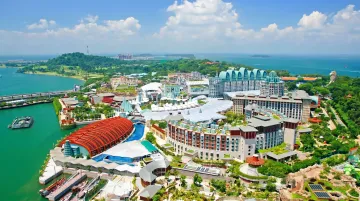
Sentosa began as a British military base before evolving into a family-friendly leisure destination. From the 2000s onward, the island underwent comprehensive repositioning — introducing Resorts World Sentosa, Universal Studios Singapore (opened 2010), beach clubs, and wellness experiences.
In 2023, Sentosa Development Corporation formally refreshed its brand identity.pdf) with the tagline "Where discovery never ends."
The Brand Experience Strategy
The Sentosa rebrand required a holistic approach:
Total journey orchestration: The physical journey — arrival by cable car or monorail, wayfinding systems, environmental design — was treated as a brand journey. Every signpost, lighting choice, and landscaping decision reinforced the island's character.
Experience zoning strategy: Rather than allowing the island to feel like disconnected attractions, Sentosa created distinct zones with coherent characters:
- Family entertainment (Universal Studios, Adventure Cove)
- Beach club and nightlife precincts
- Nature and wellness experiences
- MICE and corporate event spaces
This prevented brand dilution across audience segments while maintaining a unified "island of discovery" narrative.
Measurable outcomes:
- 16.9 million visitors in FY2024/2025, with evening visitorship up 14%
- Average visitor dwell time increased by one hour
- Recognition as Travel Weekly Asia's Best Island Destination (Asia Pacific, 2024)
- First island destination in Asia to receive Global Sustainable Tourism Council certification
The Key Lesson
At the destination level, physical environments are brand assets — not just infrastructure. Every element of the built experience communicates something about the brand. Organisations in retail, healthcare, and hospitality can apply this same logic to their own spaces:
- Architecture and spatial design that reflects brand character
- Signage and wayfinding that reinforces tone and personality
- Staff interaction guidelines aligned to brand values
- Programming and events that deepen emotional connection
Vantage Branding partnered with Sentosa on brand strategy work — helping align the island's positioning across its distinct experience zones and multiple stakeholder groups.
Case Study 3 — BreadTalk: Building Emotional Brand Experience Through Transparency and Local Pride
BreadTalk launched in Singapore in 2000 with a single outlet at Bugis Junction and became famous not just for products but for its open-kitchen concept — bakers visible to customers, fresh bread on display at all times. The brand expanded from one outlet to approximately 700 outlets in 15 international markets and won World Retail Awards' "Growth Market Retailer of the Year" in 2014.
The Brand Experience Strategy
Making the baking process visible directly addressed a trust gap in the F&B category. By placing bakers in full view of customers, BreadTalk communicated freshness and quality without a single advertising dollar. As Entrepreneur magazine notes, founder George Quek "pioneered the use of an open kitchen to showcase the baking process, creativity, and high standards."
Product naming did similar work at street level. Playful, locally meaningful names reflected a distinctly Singaporean sensibility — the signature "Flosss" bun turned product names into talking points, building emotional engagement before customers even ordered.
Brand recognition outcomes:
- Listed by Brand Finance as one of the Top 100 brands in Singapore (2009)
- Won World Branding Awards three consecutive years (2015-2017)
- Expanded internationally to Indonesia (2003), China (2003), Malaysia (2007), and the Middle East (2009)
- Generated USD $209 million in revenue from BreadTalk bakeries alone in 2019
The Key Lesson
Brand experience happens at the most granular level — store layout, label language, ambient smell. For SMEs and mid-market brands, this case demonstrates that standout brand experience does not require an international budget; it requires intentional design and a clear brand promise executed consistently.
What These Singapore Brands Got Right: Patterns Behind Successful Brand Experience
Pattern 1: Consistency Over Time Beats Creativity in the Moment
All three brands maintained a recognisable core — SIA's service ethos, Sentosa's island identity, BreadTalk's transparency — even as they evolved tactically. Research by Binet and Field published in "The Long and the Short of It" demonstrates that brand-building investments compound over time, while short-term activation effects decay within weeks.
The IPA Databank evidence shows that campaigns sustained over 1–3 year windows allow brand effects to take full effect. SIA's 50-year uniform consistency and BreadTalk's 24-year adherence to the open-kitchen concept illustrate this principle in practice.
Brand experience erodes when the core promise is violated, even once.
Pattern 2: Every Touchpoint Is a Brand Decision
None of these brands treated "the brand" as separate from how they actually operated.
Brand-as-operations examples:
- The meal served on SIA is a brand decision
- The wayfinding sign in Sentosa is a brand decision
- The name of a BreadTalk bun is a brand decision
Organisations that silo brand strategy away from operations always produce fragmented experiences. McKinsey research indicates that companies implementing comprehensive customer experience operating models see approximately 20% improvement in customer satisfaction — but only when experience design permeates operational decisions.
Pattern 3: Cultural Specificity Creates Emotional Resonance
The cultural codes each brand tapped into were specific, not generic:
- SIA built its identity around a distinctly Asian vision of service — attentive, gracious, unhurried
- Sentosa anchored festivity in Singapore's multicultural calendar rather than Western leisure templates
- BreadTalk turned local food pride into a retail theatre that felt unmistakably homegrown
Campaign Asia reports that Singapore consumers place a high premium on brand credibility, and that nostalgia ranks among the top consumer trends for 2025. Brands that borrow globally without adapting locally signal inauthenticity — and Singapore audiences notice.
Applying These Lessons to Your Singapore Brand
Step 1: Conduct a Brand Experience Audit
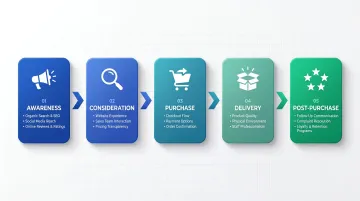
Map every touchpoint a customer encounters from first awareness to post-purchase. Assess whether each one consistently reflects your brand's core promise.
Audit framework:
- Awareness stage: Search results, social media presence, third-party reviews, advertising
- Consideration stage: Website experience, sales conversations, proposal documents, pricing transparency
- Purchase stage: Booking/checkout process, payment experience, confirmation communications
- Delivery stage: Product/service delivery, physical environment (if applicable), staff interactions
- Post-purchase stage: Follow-up communications, complaint handling, loyalty programmes
Identify gaps between what is promised and what is delivered. These gaps are where brand equity leaks.
Step 2: Invest in Brand Strategy Before Brand Execution
Many Singapore organisations jump straight to logo redesigns or social media campaigns without defining the underlying brand architecture (purpose, positioning, personality, and promise). Without this foundation, executions pull in different directions and produce no cumulative brand equity.
Forrester CX Index research found that companies with high customer experience maturity achieve 41% faster revenue growth and 49% faster profit growth than those with lower maturity.
This is why agencies like Vantage Branding ground every engagement in strategy first — working through brand research, stakeholder alignment, and narrative development before any identity or execution work begins.
Step 3: Treat Brand Experience as a Long-Term Investment, Not a One-Off Campaign
Binet and Field's research recommends an optimal budget allocation of approximately 60% to brand building and 40% to sales activation. Over-investing in short-term activation creates what they call a "death spiral" — efficiency may increase on paper while market share actually shrinks.
Timeline expectations:
- Strategy and identity development: Typically 8-16 weeks, depending on complexity and stakeholder alignment requirements
- Market perception shift: 12-36 months of disciplined execution before brand equity effects fully materialise
Singapore Airlines took decades to build its reputation. Sentosa's repositioning unfolded over 10+ years. BreadTalk's brand recognition compounded over 24 years. What these brands share is not exceptional budgets — it's the discipline to invest in brand equity consistently, even when short-term results feel slow to materialise.
Frequently Asked Questions
What is brand experience, and how is it different from branding?
Brand experience is the full ecosystem of interactions a customer has with a brand across all touchpoints — sensory, emotional, cognitive, and behavioural. Branding typically refers to visual identity and naming. Brand experience encompasses all of that plus every moment a customer encounters, remembers, and talks about your brand.
Why does brand experience matter more in Singapore than in other markets?
Singapore presents an exceptionally competitive market with a highly educated, digitally active, and multicultural consumer base. Over 56% of Asia-Pacific consumers will stop doing business with a brand after a single trust-eroding experience, and inconsistencies get amplified rapidly through social channels.
Which industries in Singapore benefit most from investing in brand experience?
While every industry benefits, those with high-consideration purchase decisions — healthcare, financial services, hospitality, education, and professional services — see the most pronounced returns because trust is a decisive factor in customer acquisition and retention.
How do you measure the ROI of a brand experience strategy?
Key metrics span two horizons: leading indicators (brand recall, Net Promoter Score, share of voice) and lagging indicators (customer lifetime value, pricing power, referral rates). Forrester research shows high CX maturity companies achieve 41% faster revenue growth, though results typically compound over 12–36 months rather than appearing immediately.
How long does it take to build a strong brand experience in Singapore?
Strategy and identity development typically takes 8–16 weeks, depending on organisational complexity and stakeholder alignment. Customer perception then shifts over 12–36 months of consistent execution across all touchpoints.
What should I look for when choosing a branding agency in Singapore to help with brand experience?
Prioritise agencies that demonstrate:
- Brand strategy capability, not just design or digital execution
- Experience across your industry or adjacent sectors
- A collaborative process that includes stakeholder alignment
- The ability to connect brand decisions to measurable business outcomes
Agencies that lead with research and strategy tend to produce more durable results than those that jump straight to execution.