Introduction: Why Pre-Workshop Research Is the Foundation of a Great Brand Workshop
You've scheduled the brand workshop. Stakeholders are confirmed, the conference room is booked, and the agenda looks ambitious. But when the session begins, the conversation stalls—not because of poor facilitation, but because no one shares the same baseline understanding of the brand, the customer, or the competition.
This scenario plays out far too often. According to BCG research, 70% of transformation efforts fail not because of flawed strategy, but because of misaligned execution. Brand workshops are no exception — when participants arrive with conflicting assumptions instead of shared facts, strategic alignment becomes impossible before the first exercise even begins.
Pre-workshop research transforms a brand workshop from a conversation into a decision-making engine. Without it, teams waste half the session debating foundational facts instead of building strategy. This guide covers the three research areas every brand team should complete before a workshop — and how to turn those inputs into a clear starting point for the day.
TLDR:
- Pre-workshop research prevents teams from wasting strategic time on foundational debates
- Three research areas matter most: internal brand audit, customer insight, and competitive landscape
- Share research findings 3–5 days before the workshop in a concise brief
- 2–3 weeks of structured groundwork is enough to dramatically improve workshop outcomes
- Most workshop failures stem from participants arriving without shared context
Why Pre-Workshop Research Makes or Breaks a Brand Workshop
Brand workshops often produce vague or conflicting outputs because internal stakeholders arrive with different assumptions about who the brand is for, what it stands for, and how it compares to competitors. Research aligns the room before discussion begins.
The data is stark: most leadership teams spend only 3 hours per month making strategic decisions — less than one week per year. When that scarce time gets consumed by foundational debates rather than actual decision-making, the workshop loses its value before it starts.
Effective pre-workshop research achieves three critical outcomes:
- Levels the playing field by surfacing facts that replace opinion battles
- Reduces decision fatigue by ensuring participants process information before the session, not during it
- Focuses the workshop on strategy and direction rather than discovery
Consider the perception gap most organisations face: Bain & Company surveyed 362 firms and found 80% believed they delivered a "superior experience" to customers. Only 8% of customers agreed — a 72-percentage-point gap. This disconnect doesn't surface through assumption; it requires research.
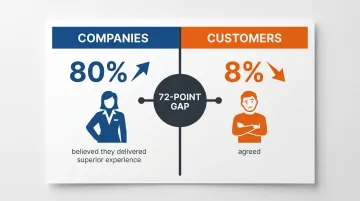
That kind of evidence is what shifts a workshop from debate to decision. The good news: the research doesn't need to be exhaustive or expensive. Two to three weeks of structured groundwork — an internal audit, customer interviews, competitive mapping — meaningfully improves both workshop quality and the durability of its outputs.
Internal Brand Audit: Start With What You Already Know
An internal brand audit is the process of honestly assessing your brand's current state: what it communicates, how consistently it's applied, and how well it reflects the business's actual direction. This often reveals significant gaps between intention and execution.
What an Internal Brand Audit Covers
An internal audit examines three key areas:
- Review existing materials: logo usage, tone of voice guidelines, messaging documents, and visual identity standards
- Audit how the brand appears across customer-facing touchpoints—website, social media, sales materials, proposals, email signatures, and physical locations
- Map where the brand feels consistent and where it breaks down across the organisation
Research shows that maintaining consistent brand presentation across all platforms can increase revenue by 23%. Yet many organisations discover during their audit that different departments are effectively presenting different brands.
Internal Stakeholder Perception Interviews
Brief, structured conversations with 5–10 employees across departments reveal how different parts of the organisation describe the brand. Interview participants from:
- Sales and business development
- Marketing and communications
- Operations or service delivery
- Senior leadership
Discrepancies between departments aren't a problem to hide—they're exactly what the workshop should address.
To get the most from these conversations, structure them around four core questions:
- What do we currently stand for?
- What makes us different from competitors in our team's own words?
- Who do we believe our ideal customer is?
- What do we think our customers value most about us?
Partnering with a branding agency like Vantage Branding for this phase can surface blind spots that internal teams are too close to see. Their brand strategy work often uncovers the sharpest tensions to bring into the workshop—before the room fills up.
Understanding Your Customers and Audience Before the Workshop
Customer insight is the foundation of effective pre-workshop research. Brand strategy built without it tends to produce positioning that sounds good internally but fails to land externally.
Why Customer-Grounded Strategy Outperforms
The business impact is measurable. Deloitte research found customer-centric companies are 60% more profitable. McKinsey reported that CX leaders achieved more than double the revenue growth of laggards between 2016 and 2021.
Yet only 9% of companies operate in a truly customer-centric manner, according to research across 180 B2B companies. Most brand teams enter workshops lacking the customer evidence base needed for effective decisions.
Practical Methods for Gathering Customer Insight
Customer research doesn't require six-month studies. Practical methods scaled to different budgets include:
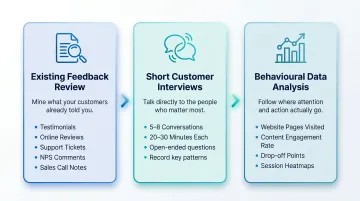
- Existing feedback review: Analyse testimonials, online reviews, support tickets, NPS comments, and sales call notes
- Short customer interviews: Conduct 5–8 brief conversations (20–30 minutes) with recent customers
- Behavioural data analysis: Review which website pages customers visit, what content they engage with, and where they drop off
What to Look for in Customer Research
Three inputs directly shape brand messaging and positioning work:
- Customer language: The words customers use to describe the problem your brand solves—not your company's language
- Decision moments: The specific moments that most influenced their choice to select your brand
- Retention or churn drivers: The reasons they stay loyal or leave
Regional Nuance in Singapore and Southeast Asia
For markets like Singapore and Southeast Asia, customer research must account for multicultural nuance. Forrester's 2024 APAC study found only 35% of APAC B2B buyers start with a single vendor in mind, compared to 45% in North America. APAC also has the largest buying groups globally.
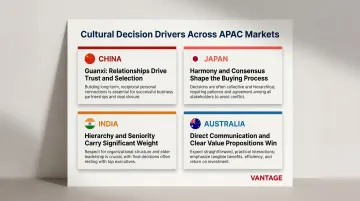
Why a customer in Singapore selects a healthcare or B2B brand can differ sharply from internal assumptions—especially when leadership hasn't spoken directly to customers in some time. Cultural decision drivers across the region vary considerably:
- China: Guanxi (relationships) drives trust and selection
- Japan: Harmony and consensus shape the buying process
- India: Hierarchy and seniority carry significant weight
- Australia: Direct communication and straightforward value propositions win
Synthesising Customer Research
Distil your customer research into 2–3 audience "truths"—short, plain-language statements about what customers really value, fear, or aspire to. Share these as pre-reading before the workshop so every participant starts from the same foundation, not from their own internal assumptions.
Mapping the Competitive and Market Landscape
Understanding the competitive context before a brand workshop prevents the team from positioning the brand in a space already occupied by a stronger competitor. It also opens up opportunities to identify genuinely unclaimed territory.
Kantar research shows that brands perceived as "meaningfully different" grow three times faster than brands that lack differentiation. Without this groundwork, brands risk echoing competitors' messaging without realising it.
Conducting a Practical Competitor Audit
Select 4–6 direct competitors and review:
- How they describe themselves on their website and in marketing materials
- What their visual identity signals — colour schemes, typography, and overall design language
- Which benefits and value propositions they emphasise most consistently
- Who they appear to be targeting, based on messaging tone and channel choices
The goal isn't to copy what works but to identify what's already saturated and where gaps exist.
Creating a Competitive Positioning Map
A simple competitive positioning map plots competitors against two variables relevant to your industry. Examples include:
- Premium vs. accessible pricing
- Specialist vs. generalist service offering
- Traditional vs. innovative approach
- Local focus vs. global reach
Bringing a draft positioning map into the workshop gives participants a concrete starting point rather than a blank canvas — differentiation gaps become visible before the discussion even begins.
Market and Industry Trends
Before the workshop, the team should understand broader shifts in the industry that may affect brand relevance:
- Changes in customer expectations
- New entrants or disruptive competitors
- Regulatory shifts
- Cultural trends in the target market
This doesn't need to be a deep report. A one-page landscape summary is enough — the goal is to ensure brand positioning reflects where the market is heading, not just where it stands today.
How to Organise and Share Your Research Before the Workshop Day
Research only creates value if it's presented in a way that participants can absorb and act on. A 40-page report dropped into inboxes the night before the workshop does not constitute preparation.
Create a Concise Pre-Workshop Research Brief
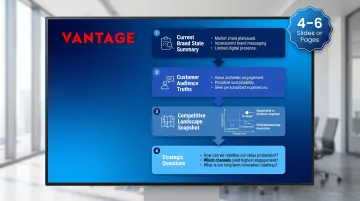
Recommend a pre-workshop research brief of 4–6 slides or pages that covers:
- Current brand state summary: 2–3 key findings from the internal audit
- Customer audience truths: 2–3 core insights about what customers value and how they decide
- Competitive landscape snapshot: Visual positioning map and key differentiation gaps
- Strategic questions: 3–5 specific questions the workshop will aim to answer
Share this brief at least 3–5 days before the session so participants can reflect and arrive with informed perspectives. Cognitive load research and distributed practice studies both confirm the same principle: spacing information intake across multiple touchpoints produces better retention and engagement than concentrating it all in one session.
Frame Research as Context, Not Conclusions
The brief you've just distributed should surface insights and tensions — not pre-answer the workshop's questions. The goal is a shared foundation that preserves space for genuine strategic exploration during the session itself.
When research is positioned as "here's what we know" rather than "here's what we should do," it invites participants to engage with the findings and build strategy collaboratively rather than react defensively to predetermined answers.
Frequently Asked Questions
How far in advance should you start pre-workshop research?
Ideally, research begins 3–4 weeks before the workshop. This allows enough time to gather stakeholder input and competitive data, synthesise findings, and distribute a pre-workshop brief for stakeholders to review at least 3–5 days before the session.
Who should be responsible for conducting pre-workshop research?
Responsibility typically sits with the marketing lead or brand manager, often in collaboration with an external branding agency. The key is that at least one person owns the process end-to-end and ensures inputs from sales, leadership, and customer-facing teams are included.
What is the difference between a brand audit and a brand workshop?
A brand audit is a research exercise that assesses the current state of the brand—what it communicates and how it's perceived. A brand workshop is a facilitated strategy session that uses those findings to define future direction.
Do you need customer interviews before every brand workshop?
Direct interviews are ideal but not always feasible. Existing reviews, testimonials, sales call notes, and CRM data can provide strong customer insight when time or budget is limited—as long as the team is honest about the limitations of indirect sources.
What makes a brand workshop fail?
The most common failure points include participants arriving with no shared context, too many stakeholders with conflicting agendas, and workshop outputs that are never connected to a clear implementation plan. Thorough pre-workshop research won't solve all three, but it gives every participant a shared foundation to build from.