Introduction
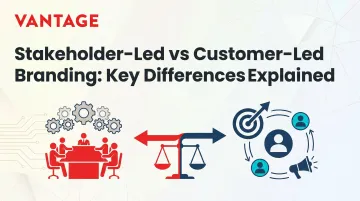
Brand leaders face a recurring tension: the vision internal stakeholders hold for what the brand should represent often clashes with what customers actually expect. Founders, executives, and boards develop perspectives shaped by organisational values and strategic ambitions. Meanwhile, customers form their own judgements based on experience, emotion, and competitive alternatives. When these two forces don't align, brand strategy pays the price.
Misalignment carries direct commercial consequences. A brand shaped purely by internal stakeholder opinion risks losing touch with market reality, producing messaging that resonates in boardrooms but falls flat with buyers. Conversely, a brand built entirely around customer feedback may lack strategic coherence — constantly pivoting in response to shifting preferences without a stable foundation.
Both approaches have merit, and the choice between them depends on context: industry dynamics, brand maturity, organisational structure, and strategic priorities. Understanding the differences helps leaders make intentional branding decisions rather than defaulting to one perspective.
TLDR
- Stakeholder-led branding prioritises internal perspectives, shaping organisational identity and long-term vision
- Customer-led branding is driven by external audience research, prioritising how target customers perceive and experience the brand
- Neither approach is universally superior—effectiveness depends on industry, brand maturity, and strategic goals
- High-performing brands often integrate both: stakeholder input defines brand purpose, customer insight shapes how it's expressed
- Knowing which approach to lead with—and when to combine them—is where brand strategy gets decisive
Stakeholder-Led vs Customer-Led Branding: Quick Comparison
| Factor | Stakeholder-Led | Customer-Led |
|---|---|---|
| Primary Audience | Internal stakeholders (leadership, boards, investors, employees) | External customers and target audiences |
| Guiding Input | Organisational values, vision, governance consensus | Market research, customer behaviour, audience insights |
| Brand Focus | Internal coherence, mission alignment, institutional credibility | Market relevance, emotional connection, customer loyalty |
| Decision-Making Driver | Strategic direction, leadership vision, regulatory requirements | Customer preferences, competitive positioning, market trends |
| Risk | Market disconnect, generic messaging, low customer resonance | Strategic drift, reactive pivoting, loss of differentiation |
| Best Suited For | Government bodies, institutional brands, regulated industries, B2B | Consumer-facing brands, competitive markets, growth-stage companies |
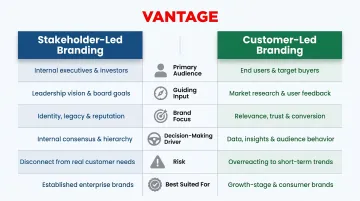
The comparison highlights a core tension: internal alignment versus external relevance. How each approach resolves that tension — and when one outweighs the other — is where the real strategic decisions lie.
What is Stakeholder-Led Branding?
Stakeholder-led branding is a branding approach where identity, messaging, and strategic direction are shaped primarily by internal stakeholders—founders, leadership teams, boards, investors, and employees. The brand is built from the inside out, reflecting organisational values, vision, and purpose before external communication.
The core logic: a strong internal identity must come first. What you stand for and where you're headed need internal consensus before any external expression can land credibly. This makes the approach especially suited to new organisations, institutional brands, and companies navigating mergers, acquisitions, or leadership transitions.
Strengths of Stakeholder-Led Branding
Done well, stakeholder-led branding delivers three core advantages:
- Consistent brand direction across leadership and communications
- Internal cultural alignment that employees can articulate and act on
- Credibility with partners, investors, and regulators who evaluate organisational character before they evaluate products
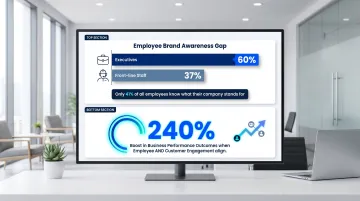
The alignment gap is larger than most organisations assume. Research from Gallup across more than 3,000 workers found that only 41% of employees feel they know what their company stands for or what differentiates its brand. The gap widens by level: 60% of executives understand brand differentiation, compared to just 37% of front-line staff—the group most likely to interact with customers daily.
When both employees and customers are engaged, the commercial impact is significant. The same Gallup research shows a 240% boost in performance-related business outcomes compared to organisations where neither group is engaged. Internal alignment isn't just a culture exercise — it directly shapes what customers experience.
Risks of Stakeholder-Led Branding
Without sufficient customer input, stakeholder-led branding can produce a brand that resonates internally but fails externally. Leadership-approved messaging may sound credible in boardrooms yet lack emotional connection with customers. The result: polished language that says very little — institutional in tone, forgettable in market.
Use Cases of Stakeholder-Led Branding
Stakeholder-led branding is most appropriate in contexts where institutional credibility, governance alignment, and multi-stakeholder consensus drive brand value. These include:
- Government bodies and institutional organisations where brand trust flows from mission fidelity and regulatory authority
- Heavily regulated industries such as healthcare and finance, where compliance and credibility matter more than consumer appeal
- Organisations undergoing leadership change or post-merger rebranding, where internal alignment prevents fragmentation
- B2B companies where trust and credibility with industry peers, investors, and procurement teams outweigh consumer sentiment
Real-World Example: Singapore Business Federation
The Singapore Business Federation (SBF) unveiled a comprehensive rebrand in November 2024, demonstrating stakeholder-led branding in practice. The rebranding was led by agency Sedgwick Richardson through in-depth stakeholder engagements across leadership, council members, and government partners.
An inaugural Honorary Advisory Panel was formed, comprising former SBF chairmen and leaders from Far East Organisation and UOB. The rebrand then aligned SBF's visual identity with a refreshed Vision, Mission, and Corporate Strategy — positioning the federation as the nexus connecting government, businesses, and trade associations.
The brand objectives are measurable: double company engagement to 25,000 companies annually by 2030, and double partnerships from 150 to 300 by the same year. The Partners' Appreciation Night was attended by close to 200 C-suite representatives from public and private sectors, demonstrating stakeholder buy-in.
The SBF rebrand was shaped entirely by consensus among institutional leaders, government stakeholders, and industry veterans — consumer market research played no part. That distinction is what defines stakeholder-led branding: the brand's legitimacy is built from the inside out, making it the right approach when institutional trust matters more than market popularity.
What is Customer-Led Branding?
Customer-led branding is a branding approach where brand identity, positioning, and messaging are shaped primarily by research into target customers—their needs, aspirations, behaviours, and emotional drivers. The brand is built from the outside in, starting with market insight rather than internal opinion.
The core logic is straightforward: a brand only has value if it resonates with the people it aims to serve. Customers want to know whether the brand understands them, solves their problems, and aligns with their values. Internal governance and leadership vision matter far less to them than that. Fact-based research, not gut feeling, drives brand decisions.
Strengths of Customer-Led Branding
Customer-led branding delivers sharper market relevance, stronger emotional connection, and higher customer loyalty. According to Forrester's 2024 State of Customer Obsession Survey, executive decision-makers at customer-obsessed organisations report 41% faster revenue growth, 49% faster profit growth, and 51% better customer retention. However, only 3% of companies currently qualify as genuinely customer-obsessed—defined as putting customers' needs, desires, and satisfaction at the forefront of all business decisions.
The commercial case is clear: Deloitte Digital research found that customer-centric companies are 60% more profitable compared to companies that are not customer-focused.
Risks of Customer-Led Branding
That said, over-indexing on customer preferences can result in a reactive brand that constantly pivots and loses strategic coherence. Customers can tell you what they want today—not what will differentiate the brand tomorrow. Without internal strategic direction, brands lose the initiative and end up chasing the market rather than shaping it.
Use Cases of Customer-Led Branding
Customer-led branding is most appropriate in contexts where market relevance, emotional connection, and competitive differentiation drive brand value. These include:
- Consumer-facing brands in competitive markets (retail, F&B, lifestyle) where customer preference determines market share
- Start-ups trying to find product-market fit, where customer feedback shapes positioning and messaging
- Brands launching into new geographies or audience segments, where local or demographic insights are critical
- Companies seeking to reposition after losing market share, where understanding why customers left is essential
The following example shows what this approach looks like when executed with conviction.
Real-World Example: Patagonia
Patagonia built its brand around customer values — sustainability and environmental responsibility — rather than conventional product marketing. The results are measurable: the company ranked 3rd in KPMG's 2024–2025 U.S. Customer Experience Excellence Survey, rising 16 places year over year.
Since 1985, Patagonia has donated 1% of total sales to environmental preservation, totalling over $140 million in cash and in-kind donations.
In 2022, founder Yvon Chouinard transferred ownership of the $3 billion company to a trust and non-profit dedicated to fighting climate change—a move that deepened customer trust and loyalty. Patagonia's Worn Wear programme (buy-back and resale) and free repair services directly reflect customer values and extend product lifecycles.
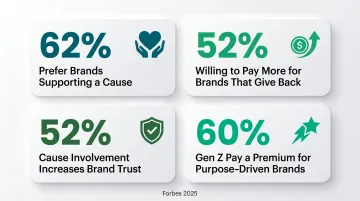
Consumer data from Forbes (2025) reinforces why this approach works:
- 62% of customers prefer brands that support a cause important to them
- 52% are willing to pay more for brands that "give back"
- 52% say cause involvement increases their trust in a brand
- 60% of Gen Z consumers will pay a premium for purpose-driven brands
Which Branding Approach Fits Your Brand?
The right approach depends on four factors: organisational maturity, audience type, regulatory environment, and whether you are building a brand from scratch or refreshing an existing one.
Decision Factors
Choose stakeholder-led branding when:
- Establishing organisational credibility in institutional or B2B contexts
- Navigating multi-stakeholder governance (boards, investors, regulators)
- Aligning internal culture during periods of change (mergers, leadership transitions)
- Operating in heavily regulated industries where compliance and governance matter
Choose customer-led branding when:
- Competing in crowded consumer markets where differentiation drives market share
- Launching to a new audience or geography where local insight is critical
- Current brand messaging is not resonating in the market
- Customer preferences and behaviours are rapidly evolving
The Case for Integration
The most durable brands use stakeholder input to define their "why" (purpose, values, vision) and customer insight to shape their "how" (tone, messaging, experience). This inside-out + outside-in model avoids the pitfalls of both extremes.
Vantage Branding's insight-led approach does exactly this: grounding stakeholder vision in market reality so that brand promises are consistently delivered and genuinely meaningful to the audiences they are meant to reach.
Comparative Example: Mayo Clinic vs. Patagonia
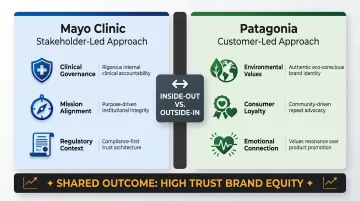
Mayo Clinic and Patagonia are both category-leading brands with high trust, but they built brand equity through fundamentally different approaches shaped by institutional context.
Mayo Clinic (Stakeholder-Led): A 2019 case study published in the Journal of Brand Management examined how Mayo Clinic manages its brand through internal stakeholder alignment. Mayo uses facilitated roundtable discussions to help front-line staff define role-specific service standards, directly tying brand perception to staff engagement. Every commercialisation effort is filtered through the "Mayo Clinic Model of Care" framework, keeping mission alignment at the centre of the brand.
Why stakeholder-led fits: In healthcare, where clinical outcomes, regulatory environments, and multi-stakeholder governance define the operating context, brand strategy must be anchored in stakeholder consensus and mission fidelity. Patient trust flows from institutional credibility, not consumer marketing.
Patagonia (Customer-Led): Patagonia's brand is anchored in customer values around environmental sustainability, with brand strategy driven by customer behaviour insights. The customer-values alignment produces measurable loyalty and revenue growth.
Why customer-led fits: In competitive consumer retail, where differentiation is driven by customer preference and emotional connection, brand strategy must be responsive to customer values. Patagonia's willingness to tell customers "Don't Buy This Jacket" reflects a brand strategy built on customer trust, not institutional mandate.
The Mayo Clinic–Patagonia contrast is a useful litmus test: if your brand operates in an institutional context, stakeholder-led thinking is your foundation. If your brand competes on consumer preference, customer insight should drive the strategy. Most brands, however, sit somewhere in between — which is precisely where integration pays off.
Conclusion
There is no universal "better" approach to branding. Stakeholder-led and customer-led branding serve different strategic purposes, and the most important step is recognising which pressures and priorities dominate your context at this stage.
The right fit depends on your context:
- Institutional brands, regulated industries, and B2B organisations tend to benefit from stakeholder-led approaches that build internal alignment and governance credibility
- Consumer-facing brands, competitive markets, and growth-stage companies tend to benefit from customer-led approaches that prioritise market relevance and emotional connection
The strongest brands integrate both — using stakeholder input to define purpose and customer insight to shape expression.
Whether you're building a brand from the ground up or re-evaluating an existing one, the right branding partner will help you navigate that balance — aligning internal stakeholders without losing sight of what your audience actually needs. Connect with Vantage Branding to explore the right approach for your organisation.
Frequently Asked Questions
What is the difference between a customer and a stakeholder?
A customer is someone who buys or uses your product or service. A stakeholder is anyone with an interest in your organisation's outcomes—including leadership, investors, employees, regulators, and customers themselves. All customers are stakeholders, but not all stakeholders are customers.
What is stakeholder-led branding?
Stakeholder-led branding is driven by the perspectives of internal stakeholders: founders, leadership, boards, and investors. Brand identity is built from the inside out, grounded in organisational values, vision, and governance consensus rather than external market research.
What is customer-led branding?
Customer-led branding is shaped by research into target customers: their needs, behaviours, and expectations. It prioritises how audiences perceive and experience the brand over internal opinion, building identity from the outside in.
Can a brand be both stakeholder-led and customer-led at the same time?
Yes. The most effective brands integrate both approaches. Stakeholder input defines core brand purpose, values, and strategic vision, while customer research ensures how that purpose is expressed is relevant, resonant, and differentiated in the market.
Which branding approach works better for B2B companies?
B2B brands often benefit more from stakeholder-led approaches because their audiences—partners, investors, procurement teams—evaluate organisational credibility, governance, and values. However, customer insight still plays an important role in shaping messaging and positioning to ensure relevance.
How do I know if my brand needs a stakeholder-led or customer-led approach?
Consider your primary audience, your brand's maturity, and whether your core challenge is internal alignment or a gap between how you're perceived and how you want to be. A brand strategy session with the Vantage Branding team can help identify the right approach for your situation.