Singapore manufacturers serve sophisticated buyers across lengthy procurement cycles, often spanning 8-11 months. Without a deliberate brand strategy, even technically superior manufacturers risk being commoditised, losing contracts to competitors with stronger market presence, and struggling to attract the next generation of engineers and specialists.
This blog examines why branding is a strategic business lever for manufacturers, the common branding pitfalls specific to the sector, and two Singapore manufacturing branding case studies that show what a structured brand strategy actually delivers.
TLDR
- Manufacturing branding shapes how clients, partners, talent, and investors perceive your business
- Singapore manufacturers face unique challenges: B2B complexity, technical communication gaps, and regional competition
- Clear brand strategy helps differentiate, win contracts, and expand regionally
- The case studies here show how manufacturers transformed brand perception into measurable outcomes
- A branding partner with industrial sector experience accelerates results
Why Branding Is a Strategic Asset for Singapore Manufacturers
Branding and marketing are not the same thing. Branding is the long-term foundation — your positioning, identity, values, and narrative. Marketing executes campaigns on top of it. Many manufacturers invest in the latter without the former, creating inconsistent market signals that confuse buyers and dilute credibility.
How Branding Drives B2B Purchasing Decisions
In industrial procurement, buyers evaluate suppliers over months-long cycles involving multiple stakeholders. More than 50% of B2B decision-makers will switch suppliers if they don't receive a seamless experience, with poor digital customer experiences cited as the primary reason for switching. A credible, consistent brand reduces perceived risk and builds trust faster.
Research shows that 95% of the time, the winning vendor is already on the buyer's "day one" shortlist. In fact, 80% of the time, the vendor ranked first on that shortlist wins the deal. Manufacturers who aren't visible and credible before procurement begins are already behind.
Talent Acquisition and the Manufacturing Skills Gap
Singapore's manufacturing sector faces a persistent skills gap. ManpowerGroup reports a 72% talent shortage in manufacturing globally, with more than 7 in 10 employers struggling to find qualified candidates. A strong employer brand makes companies more competitive when recruiting engineers, specialists, and operations managers.
According to Randstad's Employer Brand Research 2024, manufacturing talent in Singapore values good work-life balance and career growth opportunities. Yet 1 in 3 manufacturing professionals cited lack of career advancement as the primary reason for resignation in 2023. Companies whose employer brands actively communicate growth and modern culture hold a clear advantage in this competitive labour market.
Regional Expansion and Market Credibility
Singapore manufacturers increasingly serve clients across Southeast Asia. Enterprise Singapore reports that 85% of surveyed companies have a presence in ASEAN, with Malaysia (70% popularity) and Vietnam ranking among top expansion destinations.
A professionally developed brand signals legitimacy and capability to international buyers who may have no other reference point for a company's quality. For manufacturers entering Vietnam or Malaysia, limited brand recognition is cited as a key barrier to identifying partners and building overseas networks.
Brand Equity and Business Valuation
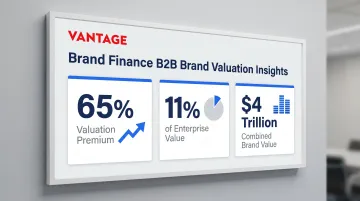
For manufacturers seeking funding, M&A activity, or government grants such as the Enterprise Development Grant (EDG), a coherent brand narrative and professional identity signal business maturity. Key findings from Brand Finance's 2026 B2B Brands report make this concrete:
- 65% valuation premium: Strong B2B branded businesses command higher forward price-to-earnings ratios than weaker peers
- 11% of enterprise value: Brand accounts for roughly one-ninth of total value for the top 300 B2B brands
- $4 trillion combined brand value: The scale at which brand equity operates across leading B2B companies
This is especially relevant for family-run or legacy manufacturers looking to grow, transition leadership, or attract investment.
Common Branding Challenges Faced by Manufacturing Companies in Singapore
The "Invisible Brand" Problem
Many Singapore manufacturers grew on the strength of referrals and personal networks, meaning they never developed a formalised brand. This works until they hit a growth ceiling or face leadership transition. Suddenly there's no brand equity to draw on — no market recognition, no digital presence, no consistent story to tell new prospects.
When the founding generation retires or the company seeks to expand beyond its existing customer base, the absence of brand infrastructure becomes a critical vulnerability.
Technical Complexity vs. Audience Clarity
Manufacturing companies often have deep product or process expertise but struggle to translate it into language that resonates with non-technical buyers, procurement teams, or end clients. The gap between internal expertise and external communication creates missed opportunities.
Engineers speak in specifications, tolerances, and process capabilities. Procurement decision-makers think differently — they evaluate suppliers on:
- Risk mitigation and supply chain reliability
- Total cost of ownership, not unit price
- Strategic partnership potential and long-term fit
When manufacturers fail to bridge this gap, their real competitive advantages stay invisible to the buyers who matter most.
Outdated or Misaligned Brand Identity
Even companies that communicate their value well can lose ground if their visual identity hasn't kept pace. Many established manufacturers have logos, websites, and collateral that reflect the era they were founded in — not the company they've become. This misalignment creates credibility gaps precisely when buyers are evaluating them.
B2B buyers spend 70% of their buying journey doing independent research before contacting vendors. The average journey lasts 11 months, with 8 months spent researching before speaking with a seller. If your website, LinkedIn presence, and marketing materials signal outdated capabilities or inconsistent execution, the shortlist decision is already made — before you ever speak to a prospect.
Case Study 1: Rebranding a Chemical Manufacturer for Regional Expansion
Background and Challenge
A Singapore-based specialty materials manufacturer had built a strong domestic track record over two decades, serving anchor clients in adhesives and coatings applications. Their technical expertise was unquestioned among existing customers, but brand visibility in regional markets was virtually non-existent.
The company was pursuing expansion into Malaysia and Vietnam — key growth markets for Singapore manufacturers. Without a recognisable, credible brand, sales conversations started from zero every time. There was no brand recall, no digital presence worth directing prospects to, and no consistent story explaining their competitive differentiation.
Their existing brand was technically focused, visually dated, and communicated little about their values or strategic positioning. The logo dated back to the 1990s and the website hadn't been updated in five years.
Marketing collateral was inconsistent across sales teams — each region telling a slightly different story.
Brand Strategy and Identity Development
The branding process began with structured discovery — stakeholder interviews across leadership, operations, and sales; a competitive audit of regional chemical suppliers; and an assessment of how the company was perceived externally versus how leadership described it internally.
This gap analysis revealed a critical insight: while the company saw itself as a "product supplier," customers valued them as a "solutions partner" with deep application expertise in specific industrial segments. This insight informed the entire brand positioning brief.
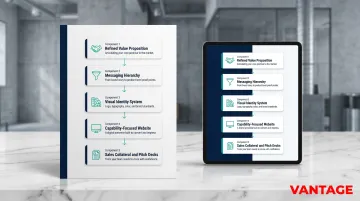
The agency developed a clear brand platform including:
- Refined value proposition emphasising collaborative problem-solving and technical partnership
- Messaging hierarchy that translated product features into customer outcomes and business value
- Visual identity system with modern logo, updated colour palette, professional typography, and comprehensive brand guidelines
- Capability-focused website structured around industry applications rather than product categories
- Sales collateral and pitch decks aligned to the new positioning and visual identity
The messaging was written to speak to two distinct audiences: procurement buyers (reliability, compliance, risk mitigation) and engineering teams (technical specifications and performance data).
Results and Business Impact
The rebrand delivered measurable commercial impact across the business:
- Shortened sales cycles with regional prospects by establishing credibility earlier in the buying journey
- Increased inbound inquiries through an improved digital presence
- Gave the sales team consistent, professional materials they actively used in every market conversation
The clearest takeaway: when a rebrand precedes regional expansion rather than following it, the brand itself becomes a commercial tool. In Malaysia and Vietnam — markets where the company had no existing relationships — the updated positioning and materials opened conversations that cold outreach alone could not.
Case Study 2: Building a B2B Brand Identity for a Precision Engineering Firm
Background and Challenge
A Singapore precision engineering SME had built an excellent reputation for quality and reliability among a small cluster of anchor clients in the electronics and medical devices sectors. They had no formalised brand strategy, no updated visual identity, and no digital presence capable of attracting new enterprise clients.
Growth had plateaued. Their referral network was exhausted, and breaking into aerospace, medical devices, and advanced electronics manufacturing required passing rigorous vendor qualification processes — where a credible brand is the price of entry.
Without a credible digital brand, the company struggled to convert outbound business development into qualified opportunities. Procurement teams researching potential vendors online found an outdated website, inconsistent messaging, and no clear articulation of competitive differentiation.
Brand Strategy and Identity Development
Through structured discovery, the branding process surfaced a core differentiator: the firm's competitive advantage wasn't price but engineering precision and a zero-defect culture built over 30 years. The brand was built around this technical authority positioning, translated into language that spoke to quality-sensitive buyers.
The brand narrative communicated:
- Decades of craftsmanship and engineering heritage
- Zero-defect operational culture backed by ISO certifications and quality metrics
- Forward-looking capability in advanced manufacturing technologies
The visual identity moved away from dated industrial aesthetics toward a clean, precision-inspired design system. The visual language was designed to signal capability without sacrificing approachability — professional but not corporate, technical but not cold.
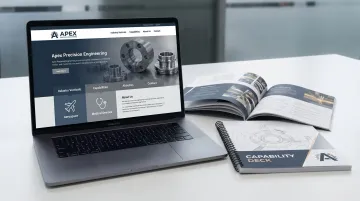
A redesigned website was structured around industry verticals (aerospace, medical devices, electronics) and service capabilities (CNC machining, assembly, quality assurance), supported by case study content showcasing technical work. This gave the sales team a credible digital asset to direct prospects to during the qualification process.
Results and Business Impact
Outcomes included:
- New enterprise clients onboarded in aerospace and medical devices — both target verticals
- Improved response rates to outbound business development outreach
- Stronger performance in formal vendor qualification processes, where brand credibility is explicitly evaluated
The lesson for precision engineering and technical manufacturers: branding is credibility infrastructure. Sophisticated procurement teams won't engage a supplier they can't verify — and a professional brand is what gets the sales team through the door in the first place.
Key Branding Lessons for Singapore Manufacturers
Position Before You Design
The most common mistake manufacturers make is jumping straight to logo and website without first establishing clear brand positioning strategy. Both case studies show that design work only delivers impact when anchored in a defined positioning platform.
Visual identity without strategic foundation is decoration, not differentiation. Effective manufacturing branding begins with answering four questions:
- What do we stand for?
- Who do we serve best?
- What makes us different?
- How do we create value?
Only then can design express those strategic choices consistently.
Translate Expertise into Audience-Relevant Language
Manufacturing brands hold enormous knowledge and credibility, but only if they communicate it in terms their audience cares about. The shift from product-feature language to outcome and value language is where most branding transformation happens for industrial companies.
Engineers speak in specifications. Buyers speak in outcomes. Your brand must bridge that gap — translating technical excellence into business value that procurement teams, C-suite stakeholders, and end customers can immediately grasp.
Brand Consistency Across Commercial Touchpoints Matters
For B2B manufacturers, the brand is experienced across a long sales cycle — website, capability decks, trade show presence, email signatures, proposal documents. Inconsistency at any touchpoint erodes the trust the brand is trying to build.
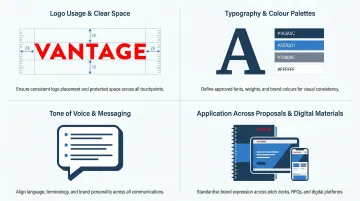
Comprehensive brand guidelines lock in that consistency after the project concludes. They provide clear instructions across:
- Logo usage and clear space rules
- Typography and colour palettes
- Tone of voice and messaging
- Application across proposals, decks, and digital materials
When every touchpoint reinforces the same positioning, each interaction builds on the last — shortening the trust-building phase in long B2B sales cycles.
Frequently Asked Questions
What are the 7 commonly used branding strategies?
The seven commonly referenced branding strategies are brand positioning, brand storytelling, visual identity development, employer branding, co-branding, rebranding, and content/thought leadership branding. For manufacturers, brand positioning and employer branding are typically the highest-priority starting points.
Why is branding important for manufacturing companies?
Branding helps manufacturers differentiate beyond price, build trust with B2B buyers across longer sales cycles, and attract skilled talent in a competitive labour market. It also supports regional expansion by establishing credibility in new markets where personal introductions don't yet exist.
What is the difference between brand strategy and brand identity for manufacturers?
Brand strategy defines the positioning, purpose, and messaging of a brand — the "what" and "why." Brand identity is the visual and verbal expression of that strategy, including logo, colours, and tone of voice. Strategy must come first for identity to be meaningful and commercially effective.
Can branding help Singapore manufacturers attract international clients?
Yes, a professional brand signals legitimacy and capability to overseas buyers who have no other reference point. This is particularly relevant for Singapore manufacturers expanding into ASEAN markets where digital presence and brand credibility precede initial contact.
How long does a branding project for a manufacturing company typically take?
A comprehensive branding engagement — covering strategy, identity, and core collateral — typically takes 3 to 6 months. Rushed timelines tend to compromise the strategic discovery phase, which is where the quality of outcomes is determined.
How much does branding cost for a manufacturing company in Singapore?
Costs vary based on scope, ranging from focused identity refreshes to full brand strategy and identity programmes. Manufacturers should treat branding as a commercial investment, not a design expense. Singapore SMEs may offset up to 50% of costs through the Enterprise Development Grant (EDG) for eligible projects.