Introduction: Why Your Law Firm's Brand Is Only as Strong as Its Consistency
Picture this: A prospective client discovers your firm through a polished website showcasing sophisticated litigation expertise. Impressed, she requests more information. The intake form arrives—different logo, generic tone, no trace of the strategic positioning that caught her attention. She hesitates.
This isn't a design mishap. It's a trust problem. In legal services, brand consistency means delivering the same promise, personality, and professional standard across every client touchpoint—website, reception area, email signature, how your associate answers the phone.
When a firm cannot manage its own identity consistently, it signals uncertainty about how it will manage a client's high-stakes matter. This guide covers the core elements law firms need to build and maintain a brand that holds up at every interaction.
TLDR
- Brand consistency delivers the same identity, tone, and experience across all touchpoints—not just matching logos
- Inconsistent branding erodes trust, confuses clients, and weakens competitive differentiation in crowded markets
- Align visual identity, messaging, digital presence, and client experience — gaps between any of these cost you credibility
- Generic values any firm could claim, vague positioning, and inconsistent service delivery all erode what makes your firm distinct
- A brand style guide and QA process provide practical foundations for firm-wide consistency
Why Brand Consistency Is the Foundation of a Successful Law Firm
The Brand-Marketing-Reputation Triangle
In legal services, advertising generates inquiries — but brand identity determines whether clients stay, refer, and pay premium rates. Your brand is the promise you make, and brand consistency is how reliably you keep it.
The Business Case for Consistent Branding
Brand name recognition in professional services historically yields a 10% to 20% premium in hourly rates, according to Altman Weil research. Yet law firms pushed rate increases at 7.4% in 2025 — more than twice the 2.8% inflation rate — and reputation alone no longer sustains those premiums.
Clients now demand value demonstration at every touchpoint. Well-positioned, consistently branded firms command better rates, attract higher-quality clients, and improve cross-selling because they've built the recognition and trust that justify premium pricing.
Recognition Drives Recall
Potential clients don't hire the first lawyer they see—they hire the one they remember. 80% of B2B buyers have their shortlist locked before they start researching, and 90% choose from that initial list. Consistent messaging across platforms builds the mental association that puts your firm top of mind when a legal need arises.
Trust Is the Primary Purchasing Criterion
Research from BTI Consulting shows that 70% of clients cite superior client service as the reason behind unsolicited recommendations—3.5 times more often than any other factor. Brand consistency builds that perception of professionalism and reliability. When every interaction reinforces the same standards, clients feel confident the firm can deliver.
Internal Alignment Matters
Brand consistency isn't just external marketing. When attorneys, paralegals, and support staff all represent the firm with the same values and tone, the brand becomes a lived reality—not a veneer. Firms that let internal culture drift from their external brand promise erode the very trust they're trying to build — and clients notice.
The Key Elements of a Law Firm Brand That Must Stay Consistent
Brand consistency operates across four layers: visual identity, verbal identity, digital presence, and client experience. All four must align.
Visual Identity: Logo, Color, and Typography
Visual identity is the most recognizable layer and must be applied uniformly across every format:
- Website and social profiles
- Business cards and letterhead
- Email signatures
- Court documents and submissions
- Office signage and reception areas
Variations in logo sizing, incorrect alternate color versions, or inconsistent font choices dilute recognition and signal internal disorganization. Clients notice — and draw conclusions about operational standards from what they see.
Brand Messaging and Tone of Voice
Messaging consistency goes far beyond taglines. It includes:
- How the firm describes practice areas
- How attorneys write emails
- How proposals are structured
- How the firm responds to reviews
A firm positioning itself as "approachable and client-focused" but communicating in cold, legalese-heavy language creates a damaging disconnect.
Strong tone consistency: "We know regulatory investigations are stressful. Our team walks you through every step, explaining options in plain language so you can make confident decisions."
Weak tone consistency: "Our firm provides comprehensive representation in all matters pertaining to regulatory compliance and enforcement proceedings pursuant to applicable statutory frameworks."
Digital Presence and Website
Your website is where most prospective clients form their first impression — it must reflect the same brand standards as every offline material. Common issues include:
- Outdated attorney bios
- Inconsistent imagery styles (some professional headshots, some informal)
- Varying design quality across pages
Social media profiles must mirror the website's positioning. A LinkedIn page that reads differently from the homepage creates confusion about who the firm actually is.
Client Touchpoints Beyond the Screen
The most overlooked touchpoints are the most damaging:
- Intake forms and onboarding documents
- Meeting room environments
- How the phone is answered
- Follow-up emails
- Invoicing and billing communications
The numbers back this up: in interviews with hundreds of Chief Legal Officers and General Counsel, BTI Consulting found that more than 50% cite inconsistency as their law firm's biggest weakness, specifically around communication, scope, and problem-handling.
Unique Value Proposition (UVP) Consistency
A UVP only functions as a brand anchor if it's communicated consistently across all attorneys and channels. When the managing partner emphasizes "industry-specific legal expertise" but an associate leads with "general full-service support," they're sending contradictory signals to the same potential client.
To identify and embed your UVP:
- Define what makes your firm genuinely different (not just "experienced" or "client-focused")
- Articulate it in one clear sentence
- Train every team member to communicate it consistently
- Embed it in every marketing asset, proposal, and client conversation

Common Mistakes Law Firms Make That Undermine Brand Consistency
Most firms don't consciously choose inconsistency—they fall into it through common, avoidable mistakes.
Mistake 1: Leading with "Permission-to-Play" Values
Values like "integrity," "experience," and "commitment to clients" are minimum expectations, not differentiators. Every competitor claims the same. A brand built on these is forgettable.
Generic brand value: "We are committed to delivering exceptional client service with integrity and experience."
Differentiated brand value: "We resolve complex cross-border disputes by converting legal risk into business opportunity—helping clients protect assets, enter new markets, and move forward with confidence."
Mistake 2: Trying to Be Everything to Everyone
Large multi-practice firms often produce diluted, "one-size-fits-all" brand identities in an attempt to avoid alienating any practice group. The result is a brand that resonates with no one. Clarity about who the firm serves—and who it does not—is the foundation of a usable brand identity.
Mistake 3: Telling Instead of Showing
There's a gap between brand claims and brand evidence. A firm claiming "exceptional client service" but offering no client testimonials, case studies, or process transparency is making an unverifiable assertion.
Evidence that transforms claims into truth:
- Sanitized case studies with outcomes
- Client testimonials and video interviews
- Industry awards and recognition
- Published thought leadership
- Process transparency (what clients can expect at each stage)
Mistake 4: Inconsistent Delivery Across Attorneys and Staff
Brand consistency ultimately depends on the people delivering it. When a senior partner's communication style, billing practices, or client management differs from a junior associate's, the "brand" becomes whatever individual the client happens to interact with. This is the hardest inconsistency to fix—and the most damaging. No visual identity or messaging guide can compensate for a fractured client experience at the human level.
How to Build and Enforce Brand Consistency Across Your Firm
Create a Brand Style Guide
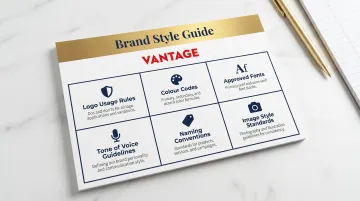
A brand style guide is the single most important tool for enforcing consistency. It should define:
- Logo usage rules - sizing, placement, clear space, acceptable and prohibited variations
- Colour codes - primary and secondary palette with Pantone, CMYK, RGB, and hex values
- Approved fonts - typeface families for headings, body text, and digital use
- Tone of voice guidelines - personality traits, dos and don'ts, example phrases
- Naming conventions - whether to use the full registered name or a shorter DBA name
- Image style standards - photography style, illustration approach, acceptable imagery
This guide should be accessible to all team members, not locked in a designer's files. A well-structured guide also makes onboarding faster — new staff can apply the brand correctly from day one without relying on institutional memory.
Audit All Existing Touchpoints
Conduct a brand audit by systematically reviewing:
- Website pages and content
- Social media profiles (LinkedIn, Facebook, Twitter)
- Printed materials (business cards, letterhead, brochures)
- Digital templates (proposals, agreements, intake forms)
- Email signatures
- Physical environments (reception signage, meeting rooms, office branding)
Compare each touchpoint against your style guide. Identify inconsistencies and prioritise fixing the ones most visible to clients first.
Establish a Brand QA Process
Brand consistency requires ongoing governance, not a one-time fix. Assign a dedicated QA reviewer — or a small team in larger firms — to check outgoing materials before publication or distribution. This matters most when:
- Onboarding new attorneys or staff
- Launching new practice groups
- Releasing new marketing collateral
- Redesigning digital assets
A quarterly review cadence keeps the brand on track — and prevents small deviations from becoming entrenched habits.
How Brand Consistency Drives Business Growth for Law Firms
Client Retention and Referrals
Brand consistency builds the familiarity that underpins loyalty. Clients who have a consistent, positive experience with a firm's brand—from the first Google search to post-matter communication—are more likely to return and refer others. Cross-industry research from Marq shows that consistent brand presentation can increase revenue by up to 33%, with respondents estimating revenue would increase by 10-20% if their brand was fully consistent.
Talent Recruitment and Retention
A coherent, well-defined firm brand isn't just a client-facing asset—it signals to prospective associates and lateral hires what working at the firm is like. In Singapore's intensifying legal market, where over 6,300 practitioners compete and law practices surged 20% between 2020 and 2023, firms with strong internal brand alignment are more attractive employers and more likely to retain top legal talent.
Strategic Positioning in Crowded Markets
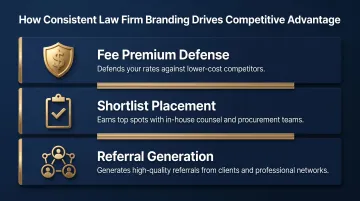
With over 150 foreign law practices operating in Singapore and legal services exports reaching S$1.74 billion in 2024, generic positioning is a severe liability. A distinctive, consistently delivered brand does three things well:
- Defends fee premiums against lower-cost competitors
- Earns shortlist spots with in-house counsel and procurement teams
- Generates referrals from clients and professional networks
Firms that treat brand consistency as a strategic priority — not a cosmetic exercise — are better positioned to compete on value rather than price in an increasingly crowded market.
Frequently Asked Questions
What is the difference between law firm branding and law firm marketing?
Branding is the identity and promise of the firm—what it stands for, how it's perceived, and the experience it delivers. Marketing is the activity used to communicate and promote that identity. Branding drives loyalty and differentiation; marketing drives awareness and leads.
How often should a law firm refresh or update its brand?
There's no fixed schedule. A refresh makes sense after a significant strategic shift (merger, new practice areas, major growth), when the visual identity looks dated, or when a gap opens between how the firm presents itself and how clients actually perceive it.
What are the most common brand consistency mistakes law firms make?
The most frequent pitfalls are using generic "permission-to-play" values that don't differentiate, allowing visual and tone inconsistencies to accumulate across platforms, and failing to align internal culture and service delivery with external brand claims.
Do solo practitioners or small law firms need brand consistency?
Yes—for solo and small firms, brand consistency is even more critical because the attorney IS the brand. A consistent, clear identity helps smaller firms punch above their weight and stand out from larger, better-resourced competitors in crowded markets.
What should a law firm brand style guide include?
A complete style guide covers:
- Logo usage rules and clear space requirements
- Colour codes (Pantone, CMYK, RGB, and hex values)
- Approved typography and hierarchy
- Tone of voice guidelines and firm naming conventions
- Approved imagery styles and adaptation guidance
How does brand consistency affect client trust?
Consistent branding signals professionalism and reliability—two qualities clients need to feel confident hiring a legal representative. Repeated exposure to the same professional identity builds familiarity, and in high-stakes decisions like choosing legal counsel, that familiarity is often what converts a prospect into a client.