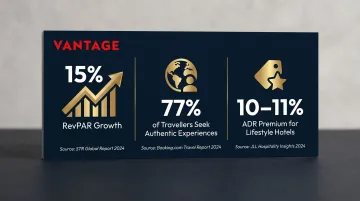
Many hotel owners and developers struggle with a fundamental question: What does it actually take to build a compelling hospitality brand in Vietnam today? The answer lies in understanding that demand has returned, but pricing power has not. Vietnam's hotel RevPAR surged 15% year-over-year in the first seven months of 2024, yet average daily rates remained 3% below prior year levels — indicating that properties without clear differentiation are defaulting to price competition.
This article unpacks what winning hospitality brands in Vietnam are doing differently. Through detailed case studies of Wink Hotels, The Anam, Avana Retreat, and Namia River Retreat, you'll see how cultural specificity, community embeddedness, and coherent brand ideas create competitive moats that international chains cannot easily replicate. You'll also learn five practical branding strategies working in today's market and when rebranding or repositioning makes strategic sense.
TLDR:
- Vietnam ranks #2 in Asia Pacific's hotel pipeline with 49,800 rooms under construction by 2028
- Lifestyle hotels in APAC command a 10-11% ADR premium over generic properties
- 52% of new branded openings in 2022-2023 were conversions, not new builds
- 77% of travellers seek culturally authentic experiences over generic luxury
- Successful brands integrate international standards with local identity, not one or the other
Vietnam's Hospitality Boom: Why Branding Is Now a Competitive Necessity
Vietnam's hotel market is on a strong run. RevPAR grew 15% year-over-year in early 2024, placing Vietnam among Southeast Asia's top performers. Beach destinations like Nha Trang-Cam Ranh and Phu Quoc are seeing 40-50% occupancy rates, and Hanoi and Ho Chi Minh City's average daily rates have surpassed 2019 levels.
But here's the problem: despite strong occupancy recovery, ADR remains 3% below prior year. This gap reveals a critical branding challenge: properties are filling rooms but not commanding premium pricing.
The Supply Wave Intensifies Competition
Vietnam ranks #2 in the Asia Pacific hotel pipeline (excluding China), with 191 projects representing 49,800 rooms under construction through 2028. The total development pipeline across all stages includes 248 projects with 84,079 rooms, concentrated heavily in midscale-to-upscale segments.
This construction boom creates urgency around differentiation. When supply growth outpaces demand recovery, operators without a clear brand identity compete solely on price. That pressure is also accelerating a structural shift already underway.
The Management Agreement Expiry Trigger
Many hotel management agreements signed during Vietnam's first branded hotel development wave (2008–2010) are now nearing expiration. These contracts typically ran 10 to 15 years, leaving developers with a clear decision: renew, switch operators, or rebrand to a higher-tier flag.
This expiry cycle explains why 52% of new branded hotel openings in 2022-2023 were conversions of existing properties rather than new builds. Rebranding has become the primary competitive lever for established properties seeking to reposition in a maturing market.
The Demand Side: Travellers Want Authenticity
Modern guests — both international and domestic — are no longer satisfied with interchangeable luxury. Research from Booking.com shows 77% of travellers actively seek culturally authentic experiences, while 73% want their spending to support local communities.
This preference translates directly to pricing power. JLL research confirms that lifestyle hotels in Asia Pacific command a 10-11% ADR premium over the overall market. Place-based brand positioning is, in other words, a measurable revenue driver — not a marketing afterthought.
International Chains vs. Homegrown Identity: The Central Branding Tension in Vietnam
International hotel brands have played a dominant role in shaping Vietnam's hospitality narrative. They brought distribution power, operational standards, and global recognition. For years, this created a perception that "luxury" in Vietnam had to look and feel like a global template.
The Rise of Vietnamese-Owned Brands
A countermovement is redefining luxury on Vietnamese terms. A growing class of Vietnamese-owned hospitality brands is building identity around cultural heritage, community relationships, and place-based design. For owners and developers, this represents a deliberate positioning choice — one that generic international templates cannot replicate.
Vietnam's hotel market tells a story of accelerating chain influence alongside widening gaps in local representation:
| Metric | Figure |
|---|---|
| International brand affiliation (2013) | <25% of hotel market |
| Projected affiliation within 3 years | ~40% of hotel market |
| Pipeline projects carrying chain brands | ~70% |
| Current operational market aligned with top 8 global operators | 18% |
| Future supply (2024–2030) aligned with global chains | 74% |
The contrast between current operational share (18%) and future pipeline (74%) highlights where the real competition is heading — and where distinctive local brands still have room to establish themselves before that pipeline matures.
The Core Branding Challenge
Hotel owners and developers face a critical decision: when does aligning with an international brand name add genuine market value, and when does it dilute a property's distinctiveness?
Trade-offs to consider:
- Distribution network and global loyalty programs vs. brand authenticity and margin control
- Operational consistency and training infrastructure vs. flexibility to reflect local culture
- Instant market recognition vs. the ability to own a unique positioning
The most successful brands in Vietnam are not choosing between international standards and local identity — they are integrating both.
Who's Driving Demand for Local Brands?
Several audience segments are fuelling demand for locally-rooted hospitality:
- Conscious travellers seeking culturally immersive experiences
- Returning Vietnamese diaspora wanting authentic connection to heritage
- A growing domestic middle class (110 million domestic trips in 2024)
- Design-savvy international guests tired of homogenised luxury
Understanding this audience is the starting point for any credible brand strategy in Vietnam.
Case Studies: What Winning Hospitality Brands in Vietnam Are Doing Differently
Wink Hotels: Brand Strategy as Market Creation
When Vanguard Hotels approached QUO, a Bangkok-based hospitality branding agency, the brief was clear: create a hotel brand that would redefine hospitality in Indochina, not just fill rooms.
The "Indochine 2.0" Concept
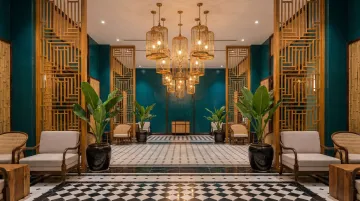
QUO identified Vietnam's cultural momentum — a fast-changing society, entrepreneurial energy, and a blend of tradition and modernity — and turned it into a brand personality rather than just a visual identity. The "Indochine 2.0" concept promised an eclectic cocktail of modernity, innovation, and efficiency, underpinned by traditional Vietnamese values.
End-to-End Brand Development
The engagement included:
- Brand strategy and culture definition
- Naming and tagline development
- Logo and visual identity system
- Tone of voice guidelines
- Video content and website design
- Social media campaign and launch strategy
Each element aligned to one coherent brand idea. The social media photo competition demonstrated that the concept resonated externally, generating significant user engagement and nearly doubling the brand's following before the first property even opened.
Market Validation
In December 2025, six Wink Hotels properties in Vietnam joined Hyatt's Unscripted Collection as the brand's first properties. The Hyatt affiliation signals market confidence in Wink's positioning while maintaining a distinct identity through the collection model — the hybrid strategy at work.
The Anam: Vietnamese Identity as a Competitive Moat
The Anam was deliberately built as a counterpoint to industrialized global hotel chains. Founder Pham Van Hien created a brand that could only be Vietnamese, rooted in the historical "An Nam" name for Central Vietnam during the French Indochina era.
Design as Brand Expression
Every design decision reinforces cultural authenticity:
- Natural ventilation through traditional architecture
- Clay tiles and wooden beams from sustainable forests
- Customised encaustic mosaic tiles and Cham decorative elements
- 250 original oil paintings by Vietnamese artists displayed throughout the property
- Authentic thatched roofs sourced from Binh Thuan
Operational Decisions Strengthen Brand Promise
Sustainability is embedded, not added:
- Total ban on single-use plastics
- Solar power and recycled laundry water
- Eco-friendly wooden key cards from sustainably managed forests
- Locally sourced ingredients
The Strategic Lesson
The Anam earned placement among Asia's top resorts in the Condé Nast Traveler Readers' Choice Awards in both 2020 and 2021 — recognition that reflects something no global chain can easily copy: cultural identity embedded at every touchpoint, not just in the logo or marketing copy.
Avana Retreat and Namia River Retreat: Community as Brand Narrative
Where The Anam drew on historical identity, Avana Retreat and Namia River Retreat took a different route — building their brand stories from the ground up through community collaboration and place-based design.
Avana Retreat: 90% Local Staff, 100% Authentic
Located in Mai Chau, Avana Retreat's 36 bungalows were constructed with guidance from craftsmen representing three minority groups: H'mong, Thai, and Muong. Local artisans taught the retreat how to plaster mud walls, layer palm leaves for thatched roofing, and implement traditional house-building techniques.
90% of Avana's workforce is local. The retreat provides free training, career guidance, and employment opportunities for locals who previously relied solely on rice harvests. This is brand-building through people, not just aesthetics.
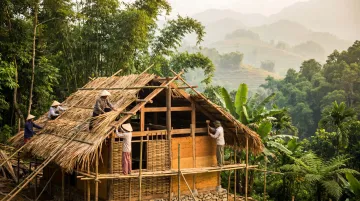
The property won Asia's Leading Retreat at the World Travel Awards 29th anniversary in 2022.
Namia River Retreat: Place-Based Brand Design
Situated on Con Ba Xa ("Three Villages Islet") along the Thu Bon River near Hoi An, Namia's 60 private pool villas were completed in 2025. All furniture is handcrafted within a 50-kilometre radius.
The design centres on three concepts: Craft with Nature (Earth), Life by the River (Water), and Ritual of Light (Light).
Activities include basket boat rides with local fishermen, guided bicycle trails to Tra Que Vegetable Village, and lantern lighting rituals that connect guests to local traditions.
The Branding Insight
Both properties show the same pattern: origin story, design philosophy, staff narrative, and guest experience all expressing the same values. The result is a brand credibility that no ad campaign can shortcut — guests sense the coherence without being told about it.
Five Branding Strategies That Are Working in Vietnam's Hospitality Market
Strategy 1: Lead with a Brand Idea, Not Just a Visual Identity
The strongest Vietnam hospitality brands — Wink, The Anam, Namia — started with a clear conceptual territory before designing a logo. Brand strategy must precede brand identity work, especially in a market where visual copying is common but conceptual differentiation is rare.
Why it matters: A logo can be replicated. A brand idea rooted in cultural insight cannot.
Strategy 2: Use Cultural Specificity as a Positioning Lever
Generic "Vietnamese-inspired" aesthetics — lanterns, lotus motifs, pho — are commodities. Winning brands go deeper:
- Ancient Hue dynasties
- Specific ethnic communities (H'mong, Thai, Muong at Avana)
- Specific craft traditions (handmade furniture within 50km at Namia)
Make specificity the centre of the brand experience, not decoration on the edges.
Strategy 3: Align Brand Promise with Operational Delivery
Operational consistency is what turns a brand promise into a brand reality. Properties in Nha Trang and Phu Quoc that opened post-pandemic and cut prices to build market share created a brand credibility problem — not just a pricing one. When the experience no longer matches the positioning, trust erodes quickly.
Lifestyle hotels command a 10-11% ADR premium because their brand promise is consistently delivered at every touchpoint.
Strategy 4: Activate the Brand Through Community and People
In Vietnam's hospitality context, the people who deliver the experience are brand ambassadors, not just staff.
Brands that invest in local talent development create differentiation that appears in every guest interaction:
- Avana's free training for ethnic minority employees
- Namia's pride in local guides and craftspeople
- The Anam's commissioning of Vietnamese artists
The result is authentic differentiation — the kind that shows up in guest reviews, repeat bookings, and referrals that no paid campaign can replicate.
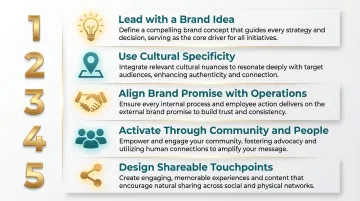
Strategy 5: Design Brand Touchpoints for the Shareable Moment
Wink Hotels' "Indochine 2.0" concept gave guests and followers a visual and conceptual vocabulary to share. In a market where 57% of travellers are becoming comfortable booking via social media, and consumers are 2.4x more likely to view user-generated content as authentic, the brand must give guests something they actively want to share — a concept, an aesthetic, or a story that travels beyond the property itself.
The Rebranding Wave: When and How Hotels Are Repositioning
Why Management Agreements Are Forcing Brand Decisions Now
Hotel management agreements signed during Vietnam's 2008-2010 development wave are expiring, creating decision points for developers. In 2022-2023, 52% of new branded hotel openings (midscale and above) were conversions of existing properties rather than new builds. By 2024, an estimated 30% of new branded openings were conversion properties.
This is the highest conversion ratio in recent history — and it signals that brand strategy has become the defining competitive decision for Vietnam's hotel market.
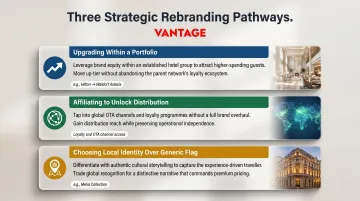
Three Common Rebranding Scenarios
Scenario 1: Upgrading Within a Portfolio
As markets mature, properties convert to premium brands within the same operator's portfolio.
Example: Hilton Hanoi Opera transitioning to Waldorf Astoria Hanoi, with the 265-room property undergoing complete renovation to become a 187-key ultra-luxury flagship.
Scenario 2: Affiliating to Unlock Distribution
Independent or stalled projects bring in an international brand to access global distribution, loyalty programmes, and operational infrastructure — shortcutting years of market-building that a standalone property would otherwise face.
Scenario 3: Choosing Local Identity Over a Generic Flag
Properties move away from generic brand flags toward locally-rooted positioning.
Example: Melia Ba Vi Mountain Retreat rebranding to Melia Ba Vi Mountain, Member of Melia Collection — maintaining affiliation while gaining positioning flexibility.
The Risk: Rebranding Without Strategy
Changing a hotel's flag or logo without revisiting the underlying brand strategy — the audience, the promise, the experience design, the culture — rarely improves performance. The brand work must go deeper than the sign above the door.
Building a Future-Ready Hospitality Brand in Vietnam
Vietnam's hospitality market is at an inflection point. The country ranks second in the Asia Pacific hotel pipeline with close to 50,000 rooms under construction by 2028. The ultra-luxury segment is doubling from its current base of seven properties, with six branded residence projects under development including Nobu Residences Da Nang and Mandarin Oriental Residences.
International arrivals are estimated at 21.5 million for 2025, with official targets of 25 million by 2026. Domestic travel reached 110 million trips in 2024, with high-growth scenarios targeting 150 million trips by 2026.
The window for establishing a distinctive brand position is narrowing fast — and brand strategy needs to be a pre-development priority, not a post-construction afterthought.
Properties that win in Vietnam's next phase will:
- Integrate international standards with deep local identity
- Build community directly into their brand narrative
- Design every touchpoint around a coherent, culturally grounded promise
For hospitality businesses in Vietnam and across Asia, Vantage Branding provides an insight-led approach across brand strategy, identity development, and brand communications. Reach the team at +65 6698 9257 or hello@vantagebranding.com.sg to discuss what a strong brand foundation could do for your property.
Frequently Asked Questions
What makes hospitality branding in Vietnam different from other markets?
Vietnam's unique cultural diversity, the coexistence of rapid modernization with deep heritage, and high guest sensitivity to authenticity make brand specificity and cultural grounding more important here than in homogenised markets. Both domestic and international travellers can detect generic "Vietnamese" aesthetics instantly.
When should a hotel in Vietnam consider rebranding or repositioning?
Three key triggers: expiring management agreements (typically 10-15 years), underperformance relative to competitive set (especially on ADR or RevPAR), and a significant mismatch between current positioning and the guest segment driving demand in the destination.
How do homegrown Vietnamese hospitality brands compete with international chains?
The most successful homegrown brands compete not on distribution scale but on depth of identity — cultural specificity, community embeddedness, and experiential authenticity that global chains structurally cannot replicate at a local level. This often translates to a 10-11% ADR premium.
What role does brand strategy play before a hotel opens in Vietnam?
Pre-opening brand strategy defines the audience, positioning, experience design brief, and communications platform — shaping construction decisions, FF&E choices, pricing strategy, and talent recruitment. Leaving it until after construction means revisiting costly decisions that were already made without a brand lens.
What is the "Indochine 2.0" concept and what can other brands learn from it?
"Indochine 2.0" was the brand territory developed for Wink Hotels, capturing Vietnam's cultural evolution as a brand idea rather than just a visual treatment. The takeaway for other brands: identity rooted in a culturally specific, forward-looking concept will outlast surface-level regional aesthetics.
How important is sustainability to hospitality branding in Vietnam?
Sustainability is now a brand expectation rather than a differentiator, particularly among international travellers and younger domestic guests. Brands like The Anam, Avana Retreat, and Namia River Retreat demonstrate that environmental and social commitments embedded in the brand story — not bolted on — strengthen guest loyalty and earned media.