It requires a powerful, coherent brand.
This article examines three Singapore hospitality branding success stories—a luxury heritage hotel, a boutique lifestyle property, and a multi-experience destination—and extracts the branding strategies that drove their market position, guest loyalty, and long-term growth.
TLDR:
- Raffles Singapore built a timeless luxury brand by anchoring emotional storytelling in colonial heritage and cultural icons
- The Warehouse Hotel owns a niche position through singular narrative consistency across every guest touchpoint
- Sentosa balances diverse experiences under a unified brand platform that resonates locally and internationally
- Strong hospitality brands are defined by clear identity, distinctive narrative, and consistent communication—not just facilities
What Makes Hospitality Branding Unique in Singapore
Singapore's multicultural identity, dense urban landscape, and role as a global travel hub create branding challenges unlike most markets. Hospitality brands must resonate simultaneously with international visitors seeking iconic experiences and local residents who treat the city as home, not a backdrop for tourism.
The market pressures are intense:
- Competition from globally recognised hotel chains with established brand equity and loyalty programmes
- Rising guest expectations for personalised, culturally meaningful experiences that go beyond transactional service
- The shift toward experience-driven travel, where 62% of travel decision-makers who personalise experiences report improved customer outcomes
- A luxury hospitality segment projected to grow at 6% annually—faster than any other hotel class
These pressures make one thing clear: competing on amenities alone is not enough. The brands that hold their ground do so through a clearly defined identity.
Branding vs. Marketing: The Foundation Difference
Many hospitality businesses conflate branding with marketing. They invest in social media campaigns, influencer partnerships, and seasonal promotions without first defining who they are.
Brand strategy shapes identity: who you are, what you stand for, and where you sit in the market. Marketing communicates that identity through campaigns, content, and channels. Without a clear brand foundation, marketing becomes expensive noise — inconsistent and easy to ignore.
The most successful Singapore hospitality brands built their marketing on a clearly defined brand strategy first. This foundation gives them:
- Emotional positioning: guests understand how a stay will feel, not just what it includes
- Consistent touchpoints: from physical signage to service scripts and social content, the brand speaks with one voice
- Genuine differentiation: a brand story rooted in specific values and cultural context that larger chains struggle to copy
Case Study 1: Raffles Singapore — How a Heritage Brand Stays Timeless
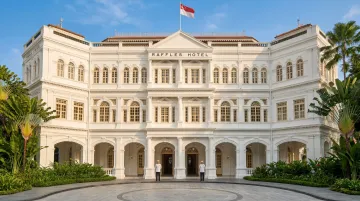
Raffles Hotel Singapore opened in December 1887, founded by the Armenian Sarkies Brothers. Over 137 years, it has become one of the world's most recognisable hotel brands and today operates as a designated national monument under Accor's Raffles Hotels & Resorts.
The hotel occupies an entire city block with 115 suites across nine categories, seven restaurants, an arcade of luxury retail, and the legendary Long Bar. But its brand equity isn't built on physical assets alone. Raffles sits at the intersection of colonial history, literary legend, and Singaporean national identity, and this heritage forms the backbone of its brand.
Emotional Storytelling and Cultural Symbolism
The hotel's brand ethos —"At Raffles, guests arrive as residents, leave as friends and return as family"— positions every stay as a relational experience rather than a transaction. The framing creates premium brand perception and justifies pricing well above market averages.
Tangible cultural icons make that narrative concrete and shareable:
- The Singapore Sling cocktail and the Long Bar serve as tangible, shareable touchpoints that guests photograph and discuss
- Uniformed doormen and preserved colonial architecture evoke prestige and continuity with the past
- Literary associations (Joseph Conrad, Rudyard Kipling, Somerset Maugham all stayed here) anchor the brand in cultural mythology
Together, these elements make the brand inseparable from Singapore's identity — something no competitor can replicate.
Heritage Meets Contemporary Relevance
In 2019, Raffles completed a three-phased restoration that began in February 2017. The project introduced contemporary dining concepts helmed by chefs Anne-Sophie Pic, Alain Ducasse, and Jereme Leung, alongside redesigned suites and a refreshed Long Bar.
The strategic branding decision: preserve the historical fabric while updating the guest experience for modern luxury expectations. Jeannette Ho, Vice President of Raffles Brand and Strategic Relationships, described the objective as "faithful to its roots, Raffles Hotel Singapore reinvents emotional luxury."
This "heritage-forward, experience-current" approach offers a clear branding lesson. Heritage becomes a genuine asset when:
- It's consistently communicated across operations (Raffles keeps "heritage at the heart of all operations to ensure storytelling always comes to the forefront")
- It's paired with service innovation that meets current expectations
- It generates trust and word-of-mouth that paid advertising cannot replicate
- It gives guests a reason to return that goes beyond price or convenience
Recognition validates the strategy: Raffles Singapore holds a Forbes Travel Guide Five-Star rating — the highest tier — and is described by Forbes as "a Singapore legend."
Case Study 2: The Warehouse Hotel — Brand Narrative as Architecture
The Warehouse Hotel opened in January 2017 at 320 Havelock Road, Robertson Quay, in a carefully restored 1895 godown (warehouse) originally used for Singapore River trade. The 37-room boutique property is 100% owned, operated, and designed by Singaporeans through The Lo & Behold Group.
Where Raffles inherited its story over a century, The Warehouse Hotel constructed its brand identity from scratch — anchoring every decision to a single source: the warehouse, the river, and the trade era that shaped them both.
Branding Strategy: A Single Founding Story, Told Consistently
Every aspect of The Warehouse Hotel draws from the same source narrative: the warehouse, the river, and the trade era.
Design by Asylum Singapore reflects "sophisticated industrial cool":
- Exposed steel trusses with hanging pulleys reference the building's warehouse past
- A rooftop glass-sided lap pool with pink tiles mimics the colour palette of traditional Singaporean kopitiams (coffee shops)
- The "Minibar of Vices" curates local products into categories like Gluttony (Irvin's Salted Egg Chips) and Lust (Hedonist brand items)
F&B reinforces the same story:
- Po, by chef Willin Low, serves elevated modern Singaporean staples
- The Warehouse Lobby Bar offers heritage cocktails inspired by the region's spice routes and trade history
Managing partner Wee Teng Wen described the Singapore market as "missing a portal to local culture. One with depth and soul that still feels like it has a cohesive point of view." The Warehouse Hotel was designed to fill that gap through integrated storytelling woven into every guest touchpoint, from the architecture down to the minibar.
Branding Strategy: Owning a Niche Position in a Crowded Market
Instead of competing with large luxury chains on scale or amenities, The Warehouse Hotel competes on brand depth and singularity.
The positioning is boutique luxury for travellers seeking Singapore's hidden history. The service philosophy is "intuitive and informal"—deliberately departing from scripted luxury service to create authentic, memory-driven experiences.
That approach earned industry recognition quickly:
- Conde Nast Traveler Hot List 2018 and Readers' Choice Awards 2018
- AHEAD Asia 2018: Hotel of the Year among three awards
- Member of Design Hotels, signalling global recognition in the boutique luxury segment
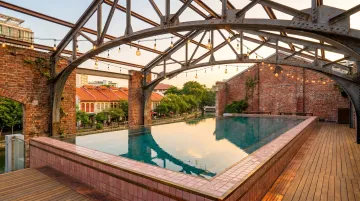
Conde Nast Traveler's verdict: "It's a tour de force by a team of Singaporean backers, designers, chefs and more—this is luxe local at its best."
The Warehouse Hotel's success points to something more transferable than heritage: a brand built around a specific, ownable story — one that competitors cannot copy because it belongs entirely to that place, that building, and that moment in Singapore's history.
Case Study 3: Sentosa Island — Destination Branding for a Diverse Audience
Sentosa Island is Singapore's integrated leisure destination — home to beach clubs, luxury resorts, Universal Studios, and cultural attractions spread across 500 hectares. In FY2024/2025, the island welcomed 16.9 million visitors (up 1.2% year-on-year) and achieved a 96% guest satisfaction score.
The branding challenge is distinctive. How do you market a destination serving families, luxury travellers, MICE visitors, and thrill-seekers — all under one cohesive brand — without the identity feeling pulled in every direction?
Branding Strategy: A Unified Brand Platform Across Diverse Experiences
In January 2023, Sentosa unveiled its current brand tagline "Where Discovery Never Ends", positioning the island as a place for ongoing exploration. In October 2025, the brand evolved further with the campaign "Discover your element in ours", anchored in an understanding of nature's restorative effect on wellbeing.
The positioning shifted from attractions-driven messaging to sensory and emotional reconnection. The campaign invites guests to engage with five natural elements — sand, water, sun, nature, and biodiversity — and frames Sentosa as "the antidote to Singapore's always-on work culture" and "Singapore's most accessible island sanctuary."
This overarching brand platform ties together wildly different experiences — from rollercoasters to high-end spas — without the identity feeling fragmented. The platform acts as a governing layer: sub-brands and individual attractions retain their own character, but all communicate back to the same emotional core.

The 2023 visual identity refresh drew from the island's "many unexpected sights, sounds, and experiences," establishing a consistent design system and tone of voice across all sub-brands and communications.
Branding Strategy: Community and Local Relevance as Brand Equity
That brand platform also had to work locally — not just for international visitors. Sentosa invested in making the island relevant to Singapore residents as an everyday leisure escape, generating year-round presence and organic word-of-mouth.
The "Sentosa Night Mode" campaign increased evening visitorship by 14%, and average visitor dwell time rose by one hour — evidence that strategic brand campaigns drive measurable behaviour change.
Chris Pok, Divisional Director of Marketing & Guest Experience at Sentosa Development Corporation, explained the positioning: "This is not wellness tourism in the sense of spa treatments and yoga retreats... It's about making restoration part of everyday life."
By targeting "a time-stretched, hyperconnected generation" of both international visitors and local residents, Sentosa built a brand that feels personally relevant to multiple audience segments without diluting its core identity.
Vantage Branding has partnered with Sentosa, contributing brand strategy expertise to help the destination articulate its identity across its many touchpoints — a fitting example of how destination brands with diverse audiences benefit from structured strategic support.
Branding Lessons Every Singapore Hospitality Business Can Apply
The common thread across Raffles Singapore, The Warehouse Hotel, and Sentosa is clear: the most successful hospitality brands are not defined by their facilities alone. They are built on a clear identity, a distinctive narrative, and consistent delivery of that story across every guest touchpoint—from signage to service scripts to social media.
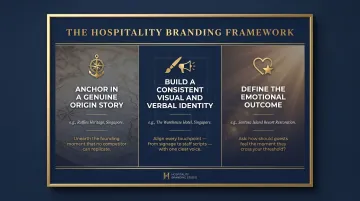
Three Core Branding Pillars
1. Anchor in a Genuine Origin Story
Raffles anchors in colonial heritage and literary mythology. The Warehouse Hotel draws from its 1895 godown past and Singapore River trade. Sentosa positions around natural elements and restorative escape. None rely on generic luxury language or copycat positioning.
Your actionable step: Identify the unique origin, history, or mission of your property. What story can only you tell?
2. Build a Visual and Verbal Identity That Reinforces It
The Warehouse Hotel's industrial design details, Raffles' colonial architecture and uniformed doormen, Sentosa's sensory-led campaign language—each reinforces the same narrative repeatedly across every guest interaction.
Your actionable step: Audit every guest touchpoint (website, signage, service language, F&B menus, social media) for consistency. Do they all tell the same story in the same voice?
3. Define the Emotional Outcome You're Promising
Raffles promises transformation ("arrive as residents, leave as friends"). The Warehouse Hotel offers a portal to authentic local culture. Sentosa provides restorative reconnection with nature. Each goes beyond functional benefits to emotional outcomes.
Your actionable step: Define the emotional outcome your guests will experience. How should they feel during and after their stay?
When to Work with a Professional Branding Agency
Consider engaging a branding agency when:
- Launching a new property and need to define positioning and identity from the ground up
- Repositioning after a renovation to align brand perception with updated facilities and service
- Expanding to new markets where current brand messaging may not resonate
- Guest feedback suggests the brand is being misread or undervalued, despite strong product quality
Vantage Branding works with hospitality and destination brands across Singapore and Asia on brand strategy, identity, and communications. The goal is straightforward: ensure your brand foundation is as compelling as the experience you deliver.
Frequently Asked Questions
What is hospitality branding and why does it matter?
Hospitality branding is the strategic process of defining and communicating a property's identity, values, and promise to guests. It shapes every interaction—from website copy to service tone—creating the consistent identity that makes every marketing effort work harder and drives loyalty, premium pricing, and referrals.
How do Singapore hospitality brands compete with global chains?
Local brands win by offering what global chains cannot: an authentic, place-specific identity rooted in Singapore's culture, history, or neighbourhood character. Strong branding makes this differentiation tangible, communicable, and emotionally compelling to guests seeking unique experiences.
What are the key elements of a hospitality brand identity?
Core components include brand positioning (how you're different), brand story (your origin and purpose), visual identity (logo, colour, typography), verbal identity (tone, naming), and guest experience design that brings all elements together consistently.
How important is storytelling in hospitality branding?
Storytelling is central because guests are buying an experience and an emotion, not just a bed or a meal. Brands with a clear, compelling story command higher rates, stronger loyalty, and more organic referrals than those competing on features alone.
When should a hospitality business consider rebranding?
Consider rebranding when:
- A major renovation changes your product and positioning
- You're entering a new market or targeting a different guest segment
- Your current brand no longer reflects your service quality
- Guest acquisition or retention is declining despite strong product delivery
How long does it take to build a recognisable hospitality brand in Singapore?
Brand recognition is built over years of consistent communication and guest experiences. However, a clear brand strategy and identity system can be developed in months—and starting with the right foundation accelerates every subsequent marketing effort and guest interaction.