Introduction
Today's customer journey begins on a screen. Whether you're a B2B services firm in Singapore, a healthcare provider across Southeast Asia, or a government agency engaging citizens, your audience encounters your brand first through LinkedIn feeds, Google search results, Instagram posts, and website visits—long before any in-person interaction.
This shift has fundamentally changed what "branding" means for businesses. 75% of B2B buyers prefer a rep-free sales experience, researching and evaluating vendors entirely through digital channels before engaging a salesperson. On the consumer side, 65% of people research products online even when they intend to buy in-store.
Yet many businesses still treat their digital presence as an afterthought—uploading an existing logo to social media profiles, building a website around print-designed assets, and wondering why their brand doesn't land with the same impact online.
That gap is costing businesses trust, recognition, and revenue. In markets where audiences form brand judgements in milliseconds, inconsistent or unconsidered digital execution leaves real money on the table.
Here's what you need to know to get it right.
TLDR:
- Digital-first branding designs brand identity specifically for digital platforms—not print assets adapted for screens
- 88% of consumers cite trust as a deal-breaker when buying—your digital presence shapes that trust in seconds
- Core elements include responsive visual identity, platform-consistent design, website as brand flagship, and strategic social media presence
- Mobile accounts for 62.5% of global web traffic—designing for desktop first is no longer viable
- Start with brand strategy before design execution to ensure digital assets reflect clear positioning
What Is Digital-First Branding? (And What It Isn't)
Digital-first branding is the practice of designing and building a brand identity with digital platforms as the primary environment—not adapting print-based branding for screens after the fact. Every brand element (logo, colour, typography, messaging) is conceived for how it performs on mobile, social media, and web contexts first.
Digital-First vs. Digital Marketing
Digital marketing promotes specific products or campaigns online through channels like paid ads, email sequences, and social media posts. Digital-first branding defines the underlying personality, values, and visual language of the entire company in a digital context. In short: one is a campaign tool, the other is the foundation everything else is built on.
More Than "Being Online"
Having a website or social media profile doesn't make a brand digital-first. True digital-first branding means:
- Strategic design for screen readability — logos that remain recognisable at 16×16 favicon size
- Platform adaptability — visual systems that work consistently across LinkedIn headers, Instagram stories, and email signatures
- Interactive engagement — messaging and voice designed for how people actually read and interact online
The "Digitising" Trap
Many businesses take a traditional print-designed brand and attempt to digitise it—uploading a CMYK logo to the web, using print-optimised fonts that lack web licensing, or applying colour palettes that look flat on screens. The result: logos that shrink poorly, inconsistent colour rendering across devices, and messaging that falls flat across platforms. Digital-first thinking starts with the digital environment—then builds outward.
Not Just for Tech Companies
Digital-first branding isn't exclusively for startups or technology firms. Organisations in healthcare, government, food and beverage, and B2B industries require digital-first approaches because their audiences discover and evaluate them online first—whether that's a patient researching treatment options, a procurement officer vetting suppliers, or a family selecting aged care services.
Why Digital-First Branding Is Essential for Businesses Today
Digital Discovery Is the New First Impression
In Singapore, 95.8% of the population uses the internet—5.61 million internet users out of 5.85 million people. Across Southeast Asia, the digital economy reached $263 billion in 2024, growing 15% year-on-year. Your digital brand impression is now the first and most critical brand impression for the vast majority of your potential customers.
86% of consumers say online sources help them make more informed decisions about what they're buying. For B2B buyers, the shift is even more pronounced—64% prefer a fully digital buying experience when they're already familiar with a product category.
Trust Formed in Milliseconds
On digital platforms, audiences make snap judgments about your brand's credibility within seconds. Research shows that visual appeal of a website can be assessed within 50 milliseconds. An inconsistent or poorly adapted digital presence signals untrustworthiness before a visitor reads a single word.
88% of consumers say "I trust it" is an important or deal-breaker factor when deciding which brands to buy from—tying with quality and value as the top three purchase considerations. Critically, 70% say their own experience using products, customer service, and websites most influences their brand opinion before purchase. Every digital touchpoint is a trust decision.
Competitive Pressure in Digitally Mature Markets
In Singapore, 88.2% of the population uses social media (5.16 million users) and mobile connections exceed the population at 179%. Audiences here have exceptionally high standards for digital brand experiences.
With 95.1% of SMEs having adopted digital solutions, a substandard digital presence doesn't just look dated—it immediately places you behind competitors who have invested in theirs.
Data-Driven Refinement
Unlike traditional offline branding, a digital-first brand can be continuously tested, measured, and refined. Real-time analytics give you visibility across:
- Website behaviour and user journey mapping
- Social engagement and content performance
- Conversion rates and drop-off points
- Page load times and technical experience signals
This feedback loop lets brands evolve based on what audiences actually do—not just what periodic research or intuition suggests.
The Core Elements of a Digital-First Brand
A digital-first brand is a system, not a collection of individual assets. The following building blocks must work cohesively to create a brand that performs across digital contexts.
Responsive Visual Identity
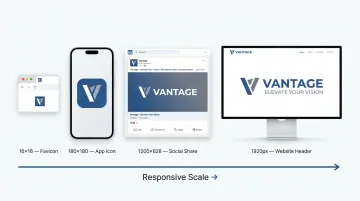
A digital-first logo and visual identity must be designed to scale and adapt across contexts:
- 16×16 favicon for browser tabs
- 180×180 app icon for mobile devices
- 1200×628 social share image for LinkedIn and Facebook
- Full-screen website header at 1920px+ width
Responsive logo systems include simplified versions for small displays—removing taglines, simplifying icon details, or using monogram variations when the full lockup becomes illegible. Colour choices must account for screen rendering (RGB/HEX values), not just print output (CMYK)—backlit displays shift perceived colour in ways print specifications won't capture.
Brand Voice and Messaging for Digital Channels
Digital-first branding requires a tone and messaging architecture suited to how people read online: quickly, on mobile, and in short bursts. Brand voice must be:
- Consistent across platforms — same personality on your website, social captions, email, and ad copy
- Adapted in register — professional on LinkedIn, visual and concise on Instagram
- Scannable — clear headlines, short paragraphs, and bulleted lists throughout
Platform Consistency Across Touchpoints
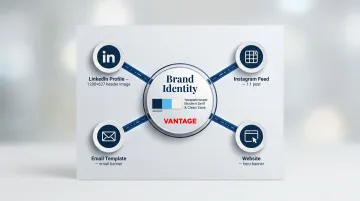
Consistency across digital touchpoints — website, LinkedIn, Instagram, email, mobile apps — drives recognition and recall. Every interaction should feel like the same brand, regardless of format.
Key consistency factors:
- Colour usage and hex values matched precisely
- Typography systems with web-licensed fonts
- Logo placement and sizing guidelines
- Messaging tone and terminology
- Visual templates for social content
Website as Brand Flagship
In a digital-first approach, the website is the core brand expression—not a secondary marketing tool. Visual hierarchy, UX design, navigation structure, and page speed all contribute to how the brand is perceived and experienced.
Why this matters:
- 70% of consumers say their own experience using a website most influences brand opinion
- A 0.1-second improvement in site speed can increase conversions by 8.4% for retail sites
- 40% of visitors leave if a website takes more than 3 seconds to load
A well-branded, well-structured website also supports better search visibility through improved user experience signals, longer session times, and lower bounce rates—all factors in search rankings.
Social Media as Active Brand Real Estate
Social media profiles now serve as brand storefronts, not just publishing channels. Consistent visual templates, colour usage, and content tone across platforms like LinkedIn and Instagram build brand familiarity over time.
Strategic approach:
- Develop branded content templates for posts, stories, and video content
- Maintain consistent profile imagery (logo, cover photos, highlights)
- Use platform-appropriate formats while maintaining brand voice
- Convert social visibility into a genuine conversion asset through recognisable, trustworthy presence
How Digital-First Branding Drives Real Business Results
Trust Converts to Revenue
Digital-first branding connects directly to business outcomes. Increased trust leads to higher conversion rates, stronger recall shortens the buyer decision cycle, and consistency across platforms builds the brand familiarity that drives repeat engagement.
According to widely cited industry research, consistent brand presentation can increase revenue by up to 23–33%.
More importantly, 88% of consumers say trust is a deal-breaker when choosing brands—and your digital presence is where that trust is formed or broken.
Lead Generation and Loyalty
That trust compounds over time. When audiences repeatedly encounter consistent brand visuals and messaging across platforms, they're more likely to engage, convert, and come back.
Why consistency matters:
- Builds brand familiarity through repeated exposure
- Reduces cognitive load when audiences encounter your brand
- Signals professionalism and reliability
- Creates memorable brand associations
Scalability Across Markets
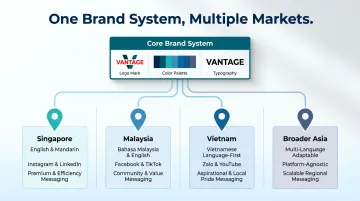
A well-built digital-first brand is inherently more scalable. It can be adapted for new regional markets, platforms, or product lines without starting from scratch, because the core brand system is built to be flexible and platform-agnostic.
For businesses expanding from Singapore to Malaysia, Vietnam, or broader Asian markets, a digital-first brand provides:
- Consistent brand experience across geographies
- Adaptable messaging frameworks for local languages
- Digital assets ready for regional platform preferences
- Centralized brand guidelines that scale across teams
Common Mistakes to Avoid When Going Digital-First
Treating It as a Visual Refresh Only
Many businesses think digital-first branding means getting a new logo or updating social media templates. Without the underlying brand strategy—positioning, values, voice, audience insights—visual changes alone rarely create lasting impact.
A solid digital-first strategy covers:
- Clear brand positioning that differentiates you from competitors
- Deep understanding of target audience needs and behaviours
- Messaging architecture that supports consistent communications
- Strategic rationale for visual decisions
Visual expression is where strategy becomes visible—not where it gets replaced.
Inconsistency Across Platforms
Once strategy is in place, execution consistency becomes the next test. Using different colour shades, logo versions, or messaging tones across LinkedIn, your website, and email erodes brand recognition. Inconsistency signals a lack of professionalism and confuses audiences who encounter your brand across multiple channels.
Watch for these common slip-ups:
- Logo files in different colour values (RGB vs CMYK conversions)
- Different taglines or positioning statements on different platforms
- Varying typography choices across website and social media
- Inconsistent tone—formal on the website, casual on Instagram—without strategic intent
Designing for Desktop and Ignoring Mobile
Inconsistent platforms are one problem; an entirely overlooked platform is another. Mobile accounts for 62.5% of global web traffic, and in Asia specifically, mobile represents 58.94% of web traffic. A brand that looks polished on desktop but breaks down on mobile is not truly digital-first.
At minimum, your brand needs:
- Responsive logo that remains legible at small sizes
- Touch-friendly navigation and interactive elements
- Fast page load times on mobile networks
- Content formatted for vertical scrolling
The stakes are measurable: mobile users are 5× more likely to abandon a task if the site isn't optimised for mobile, and as load time climbs from 1 second to 10 seconds, the probability of a visitor bouncing increases by 123%.
Building Your Digital-First Brand Strategy: A Practical Starting Point
Strategic Framework
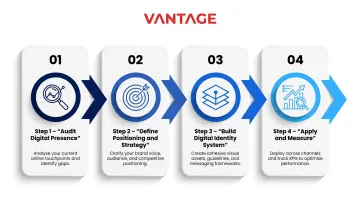
Getting started with digital-first branding requires a structured approach:
- Audit your current digital presence across all touchpoints—website, social profiles, email templates, digital advertising
- Define your brand positioning, audience, and core values before touching design—this is the strategic foundation
- **Build a digital brand identity system** with responsive assets designed for screen performance
- Apply it consistently and measure engagement data to inform ongoing refinement
Start With Strategy, Not Design
The most common reason digital-first branding projects fail is rushing to visual execution before the strategic foundation is established. Positioning, purpose, and target audience clarity must come first.
Strategic questions to answer:
- Who are we as a brand, and what do we stand for?
- Who are we serving, and what do they need from us?
- How are we different from competitors in ways that matter to our audience?
- What brand personality and voice will resonate with our target market?
These questions take time to work through, and the answers don't always come easily. That's where an experienced branding partner makes a meaningful difference.
Working With a Branding Partner
For businesses that want their digital-first brand built on a solid strategic foundation, working with an experienced branding partner can accelerate the process significantly.
Vantage Branding takes a research-grounded approach to brand strategy—working across healthcare, government, B2B, and retail—to provide both the strategic clarity and creative execution needed to build brands that perform in digital environments.
Clients including Enterprise Singapore, MPA, Jurong Health, and Allium Healthcare have used this process to build brands with clear digital positioning and consistent audience engagement. To explore how this applies to your industry, reach out to Vantage Branding at +65 6698 9257 or hello@vantagebranding.com.sg.
Frequently Asked Questions
What is digital-first branding?
Digital-first branding is the practice of designing a brand identity with digital platforms as the primary environment, ensuring every brand element (logo, colour, typography, messaging) performs well on screens, social media, and web before any other medium.
What is a digital-first agency?
A digital-first agency prioritizes digital platforms, data, and user experience in their creative and strategic process. They design brands and campaigns for how modern audiences discover and engage with businesses online, rather than adapting traditional approaches for digital channels.
What is the difference between digital branding and digital marketing?
Digital marketing promotes specific products, services, or campaigns through online channels like paid ads and social media. Digital branding defines the underlying personality, visual identity, and values of a company as expressed across digital platforms. It is the strategic foundation that shapes all marketing activity.
What are the key elements of a digital-first visual identity?
The core components include a responsive logo system that scales across sizes, a screen-optimised colour palette and typography, consistent visual templates for social media platforms, and a cohesive website design that reflects the brand across all digital touchpoints.
Is digital-first branding only relevant for tech companies?
No. Digital-first branding applies to any business whose audiences discover and evaluate them online—including healthcare, government, B2B, retail, and hospitality. Digital is now the primary channel of first impressions across all industries, not just technology.
How do I know if my brand needs a digital-first refresh?
Common signs include inconsistent visuals across platforms, a logo that doesn't scale on mobile, or outdated messaging that no longer reflects your positioning. A drop in digital engagement—or a brand originally built for print—are strong signals that a refresh is overdue.