Introduction
Singapore's compact market presents a unique paradox: 358,300 enterprises compete for mindshare among just 6.11 million people. In this hyper-dense environment, brands attempting to appeal to everyone compete against well-resourced incumbents across every channel. Brands that narrow their focus consistently outgrow those trying to reach everyone.
Generic mass-market branding struggles in Singapore's multicultural, digitally sophisticated landscape. With 96.92% internet penetration and a GDP per capita of US$90,674, consumers here are both reachable and discerning.
They reward specialists over generalists — particularly in tight-knit communities where 88% trust personal recommendations above all else.
This article covers how to define a commercially viable niche, build a distinctive brand identity, and apply branding strategies suited to Singapore's unique market dynamics.
TLDR:
- Singapore's market density makes niche positioning essential—one enterprise per 17 residents
- Micro-influencers deliver 4.2% engagement vs. 1.9% for macro-influencers
- B2B decision-makers trust thought leadership over marketing by 73%
- Long-tail keywords convert 4+ percentage points higher than broad terms
- Brand communities drive 66% retention impact
What Is Niche Market Branding (and Why It Matters in Singapore)
Niche marketing and niche branding serve different functions: marketing reaches your audience, branding shapes how they perceive and remember you. In niche markets, brand identity often matters more than advertising spend because your audience is small, interconnected, and heavily influenced by word-of-mouth.
Several conditions specific to Singapore make brand identity especially consequential for niche players:
- 358,300 enterprises competing across 728 square kilometres create intense visibility battles in every sector
- 96.92% internet penetration means marketing messages hit saturation fast — differentiation is essential
- High GDP per capita produces consumers willing to pay premiums for genuine specialist expertise
- 63.1% of Singaporeans use social media for brand research, so reputation spreads quickly in tight-knit niche communities
These conditions create genuine openings for brands that commit to a clearly defined audience. Singapore's most active niche markets include:
- Eldercare: 20.7% of citizens are now 65+, driving demand for specialised aged care brands
- Sustainability: Green Plan 2030 targets are generating 5,000+ green economy roles and a new class of environmental businesses
- B2B Professional Services: With 3+ million LinkedIn users, Singapore is a hub for specialist consultancies
- Arts & Culture: Cultural institutions attract passionate, values-driven audiences who form strong brand loyalties
- Specialty F&B: Premium food service is projected to reach US$87.12 billion by 2033
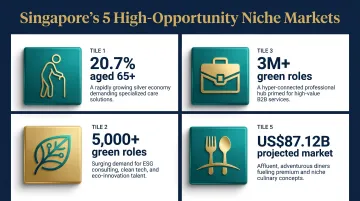
What unites them is straightforward: each serves a specific audience with needs that mainstream brands ignore. That gap is exactly where strong niche branding creates its advantage.
How to Define and Validate Your Niche in Singapore's Market
Start by mapping your strengths against market gaps. Identify what you do exceptionally well, then use customer feedback, online forums, and competitor analysis to find underserved segments. The sweet spot sits at the intersection of your expertise and audience needs that competitors ignore.
Singapore-specific validation tools:
| Tool | Purpose |
|---|---|
| Google Trends (Singapore) | Validate search demand by region |
| SingStat Table Builder | Access demographic and enterprise data |
| Enterprise Singapore Industries | Research sector trends and growth areas |
| SEMrush/Ahrefs (SG filter) | Analyse local keyword competition |
Assess niche profitability using the "not too wide, not too narrow" principle. Your niche should be large enough to generate revenue but specific enough to avoid direct mass-market competition. For example, "wellness brands" is too broad; "mental wellness platforms for working professionals" defines a defensible position.
Validate commercial viability by checking:
- Search volume for niche-specific terms in Singapore
- Existence of profitable competitors with clear market gaps
- Willingness to pay (confirmed through customer conversations)
Segmenting Beyond Demographics
Once you have validated commercial viability, the next question is who, exactly, you are targeting. Age and income brackets only go so far. In Singapore's multicultural context, psychographics (values, lifestyle, motivations) and behavioural data (purchase patterns, platform usage) reveal the sharper distinctions that actually drive buying decisions.
Example: A brand targeting "wellness-focused working adults aged 30-45" differs sharply from one targeting "eco-conscious parents aged 30-45"—even though both serve health markets.
Four questions to sharpen your niche:
- Who needs our offer most — not just who could use it?
- What problem do we solve better than anyone else in this space?
- Which segment is currently underserved by existing competitors?
- Can we realistically become the obvious choice for this specific audience?
According to Harvard Business Review research, true segmentation identifies "customers whose behaviour can be changed or whose needs are not being met"—not just demographic categories.
Building a Niche Brand Identity That Resonates
Niche brand identity goes beyond a logo or tagline. It must reflect genuine knowledge of your audience's world — their language, cultural references, and pain points. In Singapore's multicultural context, that means identifying which communities your niche spans (Chinese, Malay, Indian, expat) and letting that understanding shape every brand decision.
Core components of niche brand identity:
- A name and naming convention that signals category expertise immediately
- Visual identity (logo, colour palette, typography) that feels purpose-built for your audience
- A tone of voice that mirrors how your niche actually speaks and thinks
- A brand story rooted in your niche's specific values — not generic aspirations
Research shows 64% of Singaporean consumers choose brands reflecting local identity and heritage, making cultural relevance critical. That relevance isn't built through visuals alone — it comes from a story your audience recognises as their own.
Niche audiences are passionate and engaged. A compelling origin story, mission, or clear point of view gives them something to rally around and share. The story should speak to specific values — not broad promises like "innovation" or "excellence" that any brand could claim.
A structured process keeps brand development grounded rather than intuitive:
- Research — Audience insights, competitor analysis, market trends
- Positioning — A clear statement of who you serve and what you stand for
- Identity development — Visual and verbal brand systems built for that audience
- Implementation guidelines — Consistency enforced across every touchpoint
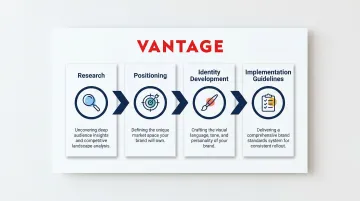
Agencies like Vantage Branding ground brand decisions in audience research rather than guesswork, creating identities that are future-ready and built for the specific niche they serve.
The most common trap in niche branding is aesthetic without substance — a brand that looks targeted but has nothing specific to say. Without a clear point of view or brand promise, even the sharpest visual identity will fail to earn lasting loyalty from niche audiences who can tell the difference.
Effective Branding Strategies for Niche Markets in Singapore
Strategy 1: Own a Specific Positioning Statement
Vague positioning kills credibility in niche markets. Your brand needs a clear, specific claim that combines audience, problem, solution, and differentiator.
Weak: "A caring healthcare brand" Strong: "The only eldercare brand designed around dignity and family involvement"
Build your statement by answering four questions:
- Who exactly do we serve?
- What specific problem do they face?
- How do we solve it differently?
- What makes us the obvious choice over alternatives?
Strategy 2: Build Credibility Through Industry Authority
73% of B2B decision-makers trust thought leadership content over traditional marketing—yet only 15% rate the thought leadership they encounter as excellent. For niche brands in Singapore, that gap is where authority gets built.
Build authority through:
- Industry-specific blog content addressing niche pain points
- Speaking at sector events and conferences
- Publishing research, whitepapers, or case studies
- Media placements in trade publications
- Professional certifications relevant to your niche
Strategy 3: Use Precision Targeting in Digital Channels
Niche brands should prioritize depth over breadth — focus on the one or two platforms where your specific audience actually congregates, rather than spreading thin across all channels.
Platform selection for Singapore niches:
| Platform | Users (SG) | Best For |
|---|---|---|
| 3M+ | B2B professionals, thought leadership | |
| 4.7M | Direct community engagement, service | |
| 3.7M | Lifestyle, wellness, visual brands | |
| 4.2M | Community groups, local segments |
LinkedIn delivers 2x higher B2B conversion rates and 13.5% lower cost per acquisition than other social channels.
Long-tail SEO advantage:
Target niche-specific keywords like "sustainable packaging supplier Singapore" instead of "packaging Singapore." Long-tail keywords convert 4.15 percentage points higher with lower bounce rates.
The same depth-over-breadth principle applies to influencer strategy.
Strategy 4: Leverage Singapore's Micro-Influencer Ecosystem
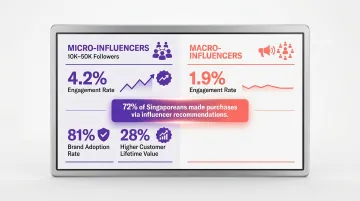
Niche brands benefit from micro-influencers (10K–50K followers) who have earned deep trust within specific communities. In Singapore, micro-influencers achieve 4.2% engagement rates versus 1.9% for macro-influencers.
Key stats:
- 81% of Singapore brands now use micro-influencers
- Influencer-acquired customers show 28% higher lifetime value
- 72% of Singaporeans made purchases based on influencer recommendations in the past six months
When evaluating influencers, prioritise those with an engaged following in your specific vertical — a sustainability advocate with 15K followers in Singapore's green business community will outperform a general lifestyle account with ten times that reach.
Strategy 5: Align Brand Touchpoints Consistently
In niche markets where audiences are small and connected, every touchpoint matters — website, packaging, customer service language, social media comments. A single off-brand interaction can undo months of positioning work.
Research shows 68% of businesses link brand consistency to 10%+ revenue growth. A comprehensive brand identity guide ensures consistency across all touchpoints.
Content, Community, and Digital Presence for Niche Brands
Content should demonstrate deep expertise. Address the specific questions, frustrations, and aspirations of your niche—not general industry topics. A B2B healthcare brand, for instance, should produce content about regulatory considerations and clinical partnerships, not generic "how to grow your business" articles.
Community-building is one of the most cost-effective growth channels for niche brands. 66% of companies report brand communities significantly impact customer retention, and in Singapore's tightly networked market, word-of-mouth within a community can outperform paid advertising at a fraction of the cost.
Niche brands typically benefit from three community types:
- Communities of Fans: Customers who advocate for your brand and refer others in their networks
- Communities of Design Partners: Customers who co-create solutions with you, deepening their investment in your brand
- Communities of Interest: People united by passion for your niche topic—even before they become customers
Strong communities also reinforce your search visibility. Long-tail keywords have lower competition, which lets niche brands rank faster than generalist competitors. With 94.74% of keywords receiving 10 or fewer monthly searches, the bulk of search demand is highly specific—exactly the territory niche brands are positioned to own. Target precise search queries and create content that answers them in depth.
Measuring and Evolving Your Niche Brand
Avoid vanity metrics like reach and impressions — these favour mass-market brands. Instead, track:
- Brand recall within your target segment: Do they remember you when asked?
- Customer retention and referral rates: Are customers staying and recommending you?
- Share of voice within the niche: Are you part of the conversation?
- Quality of inbound leads: Are prospects already educated and qualified?
Established Brand Equity Frameworks
Keller's CBBE Model structures brand building across four stages:
- Brand Salience — establishing who you are
- Performance/Imagery — defining what you stand for
- Judgments/Feelings — shaping how audiences respond
- Brand Resonance — building lasting relationships
Niche brands often reach resonance faster because audiences are more tightly defined.
Aaker's Brand Equity Model covers five components: brand loyalty, awareness, perceived quality, associations, and proprietary assets. For niche contexts, prioritise loyalty and associations — these carry the most weight when your audience is small but influential.
Evolve without abandoning core positioning. As markets shift — eldercare policy changes, sustainability interest grows — refresh your identity and messaging while preserving what made you trusted. In Singapore's fast-moving sectors, annual brand reviews help you catch these shifts before they erode your relevance.
Frequently Asked Questions
What is the most popular niche market?
Globally and in Singapore, common niches include health and wellness, sustainable products, eldercare, specialty F&B, and B2B professional services. However, "popular" niches are often the most competitive—the best niche aligns with your strengths and addresses demand competitors are missing.
What makes niche branding different from general branding?
Niche branding requires deeper audience specificity—every decision from visual identity to messaging tone must speak directly to a defined segment rather than a broad population. The stakes for consistency and authenticity are higher because niche audiences are more discerning.
How do I know if my niche market is viable in Singapore?
Three validation methods work well together:
- Keyword research — check search volume for niche-specific terms in Singapore
- Competitor analysis — identify profitable competitors and the gaps they leave
- Customer conversations — confirm willingness to pay directly
Tools like Google Trends Singapore and SingStat data support all three.
Can a niche brand in Singapore scale regionally?
Yes. Singapore's position as a regional business hub makes it an ideal launchpad. Many Singapore niche brands expand into Malaysia, Vietnam, and broader Southeast Asia by using their Singapore credibility as a trust signal in adjacent markets.
How long does it take to build a strong niche brand identity?
Developing brand strategy and identity (positioning, visual identity, messaging) typically takes 8–16 weeks with a professional branding partner. Brand recognition and trust within a niche audience then build steadily over 12–24 months of consistent execution.
Should a niche brand work with a specialised branding agency?
Working with an agency experienced in your sector accelerates the process significantly. Sector familiarity means faster audience insight, sharper positioning, and fewer costly missteps. For complex niches like healthcare, B2B, or government — where Vantage Branding has worked with clients including Allium Healthcare, Enterprise Singapore, and NUS — the right agency brings context that a generalist simply won't have.