Introduction
Singapore's loyalty market is fiercely competitive. The average consumer here is enrolled in 4-6 loyalty programs, creating one of Asia's most saturated landscapes. Loyalty program rebranding in this context means far more than adjusting earn rates or adding new partners — it's a comprehensive refresh of brand identity, naming, visual language, tone of voice, and strategic positioning.
The core tension facing Singapore brands in 2025: enrolment volume no longer equals engagement. When nearly every competitor offers a loyalty program, consumers can be technically "active" in programs they've mentally abandoned.
Real differentiation now happens at the brand level. Emotional resonance, memorable identity, and a consistent experience across touchpoints matter more than rewards mechanics alone.
This article explores five key trends reshaping how Singapore brands approach loyalty program rebranding in 2025 — from experiential positioning and visual identity overhauls to values-led narratives, coalition models, and AI-driven personalisation.
TL;DR
- Market saturation demands brand differentiation — compelling identity, not reward mechanics, is what separates programs
- Emotional positioning beats transactional mechanics — members respond to relationship-driven identities, not earn-and-burn messaging
- Omnichannel consistency is non-negotiable — visual and verbal identity must hold across app, in-store, email, and e-wallet
- AI enables personalized brand voice — adaptive, warm communication tone is replacing generic broadcast messaging
- Visual identity signals program evolution — members judge rebrand credibility first through name, logo, colours, and tier iconography
From Transactional to Experiential — Loyalty Programs Rebranding Around Meaning
Singapore brands are moving away from point-mechanics-as-identity. The new approach: rebrand around purpose, emotional connection, and curated experiences.
Metro Singapore's "Treasured by Metro" is a clear example. Launched in January 2026 with Eagle Eye as technology partner, the programme repositioned from discount-driven to relationship-focused. The name itself signals emotional value over transactional utility — "Treasured" is not an operational label, it's a feeling.
The rebrand introduced tiered privileges, invite-only events, and behavioral rewards (social sharing, event attendance), deliberately moving beyond "spend more, save more" messaging.
How This Manifests in Branding Terms
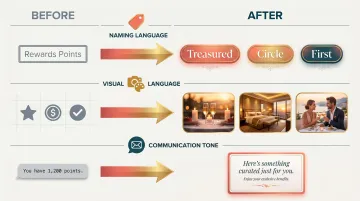
Experiential rebrands show three distinct shifts:
- Names that evoke feeling — words like "treasured," "circle," "first" replace utilitarian labels
- Warmer, aspirational visual language — photography, colour palettes, and iconography emphasize lifestyle and belonging
- Relational communication — messaging shifts from "You have 1,200 points" to "Because you're a member, here's something curated for you"
Why Singapore Specifically
Despite high enrolment, many Asian consumers feel disconnected from loyalty benefits. Globally, only 59% of loyalty memberships are actively used — meaning 41% are effectively abandoned despite technical sign-up. In Singapore's instant-gratification market, that gap is a brand problem as much as a product one. Rebranding around meaning is how brands turn dormant members into genuinely engaged ones.
Omnichannel Brand Consistency as a Loyalty Rebrand Priority
Singapore consumers expect seamless interaction across in-store, app, e-commerce, and digital wallet touchpoints. Programs with fragmented identities — different logos on app versus email, inconsistent tone across channels — erode trust and confuse members.
Metro Singapore's Omnichannel Implementation
Metro's Treasured programme enables earning and redemption across two physical stores, e-commerce platform, and marketplace presence in Singapore and Indonesia. The rebrand required unified brand presentation — not just backend integration. Name, visual system, and tone of voice remain consistent whether members scan QR codes at checkout, check points in-app, or receive SMS updates.
Coalition Program Examples
yuu Rewards Club and CapitaStar succeed partly through strong, consistent cross-brand visual identity:
- yuu Rewards Club spans 193+ partner brands across retail, dining, banking, and transport — all delivered through a single unified app with one cohesive brand identity
- CapitaStar covers 3,400+ stores across 30 properties, with payment-linked automation delivering a consistent earning experience at every touchpoint
The retention gap between these approaches is significant. According to Aberdeen Group research, companies with strong omnichannel engagement retain 89% of customers — compared to just 33% for programs with fragmented channel experiences.
The Branding Implication
A 2025 loyalty rebrand must include a digital UX audit — ensuring program name, logo, color system, and tone of voice are coherent across every member touchpoint. This is where brand strategy and customer experience design converge. Vantage Branding works with businesses to develop the identity systems, visual language, and communications frameworks that keep loyalty programs recognisable — and trustworthy — at every member touchpoint.
Three More Trends Reshaping Loyalty Program Branding in Singapore
Trend 3: AI-Powered Personalization Is Changing How Loyalty Programs Communicate
Loyalty programs are rebranding their communication style — from generic broadcast messaging to AI-driven outreach that makes each member feel individually recognised.
Singapore programs are already acting on this shift:
- yuu Rewards Club uses AI/ML for hyper-personalisation at scale, delivering customised offers based on individual behaviour
- Metro Singapore uses Eagle Eye's platform to enable personalised promotions across digital and physical channels
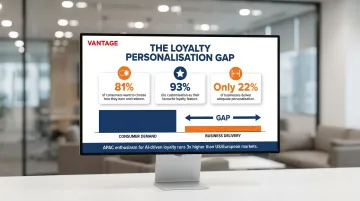
The consumer appetite is significant: 81% want to choose how they earn and redeem, and 93% cite customisation as their favourite loyalty feature. Yet only 22% of businesses deliver adequate personalisation — a clear brand opportunity.
Loyalty programs now need a distinct, warm, adaptable tone of voice as part of any rebrand — not just new visuals. APAC consumer enthusiasm for AI-driven experiences runs nearly 3x higher than in US/European markets, making Singapore a natural testing ground for what comes next.
Trend 4: Behavioural Rewards Are Expanding What Loyalty Brands Stand For
Singapore programs are rebranding to reward non-purchase actions — attending events, social sharing, writing reviews — shifting brand identity from "we reward spending" to "we value your engagement with our community."
Metro Singapore is exploring behavioural rewards post-rebrand, including social media sharing and event attendance. Singapore Airlines' KrisFlyer introduced status credit earning through Kris+, KrisShop, and Pelago from September 2025 — expanding beyond pure flight transactions to lifestyle engagement.
Adding behavioural rewards is as much a branding exercise as a product decision. It requires updating:
- Programme value proposition narrative
- Member-facing communications templates
- Visual identity touchpoints (badge systems, tier iconography, gamification elements)
Programmes that do this well build clear visual language to explain earning pathways and celebrate non-transactional engagement.
Trend 5: Premium and Tiered Programs Are Getting Visual Identity Makeovers
As paid and tiered loyalty programs grow in Singapore, brands invest in distinct visual identities for each tier — unique colour palettes, premium iconography, status language — so tier progression feels like brand elevation, not just a number change.
Singapore Airlines KrisFlyer 2025 enhancements illustrate this evolution:
- New earning pathways through Kris+, KrisShop, and Pelago
- Dynamic "Access" redemption allowing miles for any available seat
- Award rate adjustments across cabin classes and routes
The core branding challenge: communicating complex tier changes clearly without alienating existing members. Colour, iconography, and typography do the heavy lifting — signalling tier value at a glance before a member reads a single word.
Cathay Pacific reinforced this direction in October 2025, introducing a Diamond Exec tier above Diamond and repositioning as a "premium travel lifestyle brand" — with simplified Status Points rollover and dedicated Relationship Managers to match. The visual identity investment is what makes the tier feel genuinely elevated, rather than just relabelled.
What's Driving Loyalty Program Rebranding in Singapore 2025
What's Driving Loyalty Program Rebranding in Singapore 2025
Market Saturation and Enrollment Depth
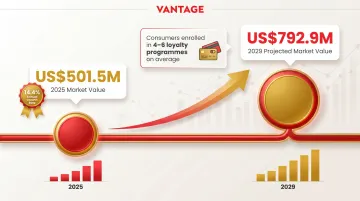
Singapore's loyalty market reached US$501.5 million in 2025, growing 14.4% annually with forecasts to hit US$792.9 million by 2029. With consumers enrolled in 4-6 programmes on average, brands can no longer win on programme mechanics alone. Rebranding has become the primary tool to reclaim attention and relevance.
Rising Consumer Sophistication and Switching Vulnerability
Singapore consumers are digitally savvy and quick to disengage from programmes that feel outdated or generic. 75% would abandon their current loyalty programme immediately for better prices, according to Forrester's 2025 B2C Marketing predictions. Forrester also forecasts brand loyalty will decline 25% in 2025 due to price sensitivity.
This drives brands to invest in identity refreshes that signal modernity and consumer-centricity — visual proof that the programme still earns its place in consumers' wallets.
Technology Advances Enabling New Brand Experiences
AI, SaaS loyalty platforms, and real-time data capabilities enable personalised, dynamic experiences that older brand frameworks couldn't support. yuu's data mesh architecture allows scalable partner integration. Metro's Eagle Eye partnership delivers omnichannel promotions. For these programmes, communicating new capabilities clearly and convincingly is itself a rebrand trigger — the technology alone doesn't signal the shift; the brand identity has to.
Competitive Differentiation Pressure
With dozens of programmes competing for wallet share, differentiation now happens at brand identity level — name, values, visual language — rather than reward level. CapitaStar's shift to receiptless rewards in July 2025 exemplifies this: the technology change required updated brand communication to position the programme as effortless and modern.
PDPA Compliance as a Branding Opportunity
Singapore's Personal Data Protection Act creates pressure on loyalty programmes to be transparent about data use. PDPC guidelines allow requiring marketing consent if "reasonably necessary" to programme operation, but members can withdraw consent — potentially triggering membership termination.
Forward-thinking brands rebrand around transparency and trust values, turning compliance requirements into brand equity assets.
Future Signals for Loyalty Program Rebranding in Singapore
Current trends point toward more structural shifts in the next one to three years. Three signals are already taking shape:
- Sustainability-linked loyalty identities: Singapore Airlines runs a voluntary carbon offset programme, yet no major Singapore loyalty programme currently offers carbon-offset redemptions via points — a clear gap for purpose-driven rebranding.
- Coalition and ecosystem branding: With programmes like yuu spanning 193 partners, coherent master brand and sub-brand architecture becomes non-negotiable. The core tension is balancing umbrella brand identity against individual partner equity.
- Systematic brand audits: Programmes built through years of patchwork updates will need structured audits to surface inconsistencies before any refresh. This is a strategic exercise requiring brand expertise and consumer insight, not just a design refresh.
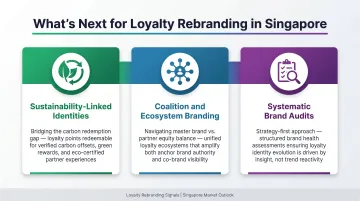
These signals share a common thread: the brands that navigate them well will have started with strategy, not aesthetics.
Start with Strategy, Not Visuals
Brands that define programme purpose, identity, tone of voice, and member promise before touching visual design build loyalty programmes that outlast trends. A rebrand without that foundation is repositioning without direction.
Vantage Branding works with Singapore businesses to develop loyalty sub-brands grounded in parent brand identity — so the rebrand holds across every partner, touchpoint, and channel.
Frequently Asked Questions
What is loyalty program rebranding, and how is it different from a program update?
A loyalty program update typically changes mechanics — earn rates, redemption options, partner additions. Rebranding refreshes the program's name, visual identity, tone of voice, and positioning to change how members perceive and emotionally connect with the program.
Which industries in Singapore are leading loyalty program rebranding in 2025?
Retail, aviation, and F&B sectors are most active — Metro Singapore, Singapore Airlines KrisFlyer, and multi-brand ecosystems like yuu lead the charge. Healthcare and lifestyle sectors are beginning to follow suit.
How do you maintain member trust when rebranding a loyalty program?
Communicate early and clearly: assure members their existing points and benefits are protected or enhanced. Involving loyal members through preview access or feedback sessions goes a long way toward making the transition feel collaborative rather than imposed.
What role does visual identity play in a loyalty program rebrand?
Visual identity — program name, logo, colour system, tier iconography — is the first thing members notice and the clearest signal that the program has genuinely evolved. When the visual language is consistent and considered, it builds confidence that the rebrand reflects real investment in the member experience.
How long does a loyalty program rebrand typically take for a Singapore business?
Timelines vary by scope. A light refresh (name and visual update) may take 2-4 months. A full rebrand including strategy, identity, and omnichannel rollout typically takes 6-12 months, with planning and stakeholder alignment usually the longest phases.