Introduction
Consumers encounter up to 1,600 brand touchpoints every day. In that kind of noise, standing out takes more than a quality product. It requires a deliberate digital strategy. 85% of CMOs agree that investing in brand drives business results, with brand awareness serving as the commercial spark that drives consideration and conversion. Brands that skip this foundation don't just grow slowly — they stall.
This article provides a clear, actionable framework for building brand awareness in 2025 through digital marketing. We'll walk through foundation-setting, channel strategy, consistency practices, measurement approaches, and emerging trends reshaping how brands earn recognition.
TLDR
- Tactics fail without a clearly defined brand identity — start with foundational strategy before execution
- Five strategies drive brand awareness in 2025: SEO, social media, influencer partnerships, multi-format content, and email nurturing
- Brand consistency across channels amplifies every strategy you execute
- Track progress through branded search volume, social engagement, and direct traffic
- Brands that adopt AI personalisation and short-form video will reach new audiences faster in 2025
Start With a Strong Brand Foundation Before You Market
Digital marketing amplifies what already exists. If your brand foundation is weak, campaigns produce inconsistent or forgettable results. Before investing in channels or campaigns, establish a well-defined identity — including values, positioning, tone of voice, and target audience.
What a Brand Foundation Audit Involves
A proper foundation audit gives you a clear picture of where your brand stands before you spend on marketing. It typically covers:
- Assessing your current digital footprint across channels
- Identifying gaps in messaging consistency
- Reviewing how your brand is perceived on each platform
- Clarifying your unique value proposition
This starting point anchors digital efforts to a clear brand strategy grounded in research, not assumption.
In competitive markets like Singapore, consumer trust depends on consistent and credible brand signals. Vantage Branding works with clients across Singapore, Malaysia, and Vietnam to build this foundation through stakeholder interviews, collaborative workshops, and market research — all completed before any creative execution begins.
Brand Identity Drives Audience Resonance
A brand that clearly communicates who it is and who it serves naturally attracts more engagement from digital marketing efforts. Aligned positioning, messaging, and visual identity reinforce recognition at every touchpoint. Misalignment, on the other hand, creates confusion that quietly erodes credibility.
5 Digital Marketing Strategies to Boost Brand Awareness in 2025
These five strategies work best in combination rather than isolation. Each reinforces the others and creates multiple opportunities for your target audience to encounter and remember your brand.
SEO and Content Marketing
SEO ensures your brand appears when your target audience actively searches for solutions you offer. 32.8% of internet users aged 16+ discover new brands through search engines, making search visibility foundational for brand discovery.
Optimising your website and blog with relevant industry keywords increases organic visibility, positions your brand as a trusted authority, and drives consistent inbound traffic over time. Content — blogs, thought leadership articles, guides — signals expertise and builds trust, two critical drivers of brand recall.
For B2B brands and professional services, long-form, insight-driven content establishes authority. 73% of decision-makers say an organisation's thought-leadership content is a more trustworthy basis for assessing its capabilities than marketing materials. 75% say a piece of thought leadership led them to research a product or service they weren't previously considering.
Content Strategy Best Practices:
- Address your audience's specific pain points rather than simply promoting products
- Develop content that demonstrates experience, expertise, authoritativeness, and trustworthiness (E-E-A-T)
- Create comprehensive resources that genuinely answer user queries
- Focus on building genuine brand authority through valuable, original insights
Social Media Marketing
Social media enables direct, ongoing interaction with your audience at scale. Platform selection matters — identify where your specific audience spends time rather than trying to be active everywhere.
Platform Selection Guide:
- LinkedIn (4.80 million registered members in Singapore): B2B professionals, enterprise decision-makers
- Instagram (3.15 million ad reach in Singapore): Lifestyle brands, visual products, younger demographics
- TikTok (3.63 million adult ad reach in Singapore): Younger audiences, short-form content enthusiasts
- Facebook (3.70 million ad reach in Singapore): Broad demographics, community building
Globally, Facebook has 3.07 billion monthly active users, Instagram has 3 billion, and TikTok reaches 1.99 billion adults — representing massive visibility opportunities when targeted correctly.
Best Practices for Brand Visibility:
- Post with consistent brand voice and visual identity
- Engage in genuine dialogue by responding to comments and participating in conversations
- Mix educational, entertaining, and promotional content to maintain interest
- Avoid constant sales pitches that diminish engagement
In Singapore specifically, 88.2% of the population (5.16 million people) actively uses social media, making these platforms essential for brand awareness campaigns in the region.
Influencer and Collaboration Marketing
Influencer marketing functions as modern word-of-mouth. When an influencer whose audience aligns with your target market endorses or features your brand authentically, it generates awareness and trust far faster than traditional advertising.
82% of Southeast Asian consumers have purchased a product or service because it was recommended by an influencer or celebrity — a 3% increase from 2023. For brands targeting Singapore and the broader SEA market, that level of purchase influence is hard to ignore.
Nano and Micro-Influencers Deliver Stronger Results:
Smaller, highly engaged, niche audiences often outperform celebrity partnerships, especially for B2B or industry-specific brands:
- Nano-influencers (1K–10K followers): 8-15% engagement rates
- Micro-influencers (10K–100K): 4-8% engagement rates
- Macro-influencers (100K–1M): 2-4% engagement rates
- Mega-influencers (1M+): 1-2% engagement rates
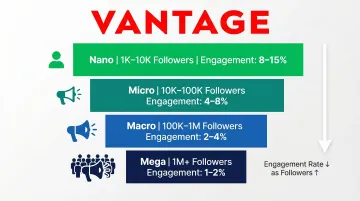
The higher engagement rates among smaller influencers mean their audiences are more likely to notice, remember, and act on brand recommendations.
Co-Branding and Strategic Collaborations:
Beyond influencer partnerships, collaborating with complementary brands or participating in industry events, webinars, and panels extends your reach to new audiences without starting from scratch. These partnerships leverage existing trust and credibility.
Multi-Format Content and Video
Different audience segments consume content differently — some prefer short-form video, others engage with long-form articles, podcasts, or visual infographics. A multi-format strategy ensures your brand is accessible across these preferences and increases overall touchpoints with your audience.
Short-form video now leads brand discovery in 2025. Video publishing grew 71% year-over-year, with TikTok driving a 156% increase in video posts. 56% of younger generations discovered TV shows or movies through social platform creators before seeking them out elsewhere — a pattern that applies equally to brand content.
Strategic Content Repurposing:
A single core piece of content can be repurposed into multiple formats:
- A thought leadership article becomes social media posts
- Key insights are extracted into short videos
- Statistics are visualised as infographics
- Main points are distributed through email snippets
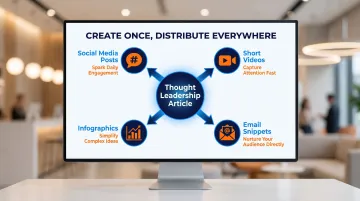
This approach multiplies reach without proportionally increasing production effort, making your content work harder across more channels.
Email Marketing and Audience Nurturing
Email marketing keeps your brand consistently in front of people who have already expressed interest. Unlike social media, email provides a direct, algorithm-free channel to your audience — one where you control the timing, message, and frequency.
Segmented, value-driven email campaigns build familiarity and trust that compound over time into stronger brand preference. Segmented emails drive 30% more opens and 50% more clickthroughs than unsegmented ones — a meaningful gap that widens as your list grows.
Personalisation Best Practices:
- Segment your list by audience type, industry, or stage in the buyer journey
- Send relevant content that feels tailored rather than generic
- Focus on education and value delivery, not just promotional blasts
- Maintain consistent brand voice and visual identity in every message
In professional services and B2B contexts, email nurturing sequences that provide genuine insights position your brand as a trusted resource long before prospects are ready to make purchasing decisions.
Brand Consistency: The Multiplier Behind Every Digital Strategy
Brand consistency means your visual identity (logo, colours, typography), tone of voice, and messaging remain recognizably the same across every platform and touchpoint — from your website to social media profiles to email campaigns to paid ads. Without it, individual brand exposures never compound into recognition.
Why Inconsistency Harms Brand Awareness
When audiences encounter conflicting visuals, tones, or messages across channels, it creates confusion and erodes credibility. Consistent branding can increase revenue by 33%, while 71% of businesses acknowledge that inconsistent brand presentation confuses customers and impacts conversion rates.
Maintaining Digital Brand Consistency
Practical Implementation Steps:
- Create a brand style guide that documents visual standards and tone of voice
- Conduct periodic audits of all active digital channels to identify drift
- Ensure third parties (agencies, partners, freelancers) follow the same guidelines
- Establish approval workflows for content across all channels
Consistency Across Markets:
For brands operating across Singapore, Malaysia, Vietnam, and broader Asia, maintaining a coherent identity while adapting for local audiences is a genuine challenge. The key is knowing what to lock down and what to localise:
- Lock down: visual identity, core values, brand positioning
- Localise: language, cultural references, market-specific examples
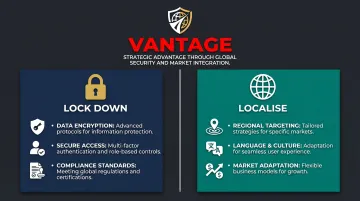
This distinction — clear brand architecture — is what separates brands that scale successfully from those that fragment as they grow. Vantage Branding works with organisations across Singapore and the region to define exactly this structure, helping brands like Enterprise Singapore and the Singapore Symphony Orchestra maintain cohesive identities across diverse contexts.
How to Measure Brand Awareness Online
Without tracking brand awareness metrics, it's impossible to know whether your digital marketing efforts are working or which channels deserve more investment. KPIs should align to specific brand awareness goals rather than generic performance metrics.
Key Brand Awareness KPIs
| KPI | What It Measures |
|---|---|
| Branded Search Volume | How often people search your brand name directly — Google Search Console's branded queries filter (introduced November 2025) makes this easy to isolate. |
| Social Media Reach & Engagement | Impressions, follower growth, mentions, and share of voice — showing how your visibility stacks up against competitors. |
| Direct Website Traffic | Visitors who type your URL directly, demonstrating strong brand recall without a search prompt. |
| Brand Sentiment | Whether mentions are positive, neutral, or negative, tracked via social listening tools to reveal shifts in brand perception. |
Each of these KPIs maps to a specific tool:
- Google Analytics — direct traffic and user behaviour
- Google Search Console — branded search volume
- Native social analytics — reach and engagement per platform
- Social listening platforms — sentiment and share of voice
- Brand recall surveys — qualitative perception data at intervals
Establish a baseline before launching campaigns so progress can be tracked against a starting point. Without that baseline, even strong results are difficult to attribute to a specific channel or campaign.
What's New in 2025: Trends Reshaping Brand Awareness
AI-Powered Personalisation and Content
78% of organisations use AI in at least one business function, with marketing and sales being among the most common areas of adoption. AI enables brands to deliver more personalised digital experiences at scale — from content recommendations to chatbots that reflect brand voice.
As AI-generated content becomes mainstream, brands must differentiate through authentic, human storytelling and strategic positioning. While 60% of consumers support brands using AI in content creation, labelling products as "AI" can reduce trust and purchase intent for experience-based products where human expertise matters.
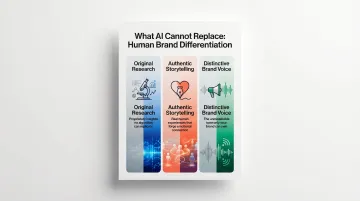
The strategic response is to use AI for efficiency while doubling down on what it cannot replicate:
- Original research and proprietary data that reflects real experience
- Authentic storytelling grounded in human perspective
- A distinctive brand voice that remains consistent across channels
Short-Form Video and Social Search
Short-form video continues to dominate as a brand discovery format. TikTok, Instagram Reels, and YouTube Shorts drive brand awareness through entertaining, digestible content that algorithms favour.
41% of Gen Z consumers use social media as their first source when looking for information, compared to 32% who turn to traditional search engines. Instagram remains the top social channel for brand research, with 62.3% of active adult users using it to research brands and products. TikTok ranks third at 51.5%, representing a 36% increase over two years.
To build discoverability on these platforms:
- Use platform-native features — hashtags, sounds, and effects — rather than repurposing ads
- Create content that feels native to each platform's culture and format
- Engage with communities directly, not just broadcast to them
Zero-Click and AI-Driven Search
59.7% of European Union Google searches and 58.5% of American Google searches resulted in zero clicks to the open web in 2024. AI Overviews and featured snippets provide answers directly in search results, reducing organic clickthrough rates.
When an AI Overview appears, the top-ranking organic page sees a 58% lower average clickthrough rate, changing how brands earn visibility through SEO.
Ranking for keywords is no longer enough. Brand authority now depends on:
- Being cited by credible third-party sources, not just appearing in search results
- Strengthening E-E-A-T signals through expert-authored content and verifiable credentials
- Ensuring your brand is referenced across trusted external sites — the sources AI systems draw from when generating answers
Frequently Asked Questions
What 5 digital strategies are successful in building brand awareness?
The five most effective strategies are SEO and content marketing, social media marketing, influencer and collaboration marketing, multi-format content (especially video), and email nurturing. Each reinforces the others, creating multiple touchpoints that compound brand visibility over time.
What are the 5 C's of branding?
The 5 C's of branding are Clarity (clear brand purpose and positioning), Consistency (uniform identity across touchpoints), Content (valuable, relevant communications), Connection (emotional resonance with the audience), and Credibility (trust built through authenticity and proof).
How do you measure brand awareness in digital marketing?
Key metrics include branded search volume, social media reach and mentions, direct website traffic, and engagement rates. Brand recall surveys add qualitative depth, revealing how your audience actually perceives and remembers your brand.
How long does it take to build brand awareness online?
Meaningful brand awareness typically takes 6-12 months of consistent digital marketing effort to build. Paid campaigns and influencer partnerships can accelerate early visibility, but sustained recognition requires ongoing strategic content, engagement, and consistency across channels.
What is the difference between brand awareness and brand recognition?
Brand awareness is the degree to which consumers know a brand exists. Brand recognition is the ability to identify a brand by its visual or verbal cues (logo, colours, tagline) when prompted. Awareness is about familiarity; recognition is about identification.
Why is brand consistency important in digital marketing?
Consistency builds familiarity and trust over repeated exposures. Consumers are more likely to choose and remember brands that present a coherent identity across all channels. Inconsistency creates confusion and weakens brand equity, directly impacting conversion rates and customer satisfaction.