Introduction
A business leader invests in a sleek new logo, a polished website, and a suite of fresh collateral. The launch rolls out with fanfare. Yet six months later, customer loyalty remains flat. Market position hasn't shifted. Competitors still seem interchangeable. What went wrong?
The visual refresh had no "why" behind it.
In Singapore and across Asia, markets are saturated with competitors offering similar products, similar pricing, and similar promises. Purpose-driven branding is no longer a "nice to have"—it is a strategic differentiator that drives customer loyalty and commands premium pricing.
What separates brands that grow from brands that stagnate is rarely the logo. It's the clarity of purpose behind it — and knowing how to translate that purpose into every customer touchpoint.
TLDR
- Purpose-driven branding anchors your identity in a clear "why" that resonates emotionally with customers
- A brand consultant uncovers your reason for existing and embeds that purpose into every business decision
- Purpose-led brands attract more loyal customers and command premium pricing
- Purpose must be authentic and lived internally before external communication—performative purpose backfires
- Across Asia, customers now expect the brands they choose to stand for something real
What Is Purpose-Driven Brand Consulting?
Purpose-driven branding is the strategic process of identifying and articulating a brand's deeper reason for existing—beyond revenue—and aligning that purpose across messaging, identity, operations, and culture. It is not a standard rebrand or visual refresh.
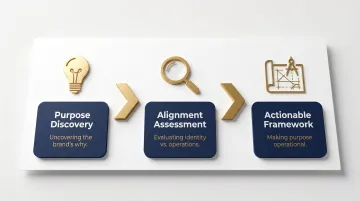
A purpose-driven brand consultant facilitates three critical functions:
- Purpose discovery: Uncovering the brand's "why" through stakeholder engagement and strategic inquiry
- Alignment assessment: Evaluating how well current identity and operations reflect that purpose
- Actionable framework: Building a strategic blueprint that makes purpose operational, not aspirational
Purpose-driven brand identity is the complete expression of a brand—visual, verbal, and cultural—shaped by its core purpose. It reaches beyond colour palettes and taglines into product decisions, hiring practices, and customer service protocols.
When Heritas Capital Management articulated their purpose as "Invest with purpose. Impact across generations," every element of their brand identity was redesigned accordingly: the leaf motif symbolising growth and sustainability, and the navy-and-gold palette conveying trust and long-term value.
Purpose Is Not Exclusive to Nonprofits
A common misconception limits purpose-driven branding to nonprofits or sustainability brands. In reality, B2B companies, healthcare organisations, government agencies, and consumer brands across sectors can and should operate with a defined purpose. Enterprise Singapore, CrimsonLogic, and Allium Healthcare all demonstrate how purpose-driven branding creates differentiation in competitive markets regardless of sector.
The 3-7-27 Rule of Branding
The widely cited "3-7-27 rule" suggests that potential customers need 3 brand impressions to notice your brand, 7 to remember it, and 27 to build genuine trust. The specific numbers are a practitioner's rule of thumb rather than a scientific law, but the principle is sound: consistent, purpose-rooted identity accelerates trust-building far more effectively than inconsistent branding. When your purpose is clear and every touchpoint reinforces it, you compress the trust-building timeline.
Why Purpose-Driven Branding Gives Brands a Competitive Edge
The Business Case: Data-Driven Performance
Purpose-driven companies demonstrate measurable financial outperformance. Research analysing 500,000 employee survey responses found that firms with both high purpose and high strategic clarity achieve systematically stronger accounting and stock market results.
Moving from the bottom to the top decile in "Purpose-clarity" is associated with roughly a 0.7% increase in enterprise value growth rate — a material difference at scale.
Globally, 60% of consumers buy or boycott brands based on their values, and 84% say they need to share values with a brand in order to buy it. These numbers translate directly into purchasing behaviour and willingness to pay premium prices.
The Trust and Loyalty Mechanism
When customers believe a brand's purpose aligns with their own values, they become advocates — not just buyers. Purpose functions like friendship: consistency, honesty, and shared values deepen the relationship over time, making it resilient even when competitors offer cheaper alternatives.
The financial cost of weak differentiation is concrete:
- Margin erosion of 5–15% — up to S$225,000 annually for an SME with S$1.5M in gross profit
- Customer acquisition costs rising by up to S$96,000 per year for growth-focused businesses
The Asia-Specific Context
Southeast Asian consumers are demanding authenticity and social responsibility. While 42% now seek the same products at lower prices, they will pay more for health and premium brands that reflect their values.
This "better-for-me" mindset creates a purpose premium — but only for brands that deliver authentic alignment, not performative messaging.
The Talent and Internal Benefit
Purpose-driven brands attract and retain employees who are motivated by shared values. Employees at purpose-driven companies are four times more engaged at work. In a global environment where employee engagement fell to just 20% in 2025, purpose acts as a critical retention tool. Internal alignment is a prerequisite — employees who believe in the purpose become authentic brand ambassadors, shaping customer experience at every touchpoint.
The Risk of Purpose-Washing
Consumers and stakeholders quickly detect when purpose is a marketing veneer rather than a lived value. The consequences are severe:
- VietJet "Green Friday" (Singapore, 2025): The Advertising Standards Authority of Singapore banned VietJet's campaign offering cheap tickets while claiming consumers could "contribute to a greener future". The claims breached advertising standards because they applied only to part of the fleet.
- KLM "Fly Responsibly" (Netherlands, 2024): The Amsterdam District Court ruled that KLM's advertisements were misleading and illegal, finding the airline painted a "too-rosy picture" about measures like Sustainable Aviation Fuels.
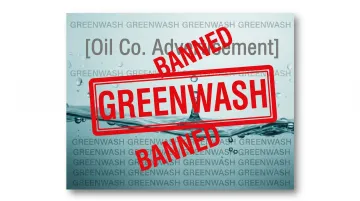
Both cases ended in regulatory bans and lasting reputational damage. Purpose must be earned through actions, then communicated — not invented in a campaign brief.
The 5 P's of a Strong Purpose-Driven Brand Identity
The 5 P's framework provides a practical tool for evaluating whether a brand's identity is purpose-driven:
- Purpose: The "why" behind your brand—your reason for existing beyond profit
- Promise: What you commit to delivering to customers and stakeholders
- Positioning: How you're distinct in the market and where you occupy competitive space
- Personality: The human traits your brand embodies—tone, character, style
- Presence: How consistently your identity shows up across every touchpoint
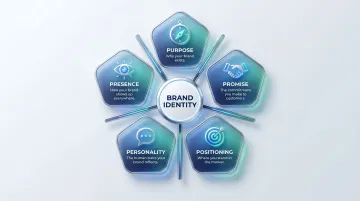
When any one of the 5 P's is disconnected from purpose, the entire identity loses coherence. A brand consultant uses the 5 P's as both a diagnostic and a building tool: identifying which pillars are weak or misaligned, then constructing an identity that holds together across all five dimensions.
That framework in action looks something like Vantage Branding's work with the Singapore Symphony Orchestra — a transformation that touched every dimension:
- Purpose: Demonstrating contemporary relevance to new audiences
- Promise: World-class classical music made accessible to a broader public
- Positioning: Modern yet credible within Singapore's arts landscape
- Personality: Vibrant and emotionally resonant
- Presence: Bold red branding carried consistently across venues, posters, and digital channels
How Purpose-Driven Brand Consulting Transforms Your Identity
Step 1: Discovery and Stakeholder Alignment
Consultants begin by engaging founders, leadership, employees, customers, and sometimes suppliers to uncover what the brand genuinely stands for. This is not a top-down exercise—authentic purpose emerges from listening broadly, not from a boardroom declaration.
Research shows that the association between purpose and financial performance is driven specifically by the perceptions of middle management and professional staff, rather than senior executives or hourly workers. That's where purpose either takes hold or gets lost.
Step 2: Purpose Articulation and Framework Development
The consultant translates discovery insights into a clear, specific purpose statement and supporting framework—mission, values, positioning. Vague statements like "We empower people to be their best" add no value. Effective purpose statements are specific, ownable, and actionable.
Heritas Capital's purpose statement—"Invest with purpose. Impact across generations"—is effective because it articulates both the "how" (purpose-driven investment) and the "why" (generational impact), differentiating the firm in the wealth management sector.
Step 3: Brand Identity Alignment
Every element of the brand identity—visual, verbal, experiential—gets redesigned or refined to express the purpose authentically. This includes:
- Naming conventions
- Messaging and brand voice
- Visual systems (logo, color, typography)
- Design guidelines
When CrimsonLogic articulated their brand idea as "Simpler trade. Smarter tech," the identity system was built to communicate efficiency, clarity, and technological sophistication across 19 countries.
Step 4: Internal Embedding and Culture Alignment
Purpose only works if it is adopted internally first. Consultants work with leadership to create processes, language, and behaviors that reinforce the purpose from the inside out before it is communicated externally.
Vantage Branding's brand implementation workshops help teams understand and embrace the brand's core purpose, so employees become authentic ambassadors rather than passive messengers.
For Teehai, this meant corporate values posters built around Responsibility, Inspiration, Differentiation, People, and Environment—serving as daily cultural reinforcement across the organisation.
Step 5: External Rollout and Measurement
Consultants guide the brand's external launch across digital channels, campaigns, and customer touchpoints. Equally important is defining what success looks like. Measurement frameworks typically track:
- Brand equity scores
- Net Promoter Score (NPS)
- Customer retention rates
- Media sentiment
- Employee engagement levels
Vantage Branding guides organisations across Singapore and Asia through this full journey—from discovery through to market rollout—ensuring that purpose drives both internal culture and external brand equity.
Warning Signs Your Brand Needs Purpose-Driven Consulting
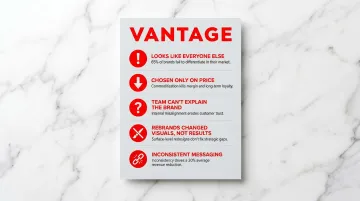
Watch for these patterns — each one signals that purpose-driven consulting is overdue:
- Looks like everyone else: 65% of small businesses fail to differentiate from competitors, forcing them into price-based competition that erodes margins.
- Chosen only on price: When differentiation is weak, customers push harder on cost — thinning profits with every deal.
- Team can't explain the brand: If employees struggle to articulate what the company stands for, customers will too.
- Rebrands changed visuals, not results: Cosmetic updates without strategic foundation produce no measurable business impact.
- Inconsistent messaging across channels: Inconsistent brand application can reduce revenue by 20%.
The Cost of Inaction
These warning signs share a common root: no clear purpose anchoring the brand. Without it, every campaign, visual refresh, or tagline iteration is built on unstable ground. Strategic rebranding reduces performance volatility by over 50% post-acquisition, dropping the standard deviation of returns from 39.2% to 24.8% — a measurable case for getting the foundation right before investing further.
The Opportunity
The ideal time to engage a purpose-driven brand consultant is not just during a crisis or rebrand—it is also during growth stages, market expansion (such as entering new markets in Southeast Asia), or organisational change, when brands need a strong foundation to scale.
Frequently Asked Questions
What is a purpose driven brand identity?
A purpose-driven brand identity is the complete expression of a brand—visual, verbal, and behavioural—shaped and unified by a clearly defined reason for existing beyond profit. Every element consistently reflects the brand's "why."
What are the 5 P's of brand identity?
The 5 P's are Purpose (your reason for existing), Promise (what you commit to delivering), Positioning (your distinct market space), Personality (your brand's human traits), and Presence (consistency across touchpoints). All five must align for the brand to feel coherent and trustworthy.
What is the 3 7 27 rule of branding?
The rule describes how many impressions it takes for an audience to notice a brand (3), remember it (7), and genuinely trust it (27). A consistent, purpose-rooted brand identity accelerates this trust-building progression.
How much does a purpose-driven brand identity consultant cost?
Costs vary by scope and market. In Singapore, project-based engagements typically start from a few thousand dollars for focused strategy work, scaling significantly for full identity transformation programmes. When comparing agencies, look beyond deliverable lists — assess the depth of strategic thinking and stakeholder engagement included.
How long does a purpose-driven brand consulting engagement take?
A focused brand purpose and strategy engagement typically takes 6–12 weeks. A full brand identity transformation — including rollout — can extend to several months depending on organisational complexity.
How do I know if my brand needs purpose-driven consulting rather than a standard rebrand?
If the challenge is purely visual, a standard rebrand may suffice. If the brand struggles to differentiate, loyalty is weak, or the organisation cannot clearly articulate why it exists, purpose-driven consulting targets the root cause — not just the surface.