Introduction
Most businesses discover their brand presence is unclear, inconsistent, or misaligned only after losing ground to competitors — when the damage is already done. In Singapore and across Asia, where markets move fast and attention is hard to earn, visibility gaps compound quickly.
Choosing the right audit partner determines whether you walk away with a clear roadmap or a polished report that changes nothing. A strong partner identifies gaps across every touchpoint and connects those findings to outcomes your business can actually measure.
This guide covers what a brand visibility audit involves, the criteria that separate strong partners from weak ones, and what a high-quality engagement should deliver.
TL;DR
- A brand visibility audit evaluates how your brand is perceived and positioned across all touchpoints — online and offline
- The right partner brings brand strategy depth, cross-industry experience, and a genuinely collaborative mindset — not a generic checklist
- Key selection criteria: methodology clarity, audit scope, portfolio relevance, stakeholder engagement approach, and deliverable quality
- Strong partners go beyond identifying gaps — they deliver a clear, prioritised action plan for your brand
- Treat partner selection like a brief: define your goals, ask hard questions, and prioritise insight-led thinking over templated reports
What Is a Brand Visibility Audit?
A brand visibility audit is a structured evaluation of how well your brand is recognized, understood, and consistently communicated across all touchpoints. This includes visual identity, messaging, customer-facing materials, digital presence, and competitive positioning.
The audit examines whether your brand is showing up clearly, consistently, and distinctively in the spaces where your audience makes decisions.
What a Brand Visibility Audit Covers
A thorough audit examines multiple dimensions:
- Brand recognition among target audiences
- Consistency of visual and verbal identity across channels
- Clarity of brand positioning versus competitors
- Perception gaps between how the brand intends to be seen and how it actually is
Unlike a marketing audit (which focuses on campaign performance and ROI) or a PPC audit (specific to paid advertising), a brand visibility audit is strategic in scope. It examines the fundamental strength and consistency of your brand presence — not just what you're spending, but what your audience actually sees and retains.
Why Brands Conduct Visibility Audits
Common triggers for commissioning a brand visibility audit include:
- Rebrand or brand refresh to ensure alignment across touchpoints
- Market expansion into new regions or customer segments
- Declining brand recall or customer engagement
- Post-merger integration requiring brand architecture decisions
- Lack of formal review as the brand has evolved organically without strategic oversight
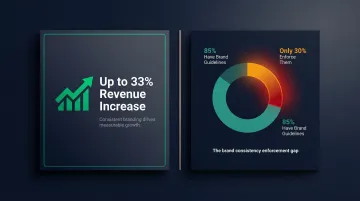
Consistent brand presentation can increase revenue by up to 33%. Yet while 85% of organizations have brand guidelines, only 30% consistently enforce them. That enforcement gap is where brand equity quietly erodes — and where an audit surfaces the specific breaks worth fixing.
Why Choosing the Right Partner Makes All the Difference
A brand visibility audit is only as valuable as the quality of insight it produces. A partner who relies on templated scorecards without understanding your market context, industry dynamics, or audience psychology will deliver findings that are technically complete but strategically thin.
The partner relationship shapes what gets examined. A partner with deep branding expertise probes beyond surface metrics (follower counts, website traffic) and examines positioning clarity, emotional resonance, and differentiation — the factors that actually move the needle on visibility.
The compounding effect of a poor partner choice includes:
- Missed blind spots that continue to erode brand equity
- Generic recommendations too vague to act on
- Audit findings that sit unused because they lack stakeholder buy-in or clear prioritisation
That last point matters more than most organisations expect. Strategy implementation failure rates range from 60% to 90%, driven primarily by poor governance and stakeholder misalignment rather than technical complexity. The audit partner you choose directly influences whether your findings lead to action or gather dust.
What to Look for in a Brand Visibility Audit Partner
Selecting an audit partner requires evaluating both their technical branding capabilities and their ability to work as a true collaborator. The criteria below help separate high-impact partners from those offering superficial reviews.
Depth of Brand Strategy Experience
A partner who specializes only in digital performance or SEO evaluates visibility through a narrow lens. Look for partners with proven backgrounds in:
- Brand strategy development
- Identity and positioning
- Equity measurement
- Strategic brand architecture
Partners with this depth look beyond surface metrics — they examine whether your brand's positioning is distinct, whether it resonates with the right audiences, and whether your identity holds up against competitors. That context shapes the quality of everything that follows.
Cross-Industry Portfolio and Relevant Track Record
A partner with experience across multiple sectors is better equipped to benchmark your brand against both direct competitors and category norms from adjacent industries. Relevant past work builds confidence that they understand your audience and business context.
When reviewing their portfolio, check for:
- Published case studies with recognizable client names
- Experience across varied sectors (B2B, government, healthcare, technology, F&B)
- Evidence of working with brands at different stages (startup, growth, established)
- Regional expertise relevant to your markets
Clarity of Methodology and Audit Framework
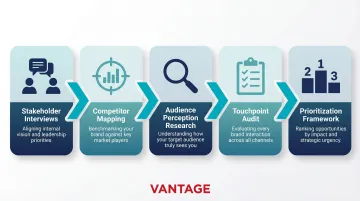
A credible partner should articulate exactly what they will examine, how they will gather data, and how findings will be structured and prioritized.
Audit methodology components should include:
- Stakeholder interviews (leadership, marketing, sales)
- Competitor mapping and benchmarking
- Audience perception research
- Comprehensive touchpoint audit
- Structured prioritization framework
If a partner can't clearly explain their process upfront, the deliverables are unlikely to be much clearer. Vague methodology usually means vague findings.
Scope of Touchpoint Coverage
A meaningful brand visibility audit examines the full spectrum of brand expression:
- Visual identity (logo, color, typography, imagery)
- Tone of voice and messaging
- Digital presence (website, social media, digital advertising)
- Sales and marketing collateral
- Customer experience touchpoints
- Competitive landscape positioning
Confirm whether the partner's scope includes both owned touchpoints (website, materials, signage) and earned/third-party touchpoints (press coverage, reviews, partner materials). Gaps in either area reduce the audit's usefulness.
Collaborative Approach and Stakeholder Engagement
The best audits are co-created with internal teams, not delivered as external verdicts. A partner who conducts structured interviews with leadership, marketing, sales, and customers produces richer, more accurate findings than one who works in isolation.
Ask whether their process includes structured internal interviews or workshops. Recommendations grounded in stakeholder input tend to gain internal support far more quickly than those handed down from the outside.
Quality and Actionability of Deliverables
The audit report is not the finish line — it's the starting point. Evaluate whether the partner delivers:
- Prioritized, actionable recommendations (not just observations)
- Clear roadmap with phased implementation
- Visual summaries of brand touchpoint gaps
- Competitive benchmarking data
- Specific next steps grouped by urgency and impact
A strong deliverable makes the path forward obvious. If you finish reading the report and still aren't sure what to do first, the audit hasn't done its job.
How Vantage Branding Can Help
Vantage Branding is a full-service branding agency headquartered in Singapore, delivering insight-led brand solutions for organisations across healthcare, government, B2B, technology, F&B, and investment. Clients include Enterprise Singapore, Sentosa, NUS, PSA, and Singapore Symphony Orchestra.
The brand visibility audit process combines deep strategy expertise with a highly collaborative approach — engaging leadership, marketing teams, and key stakeholders to surface both visible gaps and hidden misalignments between how a brand is perceived and how it is meant to come across.
Core differentiators relevant to audit work:
- Comprehensive brand strategy and identity development, from audit through execution
- Cross-industry experience that enables meaningful benchmarking across sectors
- Hands-on client partnership from engagement through implementation — not just report delivery
- Eligibility for Singapore's Enterprise Development Grant (EDG), which covers brand discovery (audits, interviews, surveys) and brand strategy development for qualifying SMEs

Qualifying SMEs can contact Vantage Branding to explore EDG funding eligibility before committing to a full audit engagement.
Conclusion
Choosing the right brand visibility audit partner is a strategic decision. The partner you select shapes the quality of insights, the depth of recommendations, and ultimately how effectively your brand can be repositioned in the market.
The difference often comes down to three things:
- Expertise: Does the partner understand brand strategy, not just data collection?
- Objectivity: Can they challenge your assumptions, not just confirm them?
- Follow-through: Will they support implementation, or hand over a report and disappear?
A brand visibility audit is not a one-time event. Markets shift, audiences evolve, and what resonated two years ago may no longer land. Brands that audit regularly and act on findings are the ones that stay visible, relevant, and trusted — not just today, but as they grow.
If you're looking for a branding partner that combines strategic depth with hands-on implementation, Vantage Branding works with organisations across Singapore and Asia to make that process count.
Frequently Asked Questions
What does a brand auditor do?
A brand auditor evaluates how a brand is perceived and communicated across all touchpoints — examining visual identity, messaging consistency, competitive positioning, and audience perception to identify gaps between intended and actual brand image.
What is the difference between a brand audit and a marketing audit?
A brand audit focuses on brand equity, identity consistency, and positioning — the strategic foundation of your brand. A marketing audit evaluates the performance of campaigns, channels, and marketing activities. Think of the brand audit as setting the foundation that your marketing activity builds on.
How do you present a brand audit?
Brand auditors typically present findings as a prioritized report with recommendations grouped by urgency and impact. This is usually accompanied by a visual summary of touchpoint gaps, competitive benchmarking data, and a phased action roadmap.
How often should a brand visibility audit be conducted?
Plan for a brand visibility audit every 2-3 years. Revisit sooner after a rebrand, market expansion, acquisition, or a noticeable drop in brand recognition.
What should be included in a brand visibility audit?
A brand visibility audit should cover:
- Visual identity consistency and messaging clarity
- Competitive positioning and digital presence
- Key touchpoint evaluation across owned and third-party surfaces
- Audience and stakeholder perception